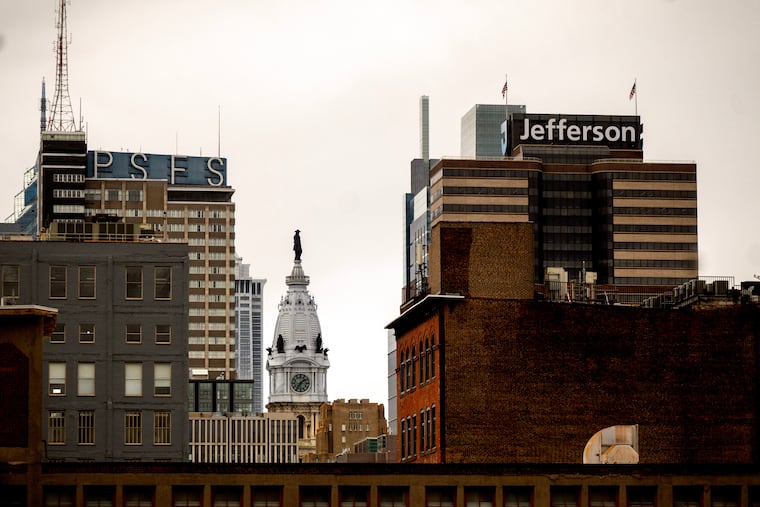
What’s changed at the President’s House with the Trump administration’s new exhibit
Historians have criticized the panels for minimizing the brutality of slavery and whitewashing George Washington’s culpability in the institution.
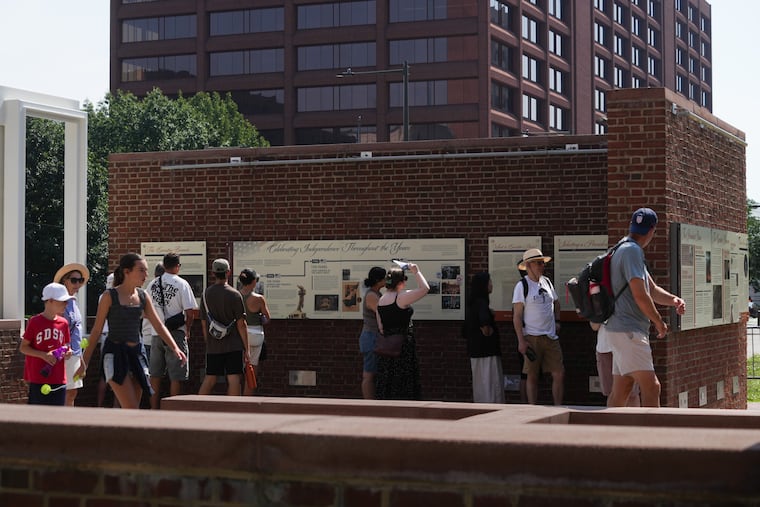
The National Park Service removed early Wednesday the few panels that remained from the slavery exhibit at the President’s House, and replaced them with new panels.
The original displays were deemed to “inappropriately disparage Americans past or living” following President Donald Trump’s 2025 executive order on “restoring truth and sanity to American history.”
The newly installed panels include 11 whose renderings were published on the National Park Service’s website and first reported by The Inquirer in April, as well as smaller panels that weren’t previously made public. Among those are additional references to the nine people George Washington enslaved in his Philadelphia home.
Historians previously criticized the panels for minimizing the brutality of slavery and whitewashing Washington’s culpability in the institution.
And according to advocates, the additions don’t change much.
Telling a blatant lie, such as claiming slavery didn’t exist, would be too easily exposed, said Michael Coard, a founding member of Avenging Our Ancestors, a group that advocated for the development of the site.
“The best lie is one that has a little bit of truth,” Coard said.
The new panels make light of slavery, the attorney said, and focus on Washington’s “discomfort” instead of the experience of the nine people the United States‘ first president enslaved in Philadelphia.
Others criticized the panels for drifting away from the site’s original purpose.
When the site open in 2010, the city and National Park Service said the President’s House exhibit “pays tribute” and “honors lives of enslaved Africans in presidential household.”
The Department of Interior said Wednesday the new panels “acknowledge the evils of slavery, including its injustices and hypocrisies, and, by telling the stories of the nine slaves that Washington kept in the President’s House, remind us of their essential humanity.”
The Inquirer photographed the original panels before their removal and the new panels that were installed this week. Here are the differences in the exhibit.
What’s gone
The original exhibit included five screens across the site that played reenactments depicting the daily lives of those enslaved at Washington’s Philadelphia home.
“The site had to tell the stories that are not often told and share the perspectives of the people who up to now have been nameless and voiceless,” said Rosalyn McPherson, the site’s project director, in the 2010 news release.
Those screens were turned off.
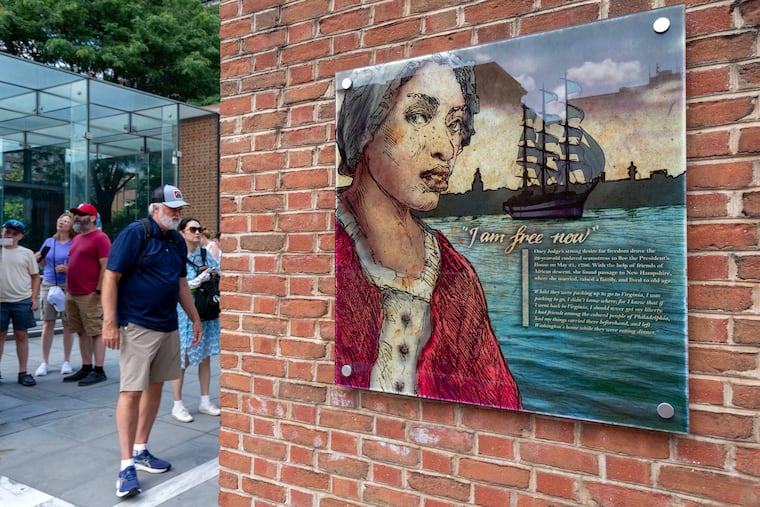
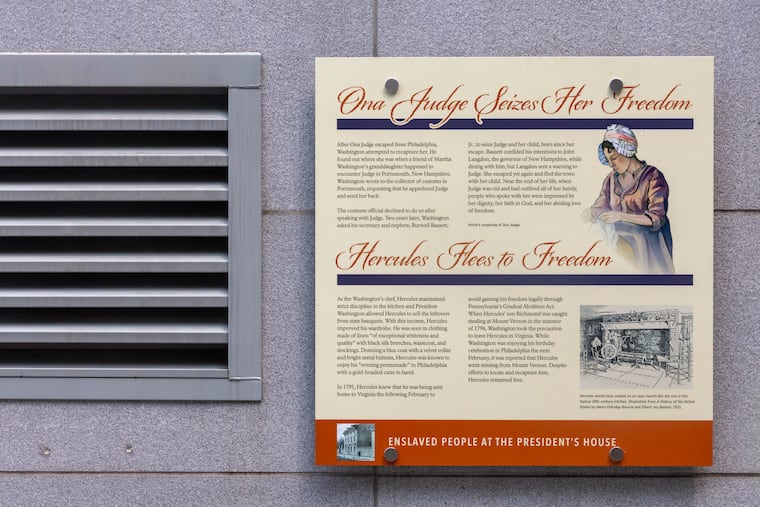
Also gone are the artistic panels, which included a portrait of Ona Judge, who escaped from slavery at the house, and another about Washington’s signing of the Fugitive Slave Act.
What’s replaced
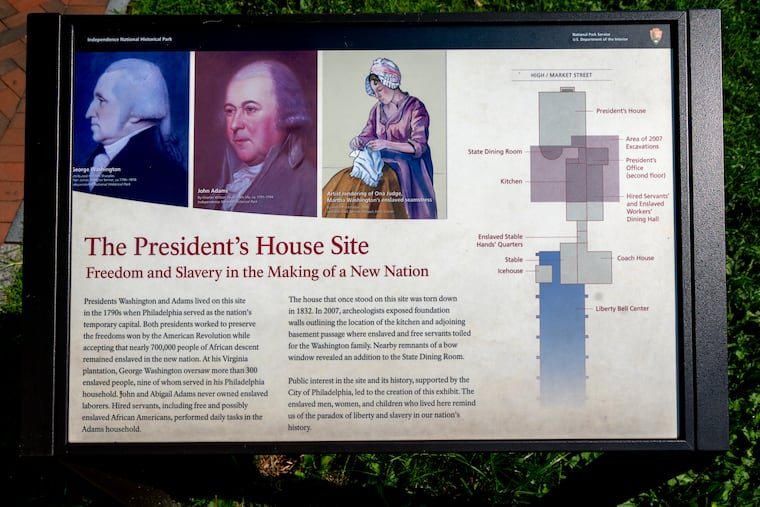
The removed panels included information about the suffering of enslaved people.
A panel titled “The Dirty Business of Slavery” included information about the slave trade, the constitutional compromise to appease slaveholders, the growth of the enslaved population during the presidencies of Washington and John Adams (who also lived at the President’s House), and a timeline of slavery from 1619 and through emancipation.
Another panel, titled “Life Under Slavery,” discussed the brutality of the notorious institution, resistance efforts, and slavery in Philadelphia.
It told the story of Absalom Jones and Richard Allen, men who were born into slavery and managed to buy their own freedom.
“Enslaved people of African descent in the North, deprived of fundamental freedom, endured profoundly difficult lives,” the panel read. ”Controlled by others, their families were always threatened by forced separation, and their work, often exhausting, was nearly always unpaid.”
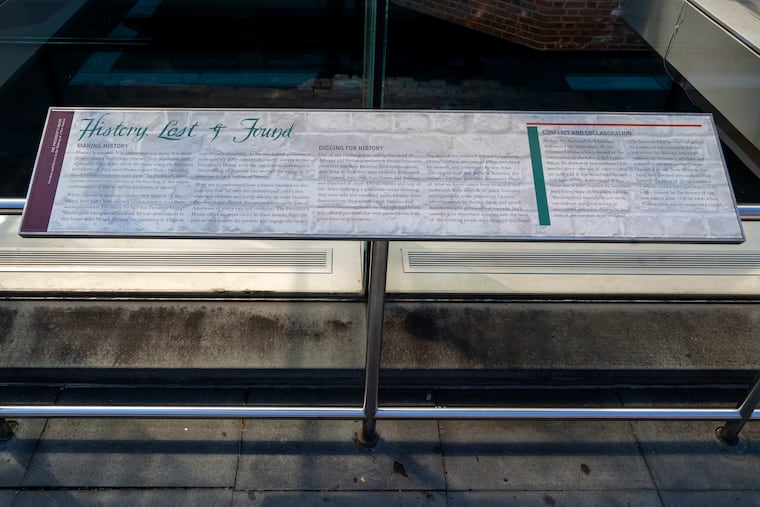
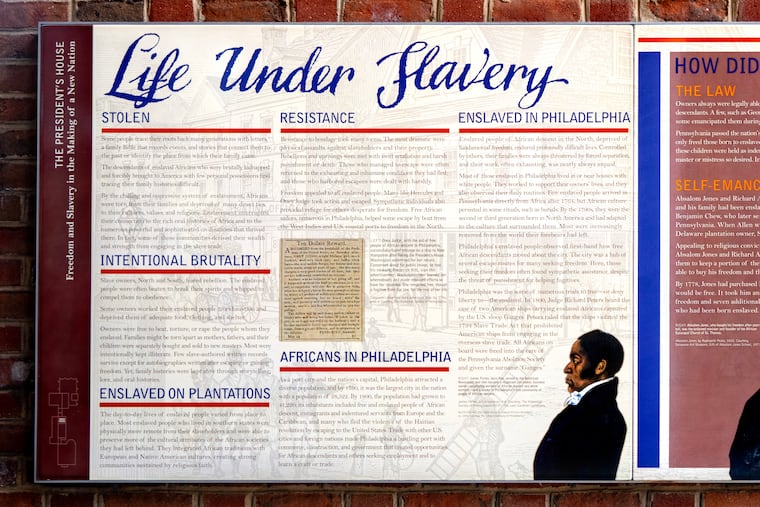
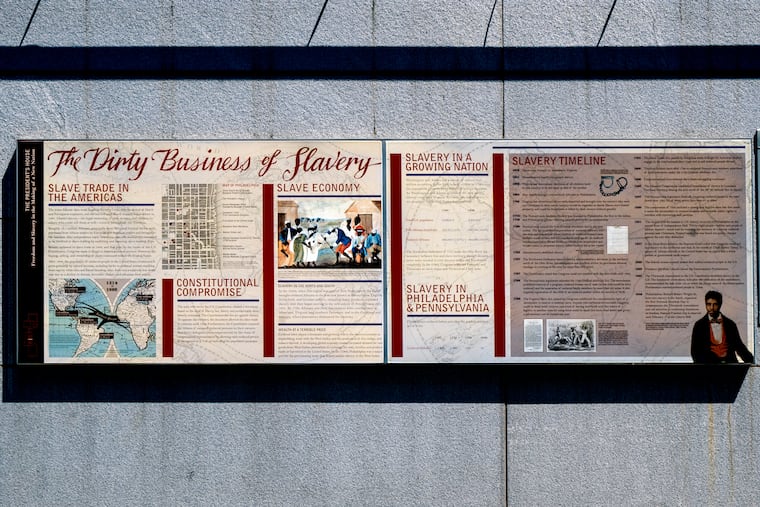
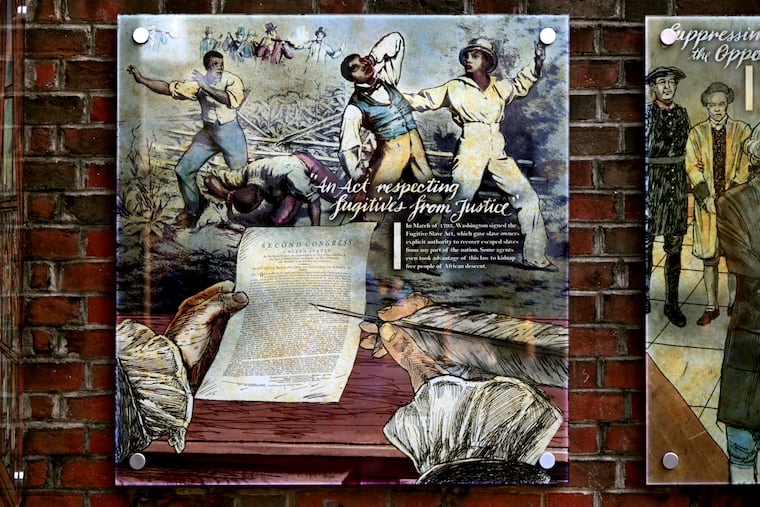
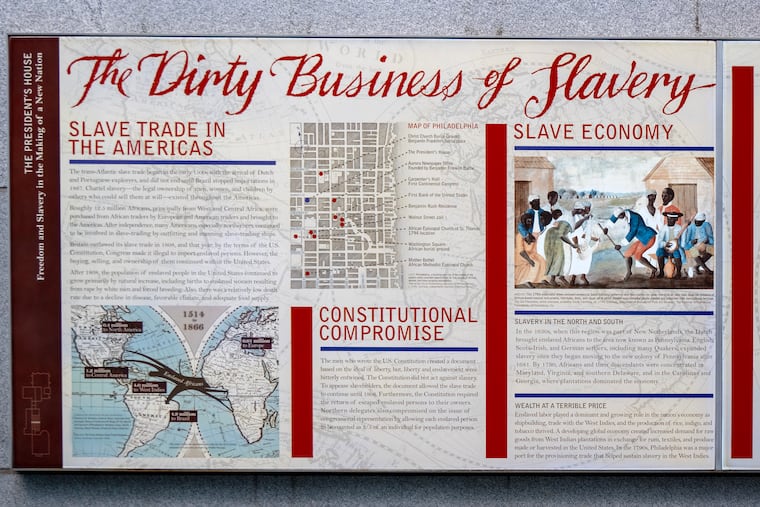
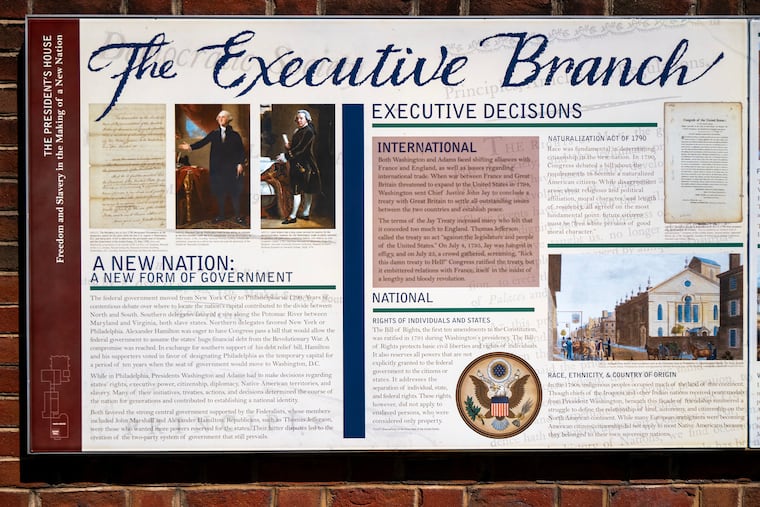
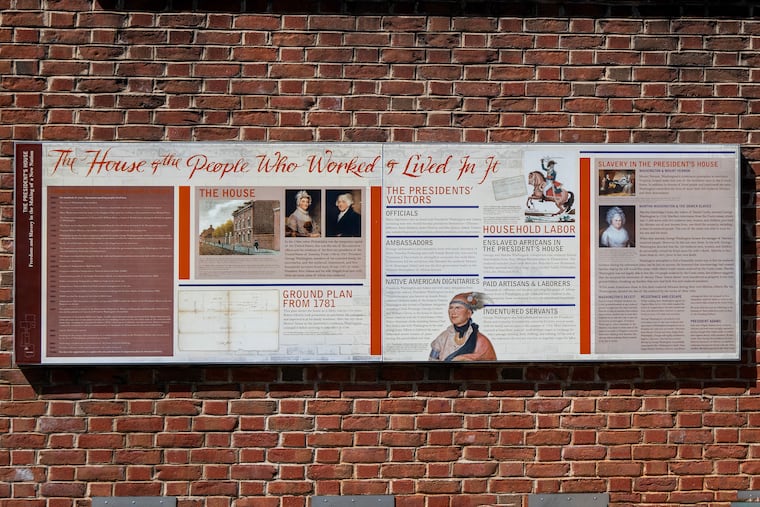
Those panels were replaced with ones that include broad descriptions of slavery that do little to unpack the experience of those subjected to it, and focus on the triumph of emancipation.
The new “Fighting for Freedom” panel discusses the Underground Railroad, quotes Frederick Douglass, Abraham Lincoln’s rise to the presidency, and the Emancipation Proclamation.
Another panel about “The Constitution and Slavery” begins by stating: “The words ‘slave’ and ‘slavery’ are not in the U.S. Constitution as ratified, nor the word ‘property’ in connection with language alluding to slavery.”
It discusses “compromises with pro-slavery delegates,” and ends with a section titled “fulfilling the promise” that quotes the Rev. Dr. Martin Luther King Jr.’s “I Have a Dream” speech.
A panel about “Slavery in the British Colonies” pays homage to Benjamin Franklin and Black abolitionists, and shows the declining numbers of enslaved people in Philadelphia between 1767 and 1847.
And in a trio of displays called “History Lost & Found,” the Trump administration focuses on how the 2007 archaeological dig of the site worked and discovery of primary sources documents it presents as non-controversial: Washington’s letters and a map of the property.
Unlike the original panels about the archaeological dig, the new ones have no mention of slavery, the nine people Washington enslaved, or the National Park Service’s initial apprehension about helping to develop the memorial.
But starkest difference comes in the treatment of slavery at the President’s House itself.
An original panel included a timeline of the site’s history from the time Indigenous people lived in the area and through the 2002 discovery of slavery at Washington’s household.
It continued to discuss the collaboration between the city, federal government, and community groups to develop the site.
The panel’s section on slavery at the house focused on George and Martha Washington ownership of enslaved people, the president’s secret efforts to evade Pennsylvania’s Gradual Abolition Act, and the escapes of Ona Judge and Hercules.
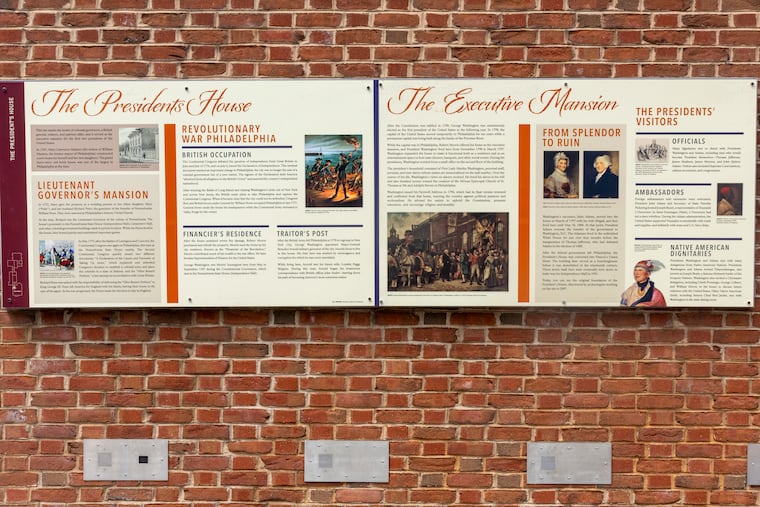
In contrast, the new panel titled “The Executive Mansion” follows a mention of slavery at the house with a statement that Washington’s views evolved and that he freed his slaves in his will.
Another new panel that addresses “Presidents Washington and Adams on Slavery” head on says Washington was “caught between his private doubts about slavery and his public responsibilities as president” and privately “often expressed discomfort with the institution.”
“Slaves living in the President’s House experienced a greater modicum of autonomy than elsewhere in the South such as to explore the city and sometimes even attend the theater, with Washington buying the tickets,” the panel reads.
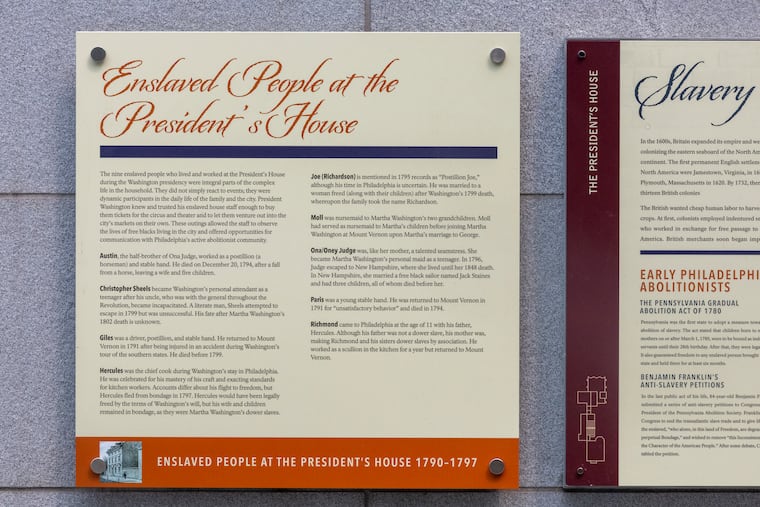
On the same wall, a new smaller panels lists the nine people Washington enslaved alongside short bios. The panel tells visitors that Washington “knew and trusted his enslaved house staff,” and repeats that he used to “buy them tickets to the circus and the theater.”
The wall also includes a smaller panels that briefly tells escape stories of Judge and Hercules, and references Washington’s attempt to recapture them.
What’s new
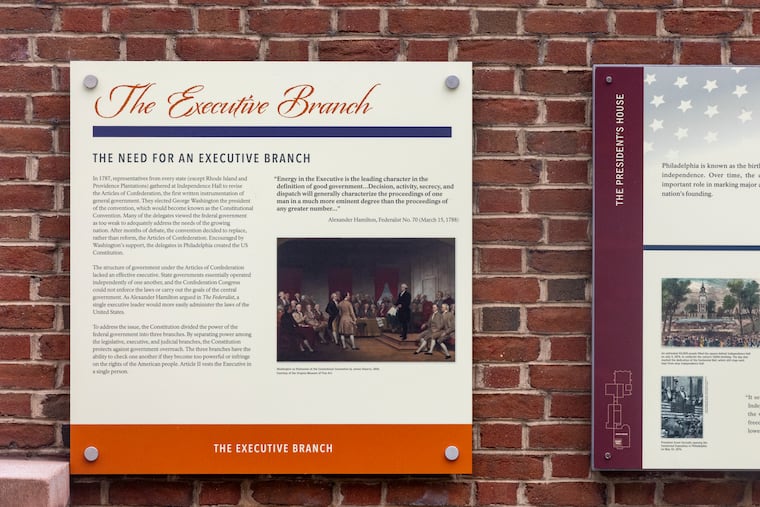
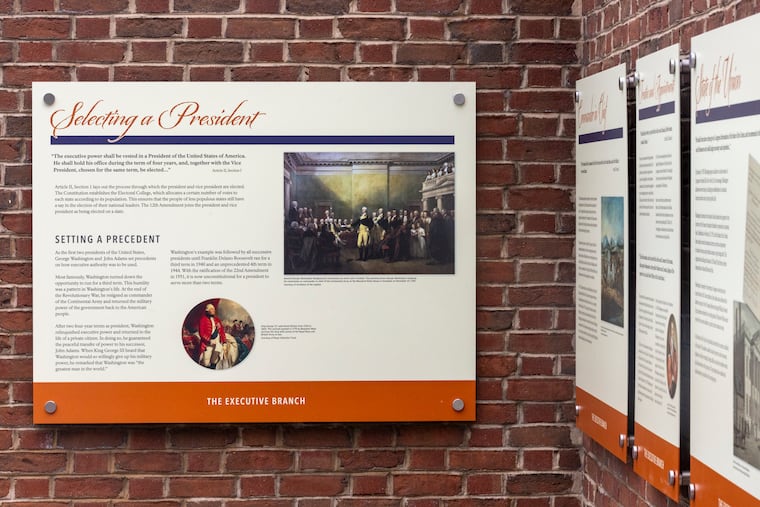
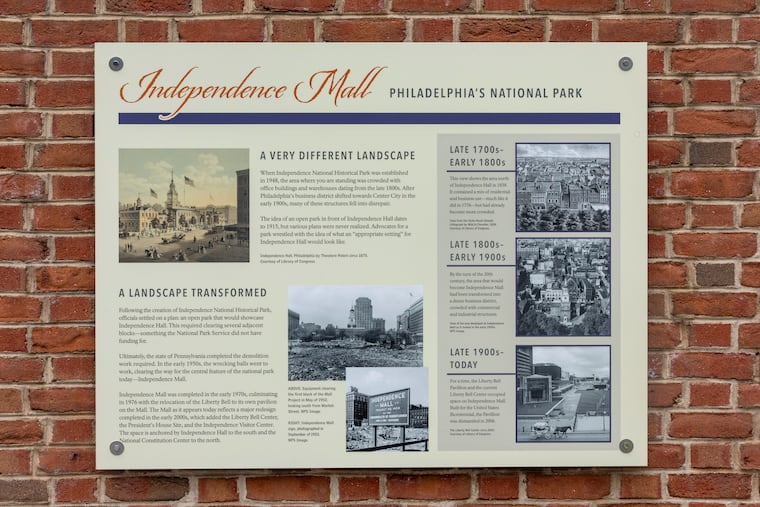
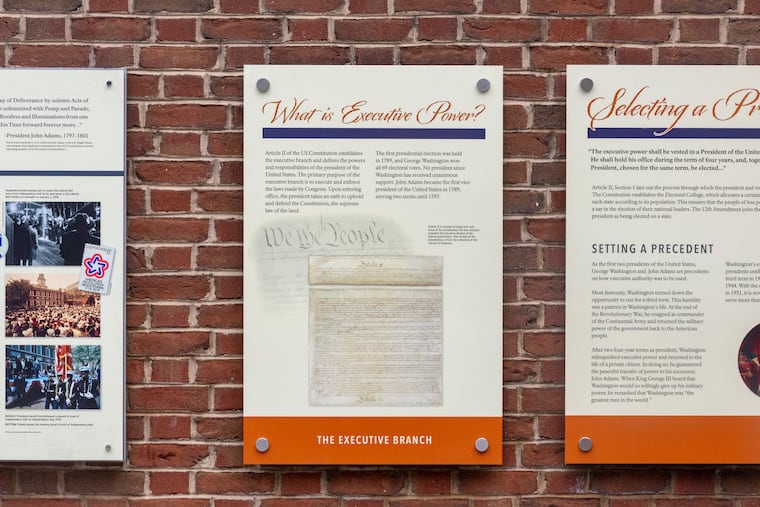
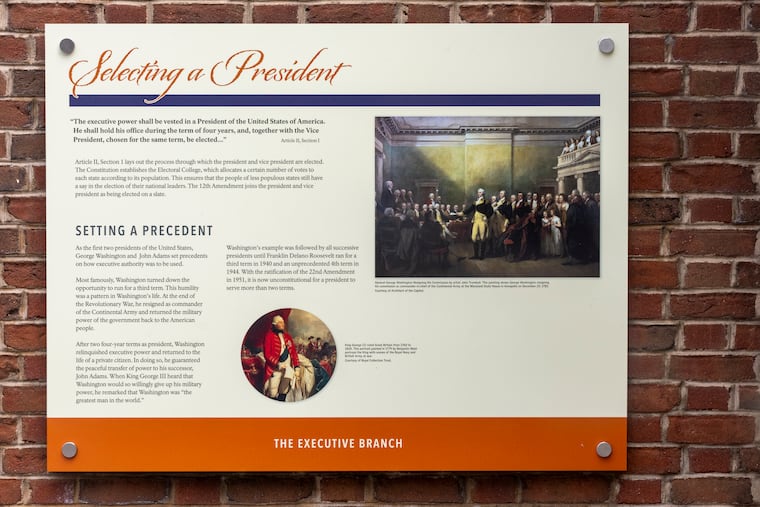
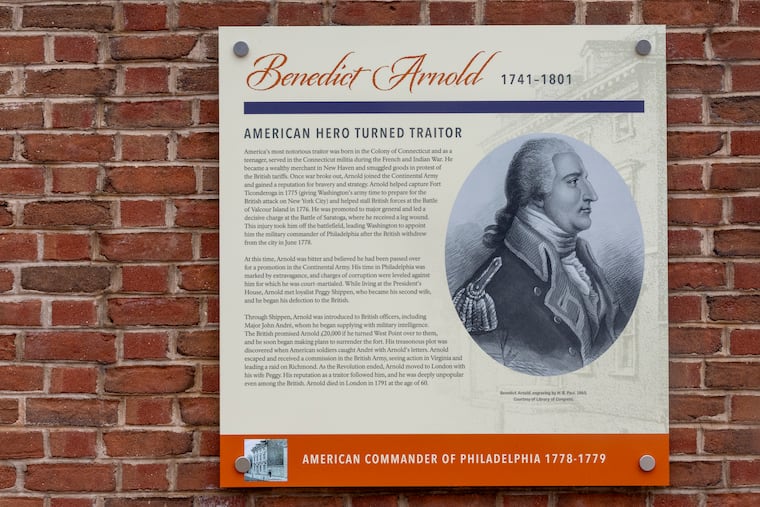
Multiple panels throughout the exhibit share facts about U.S. history, but bear no connection to the site or slavery. These include “Celebrating Independence” and “Throughout the Years,” which denote the nation’s 100, 150, and 200 year celebrations.
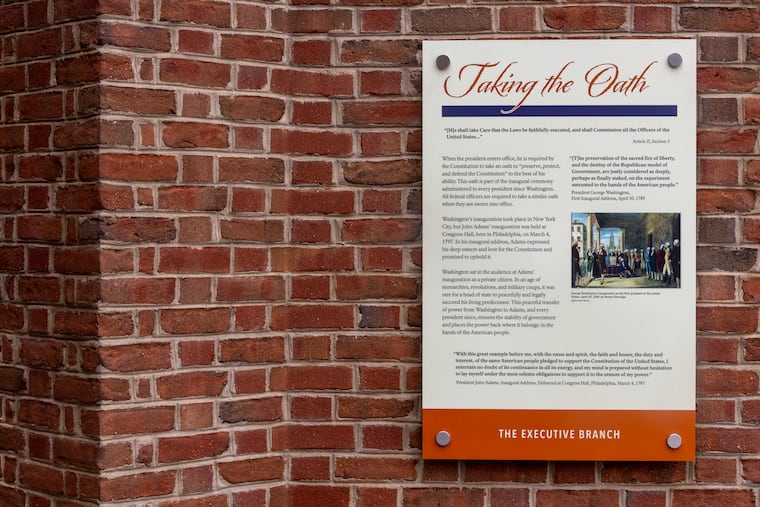
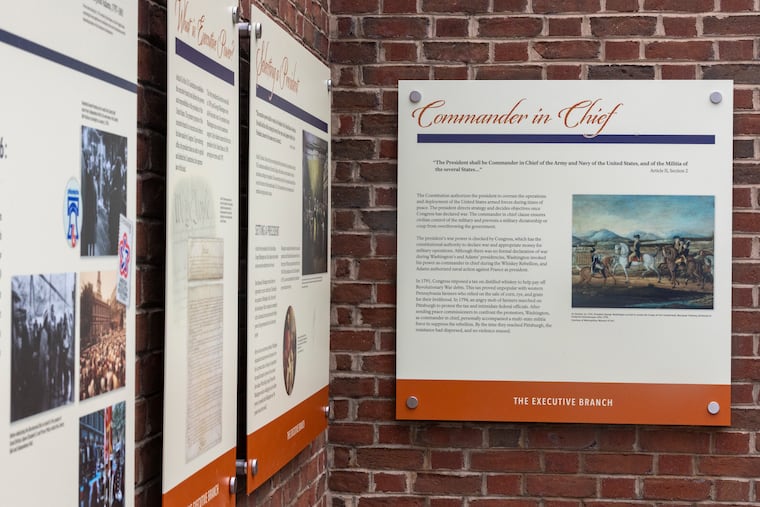
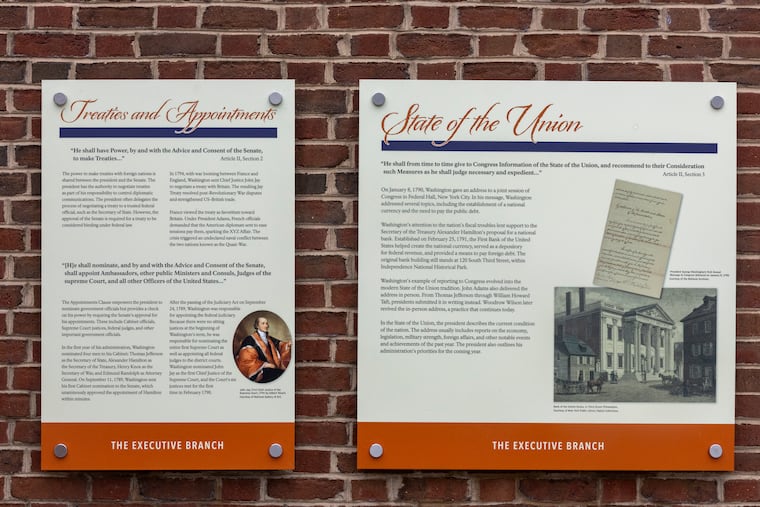
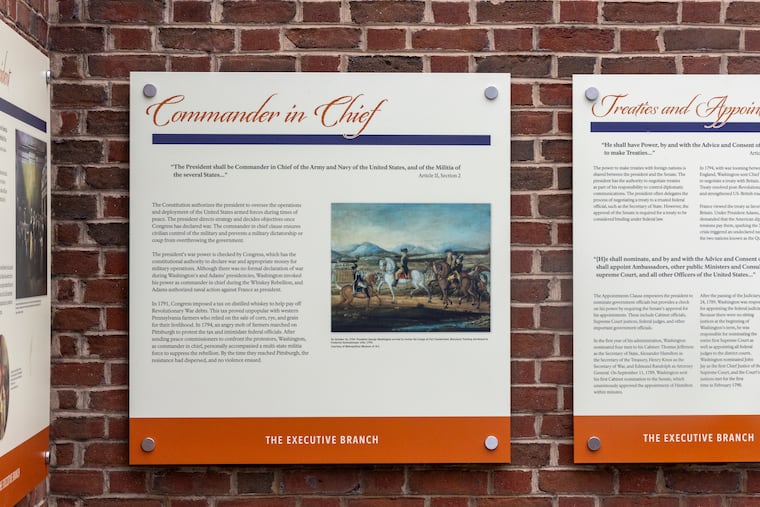
And a series of panels provide a civic lesson about the history, powers, and role of the commander in chief. Another panel discusses “the need for an executive branch.”
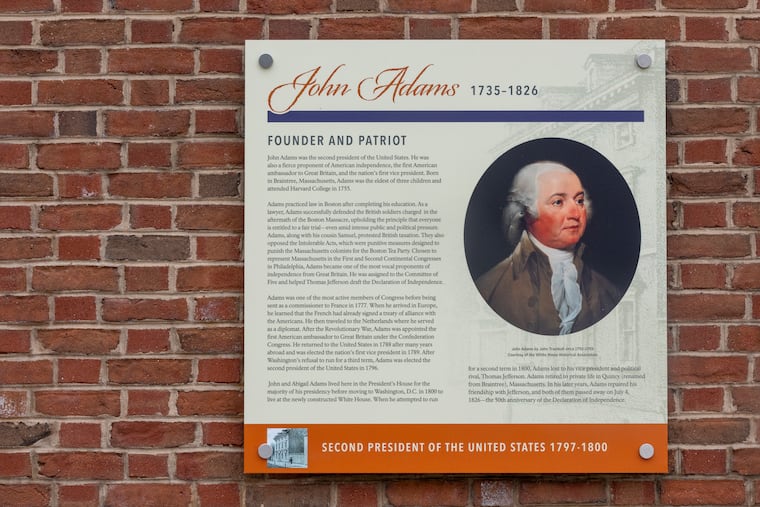
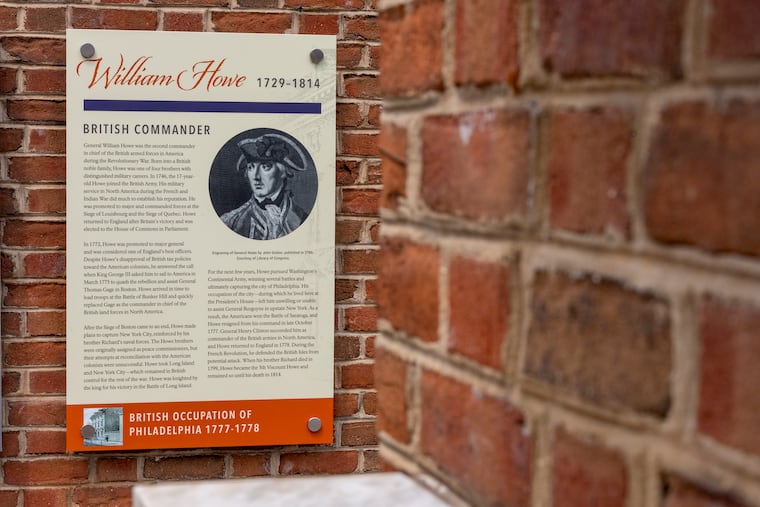
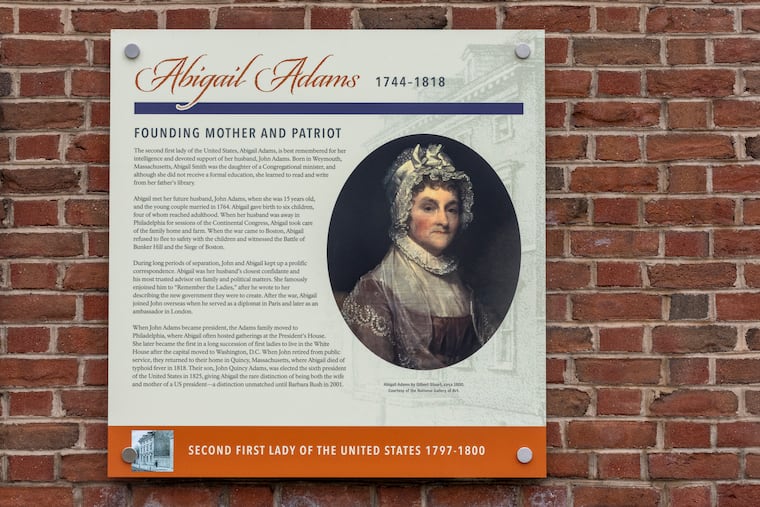
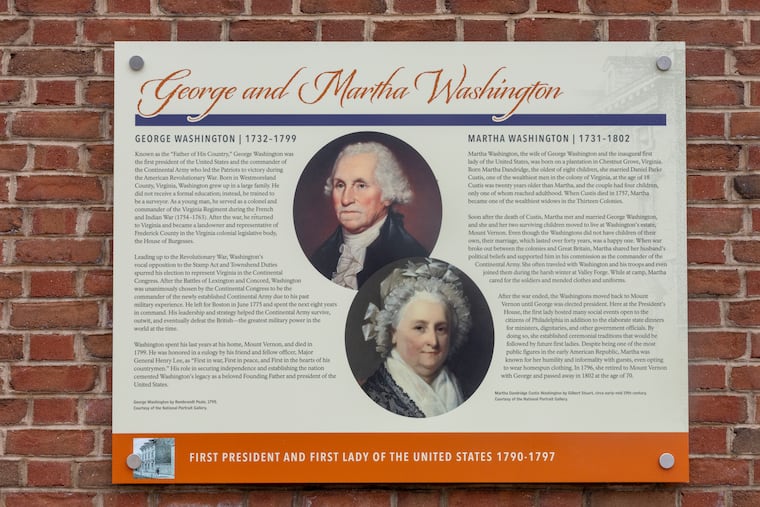
New panels detail the biographies of George and Martha Washington, John and Abigail Adams, and Benedict Arnold. The biography of William Howe, a British commander who occupied Philadelphia during the Revolutionary War and lived at the President’s House, is also attached to the wall.
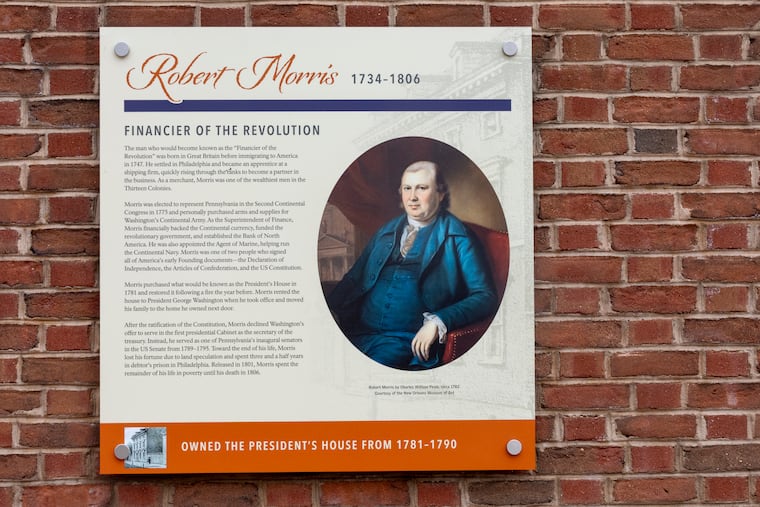
Finally, the new exhibit pays homage to Robert Morris, known as the “financier of the American revolution” and offered Washington the house as the executive mansion with a panel dedicated to his biography.
Morris’ ownership of a company that traded slaves is never mentioned.