Gene Bertoncini, 89, jazz guitarist who dazzled with subtlety
He played on at least 188 albums in a career spanning seven decades.
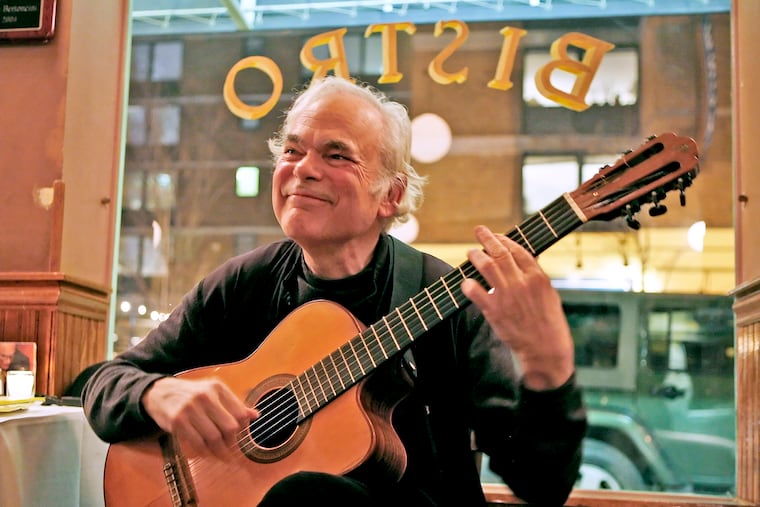
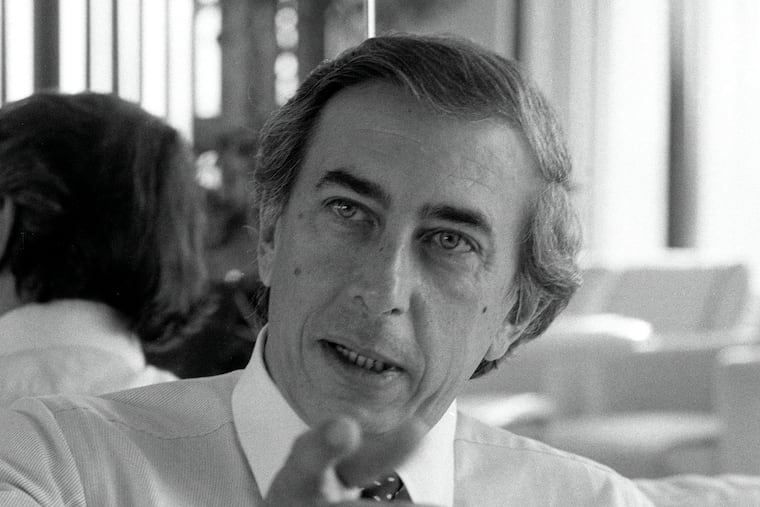
Gene Bertoncini, a prolific jazz guitarist celebrated for his bountiful lyricism and driving swing, for accompanying celebrated singers including Tony Bennett and Lena Horne, and for performances and arrangements that blurred the line between jazz and classical music, died on Saturday at the Actors Fund Home in Englewood, N.J. He was 89.
His niece Nina Collins confirmed the death.
Throughout a career that began in a duo with his older brother, Renny, an accordionist, playing in restaurants and catering halls near their childhood home in the Bronx, Mr. Bertoncini was heralded as a sensitive accompanist and innovative leader.
In a sideman role, he worked with many of the greatest jazz singers of the 20th century, including Bennett, Horne, and Nancy Wilson, and with instrumentalists as varied as Benny Goodman, Wayne Shorter, and Michel Legrand.
Mr. Bertoncini was equally at home with the Great American Songbook, the European classical repertoire, and, in advance of his fellow jazz guitarists, Brazilian works in the bossa nova style composed by such colleagues as Antonio Carlos Jobim and his close friend Joao Gilberto.
Mr. Bertoncini was in his early 20s when he played his first major date with a nationally known headliner, Buddy Rich, and passed muster with the notoriously temperamental drummer and bandleader.
“Buddy really liked the way I played rhythm with him,” Mr. Bertoncini said in an interview last year. “He liked that he didn’t have to tell me anything. I was able to lock into the beat with him, which was amazing, because he was such a dominant force.”
In the early 1960s, Mr. Bertoncini found plentiful work in New York studios, not least because his facility with nylon-string classical guitar technique lent itself to bossa nova at a time when few established guitarists could play it.
During those years, he played on Ahmad Jamal’s 1963 album Macanudo; formed a trio with pianist Monty Alexander and bassist Bob Cranshaw; performed on two albums by the trumpeter Clark Terry; and became a regular in the Tonight Show band until that late-night program moved to Los Angeles from New York in 1972.
Over the next several decades, Mr. Bertoncini played thousands of studio dates. Some teamed him with bassist Ron Carter, and Mr. Bertoncini gave his last major performance in New York, at Mezzrow, with Carter in December.
Gene Joseph Bertoncini, the younger of two sons, was born in the Bronx on April 6, 1937, to Italian immigrants Mario and Anita (Ori) Bertoncini.
Mario Bertoncini, a waiter who later owned and operated a diner called Joe’s on Third Avenue in Manhattan, also taught his sons to play the music of the old country.
At 17, Mr. Bertoncini accepted a scholarship to study architecture at Notre Dame, which seemed like a safer career bet than the itinerant life of a musician. During the five-year program, he also played in student ensembles and directed the school’s swing band.
Upon returning to New York after graduating in 1959, Mr. Bertoncini took an entry-level position in the architecture firm of David Henken, a prominent disciple of Frank Lloyd Wright, and moonlighted in big bands. In the middle of one show with a dance band led by Richard Maltby, Mr. Bertoncini later said, he had an epiphany after he hit a wrong note, which was a shock to his system at the time.
“Probably nobody noticed but me, but I couldn’t live with that,” he said. “I attributed it to the fact that I hadn’t been practicing enough.” He decided to quit his day job and commit full-time to the guitar.
Discographer Glenn Broadhead compiled a listing of 188 known albums featuring Bertoncini — 32 as leader and 156 as sideman — but even that was far from an exhaustive list, considering the guitarist’s work on thousands of sessions for pop albums and singles, and film and TV soundtracks.
In the jazz world especially, it’s largely acknowledged that Mr. Bertoncini — who never married and left no immediate survivors — influenced legions of guitarists through his music.