Parker and City Council must find common ground on affordable housing | Editorial
Officials should find ways to work together — and with private developers — to achieve the mayor’s goal of 30,000 new and renovated houses through her H.O.M.E. program.
With City Hall preparing to borrow around $800 million for housing programs, it is essential that this money be used judiciously and efficiently.
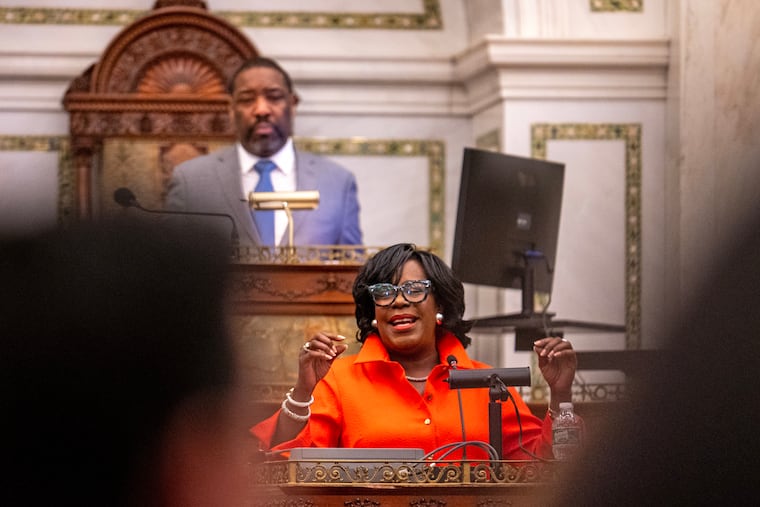
City Council and Mayor Cherelle L. Parker have focused on their competing income guidelines for the city’s various housing subsidies. Instead, they should find ways to work together to achieve Parker’s goal of 30,000 new and renovated homes.
The conversation around the mayor’s Housing Opportunities Made Easy, or H.O.M.E., program has centered on what she calls “the have-nots” vs. “the have a littles.” After spending years representing neighborhoods like Cedarbrook and the Oak Lanes — what housing experts refer to as “middle neighborhoods” — Parker is determined to ensure city programs do not exclude households whose incomes may be higher than the city average, but which are far from wealthy.
Meanwhile, progressive critics would like the administration to focus funding on those making no more than 30% of regional median incomes. Per Parker administration officials, most current beneficiaries are at those income levels, or slightly higher, and they expect this to continue even if the level of who qualifies is raised.
Despite the sometimes-heated rhetoric between the mayor and her skeptics, this situation is ripe for compromise. The two sides could find a happy medium between the current income guidelines and the mayor’s proposed increases, or they could adopt Councilmember Jamie Gauthier’s proposal to create a priority lane for the neediest residents.
Both sides have a healthy appreciation for programs like Basic Systems Repair, Weatherization Assistance, “tangled title” prevention, and Adaptive Modifications, all of which help residents remain in the most affordable housing available: their current homes.
What’s missing from the debate, however, is any sense of how to make the plan bolder and more likely to hit its ambitious targets.
After all, the city cannot afford to build or renovate 30,000 new homes on its own. Even when combined with the $6 billion-plus efforts of the Philadelphia Housing Authority, the city simply does not have the resources to build and maintain it all. It needs the private sector to do its part, as well.
While the H.O.M.E. plan expounds at length about each of the housing programs it plans to expand, renew, or launch, it is much less detailed when it comes to efforts to cut red tape and promote market-rate development.
» READ MORE: Trump makes a mockery of pardon power by blithely granting clemency to his allies | Editorial
Philadelphia is unique among big cities in having a robust private sector that caters to working-class housing. Local initiatives like Jumpstart have established a host of small-scale developers, most of whom specialize in affordable housing. With the right reforms, these efforts could grow.
While some residents have expressed deep skepticism about the prospect of private development, the fact is that most Philadelphians, across all income levels, do not live in subsidized housing. That means residents will continue to need homes built on the premise of earning a profit. The kind of systemic economic changes that are required to move entirely away from the private sector are beyond what any city mayor can accomplish.
Earlier this year, the Parker administration pushed City Council to consider a series of zoning changes. But more is needed. While the mayor has been unwilling to directly challenge councilmanic prerogative, she may need to reconsider that stance if her housing plan is to meet all its goals. She should also consider restoring the full 10-year property tax abatement on all newly built or renovated homes, which researchers have called one of the most successful housing programs in the country. The abatement was considerably reduced in 2021.
Another way to boost construction rates would be to use the H.O.M.E. bonds to create a revolving loan fund that would help finance affordable housing projects. While such a fund has been discussed during the H.O.M.E. deliberations, there does not appear to be a fully fleshed-out plan to create one.
There’s no doubt housing costs are one of the city’s biggest challenges, or that the mayor and City Council are stepping up to address the problem. But making smart decisions now will guarantee that more Philadelphians own their home in the future.