Letters to the Editor | June 3, 2026
Inquirer readers on the return of SEPTA’s historic trolleys and Philadelphia’s boxing history beyond “Rocky.”
Political diversity
Jonathan Zimmerman’s recent column argues that Democrats ignore an important reality: Black voters are more moderate than white liberals.
It is difficult to imagine an opinion columnist arguing that white voters are inherently moderate, inherently progressive, or inherently conservative.
White Americans are afforded the dignity of political complexity. They can be libertarians, democratic socialists, centrists, conservatives, labor organizers, environmentalists, anti-establishment populists, and everything in between.
Black Americans deserve the same dignity.
Yet, Zimmerman’s recent column asks Democrats to view Black voters primarily as a moderating force within the Democratic coalition. In doing so, it reduces one of the most politically diverse constituencies in America into a single political category. That is not political analysis. It is a flattening of one of the most politically diverse constituencies in American life.
Zimmerman’s argument rests on a fundamental misunderstanding of both Black politics and the challenges facing the Democratic Party. Not only does he conflate liberalism with progressivism, but he also mistakes pragmatism for moderation. Black communities have spent generations navigating redlining, disinvestment, voter suppression, mass incarceration, underfunded schools, and more. Those experiences have left deep political scars and understandably produced voters who often evaluate politics through a practical question: Will this improve our lives? That is not moderation.
That is survival.
The history of Black political thought in America is older, deeper, and more ideologically diverse than Zimmerman’s framework allows. And that history is not the history of moderation.
It is the history of people pushing this country to become more democratic than it was willing to be on its own.
We are a politically diverse people whose traditions include liberals and socialists, reformers and revolutionaries, pragmatists, and visionaries.
We do not need to be categorized.
We need to be heard.
George Lawrence, Philadelphia
More historic trolleys, please
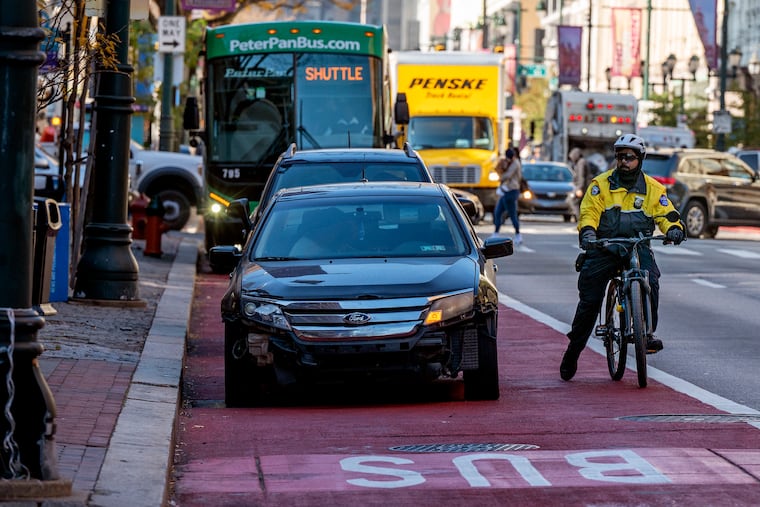
I was heartened to see the recent article on historic trolleys returning to SEPTA’s G line. As someone who lives on Girard Avenue, the trolley is both a convenient crosstown route and a point of neighborhood pride. I just wish I could see more of them. On a recent Sunday afternoon, no trolleys whirred by on the tracks, only buses. Even when there are trolleys running, there are only one or two. Of course, SEPTA’s budget woes and the way lawmakers prioritize car traffic over reliability on the G line mean we see a lot of bus-only service. Adding insult to injury is SEPTA’s plan to suspend trolley service for at least another month for the FIFA World Cup’s Fan Fest at Lemon Hill. The Philadelphia Parking Authority is towing anyone who parks in our neighborhood, creating uncertainty for local businesses and residents alike. If they can deploy tow trucks for that, why not for clearing double-parked cars from the trolley tracks? The trolleys are an icon for our neighborhood, and it’s disappointing they’ll be removed when many tourists are visiting the city for the first time for Fan Fest. Hopefully, SEPTA can reconsider and deploy more trolleys than usual, instead of letting this event take even more of them away from our neighborhood.
Tristan Heinen, Philadelphia
Founding contradictions
As we celebrate the 250th anniversary of the birth of our great nation, we must not completely forget some of the bleaker aspects of its founding. Among them are the often cruel treatment of Native American populations and tribes, which to this very day have not fully recovered. And we must always remember that our Founding Fathers were all white males, some of whom enslaved African Americans long after our Declaration of Independence was signed and our U.S. Constitution was ratified. Some say that a form of “slavery” still exists in our nation today in the form of our unfair application of justice to African Americans. I certainly believe we should celebrate the noble principles embodied in our outstanding founding documents and the enormous progress we have made as a nation. But we must also face some harsh realities. It is only by fully recognizing, teaching, and never forgetting both our nation’s aspirational principles and how the founders fell short of them that we can continue to achieve true greatness as a nation.
Richard Lippin, Southampton
Boxing beyond ‘Rocky’ myth
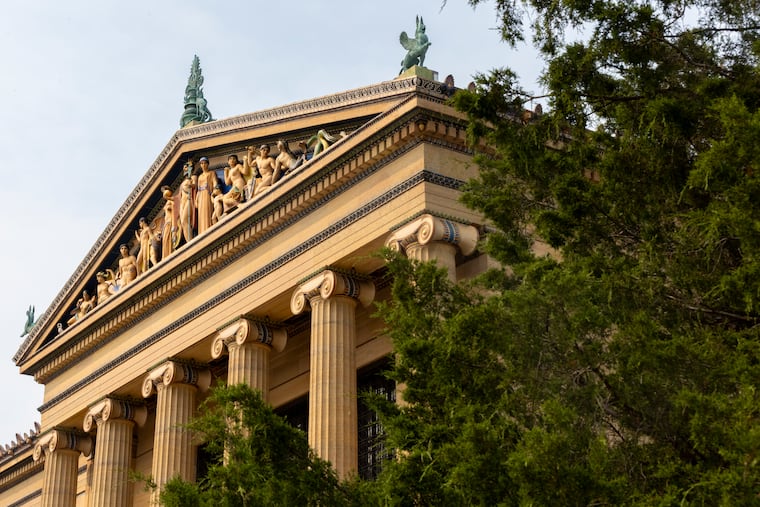
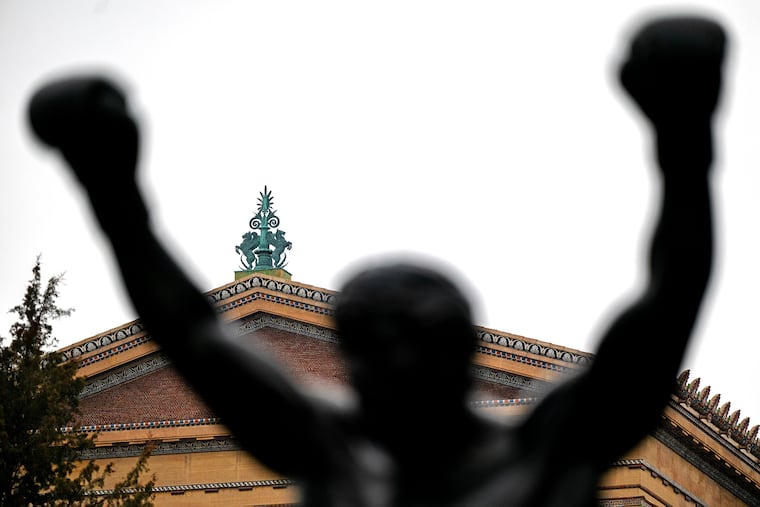
After viewing people running up the Art Museum steps for a year, Michael Vitez wrote about why people find the story portrayed in the film Rocky to be inspiring. To be honest, I found that film, as well as the music by Bill Conti, to be moving. So, what is the problem with Vitez’s argument?
Jack Johnson became the heavyweight champion of the world decades before Jackie Robinson broke the color line in baseball. The United States government indicted Muhammad Ali for refusing to fight in a war that the large majority of the population opposed. Rubin “Hurricane” Carter, a middleweight contender, served nearly 20 years in prison for a crime it was later determined he did not commit.
These few examples illustrate a point not mentioned in Vitez’s op-ed: The film Rocky portrays the idea of a former mediocre boxer getting in shape to become the world champion. The true history of boxing is about fighters who didn’t just battle their opponents, but also dealt with the insidious environment of racist discrimination.
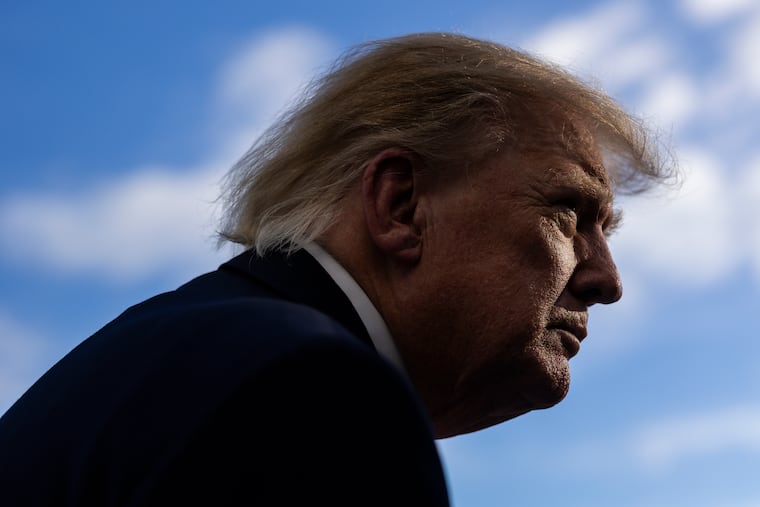
The president of the United States wants us to forget this long history of vicious discrimination. However, when we think of the profound problems we face today, the struggles of the many athletes who overcame tremendous odds can only inspire us with the idea that a better world is possible.
Steven Halpern, Philadelphia, hnbpjs@gmail.com
A candidate’s record
Tom Moran’s recent op-ed about New Jersey congressional candidate Adam Hamawy left me feeling pretty down. It is hard to read something that uses loaded language and cherry-picked details to make a public servant look dangerous. The way the article treats Hamawy’s past associations as if they are automatically suspicious, without real context, feels unfair. It comes off like it is trying to pull attention away from his actual work, his qualifications, and what he is saying he wants to do. It also feels like it is leaning on anti-Muslim fear instead of giving people a clear and honest look at the candidate. What bothers me most is how a record of service gets twisted into a story about supposed radicalization. That kind of framing feeds the idea that American Muslims are always under suspicion, no matter what they do. It pushes stereotypes that have hurt people for a long time. Moran also seems surprised these accusations are not doing more damage. I think he is missing something important. A lot of people are tired of smear tactics, and they can tell when someone is being targeted because of who they are and where they come from. Fair journalism matters, especially right now when so many communities are being dehumanized and made into targets. People deserve safety and dignity — Palestinians included — and nobody should be singled out or dragged through the mud with biased stories. Candidates should be judged on their record and their plans, not on suspicion and fear.
S. Sharif, Philadelphia
Join the conversation: Send letters to letters@inquirer.com. Limit length to 150 words and include home address and day and evening phone number. Letters run in The Inquirer six days a week on the editorial pages and online.