District looks to slash alternative-school funds
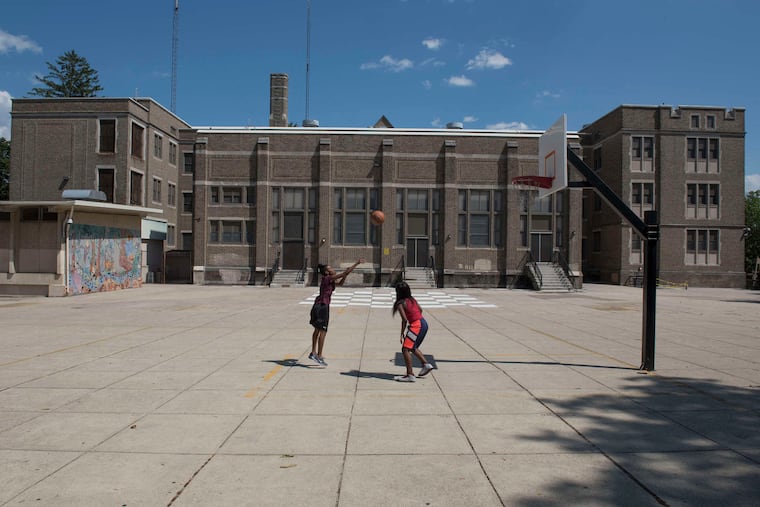
Under pressure to close a budget deficit, the Philadelphia School District wants to slash its funding of disciplinary schools, triggering a protest from the state official who monitors school violence.
Under pressure to close a budget deficit, the Philadelphia School District wants to slash its funding of disciplinary schools, triggering a protest from the state official who monitors school violence.
More than two months after passing a 2007-08 budget that was supposed to be balanced, the district's administration wants to cut about 20 percent of the funding to those schools.
The district spent $41 million last school year for nearly 7,000 students to attend the alternative schools, operated by four private companies.
But the state cut $8 million from the $22 million funding it had given the schools last year, and the district is electing not to make up that amount.
The proposal drew immediate fire from Jack Stollsteimer, the head of the state Office of Safe Schools Advocate, set up to monitor school violence in the Philadelphia district and to help victims.
"If there is going to be a cut in the number of placements in alternative education, that will have a devastating effect on the safety of our schools," Stollsteimer said yesterday. "We need to get the violent kids out so that other kids can go to school safely and learn. . . . At a time when violence is up in the city and in the schools, we can't go the other way."
Under chief executive Paul Vallas, enrollment in alternative schools jumped 56 percent. Last year, the district saw a surge in violence against teachers.
Democratic State Rep. Dwight Evans, chair of the House Appropriations Committee, said he supported the cuts because he questioned whether the schools were helping students. He said he preferred that the district cut there than elsewhere.
Others also say they do not want to see more reductions in the regular classrooms.
"I'd rather see the cuts there than in the classrooms," said the Rev. Leroi Simmons, a Baptist minister from Germantown and a volunteer at troubled Germantown High School.
Even with the latest $35 million in deficit-reduction proposals, the district still needs to find about $20 million more in savings to balance its $2.18 billion budget; district officials did not say when those cuts could be made.
District officials said that much of the funding cut for the alternative schools would come through a more efficient use of the 3,500 slots available in those schools, and they pledged that safety in the regular schools would not be compromised. A plan will be developed to work with community groups, city agencies, and volunteers to provide other options for the students, they said.
"I don't think that this reduction should be viewed as backing away from our commitment to keep safe classrooms," said acting chief executive Tom Brady. "If it is clearly a child who is a threat to a teacher or a threat to the school, there is still more than adequate room to provide an alternative educational program."
The district administration is also proposing a $3 million savings by transferring teachers from schools where attendance has dropped to other schools where attendance is larger than expected, and to fill vacancies.
That unpopular practice, called leveling, was discontinued for two years under Vallas but was started again last school year. District officials said they would complete all the transfers by the end of September, two weeks earlier than past years.
It will affect an estimated 34 of the district's 10,300 teachers. But Philadelphia Federation of Teachers president Jerry Jordan said that it would be "almost impossible" to finish the process that fast. And parents say that the practice is very disruptive. "It's a terrible way to do things, bad for the teachers and bad for the kids - no one wins," said Gerald Wright, the father of two children at the John Story Jenks Elementary School.
Other savings are to come from contracting some services, selling unused properties, and reducing bus routes as more students ride free on SEPTA under a new arrangement. And the district is asking the state-controlled Philadelphia Parking Authority to give it $4 million, even though it is not required by law to do so.
The School Reform Commission will have its say on the proposed package at its Sept. 12 and Sept. 19 meetings; the public will have a chance to comment Sept. 12.
at 610-701-7638 or dhardy@phillynews.com.