SEPTA, union trade barbs, then resume talks
Thursday, day three of Philadelphia's transit strike, began with the union's leader firing accusations at SEPTA's board chairman, and closed, once again, with promises of progress being made but no resolution to the work stoppage in sight.
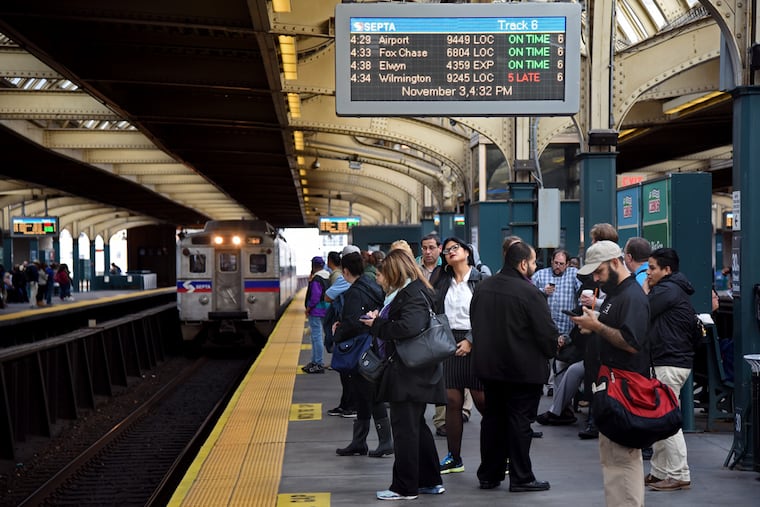
Thursday, day three of Philadelphia's transit strike, began with the union's leader firing accusations at SEPTA's board chairman, and closed, once again, with promises of progress being made but no resolution to the work stoppage in sight.
The day started with Transport Workers Union Local 234 president Willie Brown firing off a statement blasting SEPTA board chair Pat Deon.
"Deon's idea of bargaining where he tells the public half-truths about what's on the table while telling the union to take it or leave it won't get us across the finish line," Brown said.
The statement came about 12 hours after Deon issued a statement of his own, saying that the union should negotiate in good faith. He also accused Local 234's representatives of prolonging a strike - that has shut down the subways, trolleys and buses and put hundreds of thousands in a bind - by rejecting an offer presented Wednesday night that addressed most of their demands.
The union response Thursday morning emphasized that members' standard of living would have been worsened if the union had accepted SEPTA's last proposal before the strike began Tuesday morning.
"Make no mistake," Brown said, "if we had accepted their terms prior to the strike deadline, our members would have taken home less in their paychecks next year than they earn today."
Despite the war of words, negotiations that began Wednesday afternoon continued until about 2 a.m. Thursday.
The talks resumed Thursday evening and continued late, but with no agreement in sight. SEPTA rejected a counterproposal offered by the union, and Thursday, negotiators were reviewing financial details in search of a settlement.
Those familiar with the negotiations said there is a limited pool of money to address the union's requests, and discussions have centered on how that money should be distributed.
SEPTA's offer publicized Wednesday night would remove the existing $30,000-a-year cap on pensions and increase pension benefits by 8 percent, give workers an average of $8,100 more in pay over the next five years, and provide a health-care plan comparable to the existing one for $164 a month - about four times as much as workers pay now.
The union's statement did not directly address the SEPTA proposal or say what was unacceptable about it.
Also at issue are quality-of-life matters such as the amount of down time workers have between shifts and during the workday, but resolving the financial issues dominated discussions Thursday, said Fran Kelly, SEPTA's assistant deputy manager for government affairs.
SEPTA did not follow through on plans Thursday to file an injunction that would force the strikers to work on Election Day, but said that option was still on the table.
"We're still putting it together," Kelly said.
The injunction, which would be filed in the Philadelphia Common Pleas Court, would address concerns that the strike could make it difficult for voters to coordinate a trip to the ballot box with the extended commutes created by the lack of mass transit.
In a city dominated by Democrats, voter turnout could become a major issue both for Hillary Clinton's presidential campaign and for down-ballot candidates of both parties.
U.S. Rep. Robert Brady (D., Phila.), the leader of the city's Democratic Party, has said Clinton would need 460,000 votes in Philadelphia to offset the Republican-leaning areas of the state.
215-854-4587@jasmlaughlin