In Phila., Israelis weigh in on election
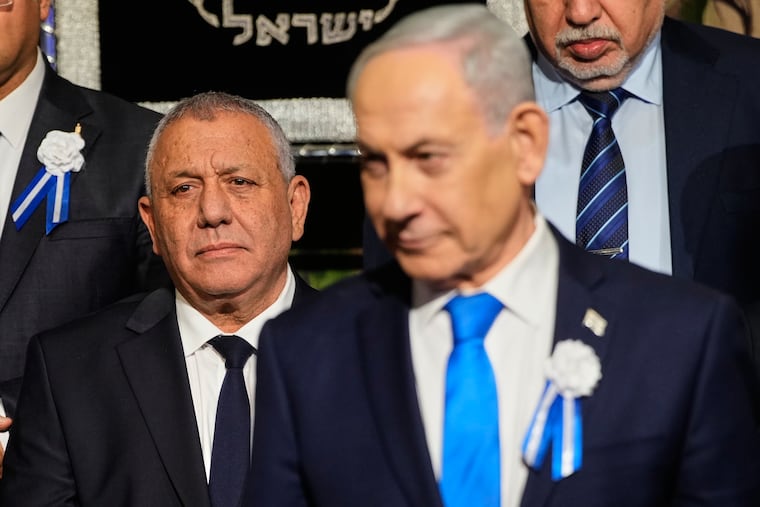
Amid tight security at the Consulate General of Israel in Philadelphia yesterday, two dozen Israelis from across the region gathered to watch the results of the parliamentary election cablecast from Tel Aviv.
Amid tight security at the Consulate General of Israel in Philadelphia yesterday, two dozen Israelis from across the region gathered to watch the results of the parliamentary election cablecast from Tel Aviv.
While the first exit polls giving the lead to Tzipi Livni's Kadima Party drew a collective "Wow!" from the group, what happens next in Israel's fractious political system seemed like anyone's guess.
Livni's moderate party appeared to win 28 of the parliament's 120 seats. Benjamin Netanyahu's right-leaning Likud Party was right behind with 27 seats.
One of them will have 28 days to form a majority coalition by joining forces with smaller parties that won fewer seats. The goal: a coalition with enough seats - at least 61 and preferably many more - to stave off gridlock when the opposition digs in its heels.
While some of the Hebrew and English speakers crowded into the consulate's conference room thought Netanyahu and Livni would be able to work together as coalition partners, others thought Netanyahu would lay back, wait for Livni to fail in forming a coalition, then seek to form his own coalition and lead the government himself, as Israeli law permits.
"I like Kadima in the lead. But I would have liked to see more of a gap" over Likud, said Haifa-born Ofer Vaisler, 31, a graduate student at the University of Pennsylvania Wharton School of Business, where he started last fall.
"I really think he will not give her the chance to form a government," said Moti Levy, 32, also from Haifa and at Wharton.
"This is a poker game, at the highest levels, right?" said Tel Aviv-born Benjamin Strauss, who came to the United States 24 years ago. Now, as a lawyer with the firm Pepper Hamilton L.L.P., he specializes in helping Israeli companies establish businesses here.
"My guess is Likud does not want to be in the opposition. That hasn't worked out so well for them," he said, speculating that the two top-vote-getting parties would find a way to work together and bring in the Labor Party and others to form "a basically centrist" government.
Sharona Durry, founder of the Web site phillyisrael.com, estimated that 30,000 Israeli immigrants and Israelis with dual U.S.-Israeli citizenship live in the Delaware Valley.
Following a monthlong war in the Gaza Strip, a new government in the United States, and a new government in the Jewish state, Israelis would seem to be on a roller-coaster ride.
"In Israel, we don't call that a roller coaster," Strauss said. "That's a day at the park. Israelis have a constant awareness that life is not safe and comfortable."
While emphasizing that it was too early to tell how the election results would affect U.S.-Israel relations, Strauss said "the common wisdom" was that "the best affinity" with the Obama administration was a Kadima-led government.
Most of President Obama's chosen Middle East diplomats worked formerly in the Clinton administration.
"When Bibi [Netanyahu] was prime minister and Clinton was president there was not a good relationship," Strauss said. While most of the U.S. Congress supports Israel, he said, the U.S.-Israel relationship works better "when there is harmony" between the leaders.
Israeli Consul General Daniel Kutner said that unlike U.S. elections, which generally produce definitive results, "this is only the beginning. We may still have a government based on a fragile coalition."