Kenya election thrown into turmoil as top opposition candidate withdraws
It was a legal challenge by Raila Odinga that prompted the Supreme Court to nullify the results of the Aug. 8 election, won by incumbent Uhuru Kenyatta, citing irregularities.
NAIROBI, Kenya — Kenya's main opposition leader announced Tuesday that he would not contest the rerun of the presidential election, set for Oct. 26, casting doubts on the legitimacy of the vote process.
It was a legal challenge by Raila Odinga that prompted the Supreme Court to nullify the results of the Aug. 8 election, won by incumbent Uhuru Kenyatta, citing irregularities. But Odinga, who leads the National Super Alliance (NASA), says not enough has been done to address the problems. He has singled out the Independent Electoral and Boundaries Commission (IEBC) for particular criticism, deeming it "rotten."
"We have come to the conclusion that there is no intention from IEBC to make sure that the irregularities and illegalities witnessed before do not happen again," Odinga told reporters. "We believe that all will be best served by NASA vacating its presidential candidature in the election."
In its ruling invalidating the Aug. 8 election, the high court cited a consistent pattern of irregularities in polling stations reporting results. It ordered a new vote within 60 days.
Kenyatta had said he would abide by the court decision but has repeatedly accused the justices of standing in the way of the people's will.
In the run-up to the reelection, there were attempts by Kenyatta's Jubilee Party, which has a majority in parliament, to reform electoral laws and the IEBC, but the opposition dismissed the efforts as insincere.
Opposition lawmakers on Tuesday boycotted a session of the National Assembly dedicated to amending election laws, saying they refuse to give legitimacy to a flawed process.
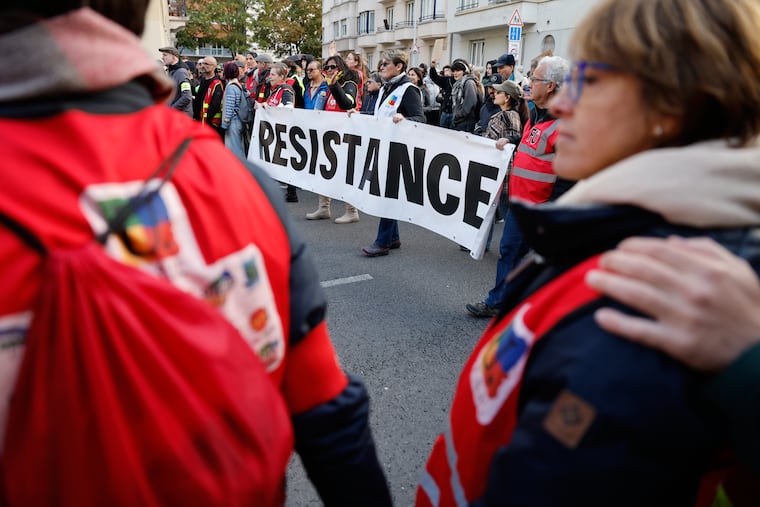
Supporters of Odinga have been holding weekly demonstrations against the electoral commission in the capital, Nairobi, as well as in their strongholds of Mombasa and the western city of Kisumu.
The protests have been heating up, with police opening fire on a demonstration in Nairobi on Monday, injuring one man. Last week, the University of Nairobi was shut down indefinitely after clashes between students and police.
Amid the political furor, gunmen attacked a university near Mombasa along the coast and killed two staff members.
The attackers, thought to be members of neighboring Somalia's al-Shabab Islamist group, opened fire on a vehicle carrying the university staff.