Scene Through the Lens with photographer Tom Gralish.
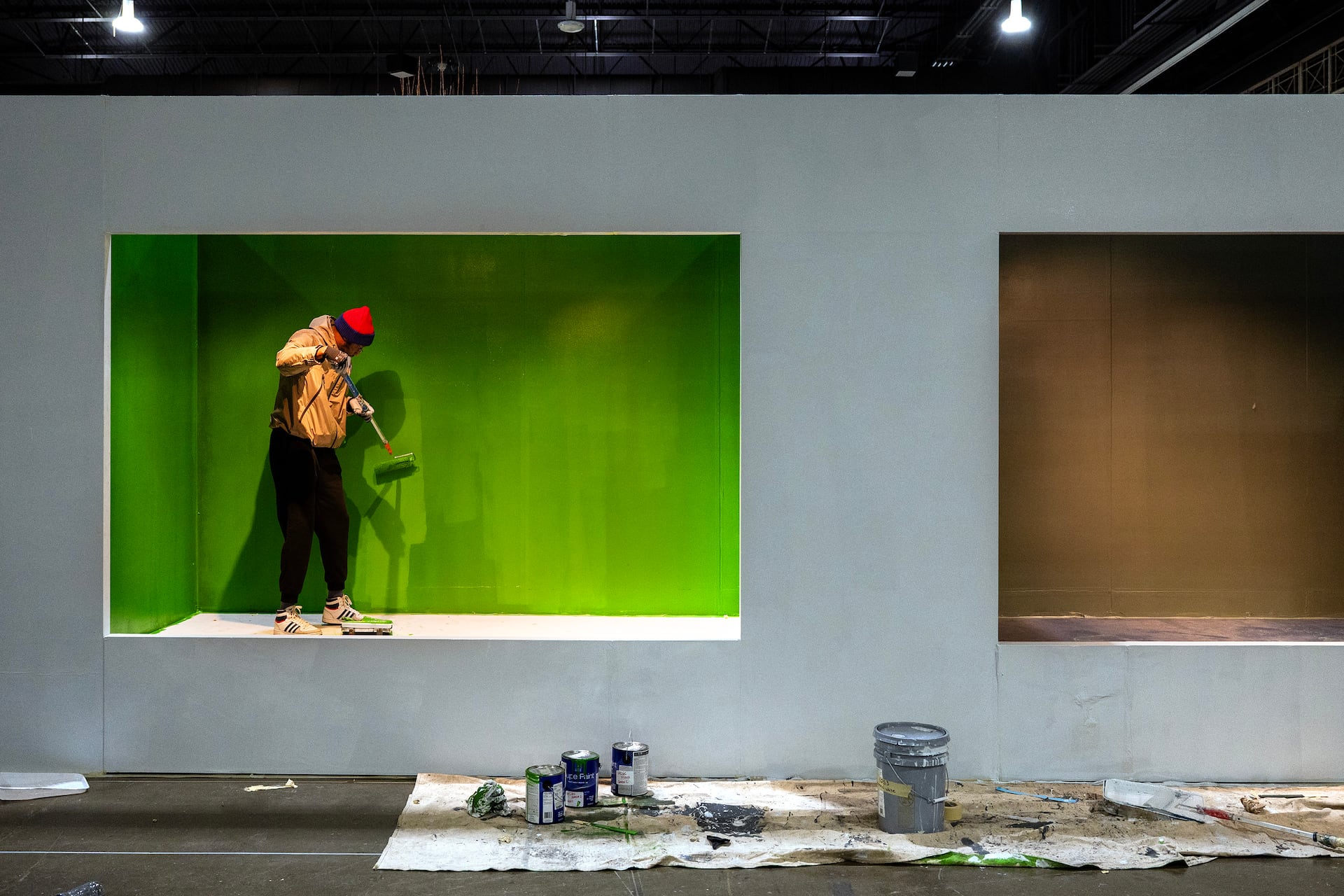
Setting up for the PHS Philadelphia Flower Show ahead of its Feb. 28 opening at the Convention Center, stagehand Dewayne Walker, with Local 8 of the International Alliance of Theatrical Stage Employees (IATSE) paints the case for one of the floral design displays at the show - Store Window Class 156 - for individuals, groups of friends or families, clubs, and other organizations, “to show off their creativity and skills.” This year the theme of the nation’s largest and longest-running horticultural event is “Rooted: Origins of American Gardening.” Read moreTom Gralish / Staff Photographer
Newspapers do many service stories, letting readers know about upcoming events.
The “things to do” pieces are usually illustrated either with pictures provided by the organizations or their public relations partners or, in the case of annual events, our own staff’s file photos from previous years.
I was at the Convention Center earlier this week to photograph preparations for the nation’s largest and longest-running horticultural event. As with similar preview assignments, the stars of the show — the flowers in this case — were not quite ready for prime time.
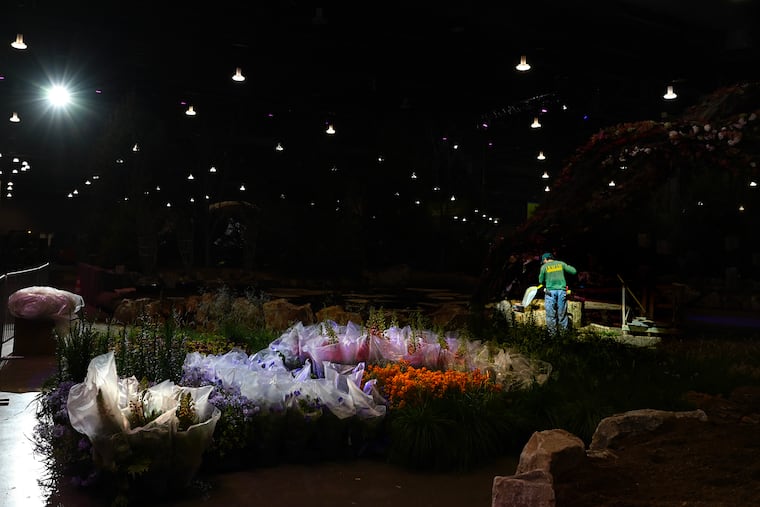
Most of the blooms are waiting to be unloaded from refrigerated trucks, and those inside the Convention Center are still wrapped in plastic. So I rely on close-ups, or take advantage of the play of color and light.
It is hard enough to convey the perfumes of thousands of blooms in the air with mere photos — or the vibrant color of the petals in the meticulously designed displays. Imagine trying to showcase it all in black-and-white.
That’s my photo on the cover of The Inquirer Weekend section on the left, from 40 years ago when the Flower Show was at the Philadelphia Civic Center in University City. David Swanson made the close up on tje right 30 years ago, the year the show moved to the new Pennsylvania Convention Center.
When The Inquirer and Daily News knew we were switching from black-and-white to color presses a forward-thinking photo editor had us pop in a roll of color negative film while covering some events so we’d have some color photographs in the files when the time came. (That finally happened in March of 1993. In a focus group a few years earlier, loyal readers “were horrified” when they were shown a prototype of a possible color Inquirer.)
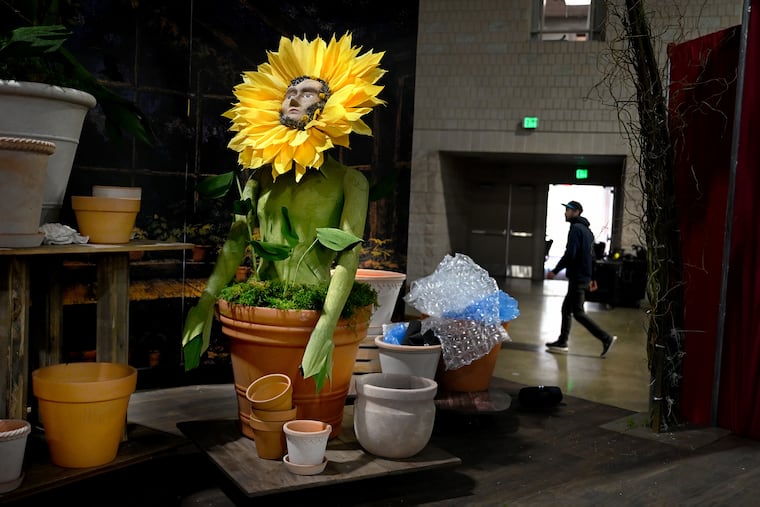
A flower pot prop, part of the display titled “Rooted in Love” by Jennifer Designs of Mullica Hill, Gloucester County, waiting for installation on Tuesday.Read moreTom Gralish / Staff Photographer
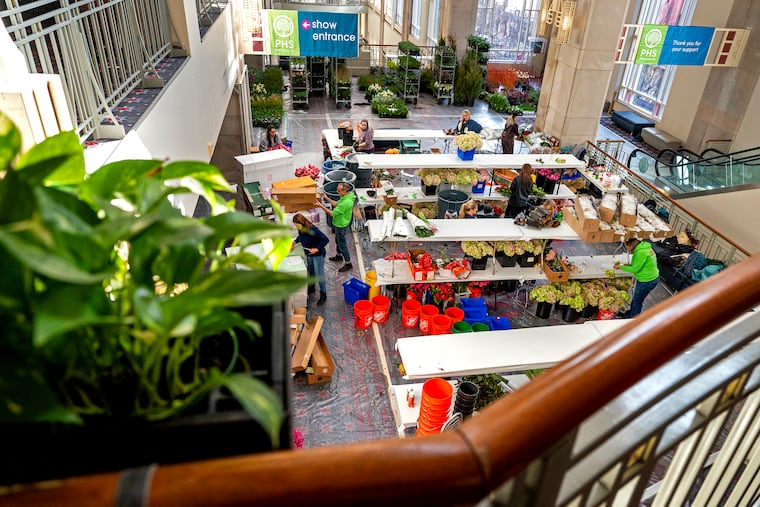
Workers unbox and prepare cut flowers in the hallway at the Convention Center.Read moreTom Gralish / Staff Photographer
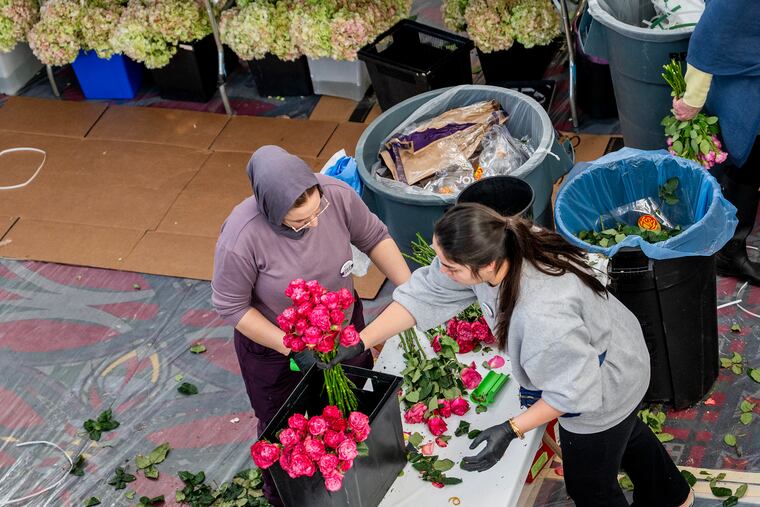
Bouchard Baba (left) and Burcu Gulsoy prepare rose stems.Read moreTom Gralish / Staff Photographer
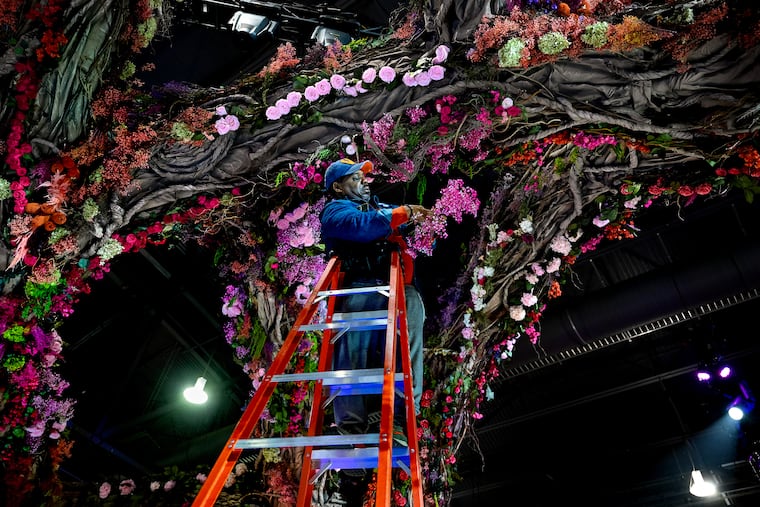
James Walker with Valley Forge Flowers places baby’s breath on a large overhead sweeping, twisting root structure. It is part of the entrance garden, “The Forest Floor”at the show, produced by PHS with designer Gary Radin of GMRdesign. Read moreTom Gralish / Staff Photographer
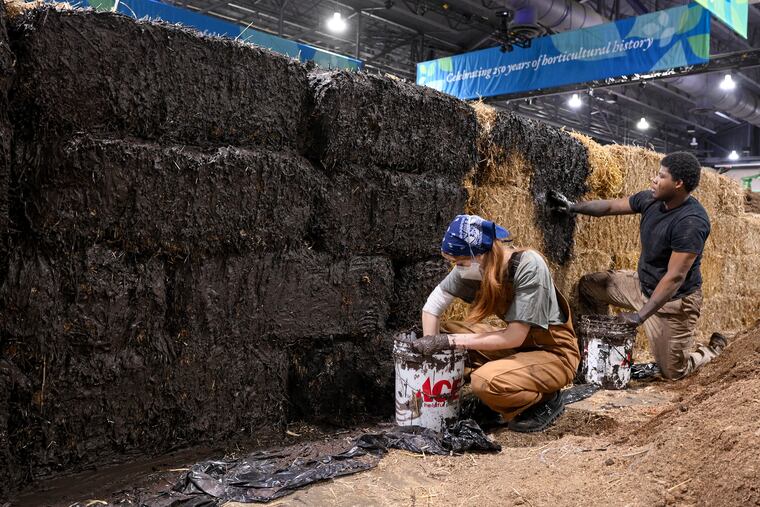
Sophie Pawlak (left), with Unknown Studio Landscape Architecture & Urban Design of Baltimore, MD, works with Nafi Kinard, a student at Williamson College of the Trades in Media, packing mud on the sides of hay bales. The “earthen plaster” is part of the “American Landscape Showcase.” Read moreTom Gralish / Staff Photographer
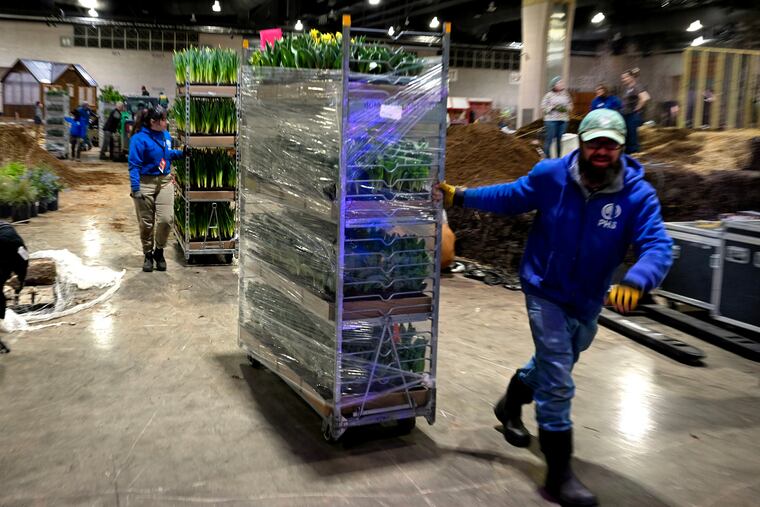
PHS staffers Margie Ricchezza and Todd Greenberg (right) wheel in carts of daffodils.Read moreTom Gralish / Staff Photographer
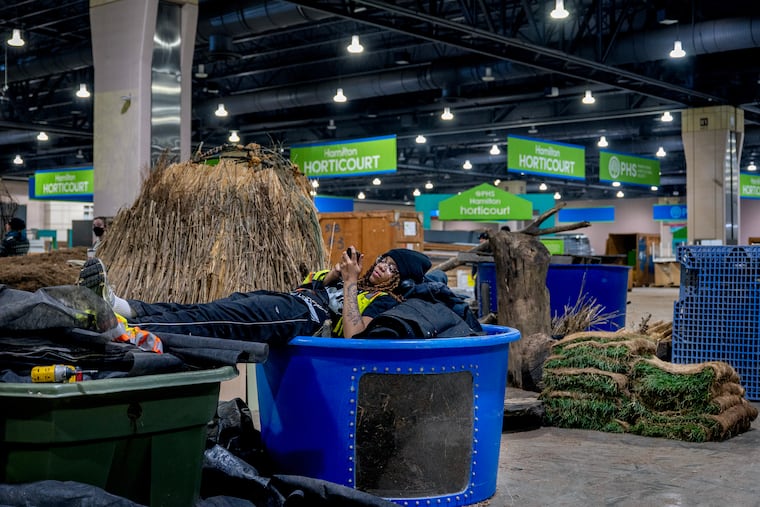
Lynasia Allen, a horticulture junior at W.B. Saul High School is on lunch break, while setting up the school’s exhibit titled, “Up-Rooted, Re-Planted.”Read moreTom Gralish / Staff Photographer
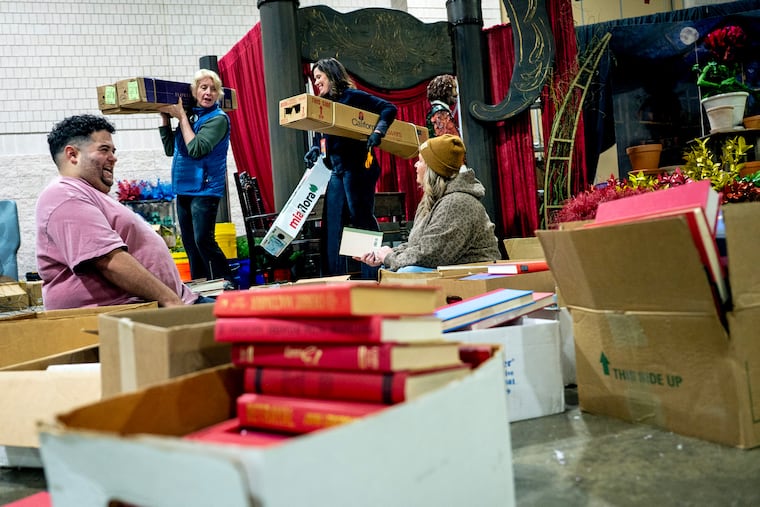
Angel Hancock (left, seated) and Kelli Sandifer work on prop books as Nickey Mullen (left, standing) and Jennifer Reed bring boxed flowers to their display, “Rooted in Love.” Reed, the founder of Jennifer Designs, won the Flower Show’s Best in Show – Floral award last year. Read moreTom Gralish / Staff Photographer
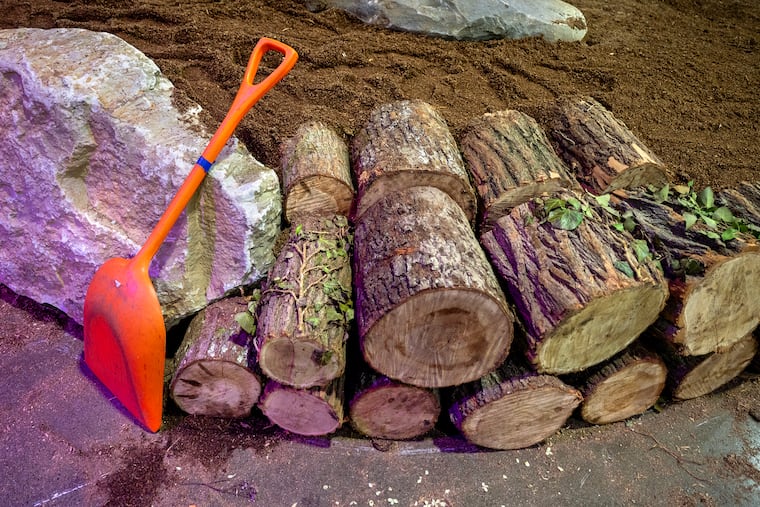
Horticultural props await setting up at the Convention Center Tuesday, Feb. 24, 2026, for the PHS Philadelphia Flower Show opening to the public on Feb. 28. The theme of the nation’s largest and longest-running horticultural event this year is “Rooted: Origins of American Gardening.”Read moreTom Gralish / Staff Photographer
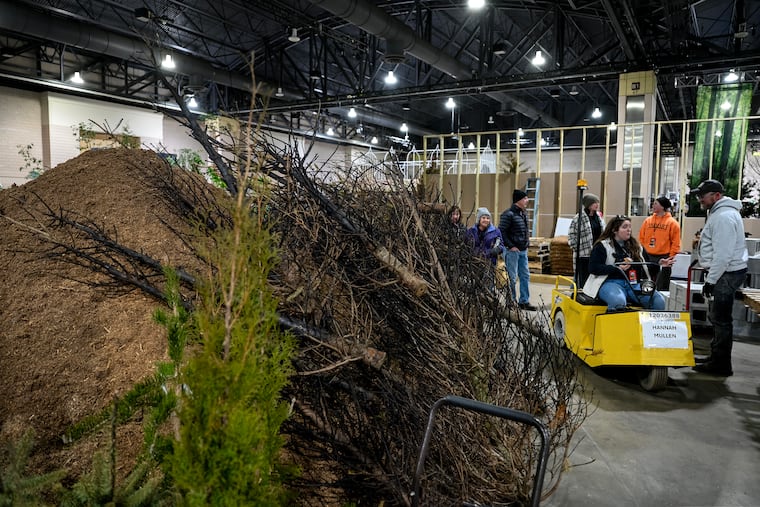
Recycled and burned Christmas trees await setting up at display by Laurel-Brook Gardens of Belleville, Pa. titled “Phoenix Rising” about regrowth after a wild fire.Read moreTom Gralish / Staff Photographer
Technicians adjust the Convention Center lighting as Andres Ceballos with Irwin Landscaping in Hockessin, Delaware works in the entrance garden, “The Forest Floor.”Read moreTom Gralish / Staff Photographer
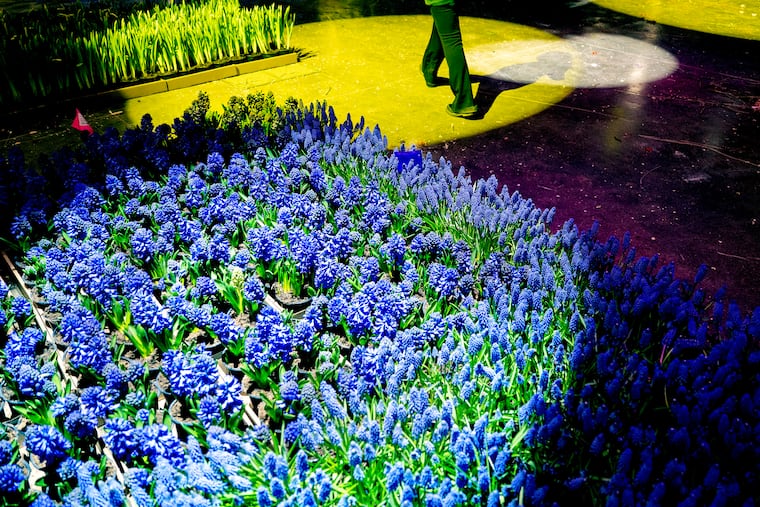
Awaiting placement in the entrance garden, hyacinths are in the spotlight as the lighting is adjusted.Read moreTom Gralish / Staff Photographer
Natalie Ross with Kelly D. Norris, of Des Moines, Iowa places sod behind a white picket fence at the Convention Center Tuesday, Feb. 24, 2026, setting up for the PHS Philadelphia Flower Show. The display is part of the “American Landscape Showcase” and is titled, “American Anemoia.”Read moreTom Gralish / Staff Photographer
I don’t know yet if I’ll be back at the Flower Show this week, or if another photographer will be assigned, but you can count not only on seeing live coverage, but some of the photos again before the 2027 show.
Favorite assignment anniversary
Speaking of anniversaries and black-and-white photography, I am often asked if I have a favorite assignment.
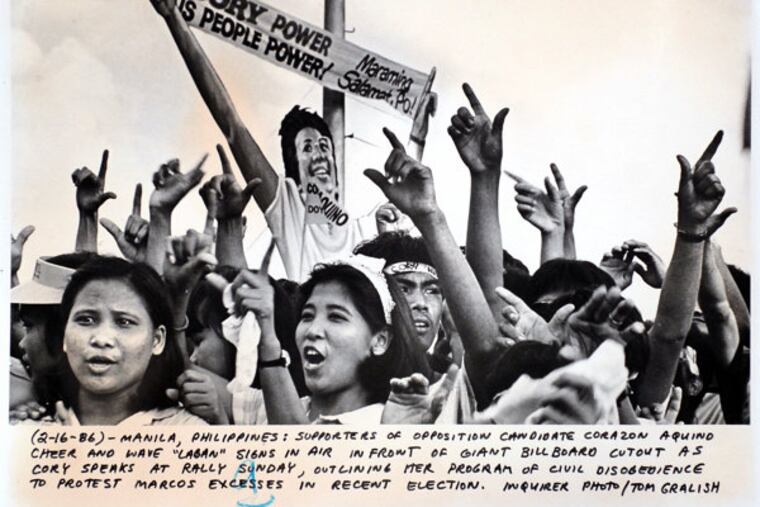
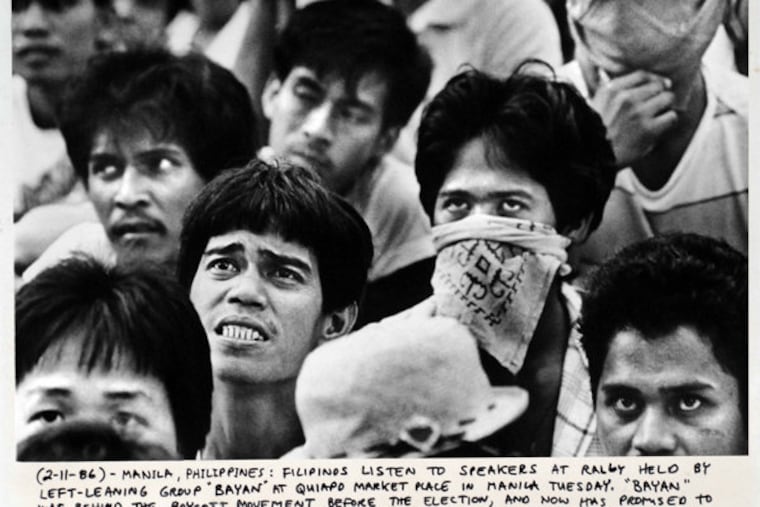
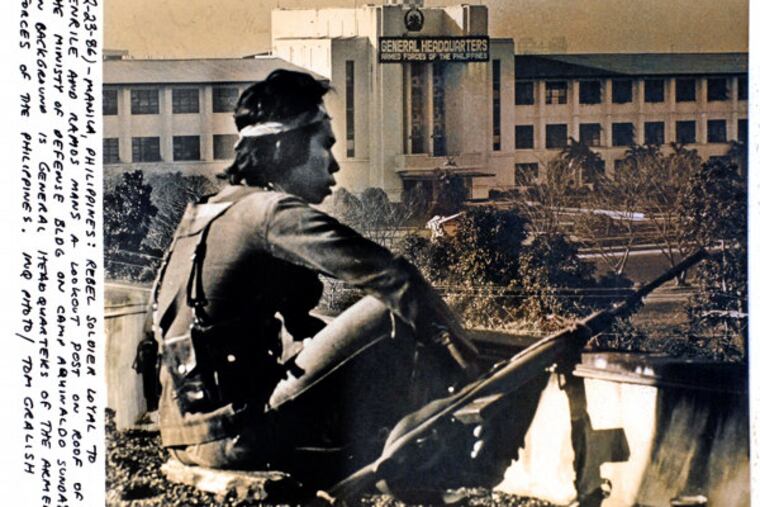
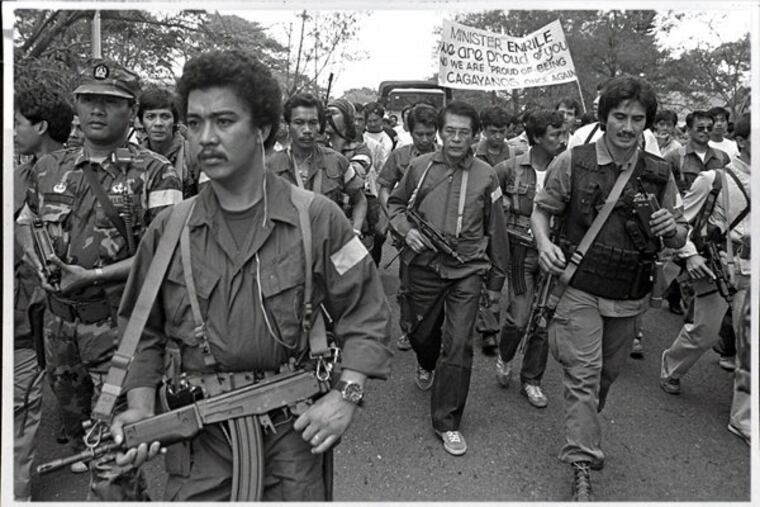
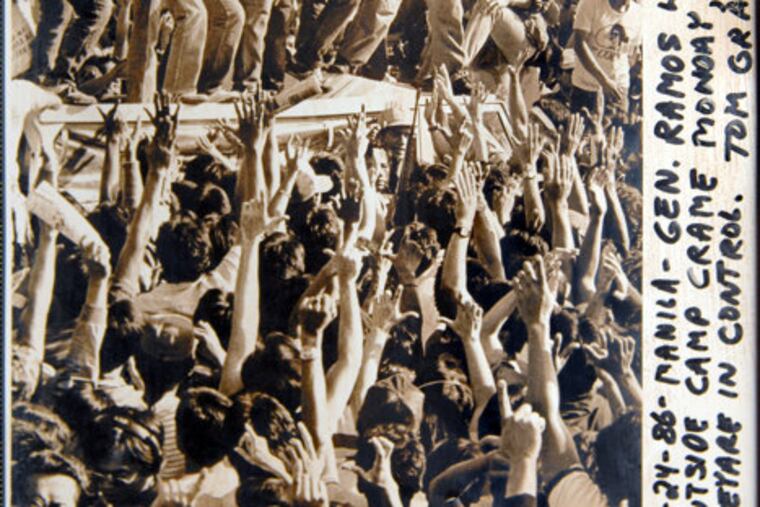
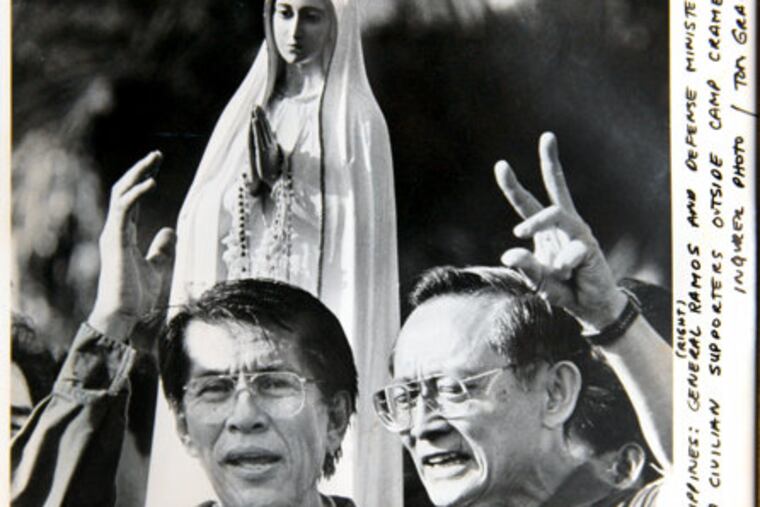
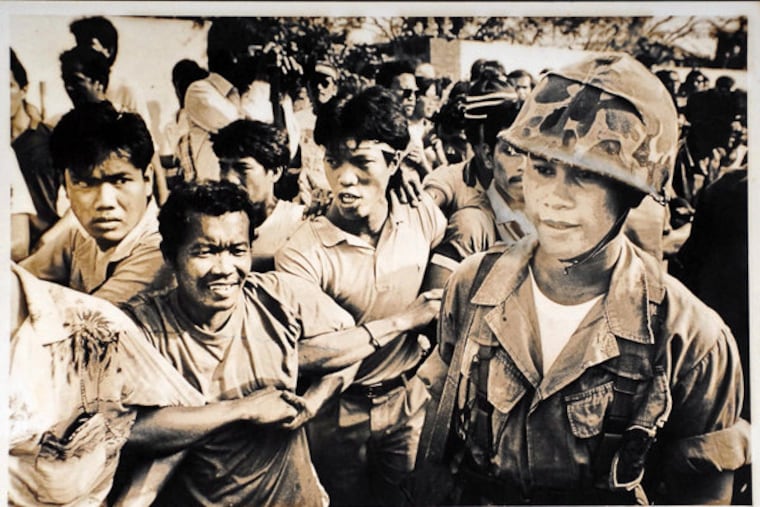
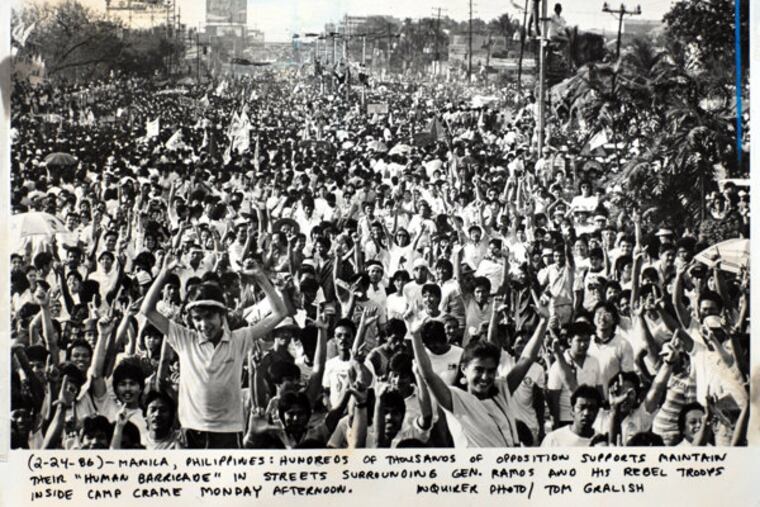
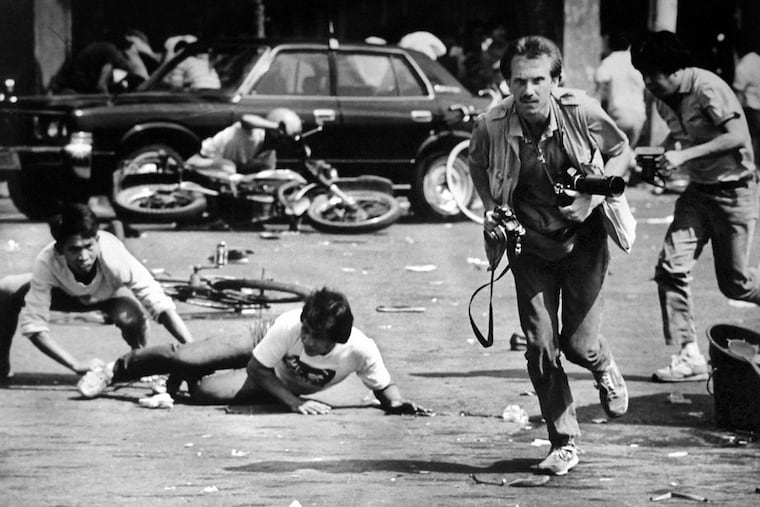
It was 40 years ago this week that I made the Weekend Flower Show cover photo above — days after returning from six weeks in the Philippines. I was there as millions of Filipinos took to the streets in a “People Power” revolution (also known as the EDSA Revolution).
The nonviolent revolution led to the ouster of President Ferdinand Marcos as Corazon “Cory” Aquino became the country’s 11th president. It was seen as a model for similar uprisings that occurred around the world in the following years, from the occupation of Tiananmen Square to the Fall of Communism and the Arab Spring.
These images are the original prints — developed in a hotel bathroom I converted into a darkroom — transmitted back to The Inquirer in January and February of 1986.
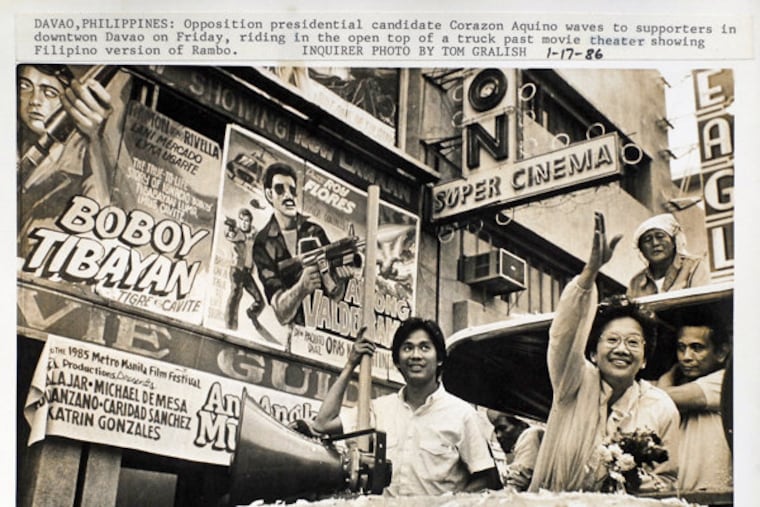
Corazon "Cory" Aquino, the widow of assassinated Marcos critic Ninoy Aquino was selected by the opposition to run against Marcos. She campaigned throughout the Philippines, here in the city of Davao, on the Island of Mindanao on Jan. 17, 1986.Read moreTOM GRALISH / Staff Photographer
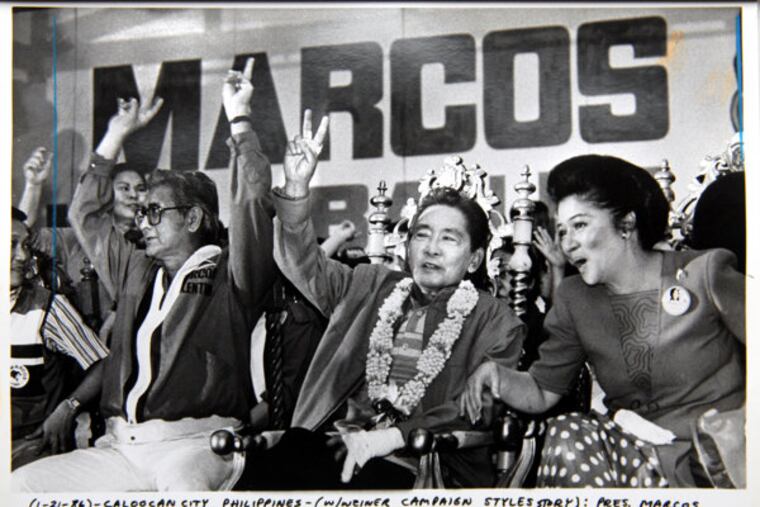
Under pressure from the United States, Philippine president Ferdinand Marcos declared a "snap election" for Feb. 7, 1986. This campaign appearance with wife Imelda was in Manila on Jan. 21, 1986.Read moreTOM GRALISH / Staff Photographer
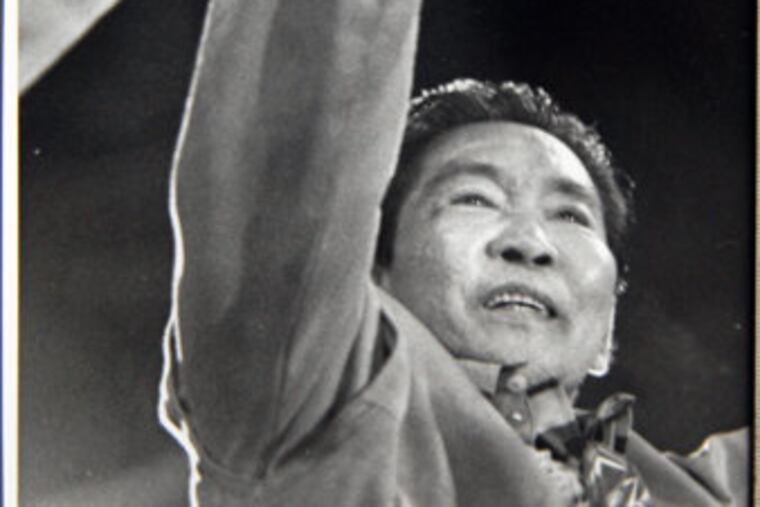
Ferdinand Marcos was first elected president in 1965 and was re-elected before being barred from running for a third term. So in 1972, by virtue of a presidential proclamation, he declared martial law, ruling until the snap election. He campaigned Jan. 27, 1986 in Manila, even as his health and strength were suspect.Read moreTOM GRALISH / Staff Photographer
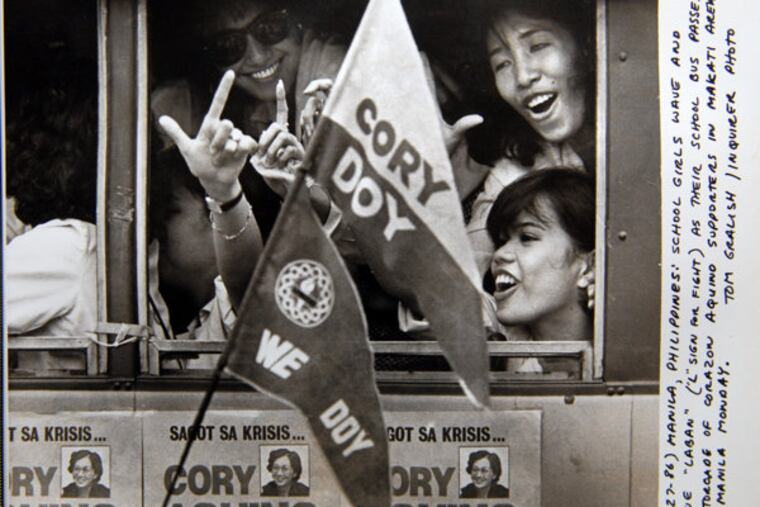
School girls react on their bus as it passes a motorcade of Aquino supporters in the Makati Section of Manila Jan. 27, 1986Read moreTOM GRALISH / Staff Photographer
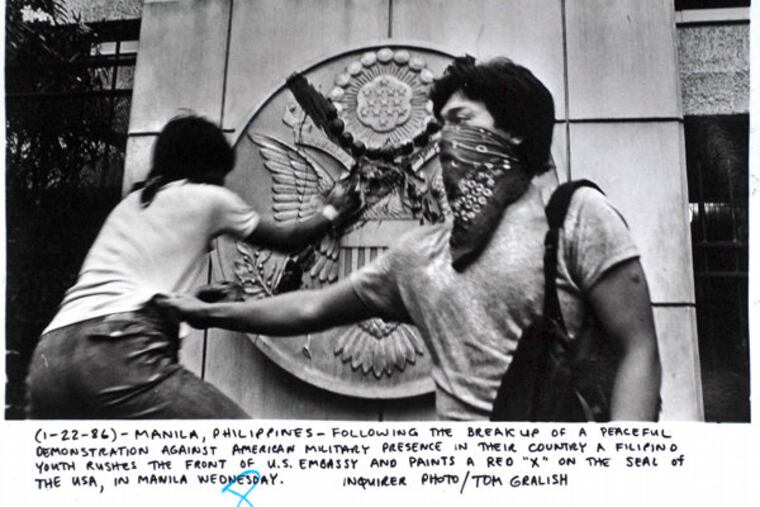
Following a peaceful protest against the presence of American military bases on Philippine soil, two young men wearing masks broke through the crowd and sprayed red paint the U.S. seal, in front of the American Embassy in Manila Jan. 22, 1986.Read moreTOM GRALISH / Staff Photographer
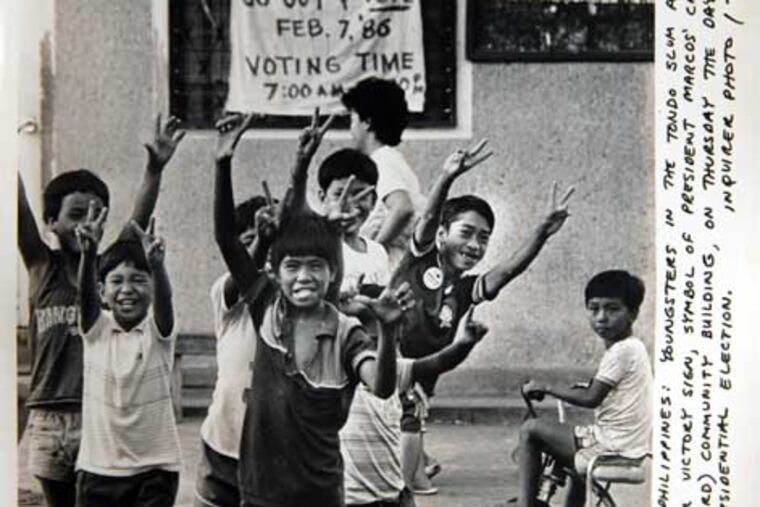
Youngsters in the Tondo slum area of Manila flash the "V" sign symbol of President Marcos' campaign in front of a polling place Feb. 6, 1986 the day before the national snap election.Read moreTOM GRALISH / Staff Photographer
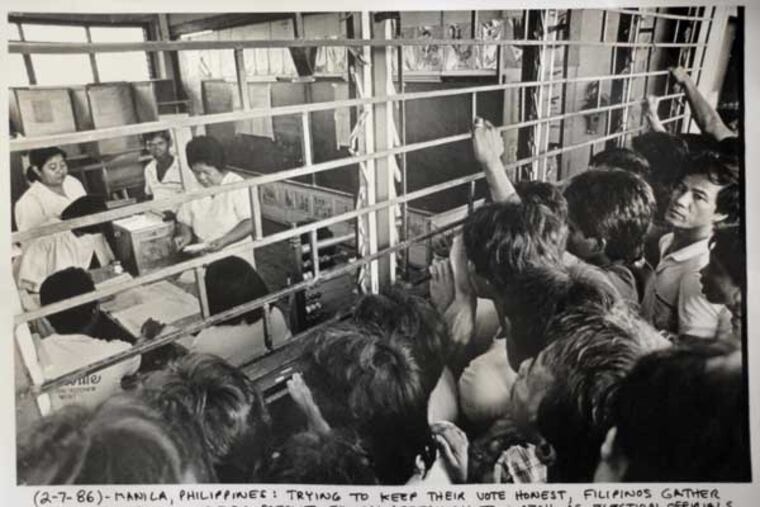
Filipinos gather outside window of the San Isidro precinct poling place Feb. 7, 1986, as election officials count the ballots. National observers were permitted inside, but the general public was kept out.Read moreTOM GRALISH / Staff Photographer
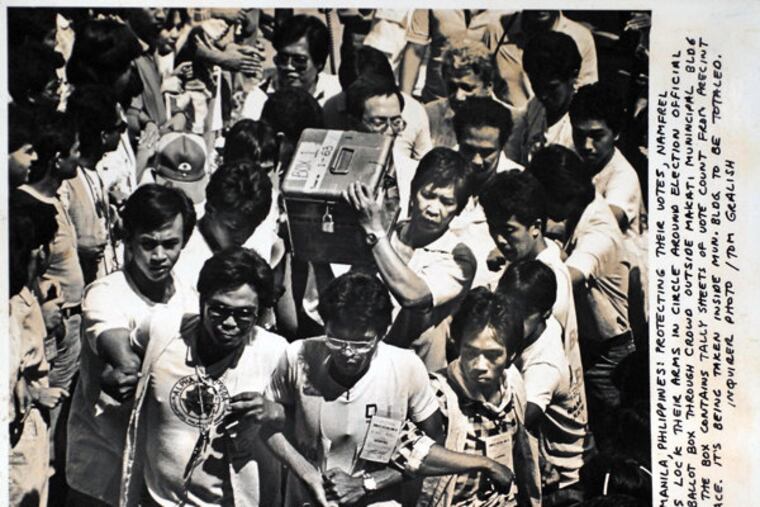
Following the snap election, volunteer citizens lock arms in a circle of protection around an election official carrying a full ballot box to be counted Feb. 8, 1986.Read moreTOM GRALISH / Staff Photographer
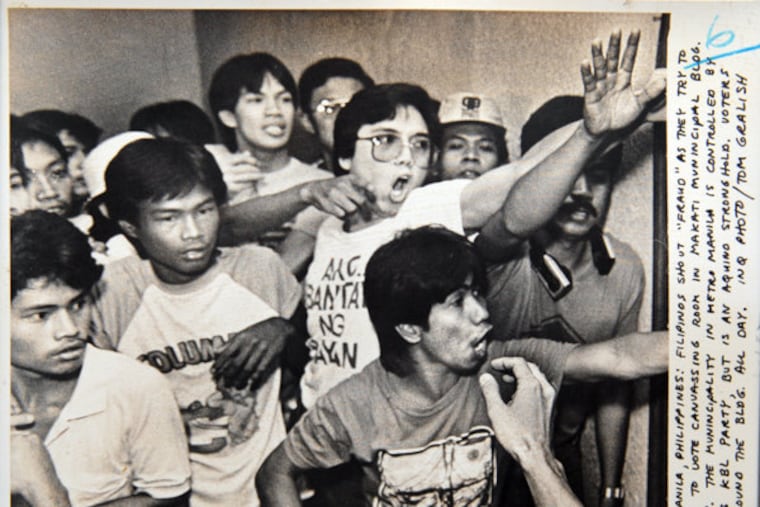
Shouting "fraud," Filipinos try to gain access to ballot canvassing room in the Makati Municipal Building Feb. 8, 1986, the day after the snap election. The municipality was controlled by Marcos' Kilusang Bagong Lipunan (KBL) party but the neighborhood was a stronghold of Aquino's United Opposition (UNIDO) party.Read moreTOM GRALISH / Staff Photographer
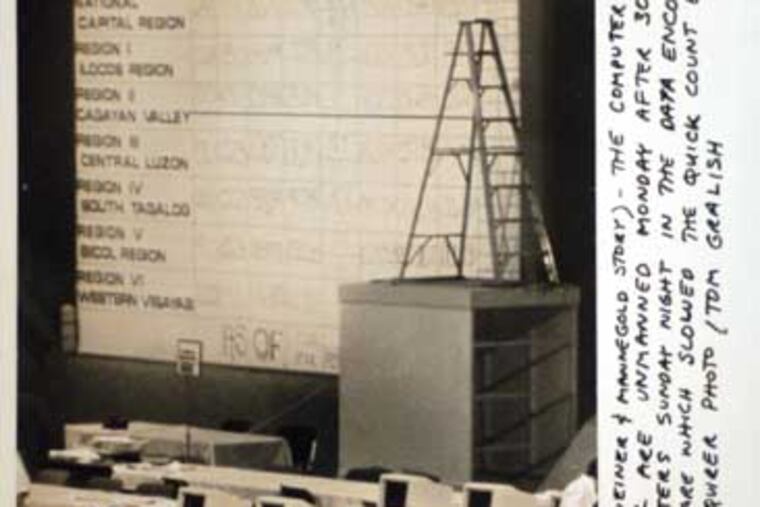
One of the first steps toward the revolution came on Feb. 9, 1986, when 29 computer workers at the official COMELEC (Commission on Elections) tabulation center walked out to protest their supervisors tampering with election results. Mostly young, and admittedly scared, they took refuge in a nearby church.Read moreTOM GRALISH / Staff Photographer
Marcos was proclaimed winner of the election, which was marred by widespread reports of violence, and allegations of vote-buying, fraud and tampering of results, so Aquino continued to rally Filipinos against Marcos. On Feb. 16, 1986, supporters listened as she outlined her program of civil disobedience.Read moreTOM GRALISH / Staff Photographer
Filipinos listen to speakers at a market place rally in the Quiapo section of Manila Feb. 11, 1986 by the group "Bayan" which had urged voters to boycott the elections. The group promised "peaceful but militant" mass actions.Read more
On Saturday, Feb. 22, 1986 members of the Reform the Armed Forces Movement began a coup against longtime dictator Marcos. A few hundred soldiers, with no air support, no armored vehicles, and no heavy artillery holed up in Camp Aguinaldo calling for the President’s resignation. A rebel stood watch on the roof the following morning.Read moreTOM GRALISH / Staff Photographer
Leaving Camp Aguinaldo on Sunday, Feb. 23, 1986, Defense Minister Juan Ponce Enrile (center) makes his famous crossover to Camp Crame, where he would join Vice Chief of Staff of the Armed Forces Lt. General Fidel V. Ramos. The reason, Enrile said later: the buildings at Crame were stronger. At right is Col. Gregorio ‘Gringo’ Honasan, who was originally set to lead a suicide attack against Malacanang Palace.Read moreTOM GRALISH / Staff Photographer
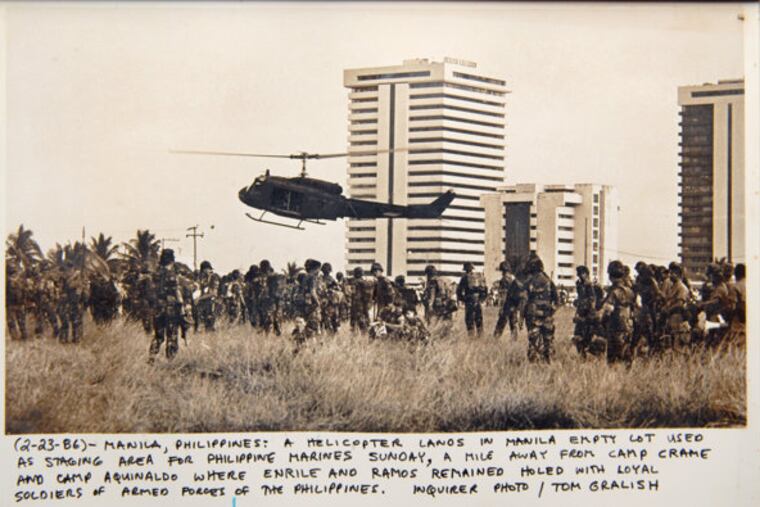
On Sunday, Feb. 23, 1986, government helicopters land in a staging area for Philippine Marines sent my Marcos to quell the opposition. Thousands of Filipinos continued to arrive to prevent the troops from moving in on Camp Crame where Gen. Ramos and his military defectors remained holed up.Read moreTOM GRALISH / Staff Photographer
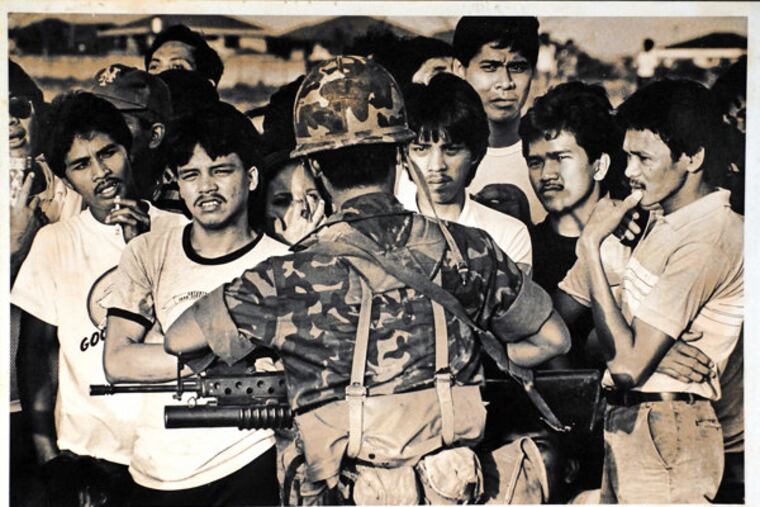
Manila's Catholic Archbishop Jaime Cardinal Sin broadcast appeals over the radio for citizens to support the rebels, so Filipinos arrived to stand up to the government troops Sunday Feb. 23, 1986.Read moreTOM GRALISH / Staff Photographer
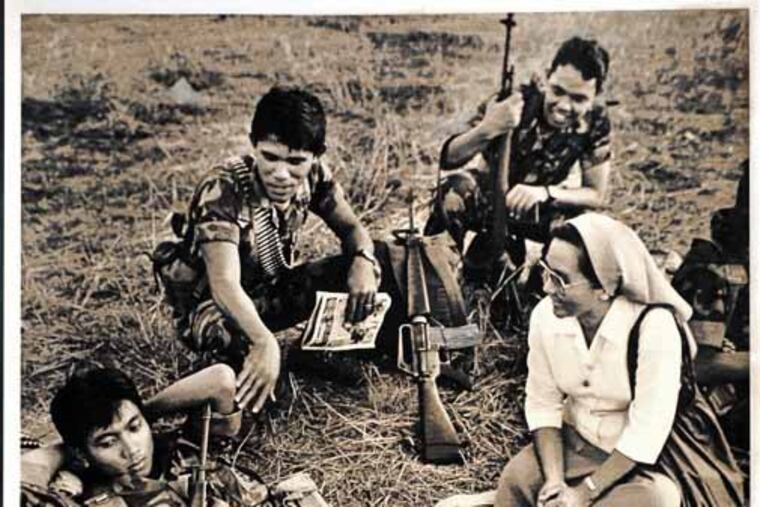
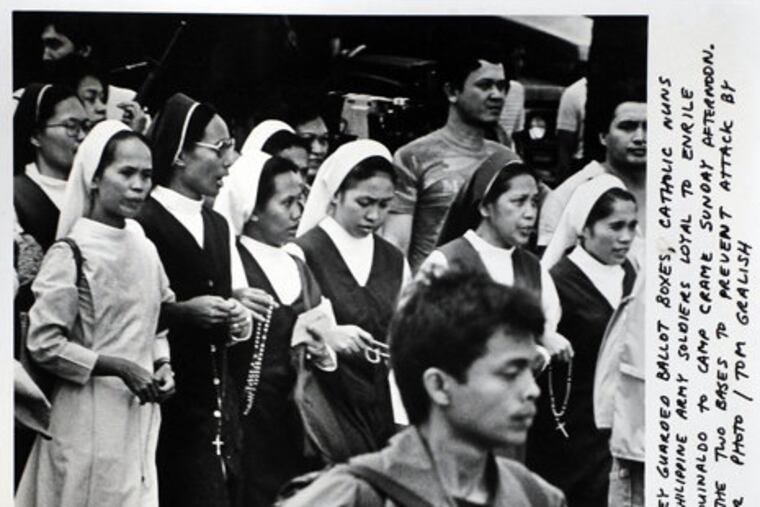
As Marcos' troops arrived at staging areas near Camp Crame, nuns armed with only rosaries, prayers, and flowers, greeted the gun-wielding government soldiers Sunday, Feb. 23, 1986.Read moreTOM GRALISH / Staff Photographer
Nuns served as human shields as defectors from the Marcos military walked to the camp Sunday Feb. 23, 1986.Read moreTOM GRALISH / Staff Photographer
The mutinying leaders Ramos and Enrile (hidden) venture outside the camp gates to speak to the crowd outside Camp Crame Monday, Feb 24, 1986.Read moreTOM GRALISH / Staff Photographer
The leaders of the revolution, Ramos (right) and Enrile address the crowds massed outside Camp Crame Monday, Feb. 24, 1986, declaring they now control the military and that Corazon Aquino is the rightful President of the Philippines.Read moreTOM GRALISH / Staff Photographer
Defections of soldiers continue Monday, Feb. 24, 1986, and just as they had for workers transporting ballot boxes after the snap election, Filipino citizens lock arms to provide a save corridor.Read moreTOM GRALISH / Staff Photographer
By Monday, Feb. 24, 1986 the crowds swarming Epifanio de los Santos Avenue - known as the EDSA highway - grow to over one million.Read moreTOM GRALISH / Staff Photographer
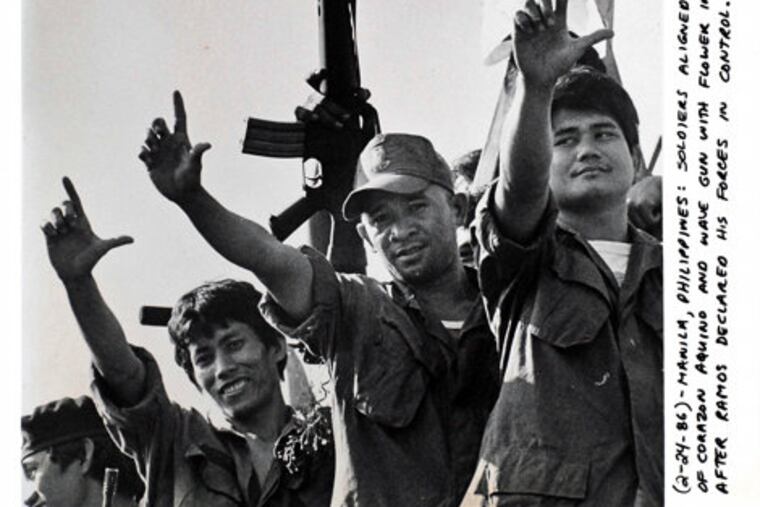
Soldiers aligned with Gen. Ramos flash the "Laban" sign of Aquino's campaign as the standoff continues on the EDSA Monday, Feb. 24, 1986.Read moreTOM GRALISH / Staff Photographer
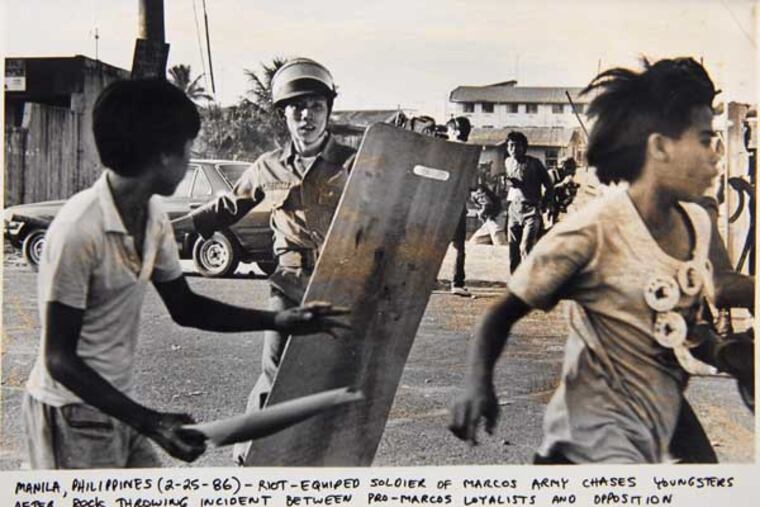
Following the dual inaugurations Feb. 25, 1986, riot-equipped soldiers chase youngsters after a rock throwing clash between pro-Marcos loyalists and Aquino supporters outside the gates of the presidential palace Malacanang.Read moreTOM GRALISH / Staff Photographer
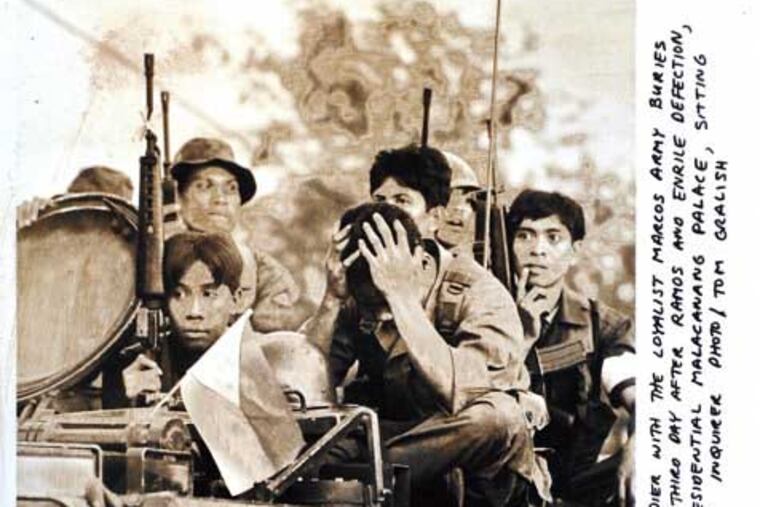
Troops loyal to Marcos remain on guard atop armored personnel carriers on the perimeter of Malacanang Palace after both Aquino and Marcos completed iinaugurations Feb. 25, 1986.Read moreTOM GRALISH / Staff Photographer
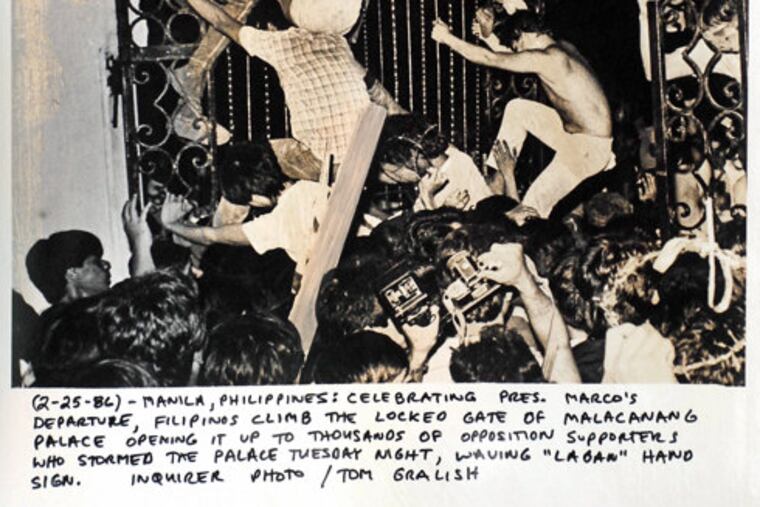
After Marcos took his oath of office, opposition crowds began to gather outside his palace. Marcos tried to reach President Reagan, but his intermediary, U.S Sen. Paul Laxalt told Marcos, "Cut and cut cleanly...The time has come." On the evening of Feb. 25, 1986, American helicopters evacuated Marcos and his family. When the people outside Malacanang heard the news, they climbed over the palace gates.Read moreTOM GRALISH / Staff Photographer
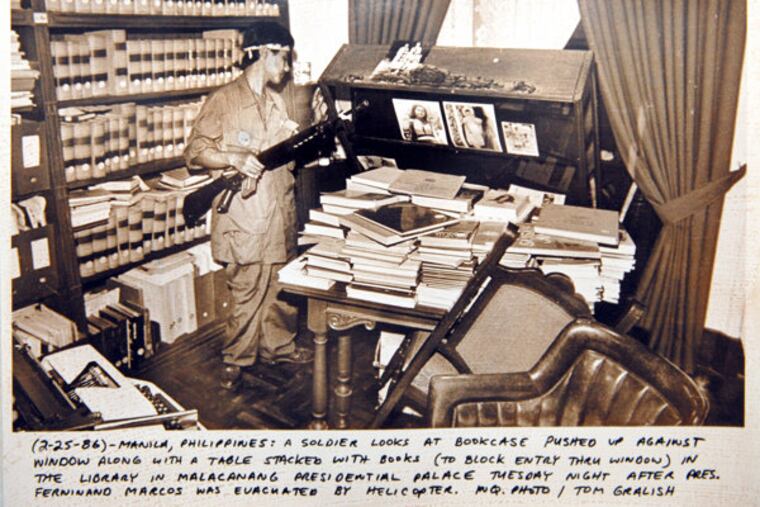
A soldier examines a bookcase and table stacked with books propped against a window in the library of Malacanang Palace Feb.25, 1986 after Ferdinand Marcos and his family were evacuated by helicopter hours earlier.Read moreTOM GRALISH / Staff Photographer
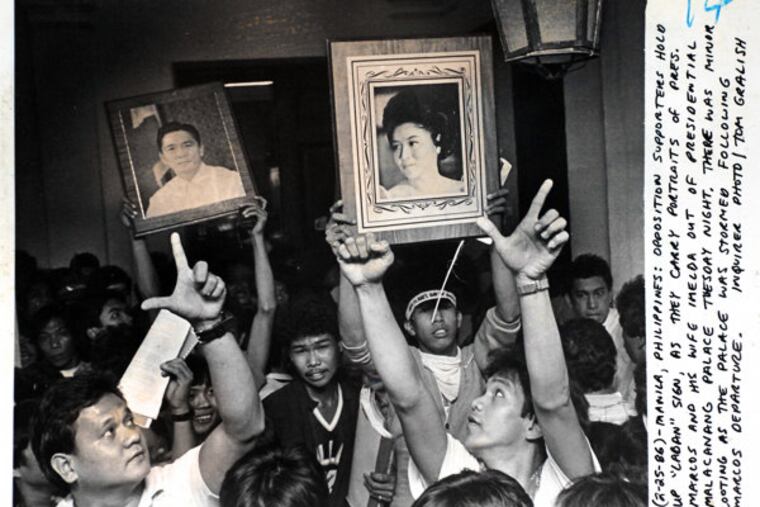
Supporters of Corazon Aquino carried portraits of President Marcos and his wife from the palace Feb. 25, 1986. It would be days before anyone discovered the 2,700 pairs of shoes that Imelda Marcos left behind in a cellar under her bedroom.Read more
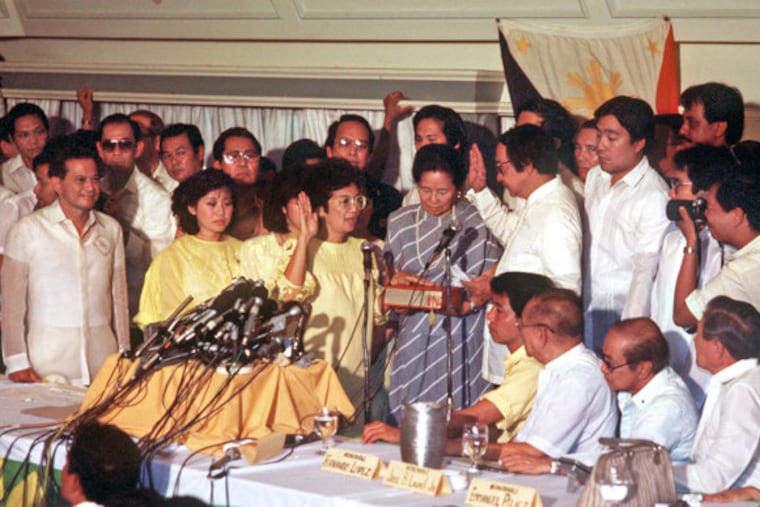
Maria Corazon "Cory" Cojuangco Aquino is inaugurated as President of the Philippines, Feb. 25, 1986. Holding the bible is Aurora Aquino, the mother of her assassinated husband, Ninoy Aquino. At far left is Vice-President Doy Laurel. An hour later President Ferdinand E. Marcos took a similar oath at Malacanang Palace, and later that evening, was transported out of the country with his family by American helicopters. He ended up in Hawaii, where he died in exile three years later.Read moreTOM GRALISH / Staff Photographer
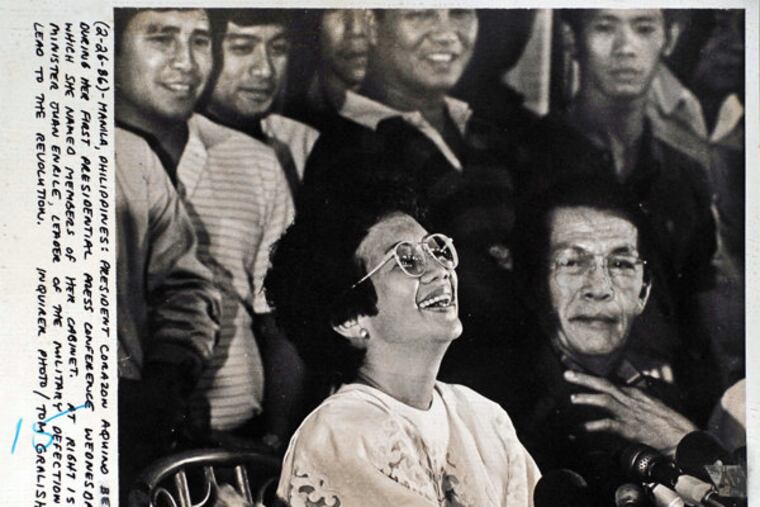
President of the Philippines Corazon Aquino names her cabinet during her first presidential press conference Feb. 26, 1986. At right is her Defense Minister, Juan Ponce Enrile who held the same post in the Marcos administration.Read more
Philadelphia Inquirer staff photographer Tom Gralish outside Malacañang, the presidential palace in Manila, Feb. 23, 1986.Read moreBill Hogan / The Chicago Tribune
Since 1998 a black-and-white photo has appeared every Monday in staff photographer Tom Gralish’s “Scene Through the Lens” photo column in the print editions of The Inquirer’s local news section. Here are the most recent, in color: