In his new book, Gov. Josh Shapiro recalls an ‘offensive’ vetting process to be Kamala Harris’ running mate
In Shapiro’s memoir set to publish later this month, he recalls being asked by Harris’ vetting team if he had ever been “an agent of the Israeli government,” among other new details.
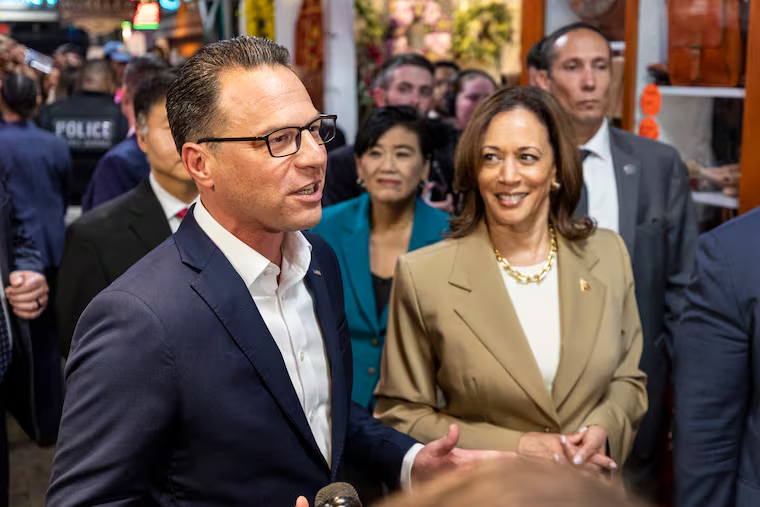
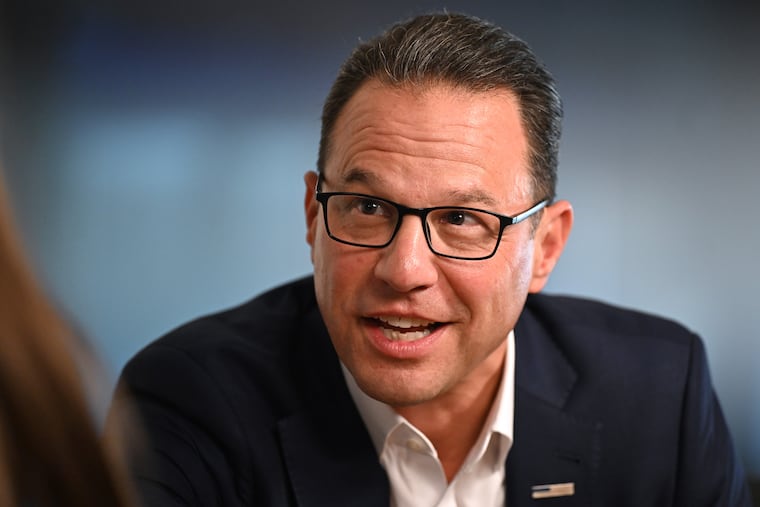
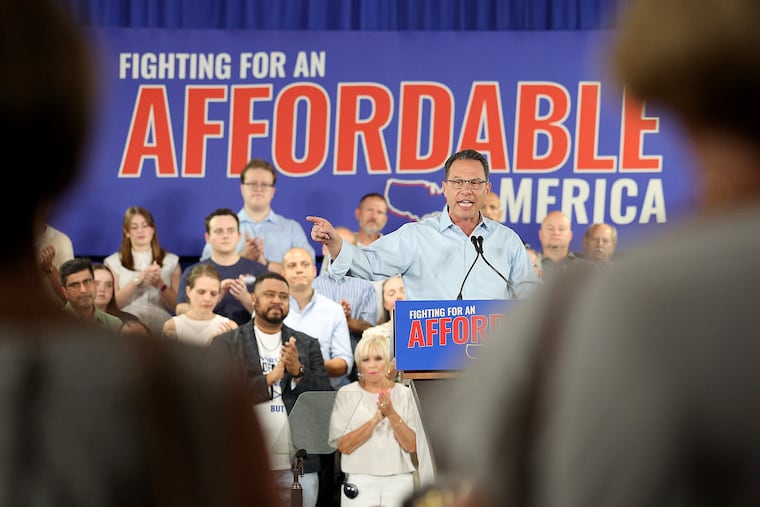
Pennsylvania Gov. Josh Shapiro questioned whether he was being unfairly scrutinized as the only Jewish person being considered as a finalist to be Vice President Kamala Harris’ running mate — and briefly entertained his own run for the presidency — according to a copy of his upcoming book obtained by The Inquirer.
In his memoir, Where We Keep the Light, set to debut on Jan. 27, Shapiro wrote that he underwent significant questioning by Harris’ vetting team ahead of the 2024 presidential election about his views on Israel, and his actions supporting the end of pro-Palestinian protests at the University of Pennsylvania — leading him to wonder whether the other contenders for the post had faced the same interrogation.
Shapiro, a popular Democratic governor long rumored to have future presidential ambitions, even briefly entertained a run shortly after then-President Joe Biden unexpectedly dropped out of the race in July 2024, according to his book. The Abington Township resident is now seen as a top contender for the 2028 Democratic nomination as he seeks reelection in Pennsylvania this year.
» READ MORE: Josh Shapiro’s reelection campaign in Pennsylvania starts now — but 2028 looms large
But before Shapiro ended up in the veepstakes for Harris’ running mate, he wrote in his book that there was a moment right after Biden dropped out of the race where he considered whether he should run for president.
“Well, now what?” Shapiro wrote. “Maybe there would be a process the party would engage in to replace him? Did I want to be part of that?”
He called his wife, Lori, who at the time was out of the country with their two younger kids. “I don’t think we are ready to do this,” Shapiro recalled his wife saying from a Walmart in Vancouver. “It’s not the right time for our family. And it’s not on our terms.”
After that call, Shapiro wrote that he quickly decided he didn’t want to run and would back Harris, as Biden also endorsed her for the top of the ticket.
Once the field cleared for Harris, Shapiro recalled seeing his face on TV as her potential running mate, before he was asked by her campaign manager to be formally vetted.
In the days that followed, Shapiro contended with increasing national scrutiny as he emerged as a front-runner. Some pro-Palestinian protesters began calling Shapiro “Genocide Josh” online, he wrote. And top Democrats questioned whether a Jewish running mate would deter voters from supporting Harris, as Shapiro had been outspoken against some pro-Palestinian campus protests that year.
What was unknown: Whether those same questions — and some even more extreme — were circulating within Harris’ camp, Shapiro wrote in his most detailed retelling of his experience vying for the vice presidency to date.
Just before he went to meet with Harris at the vice president’s residence in the summer of 2024, Shapiro received a call from Dana Remus, former White House counsel for Biden who was coleading the vetting process for Harris.
“Have you ever been an agent of the Israeli government?” Remus asked, according to Shapiro’s memoir.
“Had I been a double agent for Israel? Was she kidding?” Shapiro wrote in his 257-page book. “I told her how offensive the question was.”
According to the memoir, Remus then asked if Shapiro had ever communicated with an undercover Israeli agent, which he shot back: “If they were undercover… how the hell would I know?”
“Remus was just doing her job. I get it. But the fact that she asked, or was told to ask that question by someone else, said a lot about some of the people around the VP,” Shapiro wrote.
In high school, Shapiro completed a program in Israel that included service projects on a farm, and at a fishery in a kibbutz, as well as at an Israeli army base, which he once described in his college student newspaper as “a past volunteer in the Israeli army.”
Harris’ office could not be reached for comment Sunday evening. Remus also could not immediately be reached for comment Sunday.
Shapiro, more broadly, recalled getting the feeling from Harris’ vetting team that she should pick Shapiro — a popular Democratic governor in a critical swing state — but that they had reservations about whether Shapiro’s views would mesh with Harris’.
In one vetting session with U.S. Sen. Catherine Cortez Masto (D., Nev.), former Labor Secretary Marty Walsh, former associate Attorney General Tony West, and former senior Biden adviser Cedric Richmond, Shapiro wrote that he had been questioned “a lot” about Israel, including why he had been outspoken against the protests at Penn.
“I wondered whether these questions were being posed to just me — the only Jewish guy in the running — or if everyone who had not held a federal office was being grilled about Israel in the same way,” he wrote. (Illinois Gov. JB Pritzker, who is Jewish, was also vetted to be Harris’ running mate. Harris’ husband, Doug Emhoff, is also Jewish.)
In his book, Shapiro recalled the whirlwind two weeks as an awe-inspiring window into an opportunity — but ultimately it was one he knew he didn’t want.
When Shapiro finally sat down with Harris in the dining room at the Naval Observatory, he said it became clear that she had a different vision for the vice presidency than what he wanted. He would work primarily with her staff and couldn’t say whether he would have access to her. In her own experience as vice president, she saw the job as mostly to make sure that you aren’t making any problems for the president, he wrote.
Shapiro noted his own relationship with his No. 2, Lt. Gov. Austin Davis. The role in itself has few powers, but Shapiro views Davis as a governing partner and is one of few people who can walk into his office unannounced at any time, he wrote. He wanted the same relationship with Harris, he said, noting that he knew he would not be the decision-maker.
“If we had door A and door B as options, and she was for door A and I was for door B, I just wanted to makes sure that I could make the case for door B,” Shapiro wrote.
But Harris was “crystal clear” that that wasn’t the kind of president-vice president dynamic she envisioned, he said.
In her own book released last year, 107 Days, Harris recalled the meeting differently. There, she wrote that Shapiro had “peppered” her with questions and “mused that he would want to be in the room for every decision.” His ambitions, she said, didn’t align with her view that a vice president should be a No. 2 and not a “copresident.”
» READ MORE: Kamala Harris opens up about Joe Biden’s weird Philly phone call, Josh Shapiro’s VP interview, and more
As Shapiro tells it, the friction with Harris’ team didn’t stop there.
Shortly after meeting with Harris, Shapiro in his book recalled another unpleasant conversation with Remus, in which he wrote that she said she “could sense that I didn’t want to do this.”
According to the book, Remus said it would be hard for Shapiro to move to Washington, it would be a strain financially for his family who “didn’t have a lot of money” by D.C. standards, and that Lori would need to get a whole new wardrobe and pay people to do her hair and makeup.
It was then that he decided to leave the apartment where he had been asked to wait until Harris could come and talk to him again, he recalled.
“These comments were unkind to me. They were nasty to Lori,” Shapiro wrote. “I hold no grudge against Remus, who I know was doing the job she had to do, but I needed to leave.”
Shapiro went home, he said, and went over the day’s events with Lori at the edge of their bed.
“On one hand, I was still tugged by the prestige of it all. It’s an honor. It’s a big title. But that’s never been enough for me,” he wrote. Still, he struggled with what it would mean to withdraw, concerned about not playing his part in a high-stakes election and letting his supporters down. Ultimately, he decided that it was not his race to win or lose, he wrote.
“People were going to cast their votes for her, or they weren’t,” he added.
He decided that day he did not want the job, and toyed with the idea about publicly releasing a statement withdrawing himself from the running. He said he also tried to tell Harris he did not think it would be a good fit, but wasn’t able to reach her.
Shortly thereafter, Harris announced that she had chosen Minnesota Gov. Tim Walz to be her running mate in an ultimately unsuccessful campaign against President Donald Trump. The two would debut their presidential ticket at a rally at the Liacouras Center in North Philadelphia. Shapiro wrote that he didn’t want to go.
“I was wrung out. I just wanted to be home with my family, to take a walk with Lori, and just be,” he wrote.
But when it was time for him to take the stage ahead of Walz and Harris, he was long-applauded by his home city and gave a speech “from my heart” about how he took pride in his faith and his support for Walz and Harris.
Shapiro’s memoir will be released Jan. 27 and is a reflection on his decades as an elected official, including as Pennsylvania attorney general, as well as the firebombing of his home last year. He will tout the book in Philadelphia on Saturday at 3 p.m. at Parkway Central Library. He will also discuss the book at upcoming book tour stops in New York and Washington.