Republicans’ grip on state power is also at risk in elections
Democrats appear on track to govern a majority of states across the country for the first time since 2010, which could create enormous advantages for the party in 2028 and beyond.
The national political obsession has focused on the House and Senate, and whether Republicans will lose their lock on federal power. But Election Day could deliver another profound swing in power.
Democrats appear on track to govern a majority of states across the country for the first time since 2010, which could create enormous advantages for the party in 2028 and beyond.
With three dozen states holding gubernatorial contests, the map holds a wealth of opportunities for Democrats in part because 19 are for open seats in a climate where the winds are blowing against the party in control.
Democrats are considered even bets against Republican opponents in Georgia, Iowa and Ohio — none of which has elected a Democratic governor in two decades. They are looking more competitive than just about anyone six months ago would have imagined in red bastions such as Texas and Florida. Meanwhile, they are battling to keep the executive offices in swing states that include Arizona, Michigan and Wisconsin.
A new balance of statehouse power across the map would culminate a dramatic comeback from the Democrats’ low mark nine years ago, when they held only 15 of the nation’s 50 governorships. The number now stands at 24, to the GOP’s 26.
Yet governors’ races rarely spark the passions of big Democratic donors the way Senate and House contests do.
“The map keeps getting bigger and bigger, but our budget stays the same,” said Meghan Meehan-Draper, executive director of the Democratic Governors Association.
So Democratic gubernatorial candidates are being heavily outspent. Adding to that disadvantage, two of their biggest chances to flip seats are in states where Democrats are up against self-funding billionaires.
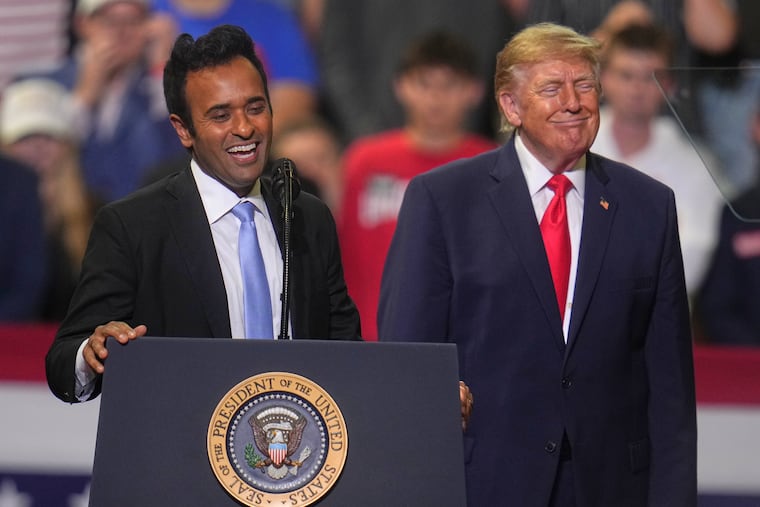
In Ohio, Republican Vivek Ramaswamy has put more than $36 million of his personal fortune into the contest where he holds a big lead in campaign spending against former state health director Amy Acton, the Democrats’ contender. In Georgia, the disparity is greater. Billionaire businessman Rick Jackson, the GOP contender, is expected by some to spend $200 million of his own money in his race against former Atlanta mayor Keisha Lance Bottoms.
This year’s battles have flipped some of the traditional scripts that Democrats followed when running for governor in conservative territory.
“I was always told, in a pretty red state, try not to nationalize the race, keep it about Kansas, keep it on the ground. So we always tried to insulate ourselves from Washington as much as possible,” said Kathleen Sebelius, who was Kansas governor from 2003 to 2009. “Just the opposite is going on this time, largely because the president’s policies are so unpopular across the country.”
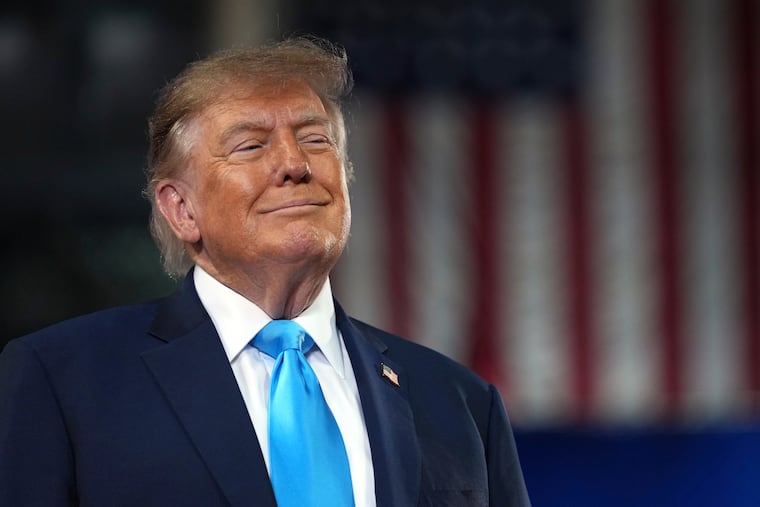
Democrats seeking to lash their opponents to President Donald Trump are also aided by the president, who demanded fealty in exchange for endorsements in Republican primaries and made sure candidates and voters knew his role in choosing them.
Some, including GOP nominee Byron Donalds in Florida, have quietly scrubbed mentions of Trump from their websites. Others have attempted to distance themselves by shifting their rhetoric, but that is a delicate and awkward exercise.
In January, Wisconsin GOP nominee Tom Tiffany pronounced himself “deeply honored” to have Trump’s endorsement, which effectively cleared the primary field for him. But he was less effusive in an interview last week, when Madison television reporter Vanessa Kjeldsen noted that recent polling showed only 38 percent in the state approved of the job that Trump is doing. She asked Tiffany whether he was among them.
“The president is doing what he believes is best for the United States of America,” Tiffany said. “What I’m focused on is being the best governor possible in Wisconsin.”
In a statement to The Washington Post, Republican Governors Association communications director Kollin Crompton said Democratic gubernatorial candidates are talking so much about Trump because “they can’t defend their own records of higher taxes, sanctuary cities, and businesses fleeing their states. … If Democrats gain control, California and Illinois will become the blueprint for the rest of America.”
Though changes in who governs individual states do not have the immediate ripples across the country that flipping one or both houses of Congress would, the national impact could be profound, starting in the 2028 presidential contest. Sitting governors tend to have formidable grass roots and group operations that they can deploy to mobilize voters in their states.
And with so much congressional gridlock, states have become increasingly aggressive in setting policies on guns, health care, immigration, the environment and other issues where federal legislation is often stalled. Nearly all governors have power to appoint judges to state courts, and half of them name justices to state supreme courts.
On the longer horizon, governors and legislatures will preside over reapportionment that will take place after the 2030 Census — and possibly sooner in some places.
The population of the Sun Belt, where Democrats are hoping to pick up gubernatorial seats, has been growing, which means the census is likely to result in those states being allocated more congressional seats — and, with them, electoral votes. That could bring a dramatic rerouting of the road to the White House, which currently runs through seven swing states, three of which are in the Upper Midwest.
“Democratic governors are the most popular elected Democrats in the country,” Meehan-Draper said. And if all goes well for Democrats in November, the party hopes there will soon be more of them.