This NAACP leader once bashed party bosses. Now he’s a key George Norcross ally.
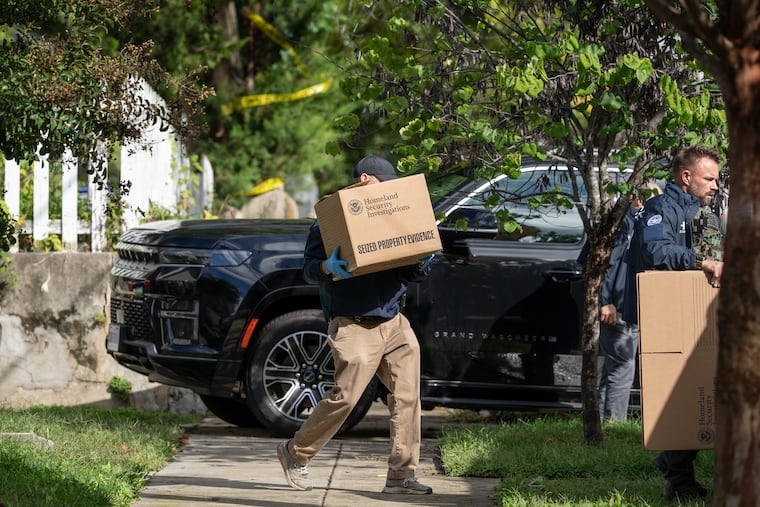
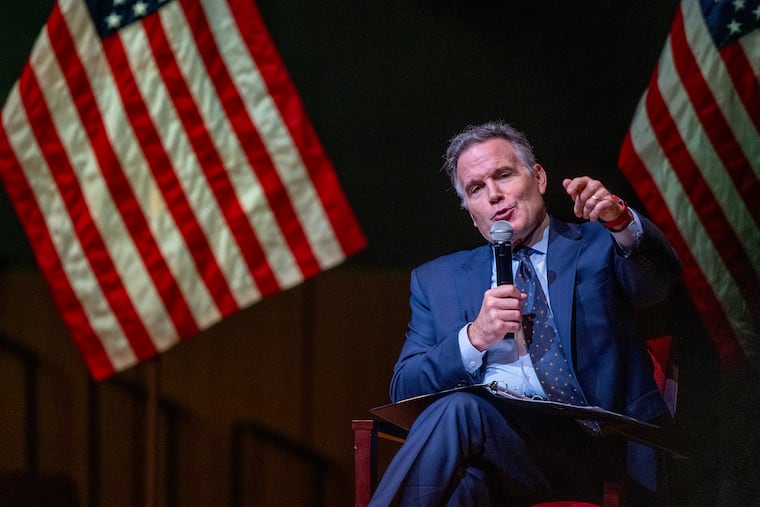
New Jersey NAACP President Richard T. Smith has developed close ties to Norcross and is now attacking the prosecutor who brought racketeering charges against the power broker.

As officials in Camden moved forward with a controversial plan to disband the police department in 2013 and replace it with a county-run force, a civil rights activist from Vineland decried the “insidious corruption” he said had long been prevalent in the city.
Richard T. Smith, then a vice president of the New Jersey NAACP, said during a meeting of the Camden County freeholder board that elected officials in Camden “are more concerned about appeasing their political boss than they are about the needs of the residents that they were elected to serve.”
He did not identify the boss by name, but in Camden, that was a thinly veiled reference to George E. Norcross III, the power broker and businessman who had long been the de facto leader of the South Jersey Democratic machine.
In the years since, Smith, now president of the NAACP’s New Jersey state conference, has refashioned himself into a Norcross ally, standing by his side when the power broker faced scrutiny from a state task force over tax credits in 2019 and criticizing the National Football League when Norcross was kicked out of an Eagles game in 2023.
Now, as Norcross, 69, fights criminal racketeering charges, Smith is not only defending him — the civil rights leader is also attacking the prosecutor who brought the case.
Smith, 62, has filed legal briefs bearing the state NAACP’s name criticizing the New Jersey Attorney General’s Office’s case against Norcross and five codefendants, saying Norcross’ alleged threats of financial harm to a developer are emblematic of the kind of tactics that have been used by workers and civil rights groups to achieve progress. The briefs cited the 1950s Montgomery, Ala., bus boycott as an example of such “unorthodox tactics.”
On Aug. 6, Smith’s lawyer sent Attorney General Matthew J. Platkin a letter — cosigned by several state senators and others — demanding that Platkin install an independent monitor to oversee the office’s anti-corruption bureau, saying it had become “a haven of investigatory and prosecutorial abuses.” The letter requested a response within 15 days. The attorney general’s office disputed the claims and said it looked forward to defending its case in court.
Some critics within the NAACP have questioned why the chapter president has lent the civil rights organization’s prestige to the cause of a man accused of shaking down a developer and a nonprofit redevelopment group to obtain valuable waterfront property in Camden and millions of dollars in associated tax credits.
A trial judge dismissed the charges in February but paused his order, allowing the New Jersey Attorney General’s Office to file an appeal. Oral argument is scheduled for Nov. 5, according to a court spokesperson.
James Harris, Smith’s predecessor as state NAACP president and a current elected member of the chapter’s executive board, said Smith filed the legal briefs without following the group’s normal procedures, including getting approval from the board and the national organization. Another executive committee member, speaking on condition of anonymity to avoid retaliation, corroborated that account.
Harris — who previously ran unsuccessfully against Smith for state NAACP president — said his successor also had a conflict of interest in the matter. Smith has served alongside Norcross as a volunteer board member of Cooper University Health Care since April 2024, according to a Cooper spokesperson.
Norcross is the longtime chairman of the Camden-based nonprofit hospital network, which is mentioned dozens of times in the indictment and is alleged to have benefited from an extortion scheme orchestrated by Norcross. Cooper has not been accused of wrongdoing, and Norcross denies the allegations.
Harris said that to his knowledge, Smith had not informed the New Jersey NAACP’s executive board of his Cooper affiliation — something the second committee member confirmed.
Cooper donated a total of $75,000 to the state NAACP from 2019 through 2023, the most recent year for which the hospital’s tax filings are publicly available. Harris and the second committee member said the organization’s annual budget is roughly $100,000.
“I think one of the driving motivations of Mr. Smith … has everything to do with the fact that Mr. Norcross [via Cooper] has been a major sponsor of our state conventions,” said Harris, 78, who served as president from 2005 to late 2013.
Cooper spokesperson Wendy Marano said the hospital network “has sponsored — and its team members have attended and spoken at — the NAACP State Conference dating as far back as 2011.”
Smith declined to be interviewed for this article. In response to written questions, Smith denied being influenced by Cooper’s contributions, said his affiliation with the hospital was no secret, and accused Harris of trying to undermine his leadership throughout Smith’s presidency.
Smith said his predecessor had left the organization in “dire straits,” with less than $10,000 in the bank. Under Smith’s leadership over the last 12 years, he said, the group has raised more than $2.5 million. He said he was “not at liberty to discuss our organization’s private budget.”
The NAACP president also said that Norcross’ insurance brokerage, Conner Strong & Buckelew, had donated to the state organization during Harris’ tenure but not while Smith was president.
Smith has said that he was personally responsible for the NAACP’s first legal brief and did not request approval from the state NAACP’s executive committee. “It was something that had to get done right away,” Smith told the news site the Jersey Vindicator.
He told The Inquirer that he did not need the board’s approval or that of the national NAACP and that he had given notice to both entities.
Smith said Harris has been critical of his leadership since Harris’ failed reelection bids and since he was suspended from the NAACP’s Montclair branch in 2020 after making antisemitic remarks. He also resigned his post from a state board.
Harris apologized for the comments at the time. He is currently an elected member of the New Jersey NAACP’s executive committee.
The NAACP got involved in the Norcross case, Smith said, because he saw it as “an attack on the leadership of Camden” — where the majority of the population are people of color — as well as “the residents who the NAACP represents.”
He acknowledged changing his views of Norcross over time, saying that “the naysayers in Camden had my ear” for many years until the election of Dana L. Redd, who served as mayor from 2010 through 2017 and who is now one of Norcross’ codefendants.
“I began to hear and see with my own eyes progress being made,” Smith said. “I’ve admitted that we were wrong. The results are undeniable. No one can credibly argue Camden’s renaissance would have happened without the commitment of people like George Norcross.”
For his part, Norcross “is proud to have worked with Richard for the betterment of Camden for its residents and workers,” said spokesperson Dan Fee.
“Camden’s transformation from the nation’s poorest, most violent city to a city that’s safer, with a growing economy, dramatically improved schools, and new housing could not have been done without the hard work and strong support of leaders like Richard Smith,” Fee said.
Smith declined to say who is paying for the group’s legal briefs — except to say that Norcross has not provided funding, which Fee also confirmed — calling that information privileged. Harris and the second executive committee source said the board had not authorized expenditures for the legal briefs.
The two other parties that signed onto the NAACP’s legal filings — the New Jersey AFL-CIO and the state Building and Construction Trades Council — did not respond to messages about the funding.
In contrast to federal and some state appellate courts such as California, New Jersey courts do not require amici curiae — groups that are not a party to a case but have an interest in the matter — to disclose whether outside interests contributed money to the preparation of their briefs, according to legal experts.
Smith is running unopposed this fall for reelection as chapter president, a volunteer position.
The New Jersey NAACP president said he splits his time between his Vineland residence and Florida, where he bought a house in 2021 and which he described to The Inquirer as his “legal residence.” Public records show he has been registered to vote there since 2021.
Smith told a federal bankruptcy judge in February 2024 that he was retired and had not lived anywhere besides his Florida house in the previous three years. “That was a legal residency question, not a ‘where do you spend your time’ question,” Smith told The Inquirer.
The NAACP’s bylaws say that to be a member of a branch, a person must be a “permanent resident” or work within the branch’s jurisdiction. Asked whether the bylaws presented any challenges with respect to his eligibility to be New Jersey conference president, Smith said there was no issue.
“I work within the jurisdiction, both in terms of my board positions and work with the NAACP,” Smith said, adding that his “employment is in Camden.” Smith serves on the board of New Jersey American Water in Camden, a position for which he said he is paid $20,000 a year. His lawyer, Gregg Zeff, did not respond to an email asking whether that was Smith’s employer.
The national NAACP did not respond to requests for comment.
“You just dropped an atomic bomb on the organization,” a member of the state’s executive committee, speaking on condition of anonymity, said when told of Smith’s Florida residency. “It’s like the governor of New Jersey living in Florida. You can’t have that.”
Civil rights leader, jail warden
A Trenton native, Smith rose through the ranks of the NAACP in Vineland — where he also was elected twice to the school board — and ultimately became president of the New Jersey chapter of the civil rights group in late 2013. He joined the board of the national NAACP in 2018.
Smith worked as a corrections officer at South Woods State Prison and retired in 2015 after a 25-year career. The following year he was appointed assistant to the warden at the Cumberland County Jail.
In 2017, the Democratic-led Cumberland County Board of Commissioners — then known as freeholders — voted unanimously to appoint Smith as the new warden, to be paid $105,000 annually, according to meeting minutes. The board’s director, Joseph Derella, said Smith “comes to the county with significant corrections experience,” the minutes say.
At the time, the Cumberland County board was still a stronghold of the Norcross-led South Jersey Democratic machine.
A couple of years later, when Norcross — then executive chairman of insurance brokerage Conner Strong & Buckelew — and his business partners came under scrutiny from a state task force investigating a New Jersey tax credit program, Smith came to his defense.
Two weeks after the task force’s first public hearing put a spotlight on Norcross, Smith appeared at a May 2019 news conference in Camden alongside business executives, former governors, local officials, and others to vouch for an economic development program that had directed $1.6 billion in tax credits to companies that invested in the long-struggling city.
Smith said at the news conference that he and Norcross had met to discuss the NAACP’s national “One Million Jobs” campaign announced a month earlier to help formerly incarcerated people find work. “He and I sat and shared our vision for a better tomorrow,” Smith said.
Months later, Smith testified at a November Senate hearing in Trenton in support of the tax credits. “There’s no denying that these incentives can put cities on the rise, as it has in Camden,” he testified, adding that it was important to create opportunities for residents.
Smith’s upbeat assessment was at odds with the more skeptical view held by some NAACP leaders in Camden County, who earlier that year held their own news conference on the waterfront outside the 18-story office tower that was built for Norcross’ company and two other firms. The activists expressed support for the task force probe and pressed for information on the number of city residents hired by firms that were awarded tax credits.
In Norcross’ Senate testimony the same day, he defended the $245 million in incentives that had been approved for Conner Strong, logistics firm NFI, and developer the Michaels Organization. The credits were contingent on the companies’ capital investments and creation or retention of a certain number of jobs.
“Let me preface my remarks by thanking NAACP president Richard Smith,” Norcross began his testimony, citing the civil rights leader’s involvement in a job training program called Camden Works. Norcross said he and Susan Story, then-president and CEO of American Water Works Co., agreed to “fund the millions of dollars that are necessary to underwrite this program over the next four years.”
Camden Works said last year that since November 2019, the group and its partners had helped hire more than 1,000 Camden residents with employers throughout the region.
However, of the 19 for-profit companies in Camden that received state tax credits between 2022 and 2024, just 9% of their employees lived in the city, according to an analysis by Good Jobs First, a Washington-based policy group that opposes corporate subsidies. The analysis was based on company reports filed with Camden.
One of those firms, American Water — the largest water and wastewater utility in the U.S. — named Smith to the board of its New Jersey subsidiary in 2020, saying he would “bring a wealth of knowledge and experience to our company.”
In 2015, the state Economic Development Authority approved $164 million in tax credits for American Water, then based in Voorhees, to build a new headquarters on the Camden waterfront.
The deal was made possible through a law championed by Norcross. “American Water is extremely proud to be part of the revival of the wonderfully strong and historic city of Camden,” said company spokesperson Chelsea Kulp.
Smith continued his day job as jail warden until January 2021, when he became an equal employment opportunity officer for Gloucester County. A week after Smith resigned as warden, the U.S. Justice Department released an investigative report finding there was “reasonable cause to believe” that the conditions at the jail violated inmates’ constitutional rights.
The investigation — which covered 2014 to 2020 — found that the county failed “to adequately address the heightened risk of self-harm and suicide for inmates experiencing unmedicated opiate withdrawal.”
Most of the suicides occurred before Smith became warden, and investigators credited the county with assisting the probe. Smith has said he made improvements at the jail, telling the Press of Atlantic City in 2022 that he was proud of his tenure and “would do nothing differently.” He added that his efforts were obstructed by a “corrupt” corrections officers union, which disputed his account.
Smith retired from his Gloucester County job in the summer of 2021, when he bought his Florida house.
He has stayed active in South Jersey civic and political life. Smith was listed as a board member of a super PAC, Building Bridges Voter Project, that supported former Senate President Steve Sweeney’s unsuccessful gubernatorial campaign this year, according to incorporation documents filed with the state in 2023. Smith said he was not paid for the role.
And Smith has served on an advisory board to the Sweeney Center for Public Policy at Rowan University, whose founding chairman in 2022 was Sweeney.
In an interview, Sweeney described Smith as a “dear friend” he has known for years and credited him with successfully advocating for legislation that overhauled New Jersey’s bail system and placed restrictions on employers’ ability to ask job applicants about criminal histories.
“When Richard became the head of the state NAACP, that turned that organization around,” Sweeney said. “We did a lot of things that would have never happened if it wasn’t for him.”
Yet one member of the NAACP’s executive board said Smith’s perceived proximity to Norcross and his childhood friend Sweeney may have damaged the state organization’s relationship with Gov. Phil Murphy, a Democrat who has at times been at odds with the South Jersey Democrats. “He and the governor were never really close,” said Peter F. Cammarano, Murphy’s first chief of staff, referring to Smith.
Free speech or unlawful threats?
Norcross and five others were indicted in June 2024 on counts of racketeering conspiracy, extortion, and other charges. In one exchange cited in the indictment, Norcross allegedly told Philadelphia developer Carl Dranoff in 2016 amid discussions over a real estate deal that the power broker would “f— you up like you’ve never been f— up before” and make sure the developer never did business in Camden again.
As his lawyers urged a judge to dismiss the charges — arguing that the alleged threats were nothing more than lawful bargaining in the course of business negotiations between sophisticated parties — a coalition of allies started to rally behind Norcross both inside and outside the courtroom.
In December, the state NAACP, state AFL-CIO, and New Jersey Building and Construction Trades Council filed a joint motion to intervene in the case as amici curiae — Latin for “friends of the court” — in support of Norcross’ motion to dismiss the indictment.
The state’s theory of prosecution “places a direct chilling effect on [the groups’] ability to advocate in the political arena, bargain for fair working conditions, and redevelop blighted communities,” wrote attorney Donald Scarinci and colleagues, of the firm Scarinci Hollenbeck LLC.
It also threatens the groups’ First Amendment rights by impeding their ability to “advocate for their members and constituencies,” the filing said.
Asked if it is common for the state NAACP to file such briefs in criminal cases, Smith said yes, “particularly those with significant implications for racial justice and civil rights,” but did not point to any specific examples.
“These briefs are submitted by the NAACP or its legal arm, the Legal Defense Fund (LDF),” he said.
The legal filing in the Norcross case disappointed Darnell Hardwick, a former president of the NAACP’s Camden County branch. He faulted Smith for not following the proper protocols. “It’s caused harm to the NAACP’s name and brand,” Hardwick said in an interview.
He said he had not been involved in the group’s activities much since the Camden County chapter was suspended by the national organization in 2021 — a decision he blamed on Smith.
Hardwick said that when he learned about the legal filing, he decided to join the NAACP’s Camden County East branch in January so that he could attend state conference meetings again. “I knew someone needed to speak up about what was going on,” he said.
Smith disputed Hardwick’s account, saying the Camden County branch was suspended “following an anonymous complaint to the national NAACP due to conduct that reflected poorly on the branch.”
Smith added that he has tried for years “to get members of the defunct Camden County branch to let go of their obsession with stopping all progress in Camden” but that their only refrain has been that “if George Norcross, or anyone that would shake hands with George Norcross is involved, it must be stopped.”
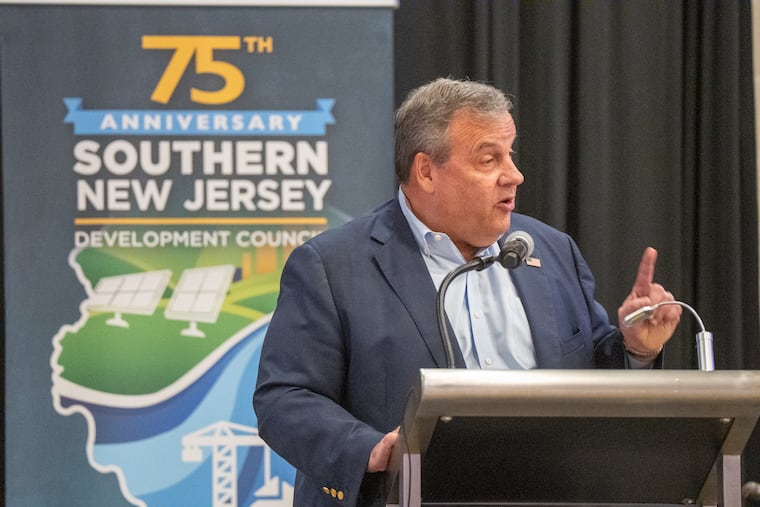
A few weeks before Judge Peter Warshaw was set to hear arguments, Norcross hosted Murphy, former Gov. Chris Christie, and other dignitaries for a groundbreaking ceremony in January at Cooper University Health Care’s campus in Camden.
Early in the program, Cooper co-CEO Kevin O’Dowd recognized several guests. “A special thank you to Richard Smith of the NAACP and Charlie Wowkanech of the AFL-CIO, who work with us to serve our communities,” O’Dowd said. “We’re very grateful to have them both here today.”
The judge dismissed the charges against Norcross and his codefendants in February, saying the allegations did not amount to criminal extortion, and now Norcross is hoping an appeals court affirms that decision. The state NAACP, AFL-CIO, and building trades council filed another brief supporting Norcross in June.
Smith then went on the offensive this month, signing a letter sent by Zeff calling for independent oversight of the New Jersey Attorney General’s Office of Public Integrity and Accountability (OPIA) “based upon a series of prosecutorial missteps, errors, and wrongful conduct.”
Zeff’s letter cited a half-dozen prosecutions — including the Norcross case — that it said showed “ongoing prosecutorial misconduct and egregious abuses of investigative and prosecutorial power.”
Smith declined to say who was paying for Zeff’s legal services in the matter. The letter was also signed by Bishop Jethro James, president of the Newark/North Jersey Committee on Black Churchmen; Wowkanech of the AFL-CIO; and Sens. Michael Testa (R., Cumberland), Robert Singer (R., Ocean), Gordon Johnson (D., Bergen), John Burzichelli (D., Gloucester), and Nilsa Cruz-Perez (D., Camden).
A spokesperson for Attorney General Platkin, Dan Prochilo, said the letter “parrots over-the-top, false attacks regularly made against OPIA by George Norcross and his codefendants, and ignores the dire need to hold corruption to account in our state.”
In his statement, Smith said his support for Camden was emblematic of his leadership more broadly.
“When I was elected, the organization was nothing more than an afterthought in the political and social justice arena in New Jersey,” he said. “Today, I’m proud to say that nothing in this state that affects the lives of Black and brown people is decided without the input of the New Jersey State Conference of the NAACP.”