Houlahan in the middle
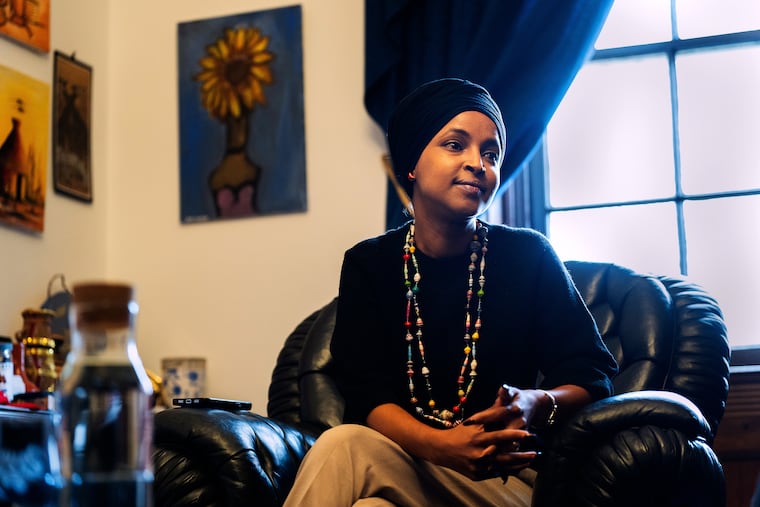
Helping with grandchildren and caring for her own parents, Chester County’s U.S. Rep. Chrissy Houlahan brings a personal dimension to her legislation on affordability.
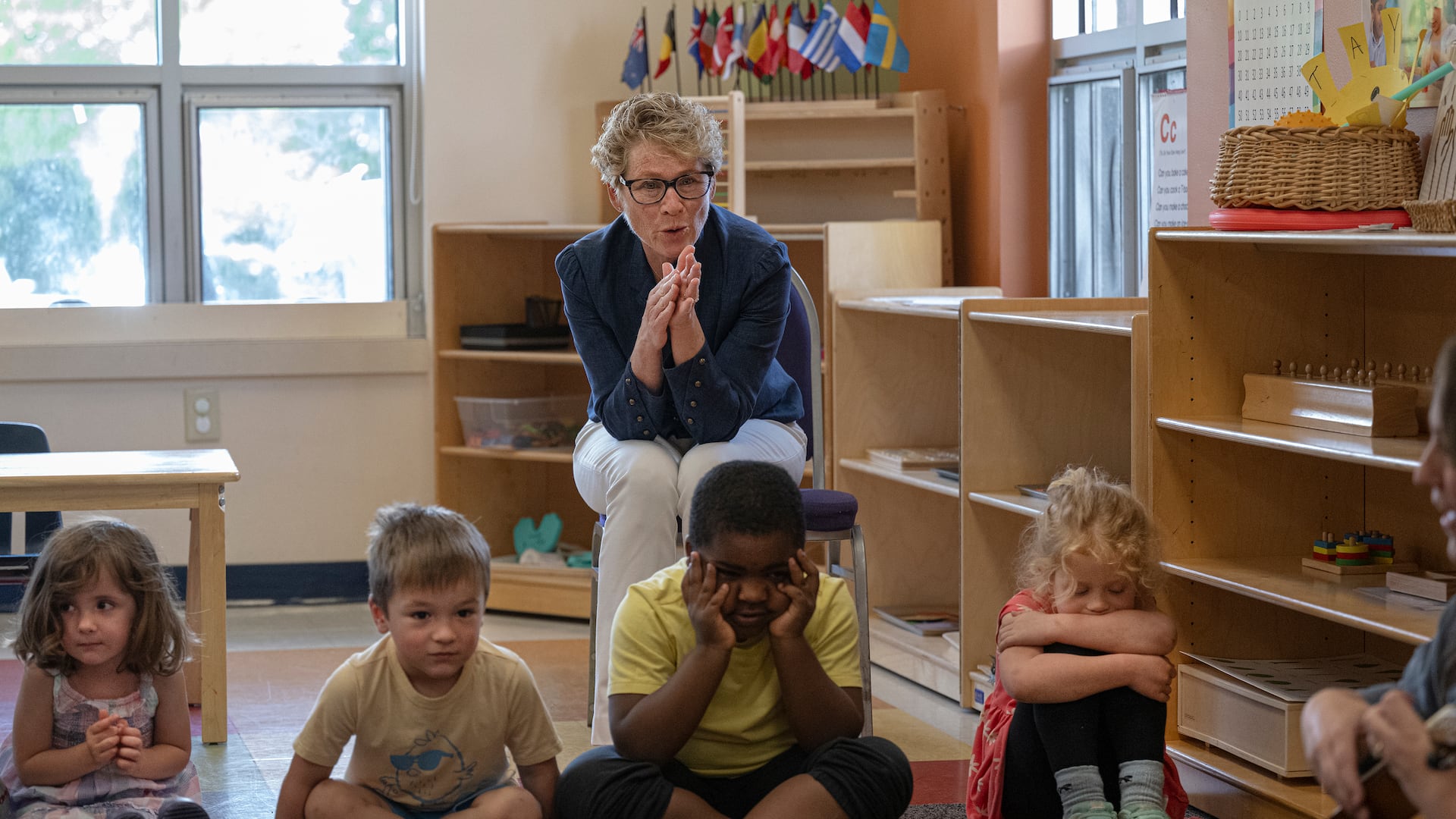
In the back of a classroom where she had just read to 20 attentive preschool kids, U.S. Rep. Chrissy Houlahan was concerned about what the staff of the West Chester YMCA was telling her.
Nearly a third of the families who rely on the facility’s childcare programs — in the richest county in Pennsylvania, and one of the wealthiest in the country — receive financial assistance to cover the $1,900 monthly cost, the staffers said.
Houlahan, a Democrat who is soft-spoken when she is not grilling President Donald Trump’s cabinet secretaries or House Speaker Mike Johnson (R., La.) on Capitol Hill, asked about the income qualifications for financial aid. At a certain point, the YMCA staff told her, some parents have a disincentive to earn more, lest they become disqualified and then stuck with a higher bill.
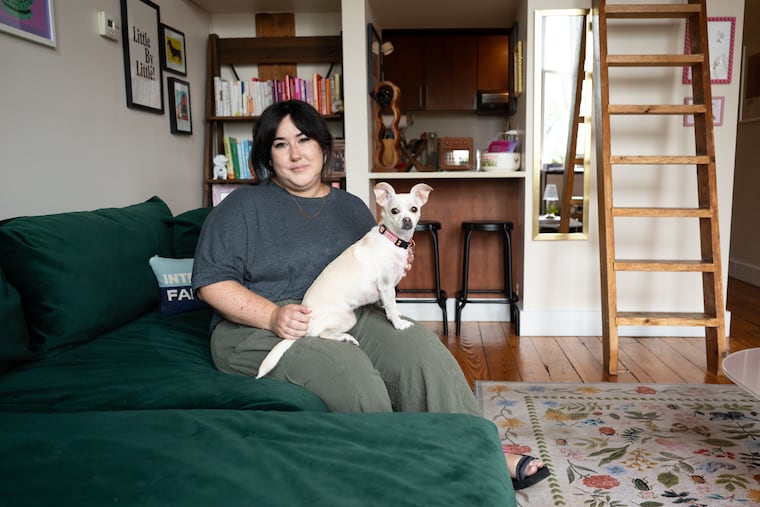
“It’s terrible, no matter how you do the math,” Houlahan said a few hours later at a Malvern restaurant, relaying the story to her daughter, Molly Rosa Houlahan, and daughter-in-law, Kristen Rosa Houlahan.
The YMCA’s fee was about the same amount the couple were paying for their 18-month-old, Lucy. With another child due in September, it is also an amount they still are unsure how to afford twice over.
“We’re very fortunate in our jobs, and we’re both trying to get promotions in order to be able to afford a second daycare,” said Molly Rosa Houlahan, 33, a local theater director and producer. “But we are not in that position yet. I don’t totally know what will happen when this second child arrives.”
From childcare to healthcare, groceries to gas prices, affordability concerns have remained top of mind for Americans this year — dominating discussions on Capitol Hill ahead of the high-stakes midterm elections.
Republicans, who control Congress and the White House, say they have made real progress in raising wages and lowering costs. They marked the first anniversary of Trump’s One Big Beautiful Bill Act — since rebranded by Republicans as the Working Families Tax Cut Act — this month by celebrating the law’s more generous tax refunds and other benefits, like new investment savings accounts for children under 18.
Democrats have pointed to the bill’s simultaneous cuts to Medicaid spending and food assistance for low-income families. They say Trump signaled he has no interest in lowering costs when he refused to sign a bipartisan housing bill and said he doesn’t “think about Americans’ financial situation” when handling the war in Iran.
Houlahan, who has represented most of Chester and Berks Counties since 2019, routinely highlights the broader scope of cost-of-living issues alongside her colleagues. She has taken a leading role among centrist House Democrats to help craft a detailed “affordability agenda.”
Whether her party can advance any of those policies in Washington, even if it wins control of one or both chambers of Congress in November, remains an open question as Trump remains in office and the International Monetary Fund warns of a worsening global economy.
But as the fight drags out, it has also become increasingly personal for Houlahan and her family.
In addition to occasionally helping fill the gaps in their granddaughter’s care, Houlahan and her husband’s own home in Devon, Chester County, has transformed into a version of a so-called sandwich generation household within the last year. The couple’s other adult daughter, her husband, and both of Houlahan’s parents, who are 80 and 84, have all moved in.
The underlying circumstances for the multigenerational home, as they would be for any family, are various and personal. And Houlahan emphasized across multiple interviews that she is fortunate to have the means to welcome her family under her roof. (Houlahan is an Air Force veteran and a former executive at the athletic apparel company AND1. Her husband, Bart, is a partner at an investment research firm.)
But the larger realities — like skyrocketing costs for childcare and senior living — have also now played a role in her own life. Her mother has a Parkinson’s diagnosis, and her parents were unable to find a one-floor living space that was affordable and fit their other needs as they looked to move closer to their family.
“We’re having these conversations, and you know people all over our community are having these conversations,” she said. “It’s an acute issue for families in our area: How do you balance all of this?”
‘A big balancing act’
Houlahan has shared parts of her family’s story as she has traveled her district this year — prioritizing events and meetings that aim for a deeper understanding of an affordability crisis that has not spared her home county, where the median household income is about $131,000, or 40% more than the statewide average.
On back-to-back days this spring, that meant a focus on the kinds of childcare and senior-care issues she has become familiar with.
“We call it ‘from zero to Edna,’” Laura Schoefield-Pierson, executive director of the YMCA of Greater Brandywine, said of the facility’s programs aimed at all ages, from infants to seniors.
Walking Houlahan through the pre-K classes and a gym with a dozen seniors playing table tennis, Schoefield-Pierson spoke about the organization’s exercise programs aimed at offsetting symptoms of Alzheimer’s or Parkinson’s, and about the complexities of providing assistance for families with young children.
In addition to the “many children” whose care is subsidized through the state’s Child Care Works program — set for families earning 200% or less of the federal poverty level, or $66,000 for a family of four — others receive aid through the YMCA, Schoefield-Pierson said. The facility’s fundraising goal this year is $237,000, she said. On the day of Houlahan’s visit, Schoefield-Pierson said “the kiddos” were writing thank-you notes to donors.
Though the U.S. Department of Health and Human Services recommends childcare should not exceed 7% of household income, Houlahan said she was surprised to learn a family would have to earn $327,000 to meet that benchmark at the YMCA for one child.
Nationally, the average annual cost of childcare in 2024 was $13,128, an increase of 29% over the previous five years and far exceeding the national recommendation for the average household’s budget.
“It’s crazy how much healthcare and childcare plays into your family planning,” said Helena Cordoba, a 35-year-old mother of two who said at a roundtable hosted by Houlahan that she had been hoping to grow her family.
I don’t know if we were going to be able to afford another baby. Our life would have been completely turned upside down.
A Colombian immigrant who owns Café Com Leite in Phoenixville, Cordoba said she thought she had been living the American dream. But a recent miscarriage and the rising costs of both childcare and healthcare, which she does not currently have, have made her rethink her family’s plans.
“I never thought I was going to say, ‘Maybe the miscarriage is a blessing.’ That thought on its own is very saddening,” Cordoba said. “I don’t know if we were going to be able to afford another baby. Our life would have been completely turned upside down.”
Others voiced similar struggles while Houlahan sympathized and shared her daughter’s own experience with a $2,000 monthly daycare bill.
Zack Hathaway, who owns the restaurant Sweet Amelia’s in Kennett Square with his wife, Karessa, said their business “makes just enough” to cover the $700 to $800 weekly cost for their babysitter amid a demanding restaurant schedule. Thomas Smith, who works at the Cleveland-Cliffs steel plate production facility in Coatesville, said he makes too much to qualify for subsidies for his grandchildren but still struggles to cover the cost.
“It’s like a big balancing act to be able to put your kids in a place that you want to feel comfortable with them being and with being able to afford it,” said Amarte Grove, another Cleveland-Cliffs employee and a father of five daughters.
In another tour focused on the other end of the age spectrum, Houlahan peppered staffers at Brandywine Valley Active Aging in Downingtown about their work to offer free meals, housing services, and activities to about 120 seniors daily.
According to the organization, Chester County’s homeless population has decreased in recent years — from 916 in 2023 to 747 in 2025. But the percentage of that population that is over 60 has increased from 9% in 2023 to 14% in 2026. About 45 older adults in the county were homeless as of early May, according to the organization, which works alongside other independent and government groups to connect seniors with stable housing.
“It is really difficult to live in Chester County,” said Jen Manthey, BVAA’s director of information and assistance. “It takes a long time for them to get out of homelessness, partly because it takes a long time for us to build the trust with them and get that rapport — that they trust what we’re saying, and there aren’t $400 room rentals out there that we’re just hiding from you.”
Nick Popov, BVAA’s chief operating officer, said demand remains high for the 5,000 free lunches the organization provides every month to individuals age 60 and older. The cost for those meals is reimbursed through the Pennsylvania Department of Aging, though the organization raises most of its funding in total, he said.
“The services are out there. We’re doing everything we can to provide them,” Popov said. “But it’s always a struggle to kind of balance the bottom line between our goals and what we can actually affordably accomplish.”
Houlahan’s parents said they had never expected to move in with their daughter. Even as they looked to move closer to their family and could not find a spot that fit their financial and physical needs, it took some convincing, mostly from their son-in-law, Bart Houlahan.
“It was an inspiration that permits us to enter old age — serious old age, not just the kid stuff right now — with greater confidence that our health will be sustained,” said Andy Jampoler, Houlahan’s father, a Holocaust survivor born in German-occupied Poland in 1942.
Turning experience into policy
In May, Houlahan introduced legislation that would require the federal government to collect data on the sandwich generation, a step she said is critical to creating better policies for an “undervalued role in the nation’s economy.”
It would require at least one federal survey to ask whether individuals provide unpaid care to both children and older adults. U.S. Sen. Andy Kim (D., N.J.), who has two young sons and cares for his father with Alzheimer’s, sponsored a companion bill in the Senate.
Houlahan is also the chair of an “economic growth and cost of living” working group within the New Democrat Coalition, a group of self-described centrist Democrats that includes about half of the entire caucus. The group rolled out an “affordability agenda” earlier this year that is considered a framework for how Democrats would tackle housing, healthcare, energy, paid family leave, and much more if they win control of the House.
U.S. Rep. Brad Schneider (D., Ill.), chair of the New Democrat Coalition, credited Houlahan for her leadership with the agenda, describing her as having a “quiet wisdom that focuses on the core of a problem” while bringing her own life experience to the work.
Everyone’s experience is unique, but her experience shares many of the aspects of what people across the country are facing.
“Everyone’s experience is unique, but her experience shares many of the aspects of what people across the country are facing,” Schneider said. “The sandwich generation, taking care of kids and parents, for whatever circumstance, while at the same time seeing the cost of just everyday living … is putting a burden on families.”
Houlahan said she has been aggravated by the pace of progress in Washington, including Trump’s decision to not sign the bipartisan 21st Century ROAD to Housing Act in an attempt to force a vote on stricter voter-ID laws.
The legislation aims to incentivize housing construction, restrict large investors from buying single-family homes, help families with home repairs, and more. The president reiterated Friday that he would not sign it, allowing the bill to become law without his signature.
In her Capitol Hill office about an hour after Trump canceled that bill signing late last month, Houlahan described the president as “so obtuse that he can’t see in front of him that this is something that the people want.” After spending much of the last year calling out Johnson, the House speaker, for not standing up to Trump, she said there should be “counterinsurgents” and an “uprising” in the Republican Party.
At the same time, she expressed some hope. The housing bill may have been a rare moment of bipartisanship, but it was also a sign that Congress can still act on affordability even before the end of the year, she said.
“We don’t have time, for all of this stuff, to wait until somebody else is in charge,” Houlahan said. “We can do this ourselves.”