Sen. Andy Kim has ‘no confidence in any aspect’ of Trump’s deal to end war in Iran
The New Jersey Democrat, who has career experience in national security issues, said the U.S. had lost any leverage to curb Iran's nuclear program.
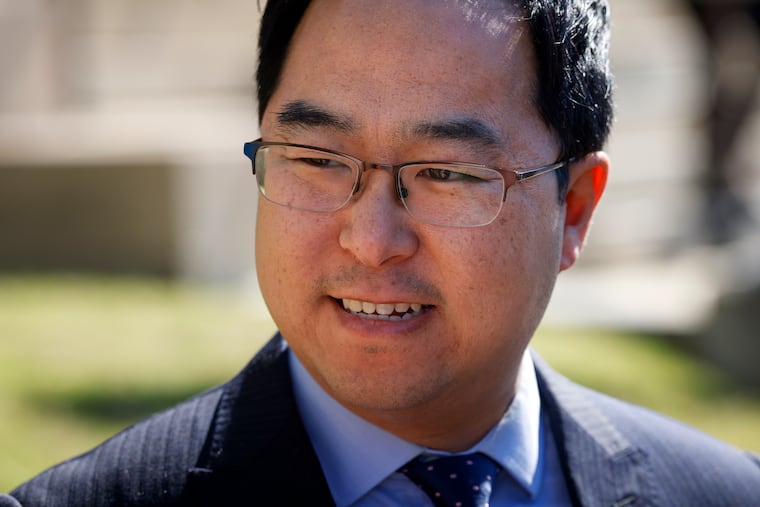
WASHINGTON — As lawmakers on Capitol Hill grapple with President Donald Trump’s deal to end the war in Iran, the New Jersey Democrat who spent years weighing national security issues in the Middle East described the agreement as a “mind-boggling” move that will have damaging reverberations across the globe.
“It’s like setting your own house on fire, a good chunk of it burning. You put it out. And then you start clapping, celebrating yourself. That’s what Trump is like right now,” U.S. Sen. Andy Kim, the only career diplomat in the Senate, said of the memorandum Trump signed Wednesday night.
Democrats representing the Philadelphia region on Thursday blasted the terms outlining the end of a conflict that many of them repeatedly described as a strategic failure from the start.
Some prominent Republicans echoed those concerns — criticizing Trump’s removal of U.S. sanctions on Iran and his promise to help pull together a $300 billion fund to rebuild the country’s infrastructure after months of bombings — while Pennsylvania lawmakers who supported the war, like U.S. Sens. Dave McCormick (R., Pa.) and John Fetterman (D., Pa.), remained silent or defended Trump.
“Reagan is rolling over in his grave,” U.S. Sen. Bill Cassidy, a Louisiana Republican, wrote on social media.
Kim, who worked at the National Security Council under President Barack Obama and spent time as a civilian adviser in Afghanistan, said it was difficult to imagine what will happen next.
He said the Trump administration had lost all forms of leverage by agreeing to end hostilities, reopen the Strait of Hormuz, and provide financial benefits to Iran without securing any new or firm commitments around the country’s nuclear program. Though the countries vowed to continue negotiating over the next 60 days, Kim said, Iran will already be in a “position of strength” with the financial relief and thus have little incentive to follow through on its pledge not to pursue a nuclear weapon, which was the primary justification for the war by Trump and his allies.
“I have no confidence in any aspect of this,” Kim said in an interview.
Kim said he feared not just prolonged issues between the U.S. and Iran — issues that look almost the same as before the war began — but “reverberations everywhere” as the administration signals how it would handle other foreign conflicts, like Russian President Vladimir Putin’s aggressions in Ukraine or Chinese President Xi Jinping’s moves toward Taiwan.
“We’re just at such a weak point now. We’re still strong enough that we can muscle other countries, but they see through it now,” Kim said.
Trump has continued to project strength, including with threats to resume attacks if Iran does not comply with the peace deal.
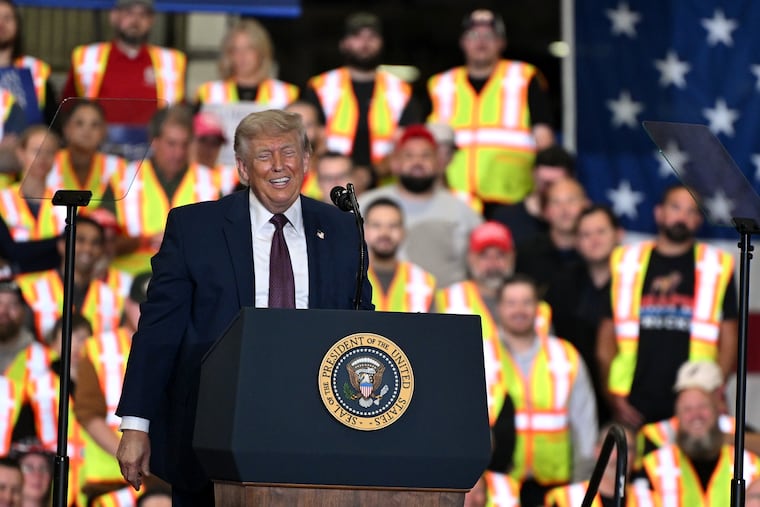
“It’s a memorandum of understanding, and if I don’t like it, we’ll go back to shooting at them, dropping bombs on their head,” Trump said Wednesday.
McCormick, who served in the Army during the Gulf War and has described the war in Iran as one of the most effective military campaigns in history, did not agree to an interview with The Inquirer on Thursday as other Republican senators like Cassidy and U.S. Sen. Ted Cruz of Texas raised concerns. In multiple television interviews, McCormick said he had “a number of questions” about the memorandum.
“If it has the two things the president’s talked about, I think we’re in good shape,” McCormick said on Newsmax. “One thing is that there can be no path to a nuclear weapon or not giving up the enriched uranium. … That has to happen for this to be successful. And the second thing was the president’s words that you have to pay for performance. You can’t lift the sanctions or give them real economic relief on the sanctions until they take tangible steps toward eliminating that nuclear capability.”
A spokesperson for U.S. Rep. Brian Fitzpatrick, a Bucks County Republican who has voted for more congressional oversight of the war but has not criticized its mission, referred to a statement from before the terms were announced this week. Fetterman, the only Senate Democrat who has fervently supported the war, did not respond to a request for comment.
Democrats representing the Philadelphia area, meanwhile, were quick to call the deal a symbol of a conflict that was entirely a failure.
“Now, after billions of taxpayer dollars spent and 13 American service members’ lives lost, we are no better off in Iran than we were before the war began,” said U.S. Rep. Chrissy Houlahan of Chester County, an Air Force veteran.
U.S. Rep. Mary Gay Scanlon of Delaware County said she was hopeful that the agreement was a step toward peace while calling the conflict damaging to the U.S. economy and embarrassing on the global stage.
“The war did not accomplish any of the administration’s alleged goals, and has instead only strengthened Iran’s strategic ambitions,” she said.
In a post on social media, U.S. Rep. Brendan Boyle of Philadelphia called it “total humiliation.”
Public surveys showed the war was never popular with the majority of Americans, and at least one new poll released this week showed Pennsylvania voters were continuing to sour on Trump’s handling of foreign policy.
About 29% of voters in the state agreed with the president’s approach to foreign policy in the June poll released Thursday by Franklin and Marshall College in Lancaster. That figure was down from 37% prior to the war.
“This was just really a lose-lose everywhere,” said Kim, who helped lead a roundtable on Capitol Hill this week to highlight the economic impact of the war, like increasing fuel and fertilizer costs due to the shipping decline. “We need to move on. But this is going to have such a negative impact on America for so long, and in so many different ways.”
Staff writer Michelle Baruchman contributed to this article.