A Philly lawmaker has proposed a ‘temporary moratorium’ on puppy breeding | City Council roundup
“Right now, healthy and adoptable dogs are being euthanized in our shelter simply because there’s no space,” Councilmember Cindy Bass said.

A City Council member wants to tighten the leash on Philly’s backyard puppy breeders.
Councilmember Cindy Bass, who represents parts of North and Northwest Philadelphia, introduced a bill on Thursday to “impose a temporary moratorium on the breeding and transfer of puppies.”
“Right now, healthy and adoptable dogs are being euthanized in our shelter simply because there’s no space,” Bass said in a Council speech. “Every litter means more dogs in our shelter, more cost for taxpayers, and more suffering that we can prevent. This isn’t about punishment; it’s about compassion and responsibility.”
» READ MORE: How to adopt a cat or dog in Philadelphia: fees, shelters, and fostering
Bass acknowledged that her bill would be difficult to enforce. But she said it would be worth it to foster “a more informed and humane citizenry.”
“In terms of enforcement, what we’re really trying to do is up the awareness and get people to not purchase animals, knowing what the consequences are that people are dumping puppies in the street,” Bass said in an interview. “There was a whole box of puppies that were dumped in a Hunting Park not too long ago. People can’t sell them, so they just dump them.”
ACCT Philly, the region’s largest animal care and control service provider, according to its website, has reported overcrowding since the coronavirus pandemic.
If approved, the moratorium would last three years, after which Council could decide whether to continue the ban. Under the bill, infractions would include selling puppies as well as posting ads to sell them. Violators would face $1,000 fines, and repeat offenders would pay $2,000. Proceeds would go to ACCT Philly.
Licensed kennels, nonprofit animal rescues, and breeders of service dogs would be exempt.
Abortion rights hearing in limbo
Hearing problem: Abortion rights activists on Thursday pleaded with Council to schedule a hearing on funding for reproductive healthcare in the city, saying lawmakers have failed to act after passing legislation two months ago vowing to further examine the funding issue.
More than a dozen people testified during public comment in support of Councilmember Kendra Brooks’ legislation authorizing a hearing that passed Sept. 18, and her new resolution “celebrating abortion access as a human right.”
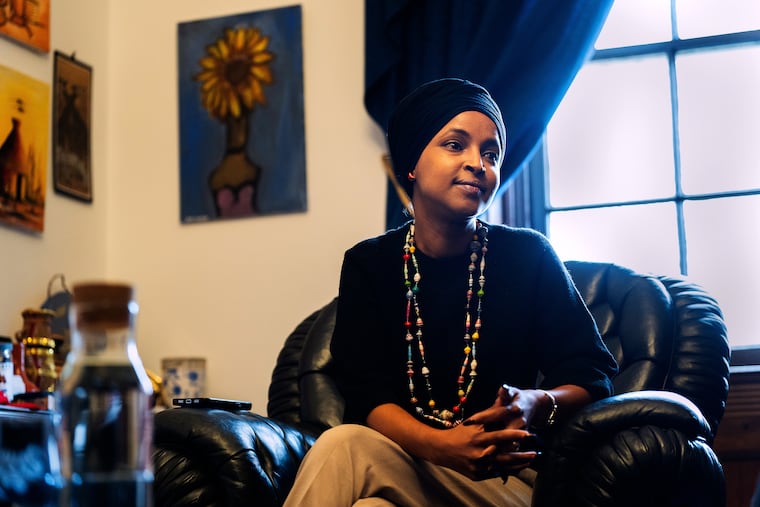
In a somewhat unusual delay, Councilmember Nina Ahmad has not yet scheduled a hearing in the Public Health and Human Services Committee, which she chairs.
Brooks, a member of the progressive Working Families Party and leader of the city’s Reproductive Freedom Task Force, called for the hearing after local Planned Parenthood leaders said they were disappointed that this year’s city budget did not include a $500,000 line item for sexual and reproductive healthcare, as it did last year.
Meanwhile, President Donald Trump’s administration this year prohibited Planned Parenthood from billing Medicaid for non-abortion care, a move that the organization says has already led to the closure of 20 clinics.
Brooks said the loss of local funding was an “unexpected blow” for providers.
“It’s no surprise Donald Trump is refusing to acknowledge the damage his policies have caused,” she said. “But I expect better in Philadelphia.”
Ahmad said her committee was not able to schedule a hearing this fall because it has been focused on the Trump administration’s cuts to the Supplemental Nutrition Assistance Program, or food stamps, during the recently concluded federal government shutdown. She said a hearing on abortion rights could take place in early 2026 — but she did not commit to holding it along the lines Brooks envisioned.
“We have a wide swath of issues we need to [address] about healthcare in the reproductive realm,” Ahmad said in an interview. “So I’m very clear that when we do these things, we need to be comprehensive and inclusive of everything.”
The activists who testified Thursday said a hearing on the local funding picture is necessary amid federal budget cuts affecting providers’ ability to care for patients.
“The city of Philadelphia can and should be the first line of defense for its residents in the face of these federal threats,” said Nikki Grant, cochair of the board of the Abortion Liberation Fund of Pennsylvania.
This was not the first time Brooks and Ahmad have clashed.
In 2023, when both were running for Council seats to represent the city at-large, Ahmad was publicly critical of the Working Families Party for what she described as efforts to “poach” Democratic voters. She called the party’s political strategy at the time “a lazy approach.”
More business curfews proposed for North Philly
Closing time: Council took another step in its controversial campaign to impose business curfews and other restrictions on commercial activity, which members say will reduce crime and nuisance behavior.
This time, Councilmember Jeffery “Jay” Young Jr., who represents much of North Philadelphia, is seeking to restrict business activity between 11 p.m. and 6 a.m. on much of Girard and Fairmount Avenues. His bill would also ban new pharmacies and convenience stores from opening on those corridors.
“Our communities have been inundated with recent stores where they’re actually selling illegal narcotics,” Young said in a speech.
Both provisions of the bill echo previous legislation passed by other lawmakers, led by Councilmember Quetcy Lozada, who represents Kensington, and was the first to enact both a pharmacy ban and a business curfew.
But while Lozada and others have passed sweeping legislation that created restrictions that span entire neighborhoods or entire districts, Young’s bill is narrowly crafted. Young said he has so far only heard from neighborhood groups in Fairmount and Spring Garden about these concerns. He said the bill could potentially expand in its geography as he has the opportunity to talk with more community organizations.
Young’s bill does not exempt restaurants with liquor licenses, which often stay open past 11 p.m., as other Council curfew bills have done. He says that’s because the state regulates such businesses, making them outside the purview of local legislation.
“Ultimately we don’t have the authority to regulate them,” said Young. He added that he might “add amendments as necessary.”
Nonetheless, restaurant industry advocates are wary.
Girard and Fairmount Avenues are among the most bustling commercial corridors in the North Philadelphia, with multiple bars that could be covered by the proposed city law.
“We look forward to the opportunity to work with Councilmember Young to ensure that Philadelphia’s hospitality businesses and their employees are not negatively affected by this proposed legislation,” said Ben Fileccia, senior vice president of the Pennsylvania Restaurant and Lodging Association.
Gettin’ paper: Philadelphia shoppers will soon have to pay 10 cents per paper bag after Mayor Cherelle L. Parker on Thursday allowed a bill imposing the fee to become law without her signature.
The new law was authored by City Councilmember Mark Squilla, who also championed the city’s ban on plastic bags. Council approved the measure in a 10-5 vote two weeks ago, sending it to Parker’s desk.
» READ MORE: Philadelphia shoppers will soon have to pay 10 cents for a paper bag
The mayor’s administration had been critical of the measure, and it was unclear if Parker would sign the bill into law, veto it, or return it to Council without her signature, allowing it to be codified.
Parker, who took office last year, has never vetoed a bill, and she declined to do so over Squilla’s paper bag fee.
“I support the intent of this bill to reduce the utilization of single-use bags and, thus, further Philadelphia’s commitment to environmental sustainability,” Parker wrote in a letter explaining her decision not to sign the bill. “But I remain concerned with some of the unintended consequences this legislation could have for our local economy and low-income Philadelphians, especially our communities of color.”
It’s likely Squilla had rounded up enough support on Council to override a potential veto, which would require a two-thirds vote from the legislature.
The law is expected to go into effect in January.
“Nobody wants to pay that money for a bag,” Squilla said in an interview. “It’ll reduce the use of paper bags, which is environmentally [beneficial], if you have to cut down trees to make more place paper bags. Also, the cost of making these paper bags is a lot more expensive than the plastic bags.”
Quotable
Reservoir weeds: In a speech Thursday, Councilmember Anthony Phillips unloaded on the Philadelphia Water Department, threatening to cut the agency’s funding if it didn’t improve.
What was the burning issue? Overgrown weeds at a reservoir in East Oak Lane, which is part of his district. Residents complained for months about the facility’s unsightly appearance, Phillips said. After repeated delays, the Water Department eventually sent out a landscaping crew, but weeds remain, he said.