At its 10th anniversary, the Bok building boasts its economic impact
As developer Scout expands its model to South Broad Street, the company is celebrating what has worked at Bok.

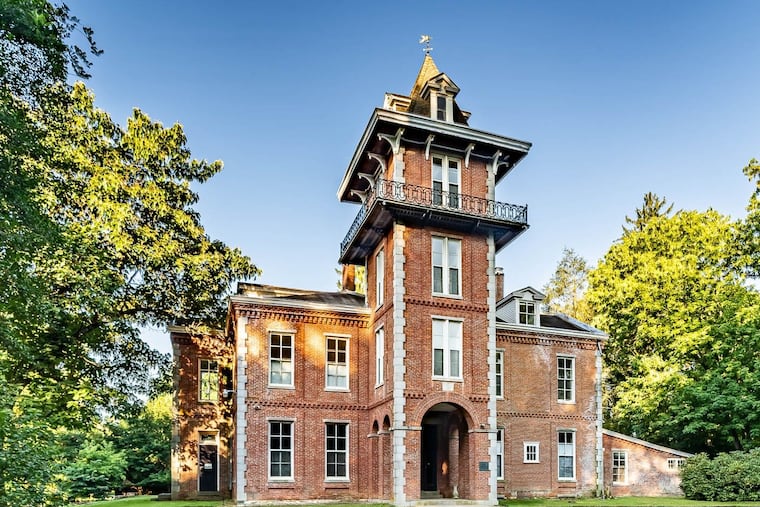
When Lindsey Scannapieco obtained the keys to the former Bok Technical High School in 2015, her plans to transform it into a commercial building for artists and small businesses was met with skepticism and some anger.
Scannapieco, managing partner and founder of Scout Ltd., obtained the 340,000-square-foot shuttered public school for the low price of $1.76 million, and some critics saw her transformation plans as a poster child for gentrification.
Other, more business-minded skeptics couldn’t see how Scannapieco would be successful without putting apartments or condos in the building.
“As a Realtor, when they started, I thought there’s no way she’s going to fill that place up with makers; it’s got to be residential to be successful,” said Bruce Benjamin, president of the East Passyunk Crossing Civic Association, the community group for the area. “And look at it. I was completely wrong.”
Now 10 years later, Scannapieco is releasing a report to put numbers behind the success that the Bok building has inarguably become. The mammoth former school has been 100% occupied since 2022, with 574 inquiries from prospective tenants last year.
Scannapieco says the key is to be able to keep rents low — multiple long-term tenants described paying well under $2 a square foot — and leases short-term, averaging two years for spaces that are as small as 73 square feet. Scout does not comment on rent prices, and it isn’t clear whether newer tenants pay more or how variable prices are.
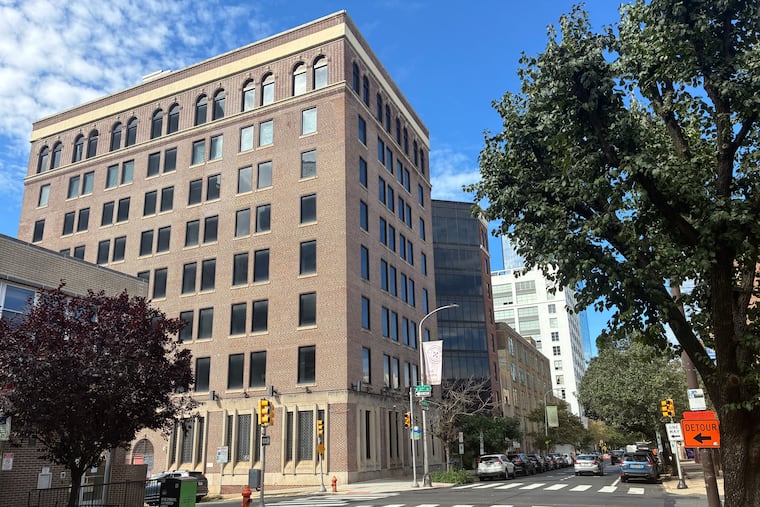
When developer Ori Feibush recently purchased a much smaller office building at a deep discount in Old City, he estimated newly lowered rents at $22 to $25 a square foot.
Bok’s pricing allowed the building to be accessible to start-ups, small nonprofits, and creative types that don’t have much money. This is partly supported by businesses Scout runs within the sprawling building, like Bok Bar and the Bok events business, which attracted a combined 150,000 visitors. It’s a model that both Scannapieco and others are seeking to emulate in other parts of the city.
“Some people really want the certainty of a long-term lease, but some just don’t know where their business is going to be in a year or two,” Scannapieco said. “Our kind of model allows people to take risks and experiment.”
She says that a recent survey found that over 50% of the Bok building’s tenants never had a commercial lease before, and 50% started their businesses at home or in a studio. One in five is owned by nonwhite tenants, and 56% of the businesses are owned by women. Almost half are devoted to arts and culture.
Especially in the earlier years, when the building was still being redeveloped floor by floor, those who experienced success could grow with the project.
The nationally acclaimed Machine Shop bakery grew from two people in 720 square feet on the fourth floor in 2018 to 10 workers in the renowned retail storefront they now have on the ground floor with 1,751 square feet.
“We thought of Bok as a starting-off point because it had a lower barrier to entry, which was helpful for us because we didn’t have a lot of funds when we were starting out,” said Emily Riddell, chef and owner of Machine Shop.
“It was still a very raw space then,” Riddell recalled. “They supplied the electricity for us, and we did a bunch of work installing shelving, and we got someone to put sinks in and all that kind of stuff.”
Other businesses in the space include Scipio’s Commercial Cleaning, BlackStar Projects, and Redshift Sports, which manufacturers bike parts.
Scout reports that Bok currently hosts 673 workers, 39% of whom live in South Philadelphia. West Philadelphia is the second most represented part of the city.
“A lot of those jobs are accessible jobs that don’t require higher levels of education beyond a high school degree,” Scannapieco said. “They’re also well-paying jobs, often above Philadelphia’s living wage.”
The company found that three in five workers in the building commute by foot, bike, or transit. Bok does not offer parking space, and since the building’s transformation, many of the surrounding blocks have become permit-only parking.
Scannapieco notes that the building does have plenty of loading zone capacity, which is essential for small businesses that may be sending out hundreds of packages, especially around holiday season.
Ian Toner rents over 2,500 square feet that he shares with the partner in his architecture firm and seven employees, most of whom drive to work.
“They have their secret spots around the neighborhood,” Toner said. “They don’t like sharing because there’s a lot of permit parking around here. That wasn’t the case when we first moved, but now a lot of the blocks nearby are two-hour parking, and they have to park further away.”
But Toner says that as Bok has expanded and become a neighborhood icon, the building has become a more attractive place to work. And over the course of nine years at Bok, his firm’s per-square-foot rent has increased only marginally.
“I would say the rents really only increased in keeping with inflation,” Toner said. “I have looked at a lot of other places, and I didn’t find anywhere in the city that I’d get rent like this. And I’m not driving out to the county to get cheap office space.”
Scannapieco noted that her business model didn’t depend only on purchasing buildings on the cheap or having a lean staff at Scout of 8 to 10 employees.
Scout’s most recent expansion with the purchase of the University of the Arts’ Hamilton and Furness Halls cost a lot more money for a lot less square footage. Yet she hopes to continue the Bok’s business model there.
“What makes affordable rents possible is a mix of resourcefulness, expertise, and day-to-day commitment,” she said, highlighting again the revenues from businesses Scout runs in Bok. “It’s about understanding complex capital stacks, knowing how to leverage subsidies or low-cost financing ... and sometimes changing the expectations of your returns, or looking at returns beyond simply profits.”