Haiti dreams of bringing a party to the World Cup, even though its citizens can’t come to Philadelphia
Members of Haiti's World Cup delegation say the thought process remains: "The [Haitian] federation would like to have our fans at the World Cup, but it’s at the discretion of the United States."
VANCOUVER, British Columbia — Haiti’s return to the men’s World Cup is the kind of story that erases the cynicism directed at FIFA for a moment.
Les Grenadiers are back on the sport’s biggest stage for the first time in 52 years, and the soccer gods put them in what could be this tournament’s most fun group. The quartet of Brazil, Haiti, Morocco, and Scotland might not have all of the best players, but it almost certainly will have the best vibes in the stands.
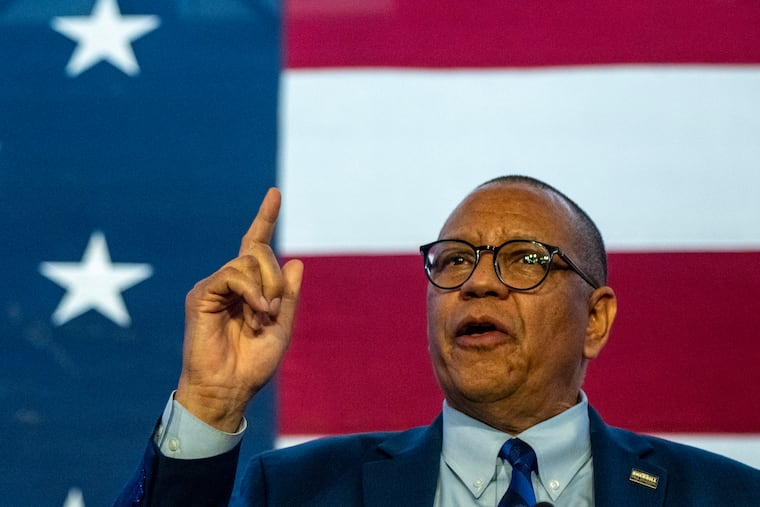
“Since my childhood, when I grew up with my father, I grew up with his dreams to see Haiti play in a World Cup,” said Yvon Severe, one of Haiti’s delegates at the FIFA Congress. “Happily, 52 years later, we’re back on the stage.”
The party will pass through Philadelphia, too, when Haiti plays Brazil on June 19 in the city’s highest-profile group game. The nations have longstanding cultural ties, including in soccer, and for many Haitians, Brazil was the team they really wanted to face.
They got their wish in style: a prime-time showcase in the squads’ second group-stage contest.
“I have to tell you, when it comes to soccer, Haitians have a second country: Brazil,” Severe said, speaking in French and sprinkling in some Haitian Creole. “You know how we call our national team Les Grenadiers? It means they’re fighters, warriors. So we don’t fear anyone.”
If there was ever a moment to boast, this was it.
» READ MORE: Haiti and the Union will make World Cup history in Philadelphia. Here’s how.
“The ball is round, we’re going to play in the World Cup, we’re going to play against Brazil, and everything can happen,” he said. “That’s why we worked to give the best preparation to our national team, and now we wait to see the results.”
It’s also a good enough story to make you ignore that Severe is on a “normalization committee” FIFA installed in Haiti in 2021 to run the nation’s soccer governance amid long-running unrest in the country. The team was unable to play its home World Cup qualifiers on its own turf and did so on neutral ground in Curaçao and Aruba instead.
“You know all the problems there are in Haiti,” Severe said. “We didn’t see people who were for X or Z. We saw just one people together, behind their national team.”
Normalization committees don’t always go well — or at least aren’t popular in the places where they arrive. But Haiti’s has been well-received.
» READ MORE: The World Cup has always been political, but it feels even more so now
On the field, the men’s and women’s national teams have been successful, with the women’s team playing in its first World Cup in 2023 and boasting a global rising star in Melchie Dumornay.
Off the field, Haiti’s current delegation took over the responsibilities of former president Yves Jean-Bart, whom FIFA banned for life in November 2020 after a long investigation into alleged sexual abuse of young female players.
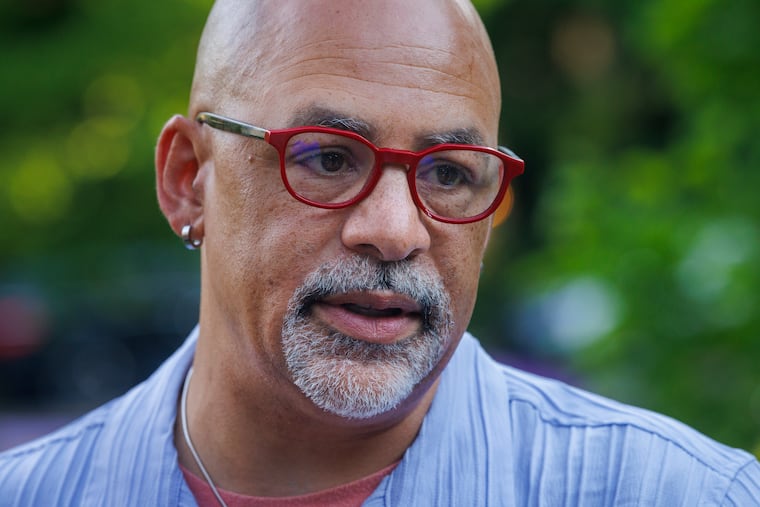
Severe was one of three Haitian delegates at the Congress, along with normalization committee president Monique André and Hatian Football Federation secretary-general Patrick Massenat.
“This qualification is the fruit of all of that work done since the arrival of the normalization committee,” Severe said. “And we are proud. The whole country is proud. … I lived the qualification in Haiti. I have to tell you, there’s one thing that brought everyone to stand together: the qualification.”
It might not have happened, had FIFA not expanded this World Cup to 48 teams, a matter that still isn’t universally popular but has at least given this tournament some new underdogs.
» READ MORE: Ale Ayiti: Philly’s Haitian Americans celebrate a rare World Cup bid | Sabrina Vourvoulias
Along with Haiti, Iraq will come to Philadelphia in its first men’s World Cup since 1986. The Democratic Republic of the Congo is in for the first time since 1974, when it was called Zaire. Scotland and Norway are in for the first time since 1998. And Curaçao will take to South Broad Street as one of four debutants across the tournament, along with Cape Verde, Jordan, and Uzbekistan.
And if any critics would claim that Haiti was helped by three Concacaf powers already being in as cohosts — the United States, Mexico, and Canada — Severe had a WIP-worthy response ready.
“Some people have said that Haiti qualified because the United States didn’t have to,” he said. “No, we have won our qualification by our hard work. Go ask the countries that didn’t qualify — Italy, for example, the multi-time champions of the World Cup.”
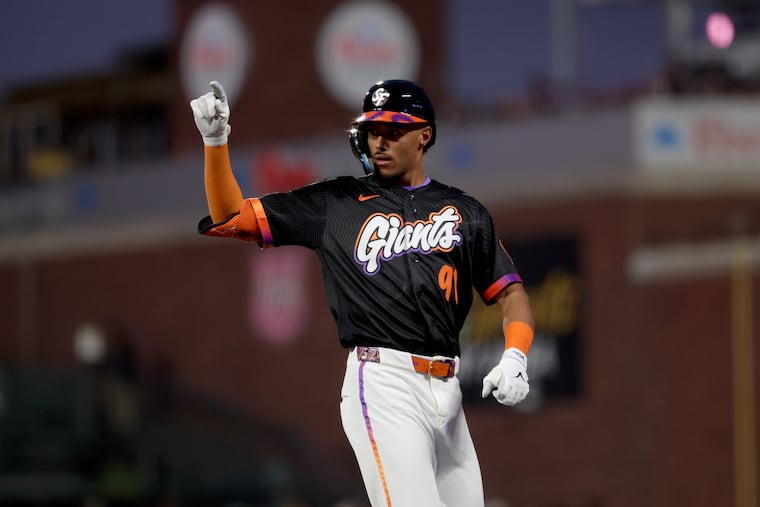
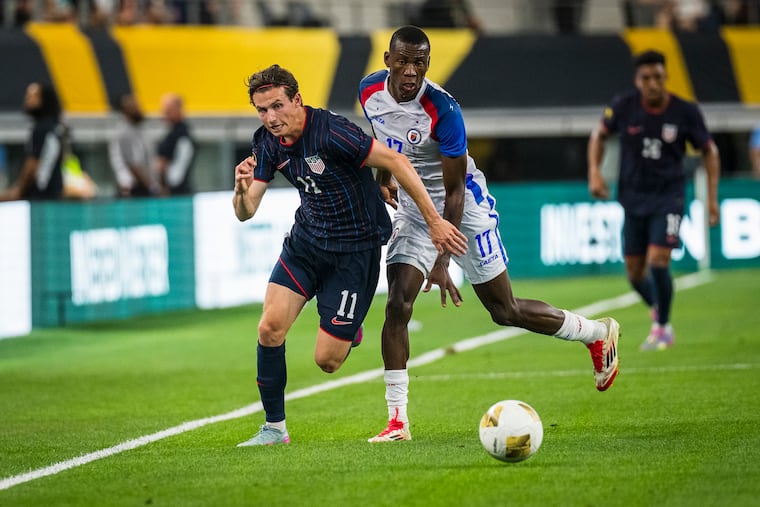
If Union midfielder Danley Jean Jacques shoots with that accuracy in the tournament, Haiti will have a goal to celebrate.
“We played games, and there is one nation, one team, the players, who are standing,” Severe said. “There’s one staff that’s standing. There’s one administration that arrived that put everything in place, and the players had things set up comfortably in their travels, their hotels, their food, and in the staff that traveled with them.”
» READ MORE: FIFA's president tried to get Israel and Palestine soccer officials to shake hands. He failed badly.
Severe happens to be from the same small town as Jean Jacques, Petit-Goâve. It’s about 42 miles west of Port-au-Prince, Haiti’s capital and biggest city, and sits on a long peninsula that stretches into the Caribbean Sea. When Jean Jacques was mentioned to Severe, he was surprised and pleased.
“Normally, the roster is picked by the coach, but I have to admit, Danley Jean Jacques is a player I know,” Severe said. “I have to tell you sincerely, he’s a fighter and someone we count on a lot at the heart of the national team.”
The way things are going, Severe doesn’t have to worry about interfering in manager Sebastian Migné’s good work. But he does have to worry about big-picture topics.
Haiti is among the countries on the Trump administration’s banned list, which means its citizens can’t come to the United States this summer to cheer on their team. Though the big Haitian diaspora communities in the northeastern U.S. and Canada undoubtedly will show up, they will know who’s missing.
» READ MORE: FIFA president Gianni Infantino insists Iran will play in this summer’s World Cup, and in the U.S.
“The question of visas is up to the political orientation of the president and the administration in the U.S., via the State Department,” Severe said. “Soccer unites the world, and it’s a party that matters to all the world. The [Haitian] federation would like to have our fans at the World Cup, but it’s at the discretion of the U.S. government.”
He then added: “We, as the federation, continue to do our work. We continue to fight for the fans, and we continue to look for a way for the fans to be able to go to the World Cup.”

Nine nations will compete in five group stage matches this summer, plus two more in a knockout game on July 4. Here’s what you need to know about those countries — and what those fans need to know about Philly. Click here for more.