Inside Lincoln Financial Field’s transformation into ‘Philadelphia Stadium’ for the World Cup
It’s a jarring sight to see all the signage come down along I-95, whether the corporate kind or the banners of Eagles players that surround the solar panels. But it's really a World Cup tradition.
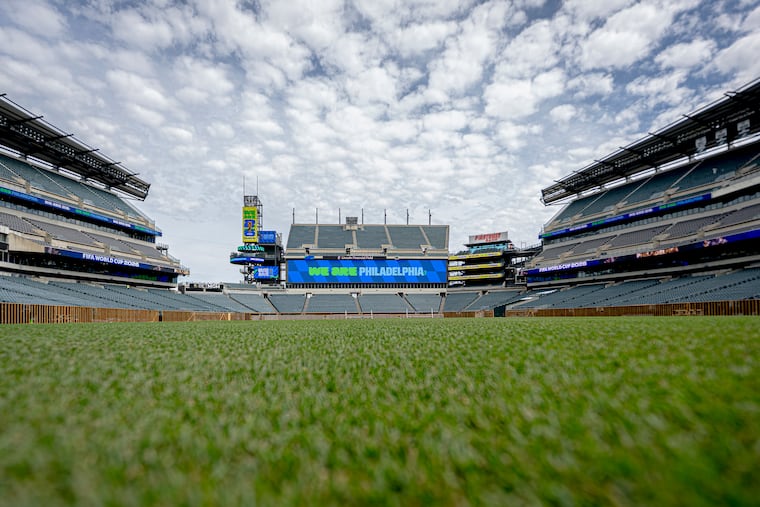
On Friday, FIFA will officially take over Lincoln Financial Field to complete its transformation into “Philadelphia Stadium” for the World Cup. Though the name change and the accompanying decor changes are unusual for this city, it isn’t unusual in the soccer world.
World soccer’s governing body has long had a rule barring corporate sponsors’ names from venues at its flagship tournaments. Fans here might not have known about it, though.
Twenty years ago in Germany, eight of the 12 venues that hosted the 2006 men’s World Cup dropped their corporate sponsor titles. Three years ago in New Zealand’s capital city, the U.S. women played at a venue that’s only called Wellington Regional Stadium for big international tournaments. Otherwise, it’s had a sponsor name since 2000.
It just so happens that the last two FIFA tournaments played domestically were exceptions to the rule. The 2003 women’s World Cup and last year’s Club World Cup were arranged hastily, the former after a disease outbreak in China and the latter because of FIFA’s modern ways.
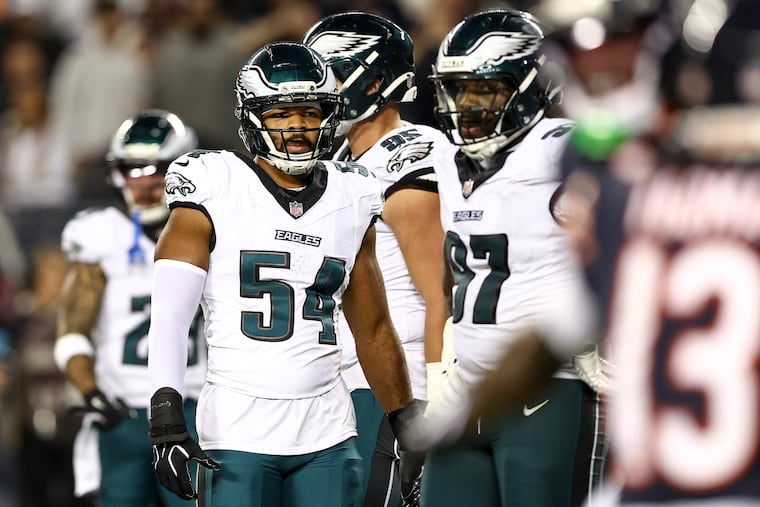
Still, it’s a jarring sight to see all the signage come down along I-95, whether the corporate kind or the banners of Eagles players that usually surround the Linc’s solar panels.
Of course, a lot of the people who come here from afar this summer might not know that it’s been 23 years since NFL games in town were played at a venue without a sponsor’s name.
» READ MORE: Lincoln Financial Field will look very different during the World Cup
Nor might they know that Veterans Stadium’s former tenants have decorated their current homes with two Super Bowls, two more NFC championships, and nine NFC East division titles on the gridiron; alongside a World Series, three more National League pennants, and seven division titles on the diamond.
They could find out, though, if all of the championship and retired number banners remain up this summer. That’s still being negotiated between the Eagles and FIFA.
What traveling fans will see are soccer games in a modern stadium featuring some of the best sight lines and acoustics in the country, played on a grass surface that’s just been installed to FIFA’s high standards.
That was the subject at hand during a news conference Wednesday morning at the stadium. Officials who spoke had no laments about what’s being temporarily put away.
» READ MORE: How Philadelphia's World Cup setup became the envy of fans in New York, Boston, and beyond
Costs ‘are fairly minimal’
“One of the things that we knew coming into our bidding process was that the stadium was very well-positioned to meet the requirements of FIFA,” said Meg Kane, CEO of Philadelphia Soccer 2026, the city’s local organizing committee. “There have absolutely been changes and upgrades, and we’re in the process of taking some of the signage down. All of that was expected when we were in the bidding phase.”
One particularly tough thing to deal with could be the Lincoln Financial Field logos on the roofs above the sideline stands. Eagles chief operating officer Frank Gumienny said covers will be put on top of them.
There is a financial cost to all of this, of course. Gumienny said it’s “a few million dollars, and we’re working in partnership with Philly Soccer 2026 as part of the bid — money that was raised and goes into the whole bid package in order to convert the stadium over to FIFA’s requirements.”
He later added that “our costs are fairly minimal to most stadiums,” with the biggest construction work required to take out rows of seats in the corners. That is required to make room for not just the playing field, but the perimeter around it for team staff and security, among others.
» READ MORE: Will keeping Philly bars open later during the World Cup be worth it? Philly bars weigh in.
“That actually was a joint cost with FIFA,” Gumienny said. “Having the Club World Cup last year actually really helped in that situation, because we were able to [be in a] partnership with FIFA and actually have FIFA pay for a large share. So compared to all the other cities, I think our stadium modifications are probably the lowest, or definitely at the very lowest [end].”
Kane said the exact dollar figure isn’t settled because “we’re still working with FIFA on certain things that are going to change that number.”
There’s still plenty of construction left to do. While the grass and the wide artificial turf area around it are firmly in place, the wood-beam foundations of the walls in front of the seats hadn’t been covered as of Wednesday.
One difference from the Club World Cup is that some seats in the upper deck will be removed to create extra media seating. That’s another tournament tradition. Hundreds of reporters and broadcasters will come to town for every game, more than can fit in the stadium’s press box.
» READ MORE: Where's the money from your exorbitant World Cup tickets going? To FIFA's $14 billion in revenue.
Gumienny said the stadium’s capacity this summer will end up between 65,000 and 67,000.
More details on tailgating
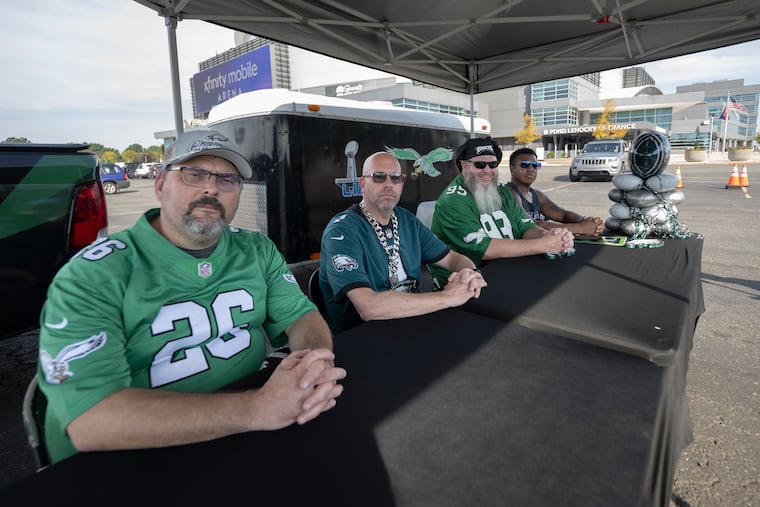
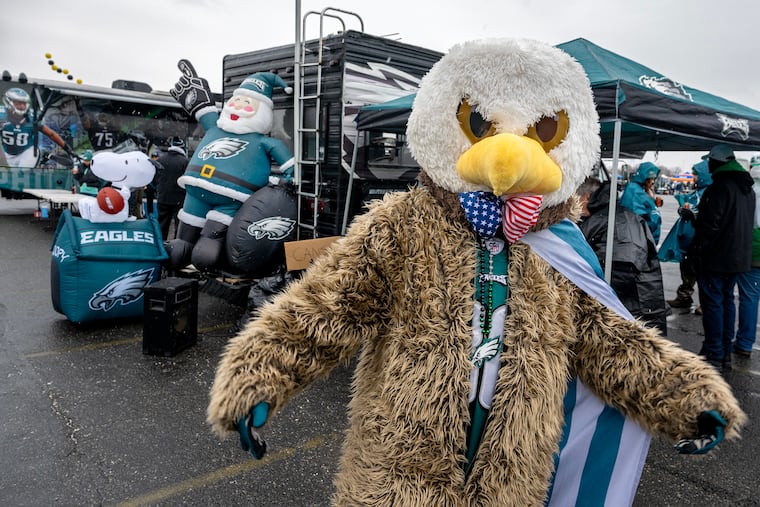
There were questions about fans’ ability to tailgate, always such a vital part of Philadelphia sports culture. Kane reiterated that it will not be officially banned. She said FIFA will control the parking lots during the tournament, and “if you have a ticket for the match, on the day of the match that your ticket says, and you have a parking pass, and you come into our lot, you’re absolutely welcome to enjoy the traditional fan experience of Philadelphia.”
But that didn’t answer what many local fans here consider the real essence of tailgating: not having a ticket but showing up anyway with a six-pack of beer and a hoagie and sitting on the grass or sidewalk around everyone else’s cars. (All the better if you can finagle a nearby griller’s hot dog along the way.)
Gumienny hedged when asked, not wanting to be the tailgating police.
» READ MORE: Haiti dreams of bringing a party to the World Cup, even though its citizens can’t come to Philadelphia
“Given the security level that the World Cup presents, we’re going to look to basically get parking in the hands of all ticketed [fans] because we want to make sure that everyone who has a ticket has a place to park,” he said. “I can’t get into policing every single [thing] about what’s necessarily going on. We just want to keep it safe and controlled. We’re not trying to alleviate the passion.”
And what of the continuing impact of the rest of the country praising Philadelphia’s readiness for the tournament, often at the expense of New York, New Jersey, and Boston?
“That’s an excellent question,” Kane said. “As a native Philadelphian, it is an odd position to be in. But it’s something that we welcome.”
She insisted that “there are no victory laps to be taken until July 20,” the day after the World Cup final at MetLife Stadium, which is having its name changed to NY/NJ Stadium. But there is a quiet confidence in her team, as there is among many local officials.
“We’ve often talked about the FIFA World Cup as being the ultimate private-public partnership,” she said. “That this doesn’t happen with just a private organization. It can’t just happen with the city or the state. So in terms of what we’ve been able to deliver, it has really been a collaborative effort of everyone really rowing in the same direction … I think it is heartening that the work is recognized, and we hope that it makes Philadelphia proud.”

Nine nations will compete in five group stage matches this summer, plus two more in a knockout game on July 4. Here’s what you need to know about those countries — and what those fans need to know about Philly. Click here for more.