Morale inside SEPTA, the Roosevelt Boulevard subway’s future, and other takeaways from our transit AMA on Reddit
On the first day of restored transit service, Inquirer reporter Thomas Fitzgerald took to Reddit to answer reader questions about SEPTA’s future.
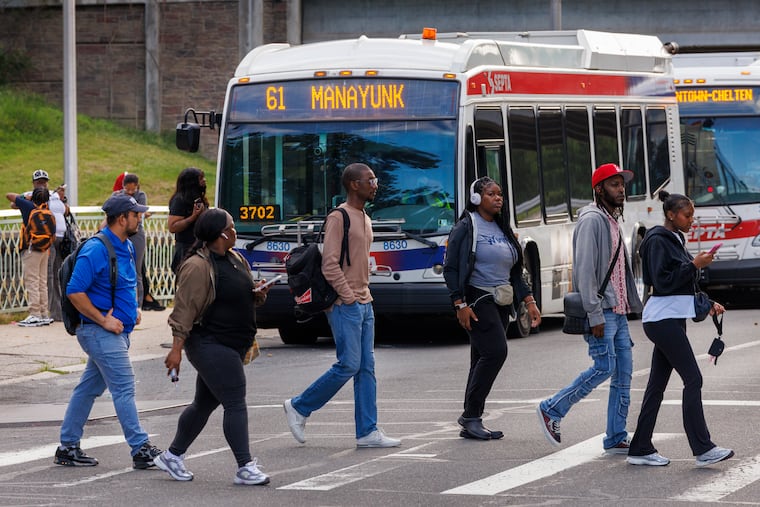
SEPTA restored service this weekend to many bus, train, and trolley routes after enacting severe cuts in late August. The slashing of service was the result of the transit agency’s $213 million financial shortfall and a stalemate in Harrisburg over whether to fund mass transit across the state.
The cuts, which resulted in loss of service for thousands of riders, were reversed after SEPTA got permission from Gov. Josh Shapiro to dip into capital funds.
As riders navigated yet another change in transit schedules on Monday, Inquirer transportation reporter Thomas Fitzgerald answered questions during a Reddit AMA with r/Philadelphia. Here are some of the highlights. Some questions and answers have been edited for length, clarity, and tone.
Did the “resolution” of using funds put aside for structural improvement just delay the doomsday scenario by two years?
Using quotes around the word resolution is well-advised. Unless other factors change markedly, this issue will be back. The promise to work on long-term funding is worth the paper it wasn’t printed on. Pols work on adrenaline and crisis. So don’t expect something until it’s rough again.
Two years sounds right. Sooner if there’s a pandemic or bad recession.
How much did the lawsuit filed by George Bochetto affect SEPTA and Senate Democrats’ ability to resist the capital fund option? Was that ruling unprecedented?
Ultimately the lawsuit, which argued that SEPTA’s deep service cuts unlawfully place a greater burden on people of color and low-income communities, didn’t change much because there was no full funding/long-term plan.
It was surprising the suit won an injunction in some ways. SEPTA was previously sued when it proposed cutbacks in 2003 and 2007 and also was ordered to rewind. There was nothing I noticed in the judge’s order that gave a rationale or precedent cases or anything.
Is there any traction for long-term SEPTA funding or has the emergency funding stopgap lulled lawmakers into thinking things are fine for now?
Supporters of SEPTA funding, the advocates, are fired up and ready to keep fighting for a long-term funding solution.
Typically, though, a temporary solution allows all involved to breathe easier and postpone decisions.
However, to be fair, there are other pending state budget issues that are hard-fought. For example, Philly schools just had to borrow $1.5 billion to pay their bills as they await funding from Harrisburg amid the monthslong budget stalemate.
What is SEPTA morale like coming out of this?
SEPTA’s people are exhausted in many ways. They can’t feel confident of a pathway to stability, unless something changes such as a concerted effort by Shapiro and Transportation Secretary Mike Carroll to push for a grand plan, similar to what happened in 2007 and 2013 with Acts 44 and 89.
But the lights will be on, so that’s a victory of sorts. Kinda.
Any truth to the Cynwyd and Chestnut Hill West lines existing only because of a person in high influence using it?
I have no inside info on who rides which trains, but I can say that Chestnut Hill West and Cynwyd are among Regional Rail’s lines with the lowest ridership.
TWU 234 had been more silent on the doomsday plan than they were during their last contract negotiations. Why do you think this was?
It’s not quite fair to say TWU was silent on SEPTA funding issues. Local president Brian Pollitt spoke to 6abc about it in August — and we don’t know what conversations he was having behind the scenes. Also worth noting that Will Vera was just elected to be TWU’s next president, and the union faces contract negotiations later this year. So lots going on there.
How will this stopgap solution affect plans for investments that were expected to happen in the next five years, like the Trolley Modernization Project?
There is no provision to replenish the capital money that has been shifted. SEPTA did certify that no projects with a direct impact on rider safety (from system failures, crashes, etc.) would be impacted, a condition to get the dough. Still, some projects are bound to be affected down the line, such as Trolley Modernization. Not clear which ones yet.
It also means the fight next time will involve replacement of capital money plus whatever SEPTA needs at that time to run things.
Is there really so little appetite for transit funding mechanisms like taxing gaming or recreational marijuana?
Shapiro proposed taxing marijuana as part of his overall budget plan. There’s some support, but the opposition is intense and well positioned, so the idea was dismissed.
There’ve been attempts to tax gaming in convenience stores that have pseudo-slot machines legally called “skill” games, but no agreement. Many Republicans don’t like taxes that would hurt VFWs and American Legions and small-business people. And Democrats from Philly are leery because these machines are concentrated in disadvantaged areas and can be seen as preying on people with little money. The machines also sometimes bring neighborhood nuisances.
What would you estimate the cost of the debate around the funding? Not the cost of the stalled funding, but the money spent on the debate itself.
It’s hard to estimate the cost of the entire debate at this point. First, SEPTA employees were working anyway and being paid. So that takes care of the alternate plans. Outside legal help has some cost, but those invoices are not in and on the public record yet. There likely was cost to implementing things, but it’s not yet clear how much.
A common misconception is that SEPTA is “bad with money.” Many believe that SEPTA should “break even” by collecting fares and that fare evasion is a major reason for SEPTA’s funding crisis.
Fare evasion, while a problem, is not the biggest funding issue by far. Fares only cover a portion of the true cost of running services. Transit is expensive and heavily subsidized. And SEPTA is pretty efficiently managed, better than most all its peers, according to stats that are reported annually to Federal Transit Administration. They share data on metrics like cost per rider, per mile, etc.
When will Bus Revolution move forward?
Bus Revolution is SEPTA’s long-planned reorganization of the region’s bus network, designed to make trips more frequent and reliable. It was placed on “indefinite hold” last November as SEPTA officials braced for the funding crisis.
I’ve asked about its future, and it’s not precisely clear but likely sometime in the spring. The plan is done. SEPTA says the bus network needs to be adjusted for efficiency; there may be more of a case to be made now. SEPTA says it will not add to its costs because it is “cost neutral” and already baked in the budget.
Does the raiding of the Public Transportation Trust Fund endanger the Roosevelt Boulevard Subway project?
The Roosevelt Boulevard subway, a decades-old proposal to connect Northeast Philadelphia and Lower Bucks County to the rest of the city and region, was always more aspirational in SEPTA’s view because of the possible cost. But … it is clear that the lack of a sustainable state funding source makes it almost impossible for SEPTA to plan or even consider such out-of-the-box ideas.