SEPTA’s struggles strike again, stranding some Regional Rail riders: ‘You have to be kidding me’
SEPTA General Manager Scott Sauer asks riders to "stick with us just a little bit longer, things are going to turn around.”
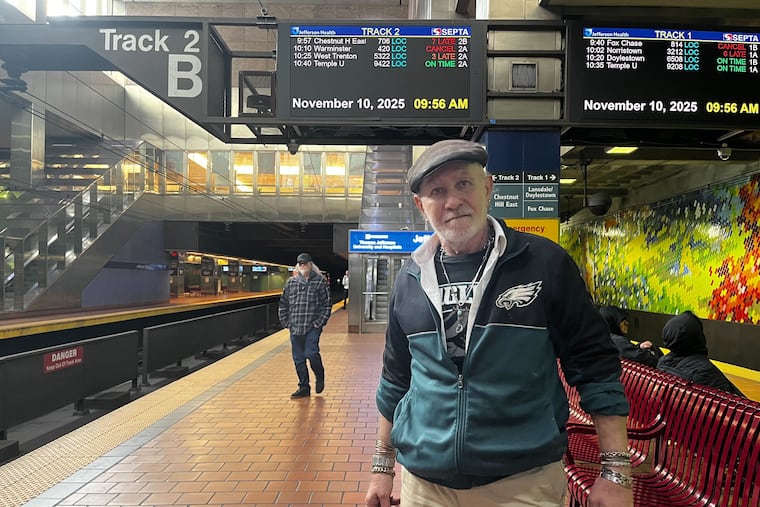
Leroy Biggs got up at 5 a.m. Monday and, as he does every morning, ate bacon, eggs, and two pieces of toast and washed it down with orange juice and chocolate milk.
His morning was going swimmingly until he began his commute.
“You can plan whatever you want, have everything ready, get here on time, and there will still be a wrench thrown in your plans,” said Biggs, a 75-year-old electrician from Fishtown.
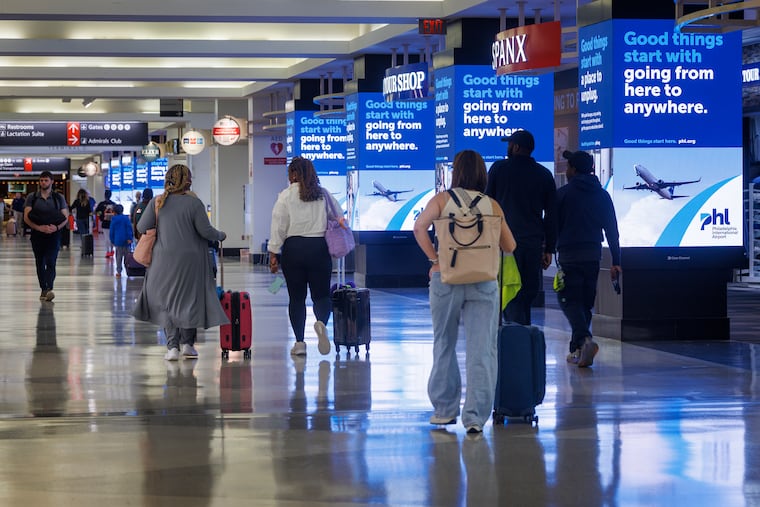
Biggs arrived at Jefferson Station around 7 a.m. to a surprise: SEPTA had canceled a slew of trains on the line he needed to take to a job in Warminster.
For Regional Rail commuters, it has been a season of chaos and dashed plans, as SEPTA rushes to finish inspections of all 223 of its Silverliner IV train cars — ordered to do so by the Federal Railroad Administration after five were involved in fires this year.
Still waiting at 9:47 a.m., Biggs looked up at the digital schedule displayed in the station and saw that the next Warminster train was canceled.
He would have to take the Lansdale/Doylestown line instead and ask a coworker for a lift.
Increasing pressure
SEPTA has been under intense and widening federal pressure on safety issues since Oct. 1.
As of Monday morning, 193 Silverliner IV rail cars had been inspected, and 70 had been returned to service. Most of the cars needed to stay in the shop for repairs, leading to shortages. SEPTA expects the trip cancellations to continue Tuesday.
“The challenge now becomes [that] even though the inspections didn’t necessarily show us major fire-related risk, we did find other issues that we have to do maintenance on in order to bring the cars back,” SEPTA general manager Scott A. Sauer said in an interview. “We’re not deferring anything that we find, even if it’s not safety critical.”
Last week, federal regulators ordered SEPTA to also inspect the overhead catenary system that powers trolleys by that Friday. The same day, the Center City trolley tunnel was closed for repairs to the catenary inside. It is scheduled to open at 5 a.m. Tuesday.
The Federal Transit Administration directive came in response to four failures of the catenary system in September and October that stranded trolleys and required evacuations.
In a Sept. 25 incident in Delaware County, a pole that conducts electricity separated from the roof of a Media-Sharon Hill trolley and pierced the passenger compartment; 11 people were injured.
U.S. Transportation Secretary Sean P. Duffy disclosed the trolley problems in a Washington news conference last Tuesday following a meeting on safety with Gov. Josh Shapiro, Mayor Cherelle L. Parker, the state’s two senators, and SEPTA’s Sauer.
Duffy said he acknowledged that Pennsylvania has to figure out stable funding for transit but focused on what he called poor management at SEPTA.
“Everyone wants to talk to me about money, but they also have to deal with the management of the system,” he said. “They have to get their house in order.”
Sauer said: “I make no excuses. We have to do a better job here at SEPTA, and we’re working on that for sure, but we can’t just dismiss the funding issue.“
A year of misfortune
Anthony Godshall, a lawyer working in Center City, was hoping to get home to help care for his daughter when his 10:10 a.m. Warminster train was canceled.
“It was frustrating to come down the steps to the platform and see that. ‘You have to be kidding me,’” Godshall said. “The most annoying portion of it was the cancellation without any notice.”
He said he would have to take the Doylestown line and walk close to 30 minutes to where his car was parked.
On the whole, the year has been one of misfortune for the Philadelphia region’s public transit agency.
Efforts to enact new funding for the state’s transit systems failed in the face of Senate GOP opposition to Shapiro’s proposal to use a bigger share of general sales-tax revenue.
SEPTA, facing a recurring $231 million annual deficit, implemented the first round of a planned 40% cut in service in late August, only to have a court order them to roll back the cuts.
Shapiro approved a two-year fix for SEPTA that allowed it to tap $394 million in state money allocated for infrastructure for operating costs.
The funding issue is only postponed, however.
Riders unaware
SEPTA staffers intercepted riders entering Jefferson Station to inform them about potential cancellations and delays.
Many customers said they had no clue.
In a statement about 8:30 p.m. Sunday, SEPTA said it would cancel in advance six trains scheduled for the morning peak hour on the Airport, Fox Chase, and Chestnut Hill West lines. Sixteen later runs on those lines would also be canceled, SEPTA said.
Spokesperson Andrew Busch said it took much of the day Sunday to determine how many cars were available for service. Word of the cancellations was posted to SEPTA’s website, app, and social media accounts, he said.
Apart from the planned cancellations, additional trains were canceled early Monday morning, too, including trains on the Trenton, Warrington, Paoli/Thorndale, and Lansdale/Doylestown lines, according to SEPTA.
In addition to completing the inspections by Friday and working on repairs, SEPTA has until Dec. 5 to install thermal-detection circuits ordered by the FRA.
“I empathize with our customers. They have put up with a lot over the last two months,” Sauer said. “If they could just stick with us just a little bit longer, things are going to turn around.”