Boricua pride murals, Philadelphia Orchestra feat. Joe Hisaishi, and a beautiful manhole cover are among our favorite works of art this week
By Rosa Cartagena, Peter Dobrin, Elizabeth Wellington, Bedatri D. Choudhury, Julie Zeglen
Hidden art at your feet
useums and galleries are spaces we enter expecting to find joy and beauty in art. Even when we leave overwhelmed with feelings that the art made us feel, we know that we went in looking for that beautiful indescribable emotion. That joy is doubled more when art comes at you from unexpected corners.
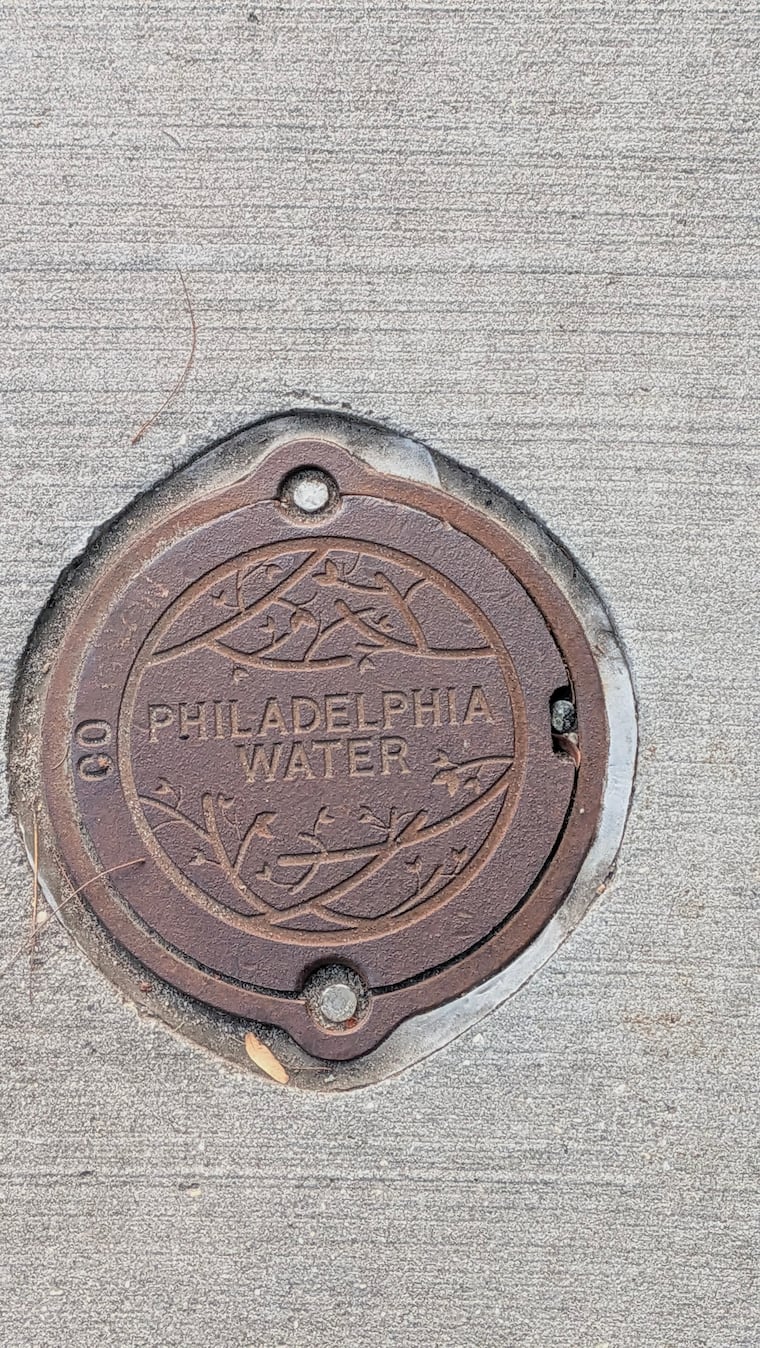
I was walking across the John F. Kennedy Boulevard Bridge one morning when my eyes fell on a manhole cover. A metal lid on the city’s unseen river of waste? Decidedly not art.
But imagine it’s early morning and the sun isn’t too strong yet, you’re walking to work with purpose and a head full of to-dos. You see the metal lid that conceals what you’re not supposed to see. The lid is stamped with a design of what looks like shoots of a plant with little leaves growing on them, the words “Philadelphia Water” occupy the center in a beautiful symmetrical typographic harmony.
It’s beautiful; its beauty enhanced by the fact that it didn’t have to be anything but a plain metal lid screwed to concrete. No one is supposed to stop and look at manhole covers in silence like framed art in a gallery but someone somewhere in the long line of civic workers at the Philadelphia Water Department decided to build something beautiful just in case someone on their way to work decided to stop and look. Someone came up with a design, someone forged a stamp, someone stamped the metal with it, and someone put that metal lid on the bridge I walk to work. There’s so much joy in discovering this silent gift. Thank you.
— Bedatri D. Choudhury
Netflix’s ‘A Different World’ is everything I wanted ‘Bel-Air’ to be
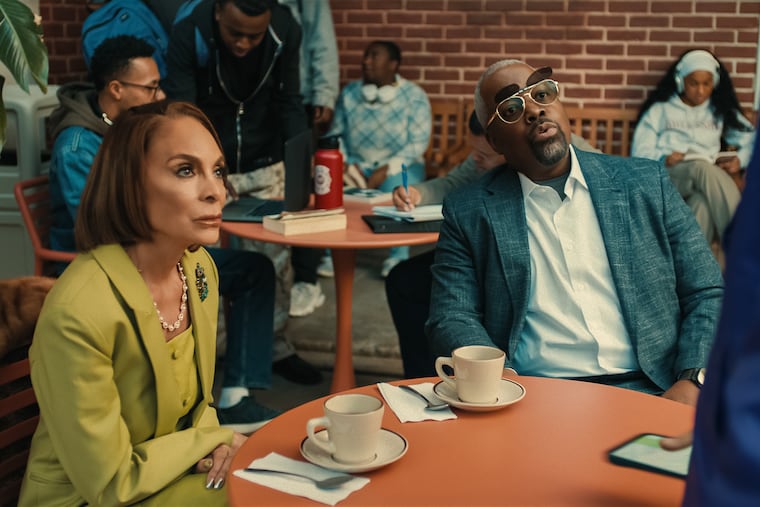
For those of you who don’t remember, A Different World was the NBC 1987 spinoff of North Philly’s own Bill Cosby’s The Cosby Show. It featured Cliff’s second daughter Denise Huxtable (Lisa Bonet) as a freshman at her parents’ alma mater, the fictional historically Black university, Hillman College.
After one season, however, Denise was out, Whitley (Jasmine Guy) was the center, and viewers were glued to their seats every Thursday night following Dwayne (Kadeem Hardison) and Whitley’s budding romance. By the end of its six season run, Dwayne and Whitley were married and we assumed they lived happily ever after.
After almost 30 years, Netflix has revived A Different World millennial style and this week it’s back.
The 10-episode first season gives Philly-inspired Bel-Air vibes; it’s a serious take on a fun and games 90s comedy. At first glance, the male lead Shaquille Johnson (Cornell Young IV) looks a lot like Jabari Banks, the West Philadelphia-born actor who assumes Will Smith’s character on Peacock’s Bel-Air.
But that’s where the similarities end.
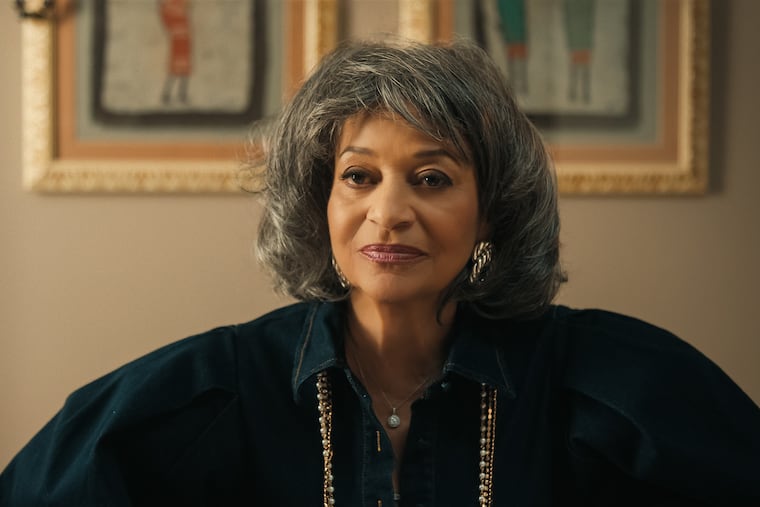
The updated version of A Different World is what I wanted Bel-Air would be. It remains true to the original show’s characters: Whitley is still an entitled snob. Dwayne remains as thoughtful is he is brilliant. And Dwayne and Whitley’s daughter, Deborah (Maleah Joi Moon) is a delightful blend of her mom’s sense of bougieness and her dad’s altruism. It’s a stone cold gas that her favorite accessory are flip glasses just like Dwayne Wayne. (It made me want to dig mine out)
Yet, the new A Different World is more than a nostalgic walk-in-the-park. The first few episodes deal with 2020s issues like the current presidential administration’s attack on Black history; rampant mismanagement of funding by university administrators; and what it’s like for this generation of college students to engage with professors and each other after almost two years of COVID lockdown.
Just like it’s 1980s predecessor, A Different World millennium style has the same immediacy.
‘A Different World’ is now airing on Netflix.
— Elizabeth Wellington
Beethoven meets Joe Hisaishi, thanks to the Philadelphia Orchestra
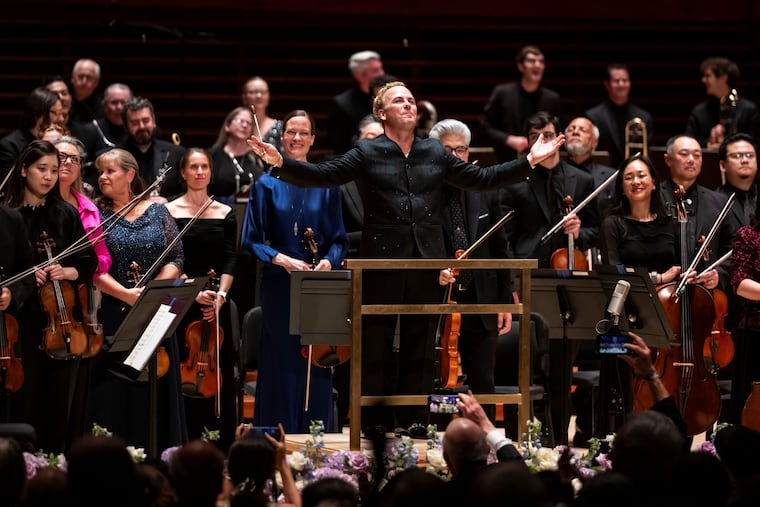
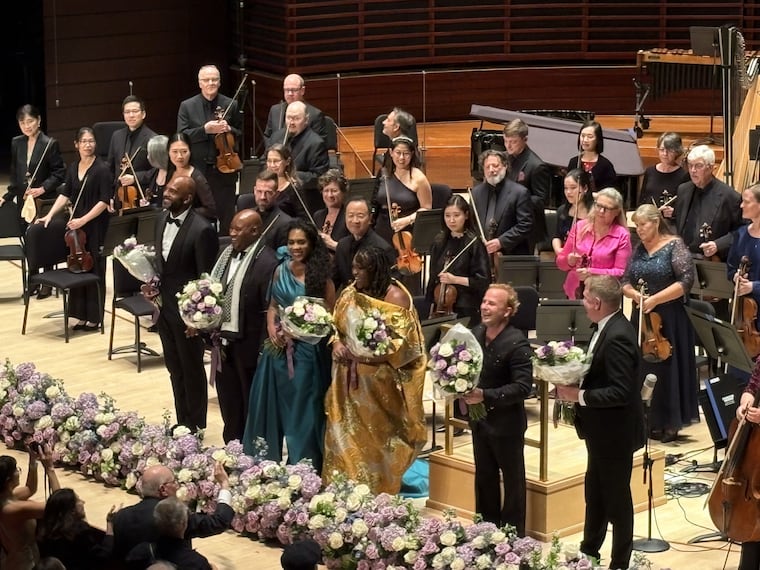
Yannick Nézet-Séguin opened the Philadelphia Orchestra’s 127th season Thursday night with a message at once broad and universal, and very local.
The piece was Beethoven’s Symphony No. 9, and the orchestra’s music and artistic director was no doubt referencing the state of the world when he spoke to the Marian Anderson Hall audience of the work’s shared humanity and how it reminds us that “there’s much more that unites us than what divides us.”
But “this is why,” he continued, “I want to finish by saying that it’s important for me and all of us to recognize all the musicians who have devoted their lives to the orchestra.”
No one said it explicitly at this gala fundraiser, but musicians and management of the orchestra recently agreed to remain united another three years. A new labor contract was ratified last week by players — “overwhelmingly,” a union official said — after six months of talks.
Nézet-Séguin not only praised orchestra members who have been “at the service of this incredible…treasured sound that’s unique in the world,” but an unusually large number of them populated tables in the Kimmel Center lobby for the dinner following the concert, where flowered tablescapes featured photographs of the players.
If the orchestra had wanted to extend the theme of unity, it might have programmed Valerie Coleman’s Umoja: Anthem of Unity, which the ensemble premiered in 2019 and has since championed. But Joe Hisaishi is the orchestra’s composer in residence, and his Orbis, a work whose sound straddles film and concert music, fit the moment.
The orchestra, too, now occupies both of these stylistic realms, making Hisaishi’s ethereal-to-brightly-stirring score — whose Latin text sung by the Philadelphia Symphonic Choir speaks of joy — emblematic of the season ahead.
The short work was written in 2007 as a companion piece to Beethoven’s symphony, which on Thursday featured the expert choir and four soloists who ranged from strong to stupendous: soprano Leah Hawkins, mezzo-soprano J’Nai Bridges, tenor Issachah Savage and bass-baritone Ryan Speedo Green.
Gala concerts of this sort often feature a single big-name soloist. The spotlight here was on the Beethoven, this great undying statement of humanity, and it was a programming decision endorsed by an audience that responded to the conductor’s push of the tempo at the end with a spontaneous roar.
There was another notable singer in attendance — Kathleen Battle, not on stage, but in the audience. At 78, the soprano still has presence, and you couldn’t help sense her place as a bridge in history, a link from the pioneering Black contralto for whom the hall is named to the four soloists on stage who represent the future of the artform.
— Peter Dobrin
Ladies of liberty and Boricua pride
Thousands of Philly Ricans will celebrate the annual Puerto Rican Day Parade on the Parkway this weekend in one of the loudest and proudest parties of the year spotlighting our city’s incredibly strong Boricua community. All year-round, though, there are other places in Philly with quieter but no less exuberant representations of Puerto Rican history and culture that have made me smile recently.
In Fairhill — where I was thrilled to see the indie band Chuwi from Isabela perform at Feria del Barrio a couple weeks ago — there’s a bright-colored, towering mural by Philadelphia artist Parris Stancell that’s a joy to see. There are two veijigante figures in striking red, green, and yellow masks, one with arms wide open like they’re about to embrace the viewer. (These characters typically appear in festivals with frightening, monstrous masks to scare away bad spirits.) Beautiful birds and symbols from indigenous Taino tribes adorn the vibrant scene.
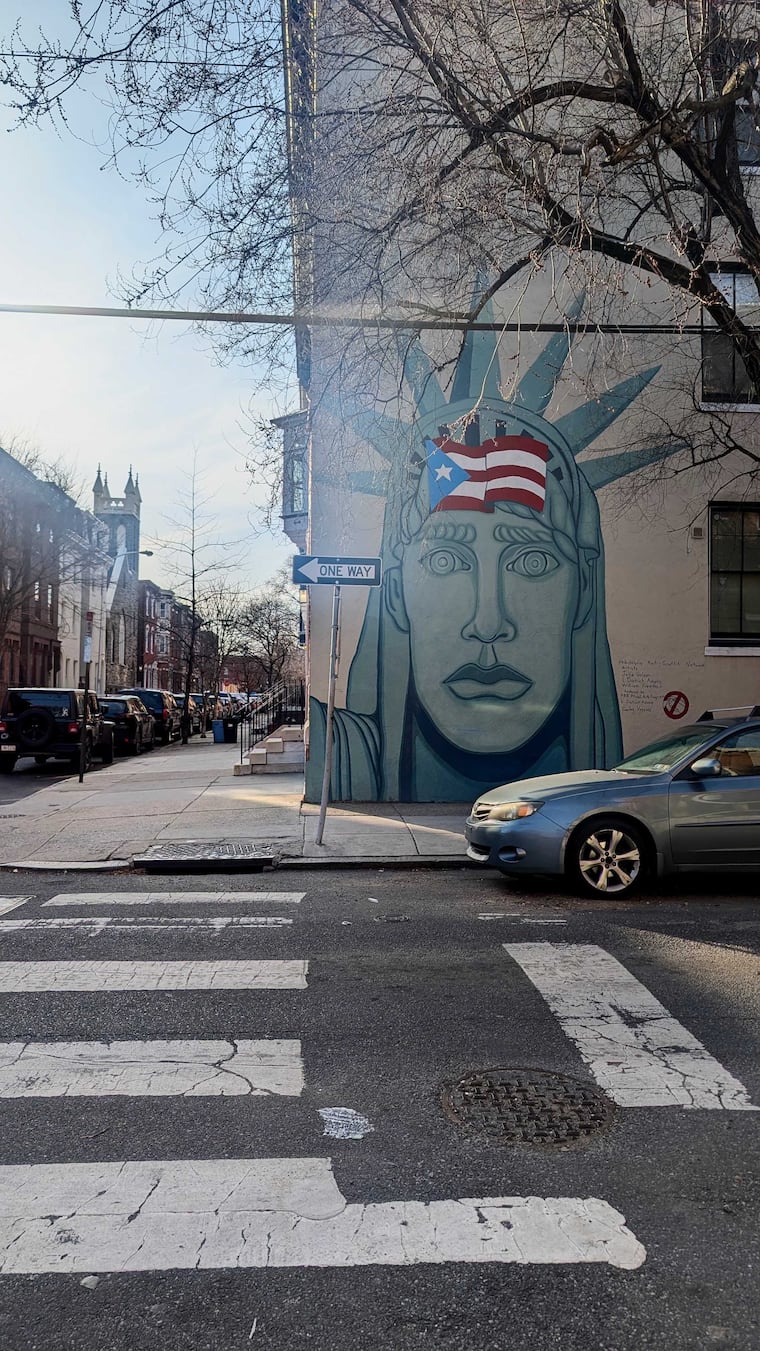
Also, picture the Statue of Liberty with a Puerto Rican flag hanging from her crown. If that sounds familiar, you may have seen another mural in Fairmount depicting Lady Liberty with the same flag. That painting offers a close-up look at the statue’s mournful, softly defiant face.
Both murals show a powerful symbol in the history of Puerto Rico’s independence movements: These ladies of liberty were not some artistic imagination but recreations of a protest from 1977, when a group of Puerto Rican nationalists occupied the Statue of Liberty and draped their flag across her forehead to demand independence for Puerto Rico.
According to Mural Arts, the Fairmount mural was first made by an anonymous graffiti artist in the early 1980s who wanted to honor that significant historical event but it was later covered up, only to be recreated after Philly Ricans petitioned the mayor to replace it.
These murals have me reflecting on the power of the diaspora in Philadelphia and beyond as Puerto Ricans on the archipelago are struggling through a devastating water crisis. That Statue of Liberty takeover happened nearly 50 years ago to criticize the government for treating Puerto Ricans as second-class citizens. Today, during Latino Heritage Month, when many Latin American nations ring in anniversaries of their independence days, Puerto Rico remains in colonial limbo. And Philly Ricans won’t let anyone forget it.
— Rosa Cartagena
Finding balance at Fringe
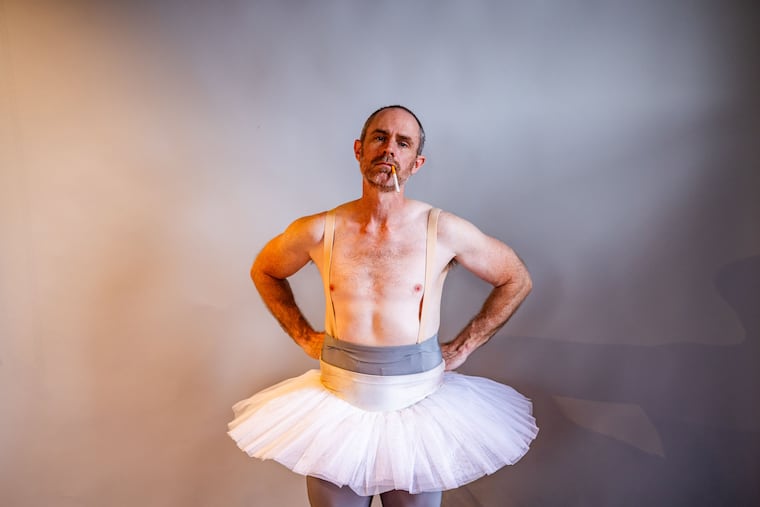
Chris Davis is still learning to let go of the barre. A literal ballet barre, from his years of late-in-life dance training. But the barre also represents the vices of his past — drugs; alcohol; unrealistic romantic expectations, thanks to too much exposure to ‘90s media; a codependent relationship.
And, he might admit, maybe they’re not all left in the past.
Dressed in a white leotard, tights, and slippers, Davis stretches and speaks to the Fringe Festival audience with nothing beside him onstage, except the barre and a boombox, which he occasionally holds above his head à la Say Anything.
The sparse set and sub-hour runtime are effective in centering Davis’ emotional journey from the guy who takes up ballet because of a ballerina ex, to the guy who keeps up with ballet (five to six days a week!) because it is what’s filling the existential void. There are more toxic ways to start over.
“The 40-Year-Old Ballerino” runs until Saturday, Sept. 26, at Studio 34.
— Julie Zeglen


