Two Philly prosecutors accused DA Larry Krasner of telling them to ‘protect the office’ in a controversial appellate case
The striking accusations come as Krasner is under court scrutiny for his office's actions in post-conviction cases.
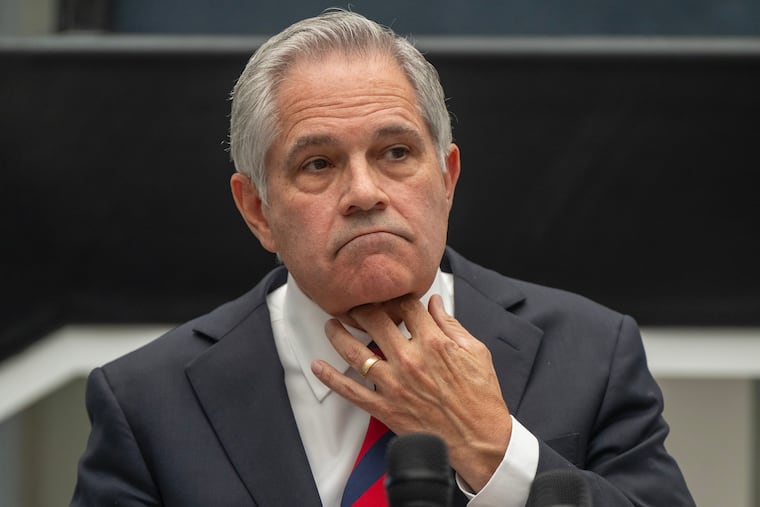
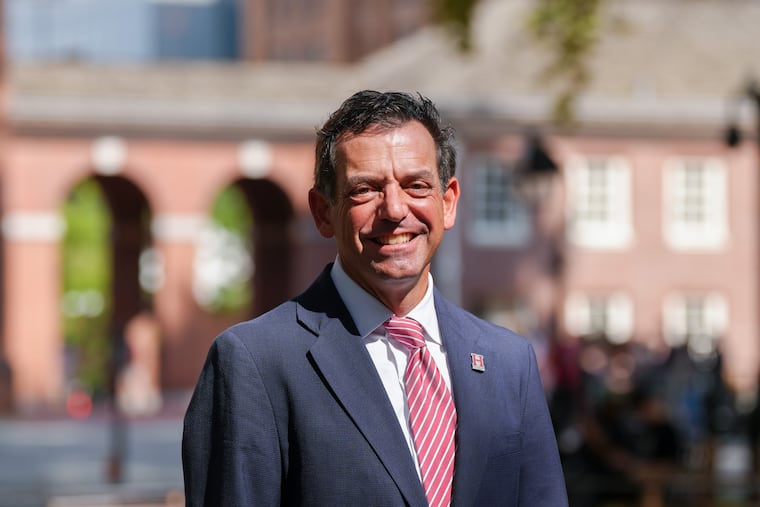
Two Philadelphia prosecutors have accused District Attorney Larry Krasner of instructing them to litigate a controversial appellate case in a manner that would “protect the office” — a highly unusual assertion that effectively accuses the city’s top law enforcement official of telling his staff to act in a way they now say was “incompatible with their ethical obligations and the interests of the Commonwealth.”
In a court document filed late Monday, Assistant District Attorneys Katherine Ernst and Steven J. Wildberger wrote that Krasner’s directive came after they had been seeking to persuade him to allow the state attorney general’s office to take over the appeal of Dennis Johnson, who is seeking to have his murder conviction overturned.
That case — which the district attorney’s office has been handling — has become a flash point in an ongoing debate about whether Krasner’s office has behaved improperly in its efforts to overturn flawed convictions.
And it received renewed attention last week, when a former prosecutor who was once assigned to Johnson’s appeal, and who had recommended that the conviction be overturned, said she had done so only at the direction of her boss. She also said she was encouraged to lie about aspects of the case in court to try to minimize scrutiny on the way the office handled it.
According to Ernst and Wildberger, they experienced similar pressures from Krasner.
As the office was weighing how to handle aspects of Johnson’s appeal this spring, they wrote, they tried to persuade Krasner to refer the case to the state attorney general’s office because of issues that had arisen internally over its handling.
One example, they said, was that a supervisor who was initially involved with the appeal — and who they believed had made mistakes while overseeing it — was still offering legal advice about it from a different role in the office, which Ernst and Wildberger viewed as self-interested and “inappropriate.”
But the district attorney’s office kept the case. And during the deliberations about how to move forward, Ernst and Wildberger wrote, they “received instruction from DA Krasner to litigate the case in a manner to ‘protect the office.’”
Then, in late June, Ernst and Wildberger wrote, they again asked Krasner to refer the case to state prosecutors, but “DA Krasner stated that there would be ‘consequences’ for anyone who notified the court of the conflict issues.”
Ernst and Wildberger nonetheless filed a notice in federal court saying they believed their office was beset by conflicts and should no longer handle Johnson’s appeal. Their filing Monday expanded on their reasons.
The accusations they lodged against Krasner represent a striking display of discord between line prosecutors and the city’s district attorney. And they come at a moment in which Krasner is under court scrutiny over his office’s actions in cases involving post-conviction review.
Krasner said in an interview Monday that although he had “a lot to say” about the latest filing, he was largely unable to comment because the case remains pending in federal court. A hearing at which many of the issues were being aired was cut short last week, and U.S. District Judge Paul Diamond has not yet scheduled the next portion of the proceeding.
“The DA’s office will be responding to the recent filing in the ethically appropriate way — on the record, because it is generally viewed as inappropriate and possibly unethical to comment during a pending hearing," Krasner said.
The case on which the saga is centered is Johnson’s conviction for second-degree murder. A jury found him guilty in 2009 of having fatally shot Kenyatta Smith during a robbery outside a North Philadelphia convenience store two years earlier, and he was sentenced to life in prison.
Johnson appealed his conviction, in part because he said his trial attorney was ineffective. And in 2022, then-Assistant District Attorney Jaclyn Mason filed court documents agreeing with that assertion and saying Johnson’s conviction should be overturned.
But earlier this spring, Ernst and Wildberger signed on to a brief that tried to walk that recommendation back. They said that Mason’s filing had been filled with “material misstatements” and that they could no longer support it.
And according to Ernst and Wildberger’s latest brief, as they were having internal discussions in recent weeks about how to proceed with the case, the supervisor who had approved Mason’s work, Matthew Stiegler, was continuing to offer his thoughts on what to do. That included speaking to Krasner — which Ernst and Wildberger viewed as a clear conflict of interest because of his potential interest in seeking to clear his name rather than evaluate the case on its merits.
That development and others led the pair to “repeatedly” implore Krasner to refer the case to the attorney general’s office, Ernst and Wildberger wrote, which he did not do.
Krasner’s subsequent instructions to “protect the office” only deepened the degree of their office’s conflicts, they wrote, because such statements could lead to questions about whether prosecutors were acting primarily out of self-interest.
It was not immediately clear how or if Monday’s filing might affect Johnson’s appeal. Ernst and Wildberger said they were prepared to testify before Diamond about the situation, and they are expected to take the stand as the case proceeds.
Diamond has not yet set a timetable for when that testimony might occur.