Shrinking student populations cause spike in public school closures across U.S.
School closures have spiked 35 percent across the country over the past four years, propelled by a shrinking youth population and the end of covid-19 relief funds that had propped up education funding in some places.
School closures have spiked 35 percent across the country over the past four years, propelled by a shrinking youth population and the end of covid-19 relief funds that had propped up education funding in some places.
For the fourth year in a row, the number of school closures rose nationally last year, according to data from the National Center for Education Statistics released last week. Districts closed more than 1,000 schools in 2025-26, compared with 755 in 2021-22. And more closures are planned, including districts in Houston, Philadelphia, Pittsburgh and Broward County in Florida.
“We call it the big shrink,” said Marguerite Roza, who tracks school funding as director of Georgetown University’s Edunomics Lab. “Enrollment at public schools is declining, partly because there are fewer kids in the U.S.”
Public school closures temporarily slowed during the pandemic as administrators focused on dealing with the fallout from covid and tapped relief funds to balance their budgets. But now that the funds have run out, experts say administrators often must close schools to deal with reduced enrollment, which in turn reduces the amount of money they receive from states.
Nationally, federal projections indicate public school enrollment has already started to decline from its peak in 2019 and will continue to do so in coming years. From 2019 to 2031, schools were projected to lose nearly 4 million students. And those estimates were made before the Trump administration made changes to sharply curb immigration, further reducing the number of kids at some schools.
Some districts are also coping with population shifts, as families move to the suburbs or other parts of the country.
In addition, Roza noted that families in some parts of the country, such as Florida, have enrolled their children in private schools, taking advantage of taxpayer-funded vouchers and scholarship programs offered in a growing number of states, or charter schools, which are publicly funded but generally operate with some degree of autonomy.
All that means more closures, sometimes year after year. School administrators acknowledge that the moves can be hard on students, families and neighborhoods.
“It’s very difficult,” said Philadelphia Superintendent Tony B. Watlington Sr. “Public schools have always been anchors of communities.”
The Philadelphia district said schools have 70,000 more seats than are needed because of enrollment declines, and many of its aging school buildings need repairs.
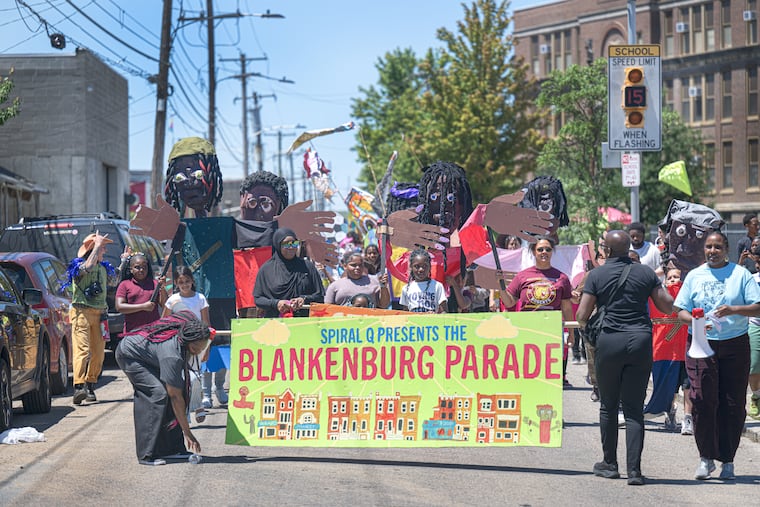
In May, Philadelphia’s school board voted to close 17 schools, rejecting a recommendation to cut even more. Students, teachers and others rallied before the meeting to try to stop the closures.
To ease the burden on families, Watlington said Philadelphia decided to gradually close campuses over the next decade to give students time to graduate from their current schools. The district also created a transition office to help families affected by the changes.
“We know how hard and how difficult this is for our families,” he said.
Watlington said the district hopes to attract more students from other local schools by improving its academic performance and modernizing 169 remaining buildings.
In Florida, Broward County Public Schools, north of Miami, closed one elementary school last year. The school district voted in January to close six more ahead of the 2026-27 school year and plans to identify additional schools to close or repurpose in the future. In May, the superintendent said he didn’t want to scare the public but thought the district might have to close more than 10 additional schools in 2027-28. The school district said it considered factors including declining enrollment and the operating costs for the buildings when deciding which facilities to shutter.
The Houston Independent School District’s board of managers decided in February to move forward with a plan to close a dozen schools, despite protests from parents and community members. And Pittsburgh Public Schools voted in May to close 12 schools.
Researchers said they expect more school closures in coming years because of declining enrollment.
Sofoklis Goulas, an economist who has studied declining school enrollment and school closures, said it is hard to make precise predictions because of changing immigration patterns and other issues.
One notable factor, he said, is that some students appear to have disappeared from school data in recent years, perhaps due to increases in home schooling or private microschools that are not fully tracked by the government.
“The unaccounted-for student is the most worrisome,” said Goulas, a senior researcher at Foundry10, an education research organization based in Seattle. “We know little about them.”
Meanwhile, many teachers and others have expressed frustration with the closures.
“There is just an overall lack of funding in our public education system,” said Mary Kusler of the National Education Association, the nation’s largest union, representing 3 million educators.
Kusler said efforts to cut taxes in many states have reduced the money available for local schools and made it hard to keep up with inflation.
She also pointed to efforts to expand vouchers and scholarship programs, which help families pay for private schools. Supporters contend those programs create needed competition and provide more options for parents, especially in areas where public schools have struggled. But Kusler argued it also ultimately reduces the pool of money for traditional public schools, which still serve most students.
“There is only so much money to go around,” she said.