A dam is removed, but the Brandywine’s battle against flooding may never end
The Brandywine battle plan has no timetable, and it's unclear where the money is going to come from.
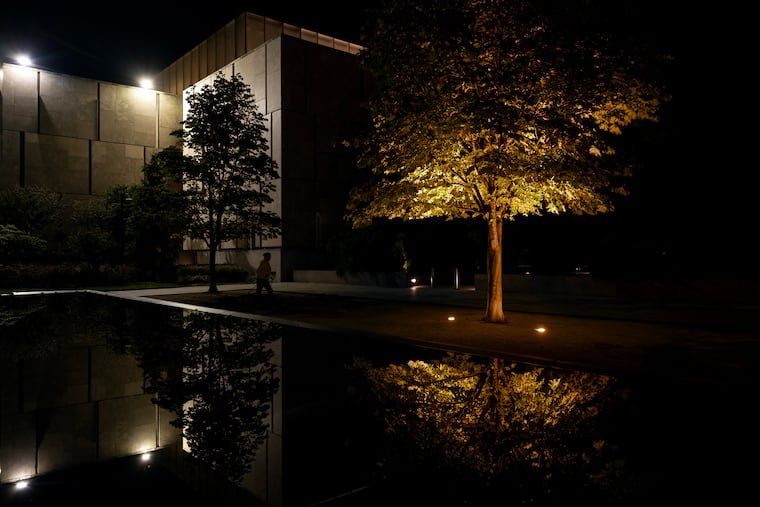
The water was flowing peacefully, a solid 7 feet below flood stage, when Matt Collins checked the reading from the government flood gauge, housed in a wooden shed behind the building that is home to the Brandywine Museum of Art.
The ivy on a brick wall had turned an autumnal shade of oxblood, and on a spectacular October afternoon in the heart of Wyeth country, it was hard to believe that Chadds Ford and towns from Honey Brook, Chester County, to Wilmington have been at war for decades with the storied stream from which the museum takes its name.
And the battle of the Brandywine in a watershed that is home to 265,000 people, and expected to add 150,000 more by century’s end, has been escalating and shows no signs of ending. An Inquirer analysis determined the Brandywine has been the most flood-prone stream in the region.
Earlier this month, an obstructive dam just upstream from the museum was dismantled, one of the recommendations in a comprehensive report coauthored by the Brandywine Conservancy — which operates the museum — on taming the flooding throughout the watershed.
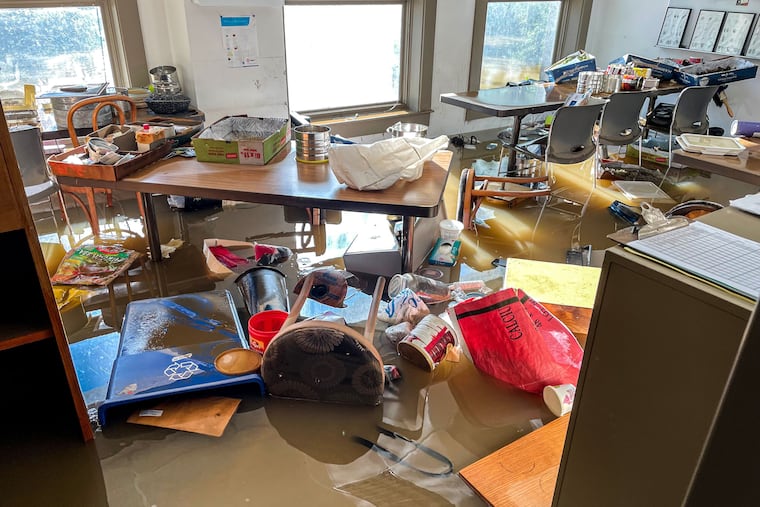
The watershed is still recovering from the ravages of Ida in 2021, its legacy powerfully evident at the museum, where Collins is the acting director of facilities. An arc of wooden benches along the erstwhile floor-to-ceiling windows near the main entrance now also serves as a flood barrier.
What was once classroom and lecture space on the ground floor is now bunkered among pipes and sump pumps and other flood-fighting hardware.
“This is all new,” Collins said. “We had to reroute everything.”
The low ceilings, spartan interior, windowless walls, and labyrinth of metal evoke a submarine.
And the hope is that it would be submarine-watertight if another Ida came along, said Nicole Kindbeiter, communications director for the conservancy.
The museum flood-proofing, which Kindbeiter said required closing off about 24,000 square feet of what was publicly usable space in the lower levels, has taken five years and $30 million. A hefty portion came from federal and state disaster assistance.
At long last, conservancy officials are confident that the work is near completion and that the building can withstand an assault similar to that of Ida, during which the river stage rose to 21 feet — 4 feet higher than the previous record crest.
But the grand plan to tame the Brandywine Creek is just beginning, and it is unclear how much it is going to cost, where the money will come from, and when it might be completed.
The Brandywine battle plan
The study, compiled by the conservancy, the Chester County Water Resources Authority, and the University of Delaware Water Resources Center and released last year, looked at 300 sites in the watershed, which covers more than 20% of Chester County.
Starting at an elevation of about 1,000 feet in the western end of the county, the East and West Branches of the creek form a jagged U shape before joining the main stem not far from Longwood Gardens, ultimately flowing into the Christina River near Wilmington.
Through the years, it has caused floods of trouble. The watershed hosts nearly 150 “repetitive loss properties,” those that have suffered repeated flood losses, which have been a drain on the perennially cash-strapped National Flood Insurance Program.
Thousands of properties reside in 100-year floodplains, areas in which a 100-year flood has a 1% chance of occurrence.
Among its recommendations, the 2025 report called for the removal of four dams, two of which, including the one near the museum, are gone, and 10 bridge replacements.
It targeted an area across the creek from the museum on land owned by the Brandywine Conservancy for “floodplain restoration,” more or less returning a property to a predevelopment state. The conservancy is seeking funding, said its director, Grant DeCosta.
But a whole lot of land has headed in the other direction, the report noted. In the heart of the watershed along the Route 30 corridor, impervious cover — the hard surfaces that incite runoff — increased from 9% to as much as 15% between 2001 and 2021.
The fact that so much land in the county was off-limits to development likely kept Ida’s flooding from being worse. A lot of the undeveloped acreage is owned by the conservancy.
That said, Ida was more than bad enough.
Ida’s legacy and the area’s flood history
By the time the museum opened in 1971 at the site of a closed flour mill, the building it occupied had endured more than 65 floods dating to 1912, according to National Weather Service records.
By just a few years, the museum’s opening predated the era of federal flood mapping, which in all likelihood would have deemed the site unbuildable.
Three months after it opened, a tremendous rainstorm blamed for 12 deaths and wiping out a 20-home development in nearby Chester city triggered the museum’s first major flood. Around the time of its first anniversary, the deadly remnants of Hurricane Agnes resulted in another major flood at the Brandywine.
Agnes’ crest was topped in September 1999 by Floyd’s rains, but Ida was a once-in-800-years event that outdid Floyd’s crest by 4 feet.
Ida was blamed for one death in Downingtown. The Chester County emergency center dealt with more than 4,000 calls and more than 300 storm-related rescues within 10 hours. Property damage throughout the watershed was immense.
And at some point, officials say, they expect more troubles.
The future of the Brandywine
Precipitation amounts have been creeping up in the region with the warming of the planet, and the Brandywine study assumed increased rains.
But as the region learned repeatedly this summer, it would be all but impossible to predict where the heaviest rains will target their ferocity at any given time.
The proposed Brandywine projects have no timetable, DeCosta said, “given the scale of the flooding challenges we have.”
“It’s a roll of the dice,” said Gerald Kauffman, director of the University of Delaware Water Resources Center, an author of the study. A major factor in the timing is going to be money, Kauffman said, with federal funding drying up.
As for the museum, the conservancy is adding a 40,000-square-foot building, to be ready in three years, as part of a $100 million expansion.
This one will be on a hillside, about 60 feet higher than the one that survived Ida, and Floyd, and Agnes.