Temple plans $30 million restoration of historic Burk Mansion
The 27-room mansion at the corner of Broad and Jefferson streets is expected to reopen in 2028 as a community engagement center.
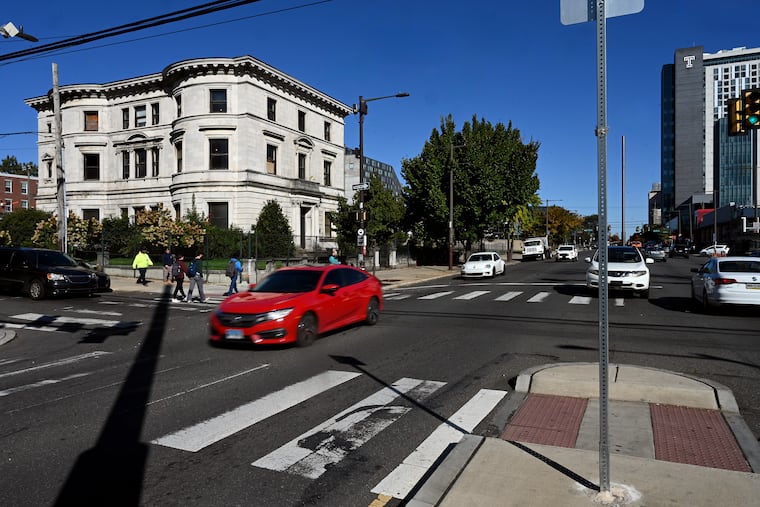
Temple University is planning a $30 million restoration of its historic Burk Mansion, which has been closed for more than 30 years after a fire damaged it.
The state will contribute $15 million, and the university has received a major gift from lawyer Michael Spolan through the Philadelphia-based Spolan Family Fund to cover most of the rest, with ongoing fundraising to close the gap, Temple president John Fry said in an interview.
“We’re largely there,” Fry said of the fundraising.
» READ MORE: Temple has released its plan for the next decade. See what the North Philadelphia university has in mind.
Temple plans to reopen the three-story, 27-room mansion at the corner of Broad and Jefferson Streets in early 2028 as a center for community engagement. It will be called the Spolan Community Engagement Center and offer programs and services to the community.
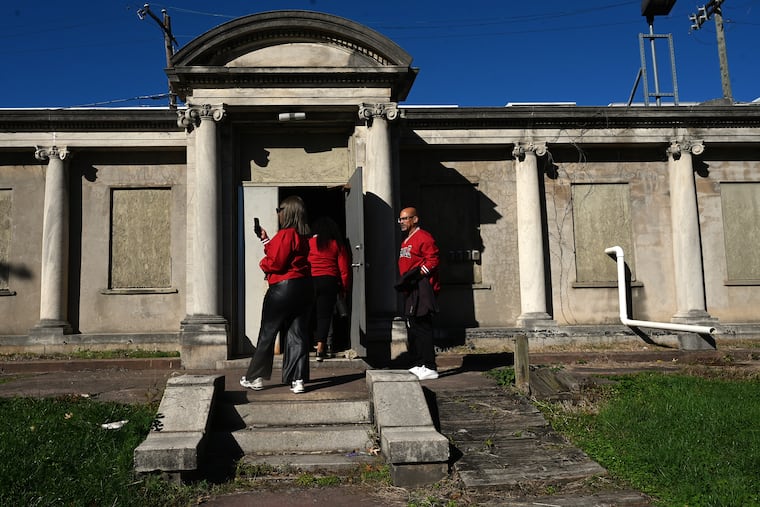
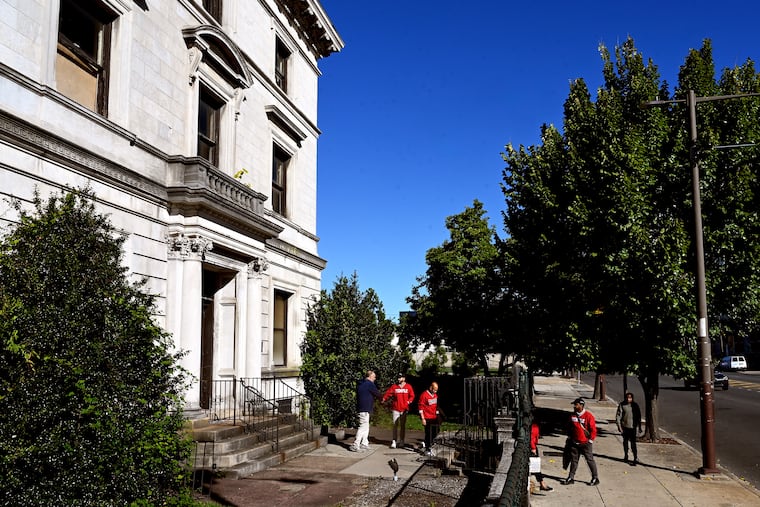
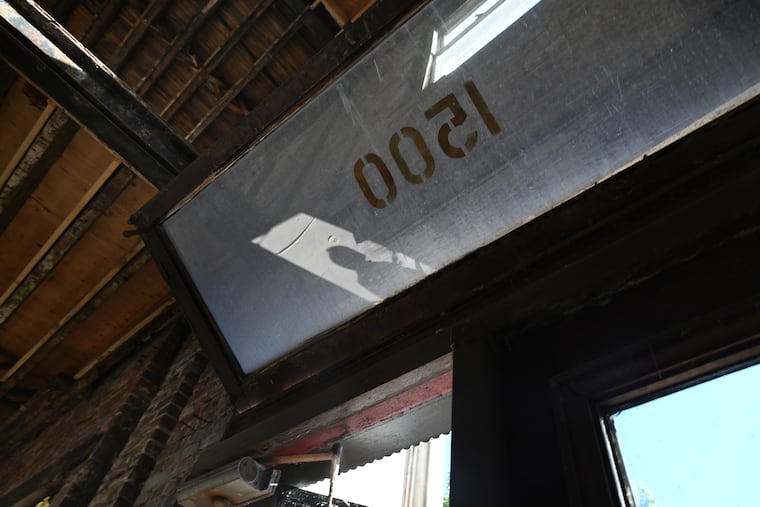
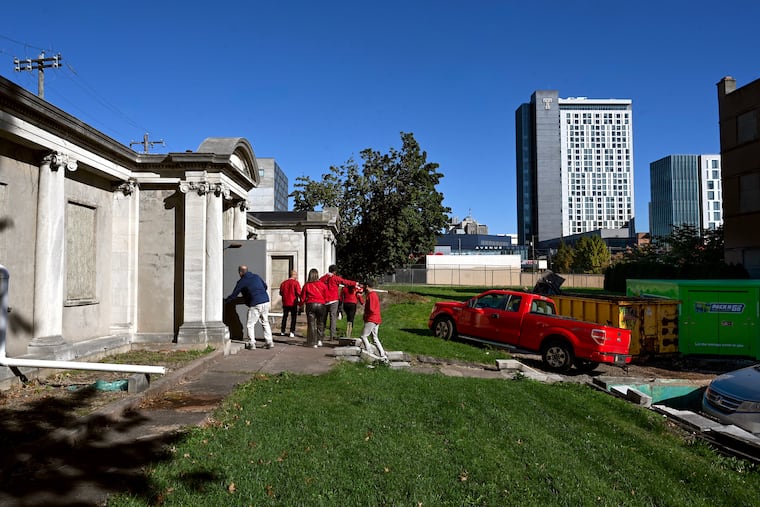
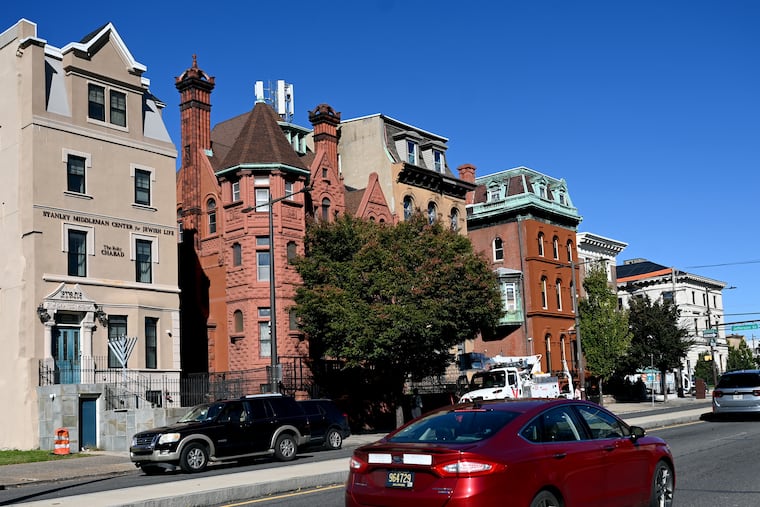
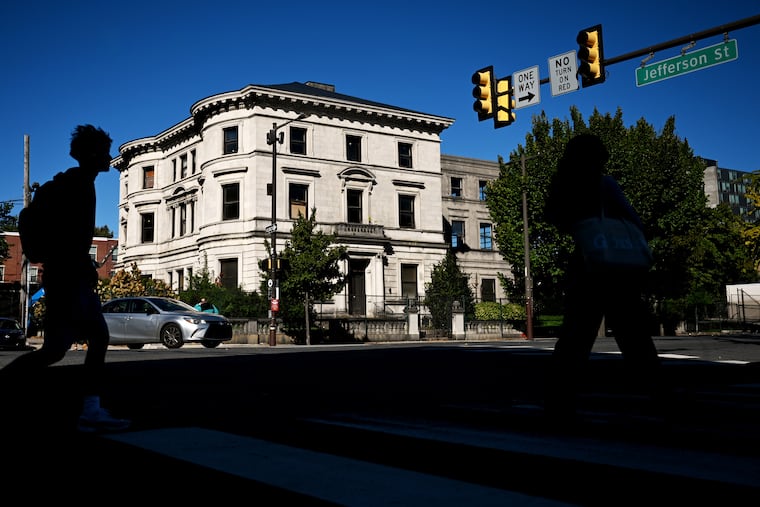
The university announced the plan at an event at the mansion on Thursday.
“Burk Mansion unquestionably is an architectural and historical landmark on the North Broad Street corridor,” said Paul Steinke, executive director of the Preservation Alliance for Greater Philadelphia. “It’s a survivor of the previous era when Broad Street was lined with similar mansions, but relatively few of them remain.
“The fact that Temple is investing in its restoration and finding a compatible new use will come as welcome news to everyone who cares about North Philadelphia and Philadelphia’s architectural and historical legacy.”
The late-Victorian Italian Renaissance-style mansion was built in the early 1900s for leather manufacturer Alfred E. Burk, and at one time it was the headquarters for the Upholsterers International Union of North America. Temple acquired the building, which is on the Philadelphia Register of Historic Places, in 1971 and used it as a daycare for faculty, staff, and students and to house its former School of Social Administration. Community education, workforce development, and violence prevention programs also were held there until a fire damaged the building. Temple closed it in 1995.
Fry said that soon after he arrived as president in 2024, he saw the building as an underutilized resource in a prime location for providing community programming.
“The neighbors I’ve talked to feel that they don’t really understand everything that Temple offers the community,” he said. “It’s hard to navigate. There’s no … friendly front door to the institution.”
The new center will serve as that front door and a hub for everything Temple has to offer the community, he said.
“There are a total of five zip codes that surround our main and Health Sciences Center campuses, and more than 175,000 people call those areas home,” Fry said. “They are more than our neighbors, they are vital members of the Temple University community, and it is imperative that we strengthen our commitment to them.”
Temple got permission from the Philadelphia Historical Commission to proceed with the renovations, Fry said.
The renovations include restoration of the facade and a “gut rehab” on the inside, Fry said.
“We are intentionally looking at more of an open space concept,” said David W. Brown, Temple’s executive director for community impact and civic engagement. “So we could anticipate having a step class one hour and then the next class a poetry reading. The space will be flexible enough to accommodate a range of different programming.”
Temple’s plans for the center in part are patterned after the Dornsife Center for Neighborhood Partnerships at Drexel University, which Fry led for 14 years before coming to Temple. Temple staffers also plan to visit similar centers at the University of Pittsburgh.
“We are looking at the Spolan as a literal extension of the university into the community,” Brown said. “We are in active discussions with our schools and colleges along with community partners — all of which we anticipate will be offering programs there.”
The university, he said, will be “conducting a listening tour” to hear what kinds of services and programs the community would like to see at the center. The school envisions, for example, offering legal services through its law school, he said, as well as involving faculty, students, and staff from other areas of the university. Temple is also talking to the nearby Columbia North YMCA about the potential of occupying space there, he said.
“I’m hoping that a significant amount of the efforts will be student-led under David’s guidance,” Fry said. “I think there’ll be meaningful student civic engagement, as well as that of our faculty and staff.”
Fry credited Gov. Josh Shapiro for the state funding to support the project and help with Fry’s larger vision to upgrade the Broad Street corridor. Fry has stated his desire to create an “innovation corridor” stretching from Terra Hall at Broad and Walnut Streets in Center City — which Temple acquired from the University of the Arts — to Temple’s health campus, a little more than a mile north of main campus on Broad Street.
Fry also underscored the importance of the gift from Spolan, who did not attend Temple, but whose father did, and who has expressed interest in helping Temple with its civic endeavors. Temple declined to release the amount of the gift from Spolan.
“This is by far and away the largest gift Temple’s ever received for these sort of civic efforts that we’re undertaking,” Fry said, “and, frankly, one of the most important gifts in our history in terms of its scale and its impact.”