Tony Watlington will be Philly’s superintendent through 2030, with school board poised to extend his contract
Watlington has led the district though its post-pandemic rebound and several tough union contract negotiations.
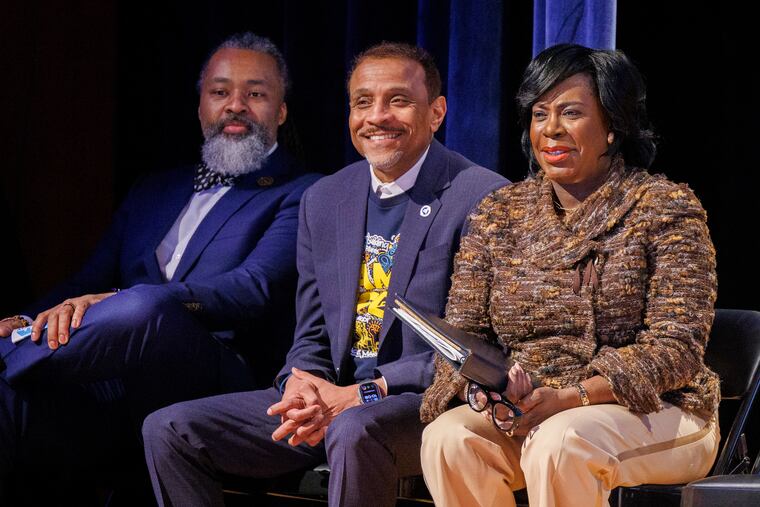
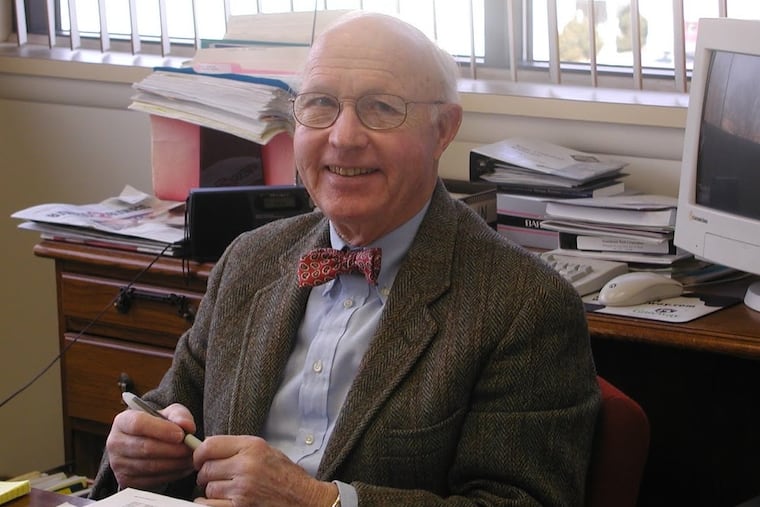
Tony B. Watlington Sr. has said he wants to stay in Philadelphia long-term and the school board is poised to pave the way for him to do just that.
It will consider a contract extension for the superintendent at its meeting Sept. 25.
Watlington, who is now paid $367,710 annually, will get a 3% raise on July 1, and his subsequent raises will match whatever is negotiated by the Philadelphia Federation of Teachers.
His current contract expires in 2027 and had a one-year renewal option; the new pact will keep him Philadelphia through 2030.
The school board signaled its intent on Monday when it added a resolution to the agenda for its Thursday action meeting.
The move comes at a crucial time for the school system, with Watlington helping to close two of three union contracts that expired Aug. 31, and ahead of the release of a long-awaited and likely to be contested facilities master plan that will mean the district will “surely” close schools, the superintendent has said.
It also happens amid both short- and long-term financial challenges: a monthslong delay in the passage of a state budget, and a looming structural deficit.
“Extending Dr. Watlington’s contract ensures that the focus stays on students, not on uncertainty,” school board president Reginald L. Streater said in an interview Monday.
If Watlington, who is now 55, works until the end of his contract, he’ll have spent eight years leading the district. That’s an eon for a big-city school district, approaching the tenure of Watlington’s predecessor William R. Hite Jr., and getting him close to the tenure of Constance E. Clayton, the revered leader who befriended Watlington before her death, and for whom Watlington and the school board renamed district headquarters.
When Watlington came to Philadelphia in 2022, he was a career educator who had never worked outside of North Carolina, and who had just one year of experience as a superintendent under his belt.
Now, he’s got national cachet, a fact that is not lost on the school board or Mayor Cherelle L. Parker, who alluded to Watlington’s reputation at a June news conference.
“Dr. Watlington, you are on the radar now,” Parker said of the school leader who first came to the city in 2022. When she speaks to mayors of other large cities, “they’re talking to me about my school superintendent — our school superintendent, and how wonderful he is. I say, ‘Yes he is, but he’s not going anywhere.’”
The Watlington administration’s accomplishments
On Watlington’s watch, the district has posted steady progress in most areas. Its graduation rate is up and dropout rate is down, and student and teacher attendance is improving.
Reading and math scores are generally up as well, though they lag most other big cities’ scores — just 22% of Philadelphia students meet state standards in math, and 34% in reading.
The district showed faster recovery from the pandemic than its peers, though, doing better than any other large, poor urban district in the U.S. in research compiled by Harvard and Stanford Universities.
Watlington earlier this year was named “Superintentendent of the Year” by District Administration Leadership Institute, a national organization.
“The board wants to say, ‘Now is the time to affirm what he’s doing, and it’s not just because we like him,’” Streater said. “It’s because we have quantitative data, qualitative data, and empirical data to support that decision.”
Though the district is spending $300 million of its reserves this year to avoid staff and program cuts, Watlington and his administration have gotten high marks for their financial stewardship of Pennsylvania’s largest school system, with about 200,000 students in traditional public and charter schools.
Philadelphia’s school system got a credit-rating boost recently, and Watlington often stresses his focus on “being good stewards of public dollars.”
When Watlington came to the district, he had no experience working in a system that had to both coexist and negotiate contracts with unionized workforces. Philadelphia has five separate unions — three of which had contracts that expired last month.
He scored a big win with an early Philadelphia Federation of Teachers contract, reached on the eve of the first day of school.
Arthur Steinberg, the PFT president, has been involved in contract negotiations for years.
His members were prepared to strike, authorizing a work stoppage if he deemed it necessary, but Watlington — courtly and polite, with his Southern accent and often-repeated talking points about the importance of teachers and his desire for Philadelphia to be the fastest-improving large urban district in the U.S. — was a changemaker in negotiations, Steinberg said.
“This was really the most involved that the superintendent has been in it, and that made a big difference,” Steinberg said. “I really do not believe that we would have gotten this done if he hadn’t kind of stuck his nose in there.”
This weekend, Philadelphia’s school police union also ratified their contract, leaving just one pact — the school principals’ union’s — unsettled.
A key point for a contract renewal
Watlington’s stock is generally high at the moment, but he’s about to enter tough waters.
The district, which unlike every other school system in Pennsylvania, cannot raise its own revenue, stands at a crossroads.
The superintendent must soon make recommendations to the school board about which of the district’s 300 buildings should be closed, co-located, rebuilt or repurposed — decisions that will surely stir community ire at the superintendent who proposes them and the board that makes the final call.
The school system also faces a looming deficit caused by costs — salary, benefits, utilities, charter-school payments — that are growing faster than city and state revenues.
And though the district dipped into its fund balance to avoid layoffs and slashing programs this school year, it will need additional revenue from the state and city next year, or will be unable to spare big classroom cuts.
Earlier this month, the school board also had to borrow $1.5 billion just to pay its bills, a function of Harrisburg lawmakers’ inability to pass a state budget. The school system is paying $30 million in borrowing costs, money it can’t recoup.
Watlington, Streater said, is ready for the challenges ahead.
“I think he really embraced the city and I think he loves the city as well,” said Streater. “And I think the fact that it appears he’s willing to go for round two in what’s about to be a heavyweight fight with a lot of challenges on the horizon, I think that speaks a lot to his character.”