The Countess who bathed in the blood of her victims. Or did she?
Elizabeth Bathory's notorious bloodbaths have been depicted in all kinds of pop culture, from Lady Gaga's stage show to Netflix's Monster.
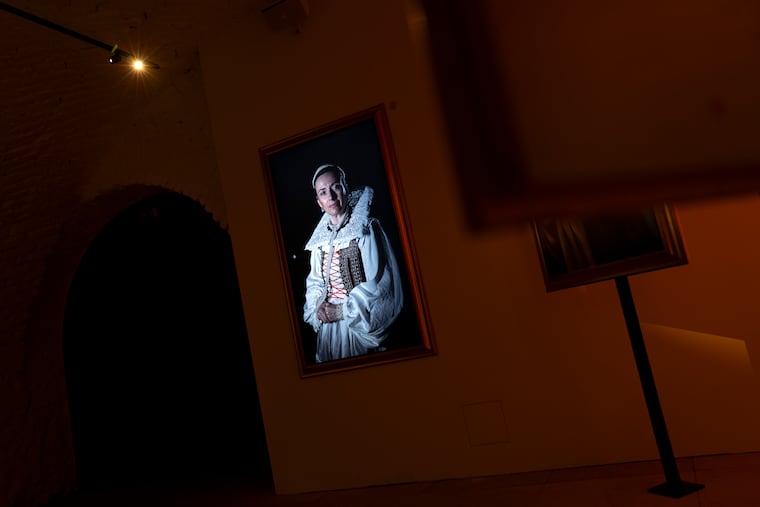
In Netflix’s newest season of Monster, an imaginative retelling of the case of Lizzie Borden, Lizzie and her maid bond over a book about the alleged 16th-century serial killer Elizabeth Bathory. Legend claims that this Hungarian countess, in a bid to preserve her youth, bathed in the blood of her virgin victims. In the show, Lizzie and her maid, enamored by this tale, recreate their own bloodbath with cherry juice.
Monster is only the latest pop culture rendition of Elizabeth Bathory’s notorious bloodbaths. Artists such as Paloma Picasso and Lady Gaga have taken a dip in stage blood, portraying the infamous countess. The trope has also turned up in everything from The X-Files to Batman comic books, an Eminem music video and video games. For Halloween, one can even purchase Bathory costumes or miniature bloodbathing figurines.
Despite its enduring popularity, there is absolutely no historical basis for this legend (although Bathory herself was a real person). But the endurance of this myth reflects more deeply rooted and widely circulated stories that specific groups of people may be doing horrific things with the blood of young children. This unsettling legend has persisted not because it is based on true events but because it reflects anxiety about changing power dynamics, as norms around religion and gender shift and vacillate.
Countess Elizabeth Bathory, like so many of our cultural bogeymen, is a Protestant Reformation-era figure. In 1560, she was born into an ancient, illustrious family that was a rival to the mighty Hapsburgs. When she was widowed in 1604, and lost her older brother the following year, Countess Bathory inherited immense amounts of land. She had 17 castles under her control and, as regent for her underage son, served as lord-lieutenant of two prosperous counties.
At first, she was admired and well-respected. Over the next six years, however, she was suspected of treason, threatened by a Hapsburg general and clashed with fundamentalist preachers. In 1610, George Thurzo, the Palatine of Royal Hungary, launched a secret investigation exploring whether she was a vicious killer too. The Countess spent the last four years of her life imprisoned in one of her own castles, without ever being formally charged with any crime. She insisted upon her innocence throughout.
The accusations made against Bathory were that she “was very skilled in magic and sorcerer’s crafts,” in the words of one former servant, and, according to one of her administrators, that she spied on people with the aid of a supernatural pretzel. A pastor claimed that the Countess tried to kill people using enchanted baked goods and that she commanded an army of invisible demon dogs and cats. The other accusations—that she had tortured and murdered anywhere from 50 to 650 girls—earned her a Guinness Book of World Record designation as the “world’s most prolific female serial killer.” She was even said to have forced others into cannibalism. According to the Lutheran pastor John Ponikenus, “some of [these girls] were coerced to eat their own roasted flesh; others, young men, were served the flesh of virgins instead of mushrooms.”
As outrageous as all this was, these gruesome testimonies never made any mention of her bathing in blood.
Bathory’s legendary bloodbaths were tacked onto her story more than a century after her death by a Jesuit priest writing a travel guide. Father Laszlo Turoczi asserted that Bathory had been born a Catholic but had turned away from her faith toward Protestantism. This was patently untrue, as Bathory had grown up as a Protestant. Still, in his 1729 book, Turoczi claimed that heresy made the Countess unnaturally vain, even telling the tall tale that one day, while having her hair dressed, Bathory slapped a maid who pulled her hair. The maid’s blood sprayed across Bathory’s face. The Countess became convinced the blood had a rejuvenating effect and, according to Turoczi’s account, mused, “If a little bit of blood adds so much beauty, what might happen if I wash myself entirely with it?”
Father Turoczi’s embellishments were likely motivated not just by his desire to sell books, but by his prejudices against Protestants and women. His tale conveniently portrayed his religious enemies as depraved and cast powerful women as vapid. The priest depicted the Countess who ruled over vast tracts of land as simpering, “My foremost wish is to please a man.”
It was not just Turoczi’s intolerance and his misogyny, though, that appealed to readers and helped popularize such a tale. Stories of bloodbaths would have been vaguely familiar to most of his readers then, who were aware of accusations of blood libel that had been leveled against Jewish communities, and charges that folk healers were using babies’ blood and body parts in their ointments and salves. Audiences were also likely drawn to Turoczi’s tale because, at the time it appeared in 1729, reports of vampires had been spreading among the border regions of the Hapsburg lands, and such accounts were selling well.
This vampire panic fed a rumor that depraved aristocrats were doing terrible things with the blood of children, which links Father Turoczi’s tale with another conspiracy theory circulating around Paris about the new king, Louis XV: that he was bathing in the blood of children in an effort to cure his leprosy. Those charges were repeated a century later, in the 1860s, in Les Miserables by Victor Hugo, who mentioned the king’s “purple baths.”
In the 1750s, however, this bloodbath rumor led to actual riots. Thousands of Parisians took to the streets, smashing windows, attacking suspected kidnappers and searching for abducted children so they might save them before their blood was used for the king’s wicked ablutions.
Nearly three centuries later, the legend of the bloodbath persists in contemporary American politics in surprising ways. It is the basis for the alt-right accusations of Pizzagate (2016) and Frazzledrip (2018), conspiracy theories that Democratic Party officials were participating in child trafficking and ritual murder. It is also the cornerstone of adrenochrome theory, a belief, first popularized in QAnon chat rooms, that global elites kidnap children to harvest their blood for a particular chemical they need for their youth elixirs—or, in other words, that elites use the blood of children in an attempt to preserve their youth, exactly as a Jesuit priest once claimed about the aristocrat Elizabeth Bathory.
The creators of the current season of Monster say it is all about exploring “female rage,” and the series certainly frames Countess Bathory as a woman motivated by fury and vengeance. And yet, history shows us that the legend of Countess Bathory was molded by male fear. During her lifetime, Bathory was denounced by a witch-obsessed pastor. In death, she was exploited by a heretic-hunting priest. The rumors about blood-bathing aristocrats, and accompanying hysterias about stolen children, end up revealing less about their subjects and far more about their architects.
Shelley Puhak is the author of The Blood Countess: Murder, Betrayal, and the Making of a Monster, an exploration of the life and legend of Elizabeth Bathory.
Made by History takes readers beyond the headlines with articles written and edited by professional historians. Opinions expressed do not necessarily reflect the views of The Inquirer.