
The best restaurants in Philadelphia this year
Our restaurant critic unveils the best of the best.
When you’re building a list of great restaurants to represent a major metropolitan dining scene, the number you pick defines your roster’s ambitions and has implications. In The 76, The Inquirer’s annual dining guide that’s built around a very Philly number, we can paint a broad picture of what moves a city’s appetites. That landscape spans from the coveted seasonal tasting menus of Her Place Supper Club to the Poblano cemitas of El Chingón and the Tibetan momos of White Yak, three personal favorites I got to scout for this year’s guide alongside a hungry cohort of 17 Inquirer eaters. My annual Top 10 list asks a different question: Which places are producing meals that capture the most special energy in Philly restaurants right now? This list reflects singular dining experiences that can only happen here, the kinds of magical flavors and hospitality that resonate in my mind after I leave the table and linger in my imagination for days to come. The sparks came when I least expected them: a seemingly simple dish of grilled mushrooms painted in porcini miso over sweet corn at Pietramala that was, in fact, a profound rumination on the shifting seasons; the snap of a tawny crepe perched over Mawn’s banh chow salad, hiding the electric funk and joyful zing of herbal Khmer greens; the mind-expanding creativity of the pasta omakase at Vetri Cucina, where a one-bite Wagyu cheesesteak wrapped inside a grilled pasta coin showed one of the city’s kitchen godfathers still pushing limits, setting standards, and having fun. (For the first time in six years, Vetri is back on my end-of-year list of favorites.) This year may go down as Philadelphia’s best ever for ambitious new restaurants — including a couple, Little Water and Tequilas/La Jefa, that are first-timers on this list. But I was heartened to see over the course of several hundred meals that excellence is still being served at several long-standing stars, from the ever-dazzling tasting menu and bar program at Friday Saturday Sunday to the Southern Thai fireworks at Kalaya and Royal Sushi & Izakaya, where the omakase may be next-to-impossible to book, but every morsel sends a sushi shiver down my spine. Each restaurant on this list represents a unique snapshot of what makes Philly a world-class restaurant city. And since I love a succulent lamb kebab as much as a whipped sturgeon doughnut piled high with caviar, here’s another important fact about the number on this list: My Top 10 remains unranked.
Friday Saturday Sunday
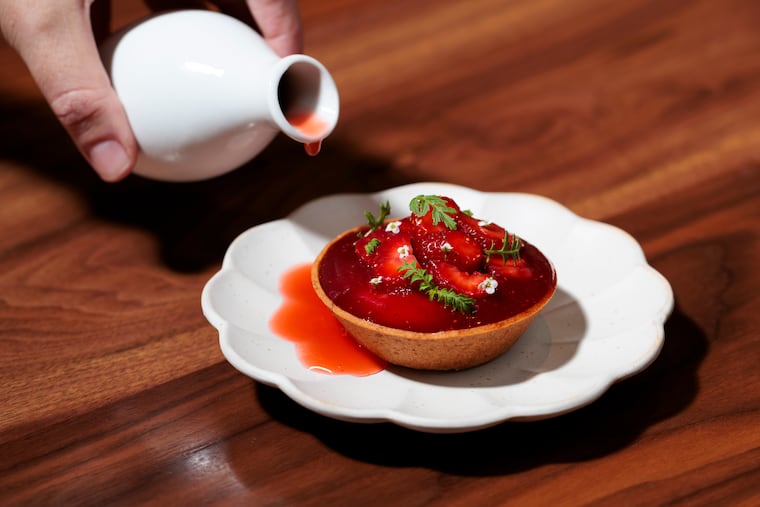
I rarely use the word “perfection” to describe any meal, let alone a pricey tasting menu with a dozen intricate creations. But the moment I bit into the warm beignet stuffed with tender oxtail and smoked yam purée, I hungrily began scanning our table at Friday Saturday Sunday for the next treasure to devour. A thimble-sized nori pastry stuffed with a tartare of tuna, veal, and caviar? Gone like a Scooby snack. Sweet Hokkaido scallops and long hot pepper jam hiding in a fluted shell beneath a creamy mist of smoked coconut sabayon? Sluurrrp! Chad and Hanna Williams haven’t rested on their accolades — a Michelin star, a No. 16 ranking in North America by World’s 50 Best, and a run of James Beard kudos. Their townhouse tasting-menu oasis off Rittenhouse Square has gotten better every year since the couple bought this now 52-year-old landmark a decade ago. That’s true whether you are seated in the plush upstairs dining room or the leopard-print ground-floor Lovers Bar, where walk-in regulars dine a la carte on irresistible FSS classics (smoked herring spaghetti, octopus and beans) and sip brilliantly original cocktails while Aretha Franklin and Herbie Hancock play in the background. I marvel at how Williams and his team, including chef de cuisine India Rodriguez, continuously reinvent the tasting menu with globe-hopping inspirations that never feel contrived. Somehow fusilli noodles darkened with allium ash and glossed in luxurious lobster stock seem like the ideal prelude to the next dish, a pairing of sweetbreads and plantains in a buttery vin blanc froth. A deeply savory grilled short rib is slow-poached sous-vide for days in lemongrass and shrimp paste before it’s grilled and served with the spark of a chili crunch. I’m still dreaming of the unexpected rice course — a soulful cup of koshikari grains cooked in duck stock with Filipino adobo, studded with smoky bacon, and draped with a rosy, honey-glazed slice of duck breast. Pastry chef Amanda Rafalski enters the picture with a palate-cleansing cashew custard topped with pretzel crumbles and a rose-scented granita, and then delivers the tart to end all tarts: an almond pastry shell filled with duck egg semifreddo, strawberry jam, fresh berries, and tangy strawberry top tea. Perfection? This tart — and this whole meal — was it.
Kalaya
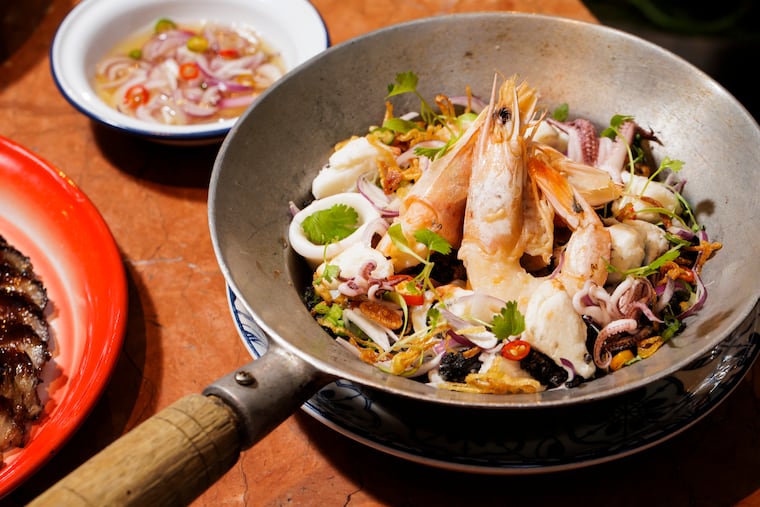
Philadelphians know Chutatip “Nok” Suntaranon as an underdog success story: the former Thai flight attendant who launched her cooking career in a Bella Vista BYOB, then soared to fame on the wings of hand-pinched, bird-shaped dumplings and the uncompromising fire of her towering tom yum. Now the rest of the world knows Suntaranon, too. She was recently crowned “best female chef in North America” by North America’s 50 Best Restaurants, which also named Kalaya the seventh best restaurant on the continent. It’s the latest in a string of awards since her 2022 move to the airy, palm-fringed space of a former Fishtown warehouse for a much grander Kalaya 2.0. The James Beard Foundation, Netflix’s Chef’s Table and Time100 innovators list have all chimed in. Kalaya still delivers spectacularly because Suntaranon is America’s most passionate ambassador for the bold flavors of her native Southern Thailand. Earthy goat and lamb curries. Majestic wok-fried river prawns in shrimp paste and brown butter. Crispy squid with a turmeric-fried crust that unleashes waves of curry, lime, and long hot pepper spice. Those are just a few dishes that make Kalaya so singular. Now three years into its current location and Suntaranon’s partnership with the team behind Suraya and Pizzeria Beddia, Kalaya as an operation is in fine-polishing mode, assuring the family recipes are consistent every time, and refining its format so servers can more easily convey a menu of regional specialties unfamiliar to many Americans. The tasting menu option, a three-course feast for $75 that’s the default on weekends, is designed to help guide diners toward a meal of balanced flavors. (Too spicy? There are tropical cocktails and fun shaved-ice desserts to quench the heat.) I would start with the crispy chive dumplings and blue flower-shaped shaw muang dumplings. Try the sour fish curry tart with pineapples for a taste of Suntaranon’s mother’s favorite dish (the restaurant, after all, is named for her). There are other favorites I don’t want to miss: the grilled chicken glazed in tamarind, coconut milk, and soy; the whole branzino in fish sauce and lime; the tangy-sweet Mangalitsa pork chop. But Suntaranon is always working new dishes into the mix, like the fisherman’s pot of squid ink-blackened rice jeweled with colossal crab, shrimp, and calamari that tastes like the Andaman Sea. One day, Nok may even get Philadelphians to go for the rustic punch of the fish-innard curry she craves whenever she visits home. If history is any indicator of Nok’s magic touch, we’re going to love that, too.
Little Water
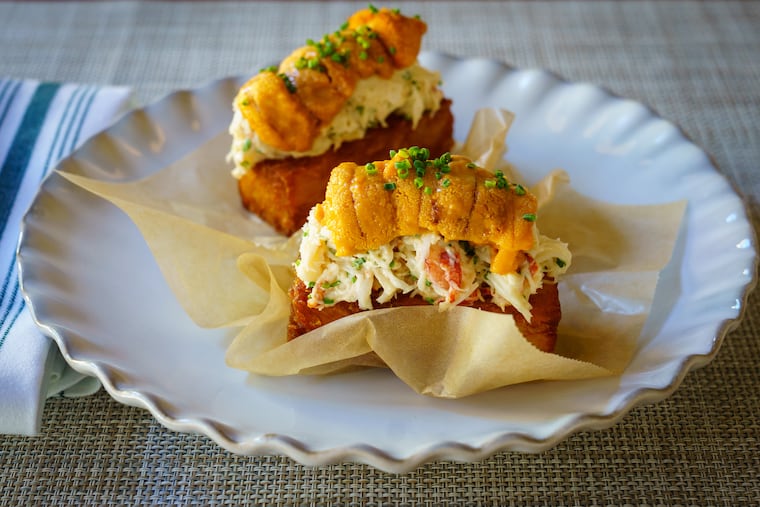
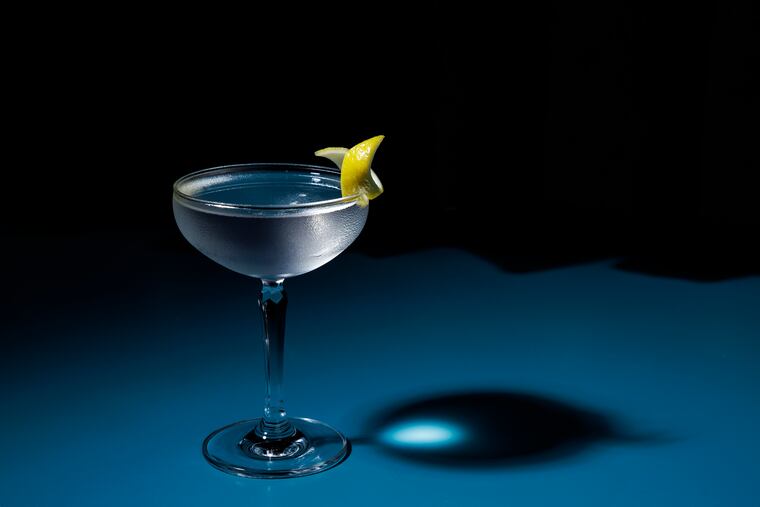
At Little Water, where the shrimp cocktail comes beneath stripes of smoked catsup piled high with fresh-shaved horseradish, the swordfish Milanese cutlets are encrusted in potato chips, and the “Caesar-like” salad is dusted with nori, Philadelphia’s once-grand fish house tradition has gotten the modern update it deserves. This restaurant, launched a year ago from chef Randy and Amanda Rucker, the married couple behind River Twice, has re-energized a corner bar near Rittenhouse Square. Wrapped in glass cafe walls and pressed tin ceilings, Little Water rides the fine line between neighborhood haunt and destination splurge. You can pop by the bar (always reserved for walk-ins) for the “Low Tide” happy hour of $2 Sweet Amalia oysters splashed in Alabama white sauce and a kombu-infused martini for $10. Or you can dive deep into one of the most innovative raw bars in town — scarlet crab claws dabbed with black walnut mustard, little toasts with tuna ’nduja, a tin of caviar with hush puppies and ricotta — and then embark on a considerable feast. If River Twice has remained Randy’s intimate atelier for modernist experimentation, the 78-seat Little Water is geared to be a bit more accessible, with a menu that taps the couple’s residence in coastal regions from Texas to New England. Two recent hits: a bowl of creamy pencil cob grits topped with luscious chunks of lobster and caramelized cippolini onions, and a steak tartare riff on oysters Rockefeller dressed with a Pernod reduction and topped with cornmeal-fried oysters. A massive fried bass over Sea Island peas remains one of my favorite whole fish of the year. And hash browns topped with Jonah crab salad and Maine uni are a must when it’s urchin season, ideal with a glass of sparkling Crémant de Bourgogne or a Müller dry riesling from the concise but smart Euro wine list. I go for the turmeric sparkle of the non-alcoholic Golden Hour during Little Water’s mellow lunch service. The midday menu is as ambitious as ever, whether one of Rucker’s peerless gumbos, a meaty Texas redfish roasted “on the half shell” with its char-roasted scales still on, or a juicy chicken-fried chicken on toast. Its tawny crust is drizzled in a buttermilk dressing beaded with smoked trout roe then spiked with a toothpick stack of bread-and-butter pickles. All you need to complete the coastal-picnic vibe is the snappy tang of Little Water’s key lime tart for dessert.

Mawn
The Cambodian-inspired flavors are so electric at Mawn, where the funky spice of wild boar prahok dip sometimes comes atop Khmer chili dogs and the fried head-on shrimp are glazed in fish sauce caramel, it can be hard to know where to start. That’s when it’s time to go “puck & see,” the Cambodian expression for “eat and drink.” That’s also your cue to skip Mawn’s a la carte menu and let the kitchen produce a family-style feast of multiple dishes that, for $65 a person, is an incredible value. “It’s a way for us to create a mixtape for you, so you can understand our music,” says chef Phila Lorn, who co-owns this 28-seat BYOB sensation with wife, Rachel Lorn. Just as the restaurant’s own soundtrack bounces from classic Khmer crooners like Sinn Sisamouth to Cambodian rapper VannDa, Mawn’s cuisine is dynamic, ranging from traditional flavors that echo the Southeast Asian Market in FDR Park (amazing lemongrass-marinated beef skewers) to multicultural influences gleaned from Phila’s time in Japanese restaurants and beyond, from Zama and CoZara to Stock. Mawn calls itself a “noodle house with no rules,” and there are noodle-based highlights, including the signature schmaltz-enriched chicken soup spiked with chili jam. But I think about Mawn’s salads even more, especially the sour and spicy papaya salad made famous on a Food & Wine cover in September, when Phila was named one of America’s “Best New Chefs” following a similar nod from the James Beard Foundation. Other irresistible salads include a Burmese melon salad dusted with lime leaf powder and crispy shallots, and the banh chow, a crispy half-moon crepe that recalls a Southeast Asian tuile inlaid with ground chicken and shrimp, placed atop a tangle of lettuce and minty backyard herbs lashed in Phila’s mom’s galangal vinaigrette. And then the free-flowing tasting menu brings pristine raw scallops in chili jam dusted with peanuts, a glimpse of what’s popping at their new oyster bar, Sao. More scallops — seared this time — arrive over a red curry infused with shrimp paste and Japanese chocolate, inspired by a mole lunch at nearby Casa Mexico in the Italian Market. We happily clear space for the “all-star fried rice,” topped with a treasure chest of seafood that’s been wok-fried with crab fat butter. And then my dream steak: a 20-ounce rib-eye piled high with a salad of Thai eggplants and turmeric-roasted tomatoes splashed in lime juice punchy with fermented prahok fish paste. Mawn is so bold, boisterous, and tinged with nostalgia for Phila’s South Philly childhood that it’s no wonder Philadelphians cannot get enough of it. Neither can I.
My Loup
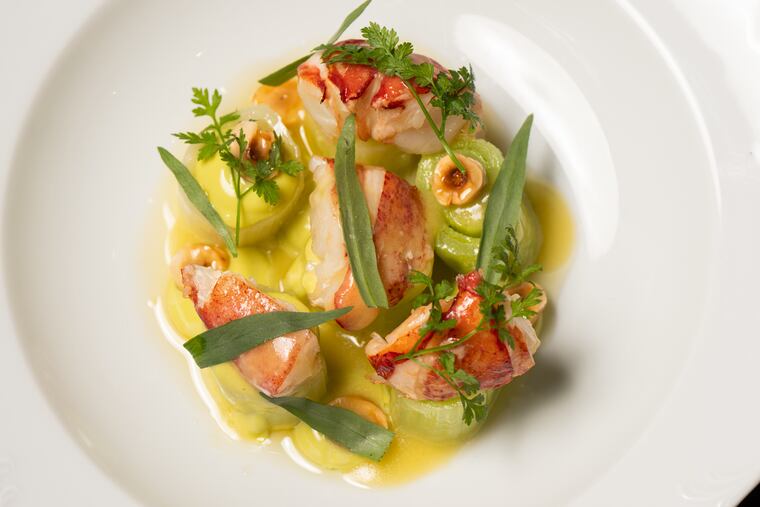
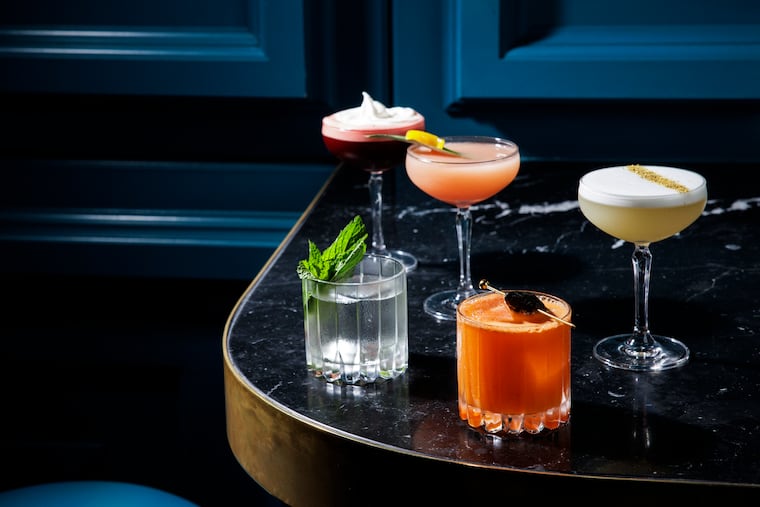
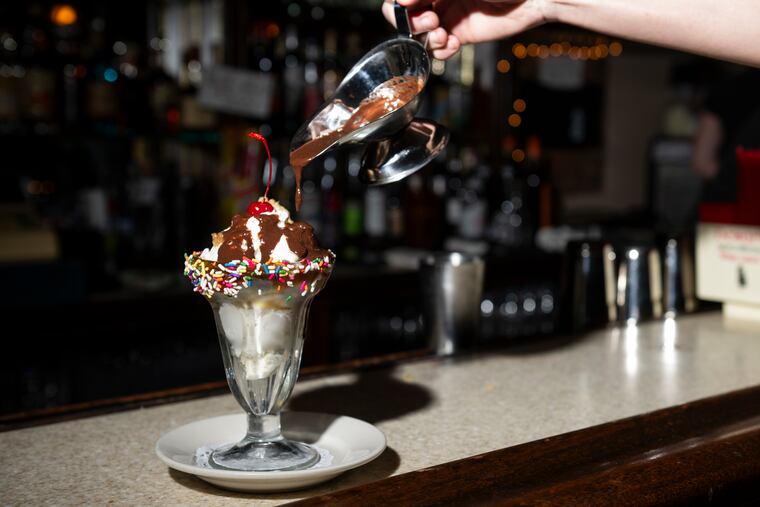
My Loup burst onto the scene in 2023 with its epic côte de boeuf and jars of pickled shrimp, already primed as the hotly anticipated sequel to Her Place Supper Club from star chef Amanda Shulman and her husband, chef Alex Kemp. The emergence of the Montréal-born Kemp as the kitchen’s driving force, however, has shaped My Loup into the rollicking French-Canadian bistro of my dreams, where the garlic knots explode with escargot, the summer cherry and peach tarts harbor a savory custard of foie gras, and Philly’s farm market seasonality informs every move, down to the cocktails. The bar, presided over by gregarious beverage manager Jillian Moore, is one of my preferred places to dine at My Loup. I’ll order her lemon-honeyed Bees Knees, anise-scented fall sangria, or mezcal bijou while devouring the slender razor clam stuffed with the salami-and-olive muffuletta fixings, or Maine sea urchins tucked into their bristly shell cups beneath an orange cloud of sweet potato mousse tart with apple cider vinegar. Kemp, who worked at Montréal’s Mon Lapin as well as Manhattan’s Eleven Madison Park, pairs elite culinary chops with a sense of whimsy that brings a welcome touch of levity to French cuisine. “Caviar and donuts” is a revelation of unexpected indulgence that offers a tin of ossetra alongside incredibly airy fritters made with smoked sturgeon, accompanied by a sour cream dip with seaweed and chive that builds layers of oceanic savor into every bite. Kemp’s team debones whole rabbits then reassembles them into bacon-wrapped saddles with garlic sausage and peaches. Juicy roasted chickens appear over mustardy spaetzle beneath truffles and fistfuls of chanterelles. In a town once dominated by French chefs, Kemp is one of the few remaining standout sauciers in that genre, with a knack for lightweight-yet-flavorful updates of classics like a silky white blanquette sauce for an osso bucco with sweet baby turnips, or an orchard-bright Calvados brandy reduction that illuminates the novel surf-and-turf pairing of seared scallops with blood sausage. My Loup’s menu can lean rich, but the servers are as adept at helping guests order with balance as they are at guiding them through the deep French cellar. Desserts are so straightforward the right answers are self-evident: a stunning bittersweet chocolate layer cake with a polished ganache mirror glaze, and a soft-serve sundae whose flavor combos swirl with the season’s spirit. There was corn and cherry in summer, a fall pairing of caramel apple and graham, and now? I’ve got My Loup on frequen repeat, because I want to try them all.
Pietramala
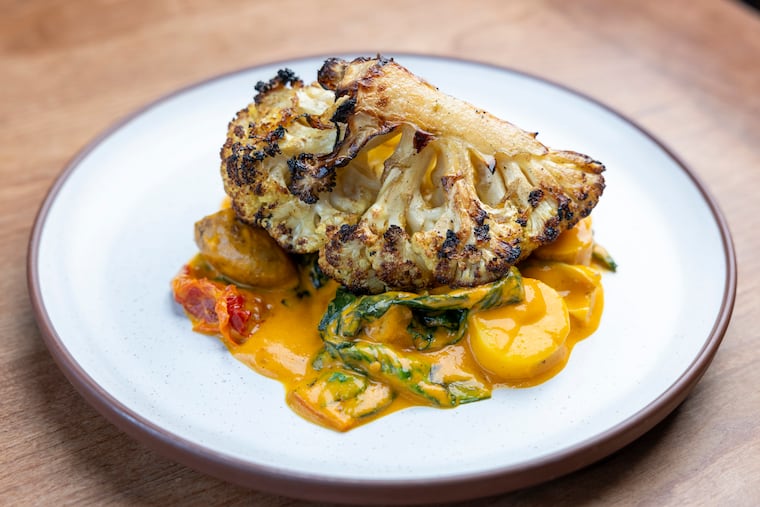
Ian Graye has figured out one of the secrets of becoming a great chef: focusing his energy on polishing one essential combination rather than cluttering plates with too many flourishes. And it has allowed him to unlock greater depths of flavor from vegetables at Pietramala than most chefs can tap from a wide-open world of meats and animal products. But don’t let the minimalist look fool you. The creations at this cutting-edge vegan kitchen in Northern Liberties are almost always the result of days, if not months, of labor — fermenting, dehydrating, smoking over the coals. This is the case with his game-changing veggie burger, a special made from smoked mushrooms, heirloom beans, house-made tamari and miso that has triggered monthly lines down Second Street. Another stunning dish this year essentially paired two ingredients: sweet corn and oyster mushrooms. But Graye teased out a rare complexity by cooking each ingredient within different versions of themselves, simmering whole kernels of Lancaster corn inside their creamy corn puree, then topping the result with a grilled mushroom painted in mushroom miso that’s fermented for months. This duo captured the poetry of shifting seasons: the fleeting sweetness of summer and autumnal umami united onto one haunting plate. That sense of wonder here is common. A smoked eggplant in au poivre sauce (with Dad’s Hat rye and creamy onion soubise) will make you forget it’s inspired by the classic steak dish, though it is every bit as satisfying. A corno di toro pepper glazed in orange Jimmy Nardello pepper romesco sauce and stuffed with smoked walnuts, local rice, and foraged lobster mushrooms elevated a potentially frumpy stuffed pepper to a special event. Graye’s growth in the three years since Pietramala opened has been impressive. He’s refined his craft and cultivated a vast larder of condiments for maximum flavor control. The intimate restaurant has also evolved, with a steady team in the open kitchen as well as a gracious front-of-house staff. The addition of a winery license for this former BYOB through Northeast Philly’s Camuna Cellars has also allowed Pietramala to add natural wines made from local grapes (the “Let’s Go Swimming” orange wine and blaufrankisch were my favorites) and cocktails with Pennsylvania spirits, lively non-alcoholic shrubs, and ingredients like fresh wormwood, summer plum, and birch bark. The license has also given a 20% revenue boost to this intimate 36-seat gem, which, of course, addresses one of the other key secrets of becoming a great chef: a sustainable business model.
Royal Sushi and Izakaya
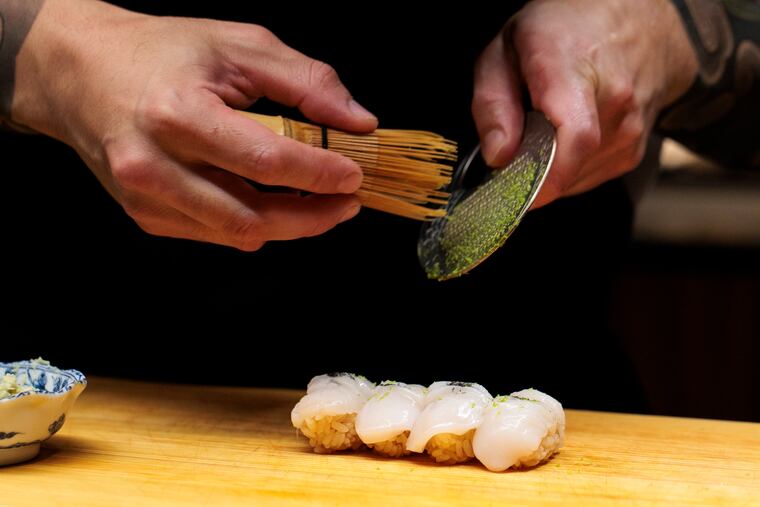
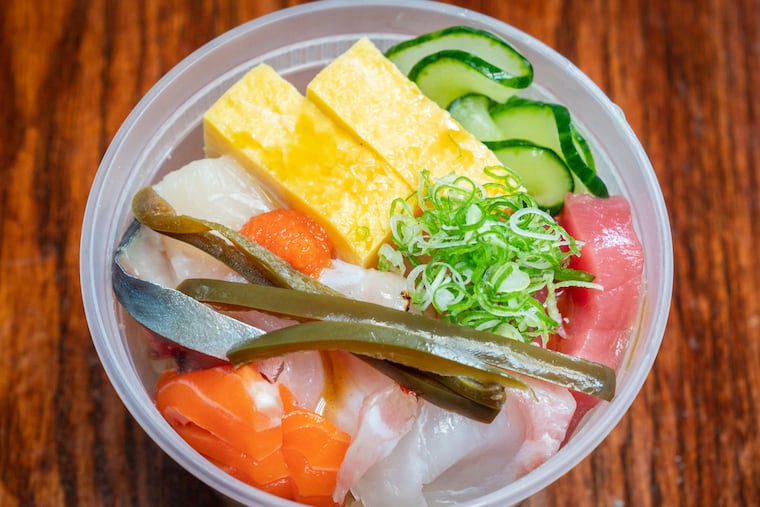
There’s a practical case to be made for the Royal Sushi part of Royal Sushi & Izakaya to be left off this list. It is as close to a private club as a public restaurant can be. While a handful of newcomers do, in fact, make it off of Resy’s daunting waiting list each week — snagging one of the 16 seats at Jesse Ito’s coveted omakase counter — you otherwise need to persuade a regular to loan you their standing reservation. But there’s a reason to keep singing its praises. This is one of the most magical dining experiences Philadelphia has to offer. Ito’s toro-carving artistry is one of the reasons he sets Philadelphia’s omakase gold standard. On a recent visit, I took a bite of glistening pink mackerel belly (a gloriously extra-extra-fatty toro sawara) and its fruity tang and buttery richness flooded my body with a pleasure wave of omega-3-s. (“Oh yeah…right?!” said a friendly stranger at the counter beside me, as we shared a mackerel moment.) There was the alabaster-smooth scallop dusted with yuzu zest cradling a nub of perfect nigiri rice, each warm grain distinct and full of flavor. A scarlet carabinero prawn melted away like sweet ocean butter. Royal Izakaya, the low-lit tavern that occupies the front of this Queen Village building, is a destination on its own, with seating for walk-ins only, serving “tuna-guac,” fish collars, chirashi buns, and Japanese-themed cocktails. Ito’s latest, dancerobot, a playful Rittenhouse Square collaboration with chef-partner Justin Bacharach, is pure Japanese comfort-food fun. But Royal Sushi’s $355-per-head sushi counter (gratuity included), where Ito handcrafts every morsel in tandem with exceptional sake pairings, resides on its own level. Ito’s style is ever-evolving, having graduated beyond the “bro-makase” cliché of pile-it-high luxuries to a more personal, nuanced style. His latest creative riff on bibimbap, a nod to his Korean mother, is a treasure hunt through buttered seaweed rice, uni, and cured Jidori egg yolk down to a hidden bottom layer of bluefin, sea bream, and king salmon. The tangy dashi dressing for lusciously thick slices of buri (adult hamachi) exuded a savory whiff of fish sauce, an ode to Ito’s Thai best friend. And then came the A5 Wagyu rib-eye, marinated galbi-style before it’s torched — an extraordinarily beefy add-on that prompted my new counter friend and I to share another knowing glance. “Don’t tell my mother,” he told me, noting his own Korean heritage, “but it’s better than hers.”
Tequilas / La Jefa
The Tequilas legacy could have disappeared altogether after a 2023 kitchen fire closed the restaurant for two years. Instead, the Suro family has blazed back to glory this spring with a remarkable vision for an all-day modern Mexican oasis fueled by agave spirits and the aroma of heirloom corn. The realization of this plan honors the traditions of a Philly pioneer, but also celebrates the present and future of one of the city’s most vibrant dining categories with contemporary creativity. From fresh-baked hibiscus conchas and morning lattes dusted with tortilla salt to artful ceviches, tequila-splashed langostinos, and cutting-edge cocktails at night, the range of delights here is vast. ¡Bienvenidos a Guadaladelphia! But first, understand how much the institution launched by David Suro Sr. 40 years ago has evolved. As noted in my colleague Kiki Aranita’s review, the revitalized Tequilas is now three places in one: A dining room, an all-day cafe, and a hidden mezcal bar inside that cafe. This Locust Street mansion’s gorgeous dining room, with its 19th-century Baccarat chandelier shimmering over a teal floor of handmade Mexican tile, has been largely preserved. This is where longtime patrons will find some of the restaurant’s classics (the cochinita and a lava rock molcajete bubbling with beef tenderloin and cheese in a chile-fired stew) deftly updated by consulting chef Fabián Delgado Padilla of Guadalajara’s palReal, and executed beautifully here by chefs and cousins Eduardo Moreno Sanchez and Jessica Sandoval. Tequilas’ former rear dining room, meanwhile, has been transformed by Suro’s children — David Jr., Elisa, and Dan — into La Jefa, an airy all-day cafe accessed from Latimer Street, offering single-origin Mexican coffees and inventive brunches. Tucked in the back of La Jefa is a moody cocktail lounge called Milpa, which has a modern Mexican menu all its own, aside from its tightly curated (and world-class) mezcal collection, avocado soda, and fascinating drinks (try the shaved ice Raspado or the $27 “Agave Cocktail,” a not-Margarita made from premium Cascahuín tequila, Colima salt, lime, and house-made roasted agave syrup). Delgado has brought elegant updates to much of Tequilas’ original menu, including a crackling-edged pork belly shingled over sweet mole dulce, an airy guacamole cloud hiding raw tuna at the bottom of a bowl, and an incredibly delicious Tapatía barbacoa made with brisket and dried chilies. But La Jefa and Milpa are where the contemporary Mexican flavors really shine. The guacamole comes with house-dried cecina beef jerky instead of chips. A stunning quesadilla made from inky black masa harbors tender squid inside molten quesillo cheese. A soft tetela, or triangular masa pastry, showcases the mind-blowing subtlety of a sweet plantain stuffing against the nutty spice of a pipián verde sauce. La Jefa’s spiced lengua pastrami sandwich is my Mexi-Jewish deli fantasy come true, and the soft huevos verdes are what I crave for brunch. Tequilas is part of a wave of thrilling Mexican projects that landed in Philly this year, but its exceptional veteran service team — many with three decades of service — sets it apart. They all returned after two years away because the Tequilas experience is really about them, too, especially as this institution strides into an even more exciting future.
Vetri Cucina
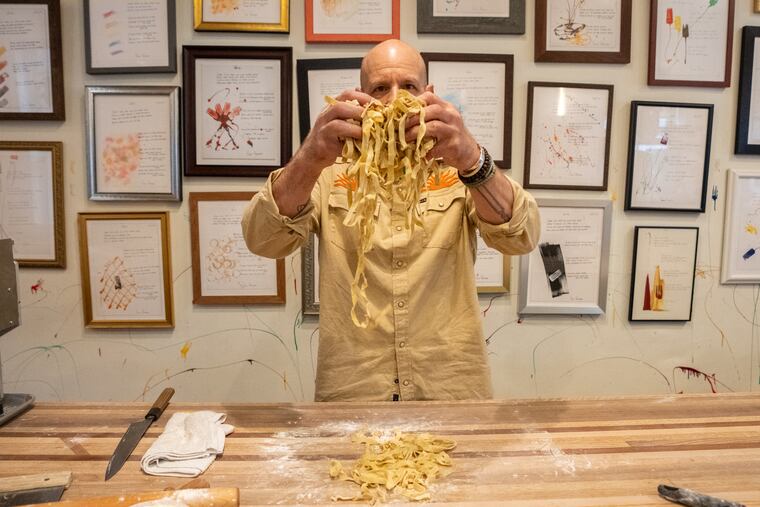
“Hug the noodle” has become Marc Vetri’s new favorite slogan. It’s a cooking directive, of sorts, to describe the magic moment when sauce suddenly thickens around pasta just enough to cling to each morsel, forming a creamy halo of cacio e pepe or zesty duck-and-olive ragù. But the saying also describes a life’s calling for Vetri, whose nationally acclaimed career has revolved around his passionate embrace of noodlecraft. Vetri radiated pure joy behind the chef’s counter recently as he dazzled a handful of lucky diners with his coveted monthly “pasta omakase,” a 15-course parade of exquisite pasta creations inspired by the sushi tasting format of Japan, where Vetri owns a restaurant in Kyoto. Snappy tagliolini strands arrive in sake butter beneath creamy sea urchin and caviar. Gnocchi clouds come stuffed with lobster mousse. A culurgione of carob dough wrapped around an X.O.-spiked stuffing of duck confit in a citrusy meat reduction sauce was essentially duck à l’orange as a dumpling. Finally, a pasta coin arrived cinched around grilled wagyu beef and Cooper Sharp for a whimsical one-bite wonder that redefined the fancy cheesesteak. Even if the limited omakase isn’t accessible to a wide audience, it’s become an essential creative outlet for the chef and his crew at Vetri Cucina to keep evolving after 27 years in this elegant Spruce Street townhouse. It has also helped refresh and inspire Vetri’s regular menu, which is still very much worth your time — and perhaps even more so of late. It’s been six years since this Philly fine-dining classic made my end-of-year favorites list. But a pair of recent visits, including for the standard $165 four-course menu, convinced me Vetri is once again having a buzzy moment — hugging the noodle, if you will — as the team’s best new ideas (sweet potato cavatelli with crab and apple) rise seamlessly alongside time-tested standards (melt-away spinach gnocchi). With one of Philadelphia’s most gracious service staff drawing from an exceptional collection of Italian wines, the complete experience here goes well beyond pasta. There’s housemade salumi to start the meal, along with a savory pear tarte Tatin with radicchio and gorgonzola. The kitchen can produce alta cucina at its most precise, with lobster mousse dumplings wrapped in mustard greens or a rosy-hued venison glossed in raisiny Amarone sauce. It can also deliver rustic satisfaction with perhaps my all-time Vetri favorite: smoked baby goat over house-milled polenta. Revived recently after years off the menu, the goat’s crispy-skinned tenderness and earthy simplicity has been a revelation for the latest generation of line cooks. Yes, the cutting-edge pastas are still a major draw. But at Vetri, what’s old is new and beautiful again, too.
Zahav
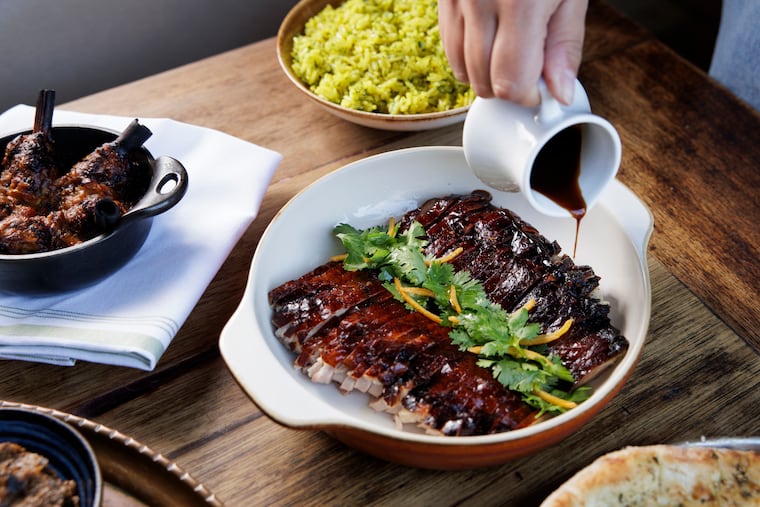
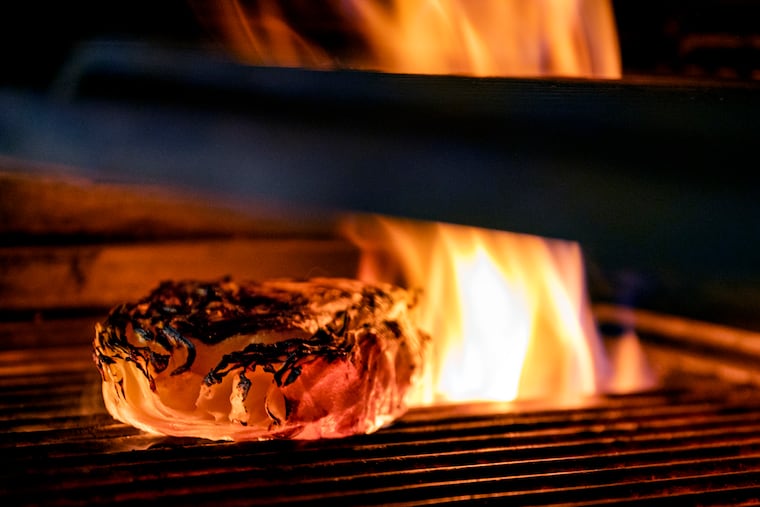
There’s always something new to savor at Zahav, the shimmering glass box in Society Hill Towers whose live-fire interpretations of modern Israeli flavors have transfixed Philadelphians for 17 years and earned national destination status. Its standards are still so superb its 100 seats remain among Philly’s toughest to book. But the more co-owners Steven Cook and Michael Solomonov grow their company — now with 14 restaurants in three states (plus 10 Federal Donuts) — the more committed they remain to maintaining their crown jewel as a living, breathing project. Some of that involves constantly improving ingredients, like the newly acquired “oyster cut” of lamb that has taken Zahav’s iconic pomegranate-braised and smoked lamb shoulder to another level of earthy tenderness. Or the vividly fresh Turkish sumac, unavailable when Zahav first opened, that lends a tangy lift Solomonov likens to “sour cherry pink lemonade” for the juicy chicken shishlik with stone fruit amba and crispy chicken skin. The prime energy boost, though, flows from a steady infusion of kitchen talent, including co-chefs Natasha Sabanina and newly arrived Aiden McGuiggin, formerly of Washington, D.C.’s Tail Up Goat. McGuiggin’s talent for preservation contributed to recent memorable bites, including a poppy-encrusted cobia crudo, whose firm white flesh crunched against snappy tiles of locally grown Asian pears compressed with turmeric and fruity yellow jalapeños. Some lusciously rare lamb carpaccio, meanwhile, was elevated by dried, cured, and smoked summer tomatoes dusted in the green chili-cilantro zing of Shabazi spice. And just when I thought the kebabs here couldn’t be more delicious, I forked into a juicy new ground lamb skewer tinted green with crushed pistachios, almost fluffy from the leavening sparkle of ginger beer, alongside a black garlic toum. Zahav’s dining room has also gotten a gentle makeover, with a second bar to speed the arrival of za’atar-dusted gin and tonics and sesame-infused bourbon drinks into thirsty diners’ hands, but also to add a few extra seats where lucky walk-ins can order a la carte (even if the four-course mesibah tasting menu remains a great value for $90). A new wooden structure in the central dining room has also added linen-draped cubbies for a touch more intimacy in this boisterous space lined with Jerusalem limestone. There’s even the promise of new acoustic treatments to finally allow easier conversation over the high-energy classic-rock soundtrack. What might people be saying? At my table it was this: Zahav is somehow still exciting and aging gracefully at the same time.
Friday Saturday Sunday
I rarely use the word “perfection” to describe any meal, let alone a pricey tasting menu with a dozen intricate creations. But the moment I bit into the warm beignet stuffed with tender oxtail and smoked yam purée, I hungrily began scanning our table at Friday Saturday Sunday for the next treasure to devour. A thimble-sized nori pastry stuffed with a tartare of tuna, veal, and caviar? Gone like a Scooby snack. Sweet Hokkaido scallops and long hot pepper jam hiding in a fluted shell beneath a creamy mist of smoked coconut sabayon? Sluurrrp! Chad and Hanna Williams haven’t rested on their accolades — a Michelin star, a No. 16 ranking in North America by World’s 50 Best, and a run of James Beard kudos. Their townhouse tasting-menu oasis off Rittenhouse Square has gotten better every year since the couple bought this now 52-year-old landmark a decade ago. That’s true whether you are seated in the plush upstairs dining room or the leopard-print ground-floor Lovers Bar, where walk-in regulars dine a la carte on irresistible FSS classics (smoked herring spaghetti, octopus and beans) and sip brilliantly original cocktails while Aretha Franklin and Herbie Hancock play in the background. I marvel at how Williams and his team, including chef de cuisine India Rodriguez, continuously reinvent the tasting menu with globe-hopping inspirations that never feel contrived. Somehow fusilli noodles darkened with allium ash and glossed in luxurious lobster stock seem like the ideal prelude to the next dish, a pairing of sweetbreads and plantains in a buttery vin blanc froth. A deeply savory grilled short rib is slow-poached sous-vide for days in lemongrass and shrimp paste before it’s grilled and served with the spark of a chili crunch. I’m still dreaming of the unexpected rice course — a soulful cup of koshikari grains cooked in duck stock with Filipino adobo, studded with smoky bacon, and draped with a rosy, honey-glazed slice of duck breast. Pastry chef Amanda Rafalski enters the picture with a palate-cleansing cashew custard topped with pretzel crumbles and a rose-scented granita, and then delivers the tart to end all tarts: an almond pastry shell filled with duck egg semifreddo, strawberry jam, fresh berries, and tangy strawberry top tea. Perfection? This tart — and this whole meal — was it.

Kalaya
Philadelphians know Chutatip “Nok” Suntaranon as an underdog success story: the former Thai flight attendant who launched her cooking career in a Bella Vista BYOB, then soared to fame on the wings of hand-pinched, bird-shaped dumplings and the uncompromising fire of her towering tom yum. Now the rest of the world knows Suntaranon, too. She was recently crowned “best female chef in North America” by North America’s 50 Best Restaurants, which also named Kalaya the seventh best restaurant on the continent. It’s the latest in a string of awards since her 2022 move to the airy, palm-fringed space of a former Fishtown warehouse for a much grander Kalaya 2.0. The James Beard Foundation, Netflix’s Chef’s Table and Time100 innovators list have all chimed in. Kalaya still delivers spectacularly because Suntaranon is America’s most passionate ambassador for the bold flavors of her native Southern Thailand. Earthy goat and lamb curries. Majestic wok-fried river prawns in shrimp paste and brown butter. Crispy squid with a turmeric-fried crust that unleashes waves of curry, lime, and long hot pepper spice. Those are just a few dishes that make Kalaya so singular. Now three years into its current location and Suntaranon’s partnership with the team behind Suraya and Pizzeria Beddia, Kalaya as an operation is in fine-polishing mode, assuring the family recipes are consistent every time, and refining its format so servers can more easily convey a menu of regional specialties unfamiliar to many Americans. The tasting menu option, a three-course feast for $75 that’s the default on weekends, is designed to help guide diners toward a meal of balanced flavors. (Too spicy? There are tropical cocktails and fun shaved-ice desserts to quench the heat.) I would start with the crispy chive dumplings and blue flower-shaped shaw muang dumplings. Try the sour fish curry tart with pineapples for a taste of Suntaranon’s mother’s favorite dish (the restaurant, after all, is named for her). There are other favorites I don’t want to miss: the grilled chicken glazed in tamarind, coconut milk, and soy; the whole branzino in fish sauce and lime; the tangy-sweet Mangalitsa pork chop. But Suntaranon is always working new dishes into the mix, like the fisherman’s pot of squid ink-blackened rice jeweled with colossal crab, shrimp, and calamari that tastes like the Andaman Sea. One day, Nok may even get Philadelphians to go for the rustic punch of the fish-innard curry she craves whenever she visits home. If history is any indicator of Nok’s magic touch, we’re going to love that, too.
Little Water
At Little Water, where the shrimp cocktail comes beneath stripes of smoked catsup piled high with fresh-shaved horseradish, the swordfish Milanese cutlets are encrusted in potato chips, and the “Caesar-like” salad is dusted with nori, Philadelphia’s once-grand fish house tradition has gotten the modern update it deserves. This restaurant, launched a year ago from chef Randy and Amanda Rucker, the married couple behind River Twice, has re-energized a corner bar near Rittenhouse Square. Wrapped in glass cafe walls and pressed tin ceilings, Little Water rides the fine line between neighborhood haunt and destination splurge. You can pop by the bar (always reserved for walk-ins) for the “Low Tide” happy hour of $2 Sweet Amalia oysters splashed in Alabama white sauce and a kombu-infused martini for $10. Or you can dive deep into one of the most innovative raw bars in town — scarlet crab claws dabbed with black walnut mustard, little toasts with tuna ’nduja, a tin of caviar with hush puppies and ricotta — and then embark on a considerable feast. If River Twice has remained Randy’s intimate atelier for modernist experimentation, the 78-seat Little Water is geared to be a bit more accessible, with a menu that taps the couple’s residence in coastal regions from Texas to New England. Two recent hits: a bowl of creamy pencil cob grits topped with luscious chunks of lobster and caramelized cippolini onions, and a steak tartare riff on oysters Rockefeller dressed with a Pernod reduction and topped with cornmeal-fried oysters. A massive fried bass over Sea Island peas remains one of my favorite whole fish of the year. And hash browns topped with Jonah crab salad and Maine uni are a must when it’s urchin season, ideal with a glass of sparkling Crémant de Bourgogne or a Müller dry riesling from the concise but smart Euro wine list. I go for the turmeric sparkle of the non-alcoholic Golden Hour during Little Water’s mellow lunch service. The midday menu is as ambitious as ever, whether one of Rucker’s peerless gumbos, a meaty Texas redfish roasted “on the half shell” with its char-roasted scales still on, or a juicy chicken-fried chicken on toast. Its tawny crust is drizzled in a buttermilk dressing beaded with smoked trout roe then spiked with a toothpick stack of bread-and-butter pickles. All you need to complete the coastal-picnic vibe is the snappy tang of Little Water’s key lime tart for dessert.
Mawn
The Cambodian-inspired flavors are so electric at Mawn, where the funky spice of wild boar prahok dip sometimes comes atop Khmer chili dogs and the fried head-on shrimp are glazed in fish sauce caramel, it can be hard to know where to start. That’s when it’s time to go “puck & see,” the Cambodian expression for “eat and drink.” That’s also your cue to skip Mawn’s a la carte menu and let the kitchen produce a family-style feast of multiple dishes that, for $65 a person, is an incredible value. “It’s a way for us to create a mixtape for you, so you can understand our music,” says chef Phila Lorn, who co-owns this 28-seat BYOB sensation with wife, Rachel Lorn. Just as the restaurant’s own soundtrack bounces from classic Khmer crooners like Sinn Sisamouth to Cambodian rapper VannDa, Mawn’s cuisine is dynamic, ranging from traditional flavors that echo the Southeast Asian Market in FDR Park (amazing lemongrass-marinated beef skewers) to multicultural influences gleaned from Phila’s time in Japanese restaurants and beyond, from Zama and CoZara to Stock. Mawn calls itself a “noodle house with no rules,” and there are noodle-based highlights, including the signature schmaltz-enriched chicken soup spiked with chili jam. But I think about Mawn’s salads even more, especially the sour and spicy papaya salad made famous on a Food & Wine cover in September, when Phila was named one of America’s “Best New Chefs” following a similar nod from the James Beard Foundation. Other irresistible salads include a Burmese melon salad dusted with lime leaf powder and crispy shallots, and the banh chow, a crispy half-moon crepe that recalls a Southeast Asian tuile inlaid with ground chicken and shrimp, placed atop a tangle of lettuce and minty backyard herbs lashed in Phila’s mom’s galangal vinaigrette. And then the free-flowing tasting menu brings pristine raw scallops in chili jam dusted with peanuts, a glimpse of what’s popping at their new oyster bar, Sao. More scallops — seared this time — arrive over a red curry infused with shrimp paste and Japanese chocolate, inspired by a mole lunch at nearby Casa Mexico in the Italian Market. We happily clear space for the “all-star fried rice,” topped with a treasure chest of seafood that’s been wok-fried with crab fat butter. And then my dream steak: a 20-ounce rib-eye piled high with a salad of Thai eggplants and turmeric-roasted tomatoes splashed in lime juice punchy with fermented prahok fish paste. Mawn is so bold, boisterous, and tinged with nostalgia for Phila’s South Philly childhood that it’s no wonder Philadelphians cannot get enough of it. Neither can I.
My Loup
My Loup burst onto the scene in 2023 with its epic côte de boeuf and jars of pickled shrimp, already primed as the hotly anticipated sequel to Her Place Supper Club from star chef Amanda Shulman and her husband, chef Alex Kemp. The emergence of the Montréal-born Kemp as the kitchen’s driving force, however, has shaped My Loup into the rollicking French-Canadian bistro of my dreams, where the garlic knots explode with escargot, the summer cherry and peach tarts harbor a savory custard of foie gras, and Philly’s farm market seasonality informs every move, down to the cocktails. The bar, presided over by gregarious beverage manager Jillian Moore, is one of my preferred places to dine at My Loup. I’ll order her lemon-honeyed Bees Knees, anise-scented fall sangria, or mezcal bijou while devouring the slender razor clam stuffed with the salami-and-olive muffuletta fixings, or Maine sea urchins tucked into their bristly shell cups beneath an orange cloud of sweet potato mousse tart with apple cider vinegar. Kemp, who worked at Montréal’s Mon Lapin as well as Manhattan’s Eleven Madison Park, pairs elite culinary chops with a sense of whimsy that brings a welcome touch of levity to French cuisine. “Caviar and donuts” is a revelation of unexpected indulgence that offers a tin of ossetra alongside incredibly airy fritters made with smoked sturgeon, accompanied by a sour cream dip with seaweed and chive that builds layers of oceanic savor into every bite. Kemp’s team debones whole rabbits then reassembles them into bacon-wrapped saddles with garlic sausage and peaches. Juicy roasted chickens appear over mustardy spaetzle beneath truffles and fistfuls of chanterelles. In a town once dominated by French chefs, Kemp is one of the few remaining standout sauciers in that genre, with a knack for lightweight-yet-flavorful updates of classics like a silky white blanquette sauce for an osso bucco with sweet baby turnips, or an orchard-bright Calvados brandy reduction that illuminates the novel surf-and-turf pairing of seared scallops with blood sausage. My Loup’s menu can lean rich, but the servers are as adept at helping guests order with balance as they are at guiding them through the deep French cellar. Desserts are so straightforward the right answers are self-evident: a stunning bittersweet chocolate layer cake with a polished ganache mirror glaze, and a soft-serve sundae whose flavor combos swirl with the season’s spirit. There was corn and cherry in summer, a fall pairing of caramel apple and graham, and now? I’ve got My Loup on frequen repeat, because I want to try them all.
Pietramala
Ian Graye has figured out one of the secrets of becoming a great chef: focusing his energy on polishing one essential combination rather than cluttering plates with too many flourishes. And it has allowed him to unlock greater depths of flavor from vegetables at Pietramala than most chefs can tap from a wide-open world of meats and animal products. But don’t let the minimalist look fool you. The creations at this cutting-edge vegan kitchen in Northern Liberties are almost always the result of days, if not months, of labor — fermenting, dehydrating, smoking over the coals. This is the case with his game-changing veggie burger, a special made from smoked mushrooms, heirloom beans, house-made tamari and miso that has triggered monthly lines down Second Street. Another stunning dish this year essentially paired two ingredients: sweet corn and oyster mushrooms. But Graye teased out a rare complexity by cooking each ingredient within different versions of themselves, simmering whole kernels of Lancaster corn inside their creamy corn puree, then topping the result with a grilled mushroom painted in mushroom miso that’s fermented for months. This duo captured the poetry of shifting seasons: the fleeting sweetness of summer and autumnal umami united onto one haunting plate. That sense of wonder here is common. A smoked eggplant in au poivre sauce (with Dad’s Hat rye and creamy onion soubise) will make you forget it’s inspired by the classic steak dish, though it is every bit as satisfying. A corno di toro pepper glazed in orange Jimmy Nardello pepper romesco sauce and stuffed with smoked walnuts, local rice, and foraged lobster mushrooms elevated a potentially frumpy stuffed pepper to a special event. Graye’s growth in the three years since Pietramala opened has been impressive. He’s refined his craft and cultivated a vast larder of condiments for maximum flavor control. The intimate restaurant has also evolved, with a steady team in the open kitchen as well as a gracious front-of-house staff. The addition of a winery license for this former BYOB through Northeast Philly’s Camuna Cellars has also allowed Pietramala to add natural wines made from local grapes (the “Let’s Go Swimming” orange wine and blaufrankisch were my favorites) and cocktails with Pennsylvania spirits, lively non-alcoholic shrubs, and ingredients like fresh wormwood, summer plum, and birch bark. The license has also given a 20% revenue boost to this intimate 36-seat gem, which, of course, addresses one of the other key secrets of becoming a great chef: a sustainable business model.
Royal Sushi and Izakaya
There’s a practical case to be made for the Royal Sushi part of Royal Sushi & Izakaya to be left off this list. It is as close to a private club as a public restaurant can be. While a handful of newcomers do, in fact, make it off of Resy’s daunting waiting list each week — snagging one of the 16 seats at Jesse Ito’s coveted omakase counter — you otherwise need to persuade a regular to loan you their standing reservation. But there’s a reason to keep singing its praises. This is one of the most magical dining experiences Philadelphia has to offer. Ito’s toro-carving artistry is one of the reasons he sets Philadelphia’s omakase gold standard. On a recent visit, I took a bite of glistening pink mackerel belly (a gloriously extra-extra-fatty toro sawara) and its fruity tang and buttery richness flooded my body with a pleasure wave of omega-3-s. (“Oh yeah…right?!” said a friendly stranger at the counter beside me, as we shared a mackerel moment.) There was the alabaster-smooth scallop dusted with yuzu zest cradling a nub of perfect nigiri rice, each warm grain distinct and full of flavor. A scarlet carabinero prawn melted away like sweet ocean butter. Royal Izakaya, the low-lit tavern that occupies the front of this Queen Village building, is a destination on its own, with seating for walk-ins only, serving “tuna-guac,” fish collars, chirashi buns, and Japanese-themed cocktails. Ito’s latest, dancerobot, a playful Rittenhouse Square collaboration with chef-partner Justin Bacharach, is pure Japanese comfort-food fun. But Royal Sushi’s $355-per-head sushi counter (gratuity included), where Ito handcrafts every morsel in tandem with exceptional sake pairings, resides on its own level. Ito’s style is ever-evolving, having graduated beyond the “bro-makase” cliché of pile-it-high luxuries to a more personal, nuanced style. His latest creative riff on bibimbap, a nod to his Korean mother, is a treasure hunt through buttered seaweed rice, uni, and cured Jidori egg yolk down to a hidden bottom layer of bluefin, sea bream, and king salmon. The tangy dashi dressing for lusciously thick slices of buri (adult hamachi) exuded a savory whiff of fish sauce, an ode to Ito’s Thai best friend. And then came the A5 Wagyu rib-eye, marinated galbi-style before it’s torched — an extraordinarily beefy add-on that prompted my new counter friend and I to share another knowing glance. “Don’t tell my mother,” he told me, noting his own Korean heritage, “but it’s better than hers.”
Tequilas / La Jefa
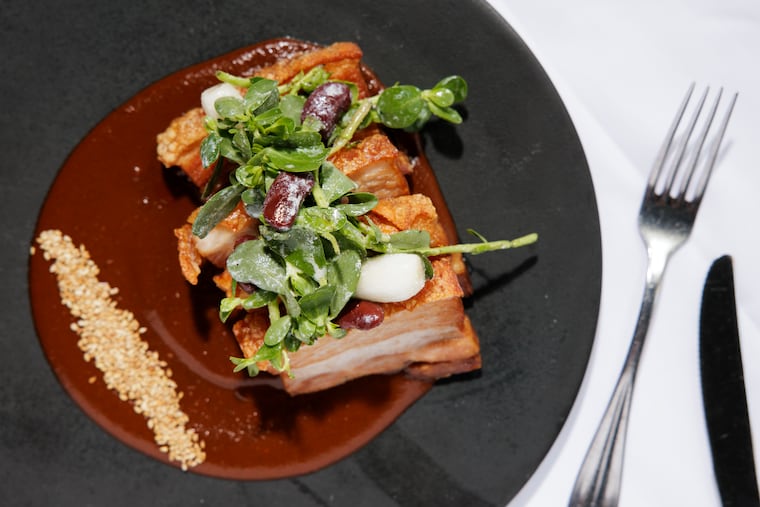
The Tequilas legacy could have disappeared altogether after a 2023 kitchen fire closed the restaurant for two years. Instead, the Suro family has blazed back to glory this spring with a remarkable vision for an all-day modern Mexican oasis fueled by agave spirits and the aroma of heirloom corn. The realization of this plan honors the traditions of a Philly pioneer, but also celebrates the present and future of one of the city’s most vibrant dining categories with contemporary creativity. From fresh-baked hibiscus conchas and morning lattes dusted with tortilla salt to artful ceviches, tequila-splashed langostinos, and cutting-edge cocktails at night, the range of delights here is vast. ¡Bienvenidos a Guadaladelphia! But first, understand how much the institution launched by David Suro Sr. 40 years ago has evolved. As noted in my colleague Kiki Aranita’s review, the revitalized Tequilas is now three places in one: A dining room, an all-day cafe, and a hidden mezcal bar inside that cafe. This Locust Street mansion’s gorgeous dining room, with its 19th-century Baccarat chandelier shimmering over a teal floor of handmade Mexican tile, has been largely preserved. This is where longtime patrons will find some of the restaurant’s classics (the cochinita and a lava rock molcajete bubbling with beef tenderloin and cheese in a chile-fired stew) deftly updated by consulting chef Fabián Delgado Padilla of Guadalajara’s palReal, and executed beautifully here by chefs and cousins Eduardo Moreno Sanchez and Jessica Sandoval. Tequilas’ former rear dining room, meanwhile, has been transformed by Suro’s children — David Jr., Elisa, and Dan — into La Jefa, an airy all-day cafe accessed from Latimer Street, offering single-origin Mexican coffees and inventive brunches. Tucked in the back of La Jefa is a moody cocktail lounge called Milpa, which has a modern Mexican menu all its own, aside from its tightly curated (and world-class) mezcal collection, avocado soda, and fascinating drinks (try the shaved ice Raspado or the $27 “Agave Cocktail,” a not-Margarita made from premium Cascahuín tequila, Colima salt, lime, and house-made roasted agave syrup). Delgado has brought elegant updates to much of Tequilas’ original menu, including a crackling-edged pork belly shingled over sweet mole dulce, an airy guacamole cloud hiding raw tuna at the bottom of a bowl, and an incredibly delicious Tapatía barbacoa made with brisket and dried chilies. But La Jefa and Milpa are where the contemporary Mexican flavors really shine. The guacamole comes with house-dried cecina beef jerky instead of chips. A stunning quesadilla made from inky black masa harbors tender squid inside molten quesillo cheese. A soft tetela, or triangular masa pastry, showcases the mind-blowing subtlety of a sweet plantain stuffing against the nutty spice of a pipián verde sauce. La Jefa’s spiced lengua pastrami sandwich is my Mexi-Jewish deli fantasy come true, and the soft huevos verdes are what I crave for brunch. Tequilas is part of a wave of thrilling Mexican projects that landed in Philly this year, but its exceptional veteran service team — many with three decades of service — sets it apart. They all returned after two years away because the Tequilas experience is really about them, too, especially as this institution strides into an even more exciting future.
Vetri Cucina
“Hug the noodle” has become Marc Vetri’s new favorite slogan. It’s a cooking directive, of sorts, to describe the magic moment when sauce suddenly thickens around pasta just enough to cling to each morsel, forming a creamy halo of cacio e pepe or zesty duck-and-olive ragù. But the saying also describes a life’s calling for Vetri, whose nationally acclaimed career has revolved around his passionate embrace of noodlecraft. Vetri radiated pure joy behind the chef’s counter recently as he dazzled a handful of lucky diners with his coveted monthly “pasta omakase,” a 15-course parade of exquisite pasta creations inspired by the sushi tasting format of Japan, where Vetri owns a restaurant in Kyoto. Snappy tagliolini strands arrive in sake butter beneath creamy sea urchin and caviar. Gnocchi clouds come stuffed with lobster mousse. A culurgione of carob dough wrapped around an X.O.-spiked stuffing of duck confit in a citrusy meat reduction sauce was essentially duck à l’orange as a dumpling. Finally, a pasta coin arrived cinched around grilled wagyu beef and Cooper Sharp for a whimsical one-bite wonder that redefined the fancy cheesesteak. Even if the limited omakase isn’t accessible to a wide audience, it’s become an essential creative outlet for the chef and his crew at Vetri Cucina to keep evolving after 27 years in this elegant Spruce Street townhouse. It has also helped refresh and inspire Vetri’s regular menu, which is still very much worth your time — and perhaps even more so of late. It’s been six years since this Philly fine-dining classic made my end-of-year favorites list. But a pair of recent visits, including for the standard $165 four-course menu, convinced me Vetri is once again having a buzzy moment — hugging the noodle, if you will — as the team’s best new ideas (sweet potato cavatelli with crab and apple) rise seamlessly alongside time-tested standards (melt-away spinach gnocchi). With one of Philadelphia’s most gracious service staff drawing from an exceptional collection of Italian wines, the complete experience here goes well beyond pasta. There’s housemade salumi to start the meal, along with a savory pear tarte Tatin with radicchio and gorgonzola. The kitchen can produce alta cucina at its most precise, with lobster mousse dumplings wrapped in mustard greens or a rosy-hued venison glossed in raisiny Amarone sauce. It can also deliver rustic satisfaction with perhaps my all-time Vetri favorite: smoked baby goat over house-milled polenta. Revived recently after years off the menu, the goat’s crispy-skinned tenderness and earthy simplicity has been a revelation for the latest generation of line cooks. Yes, the cutting-edge pastas are still a major draw. But at Vetri, what’s old is new and beautiful again, too.

Zahav
There’s always something new to savor at Zahav, the shimmering glass box in Society Hill Towers whose live-fire interpretations of modern Israeli flavors have transfixed Philadelphians for 17 years and earned national destination status. Its standards are still so superb its 100 seats remain among Philly’s toughest to book. But the more co-owners Steven Cook and Michael Solomonov grow their company — now with 14 restaurants in three states (plus 10 Federal Donuts) — the more committed they remain to maintaining their crown jewel as a living, breathing project. Some of that involves constantly improving ingredients, like the newly acquired “oyster cut” of lamb that has taken Zahav’s iconic pomegranate-braised and smoked lamb shoulder to another level of earthy tenderness. Or the vividly fresh Turkish sumac, unavailable when Zahav first opened, that lends a tangy lift Solomonov likens to “sour cherry pink lemonade” for the juicy chicken shishlik with stone fruit amba and crispy chicken skin. The prime energy boost, though, flows from a steady infusion of kitchen talent, including co-chefs Natasha Sabanina and newly arrived Aiden McGuiggin, formerly of Washington, D.C.’s Tail Up Goat. McGuiggin’s talent for preservation contributed to recent memorable bites, including a poppy-encrusted cobia crudo, whose firm white flesh crunched against snappy tiles of locally grown Asian pears compressed with turmeric and fruity yellow jalapeños. Some lusciously rare lamb carpaccio, meanwhile, was elevated by dried, cured, and smoked summer tomatoes dusted in the green chili-cilantro zing of Shabazi spice. And just when I thought the kebabs here couldn’t be more delicious, I forked into a juicy new ground lamb skewer tinted green with crushed pistachios, almost fluffy from the leavening sparkle of ginger beer, alongside a black garlic toum. Zahav’s dining room has also gotten a gentle makeover, with a second bar to speed the arrival of za’atar-dusted gin and tonics and sesame-infused bourbon drinks into thirsty diners’ hands, but also to add a few extra seats where lucky walk-ins can order a la carte (even if the four-course mesibah tasting menu remains a great value for $90). A new wooden structure in the central dining room has also added linen-draped cubbies for a touch more intimacy in this boisterous space lined with Jerusalem limestone. There’s even the promise of new acoustic treatments to finally allow easier conversation over the high-energy classic-rock soundtrack. What might people be saying? At my table it was this: Zahav is somehow still exciting and aging gracefully at the same time.