Everyone is talking about conchas lately – here’s why
How a crusty, crackling bun topping traveled from Mexico to China and where you can eat them in Philly.
Third culture bakeries have seen a meteoric rise recently and are a significant part of the bakery boom fueled by the “little treat culture” that has swept cities from New York to London to Philly.
In Philly, the children of immigrants have opened bakeries that appeal to many palates, whether Asian, Western, Middle Eastern, or Latin American. We see ingredients like za’atar and shatta being used in unexpected bakeries, united by love stories, Japanese matcha being baked into both Filipino and Indonesian desserts, and many more baked goods that have arisen from immigrants cooking and eating together. But not only are the baked goods and ingredients themselves trending, the stories behind them also are, and in some cases, even their long, shared histories.
The linked story of Mexican conchas and Chinese bo lo bao predates “little treat culture” by hundreds of years.
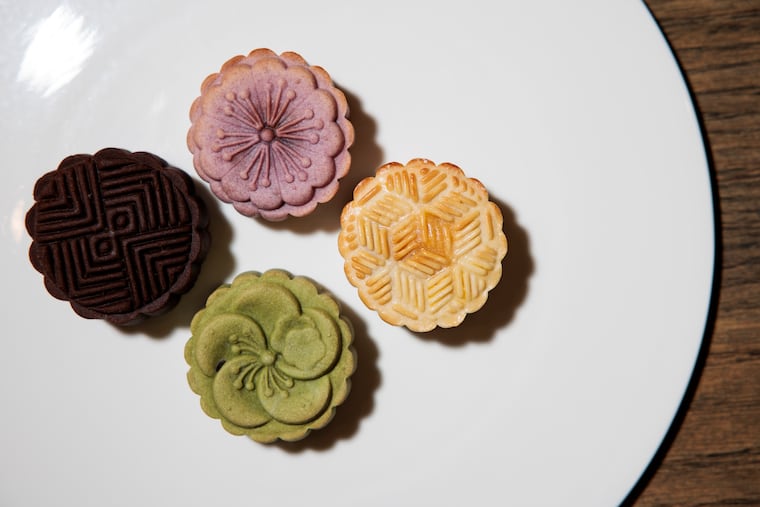
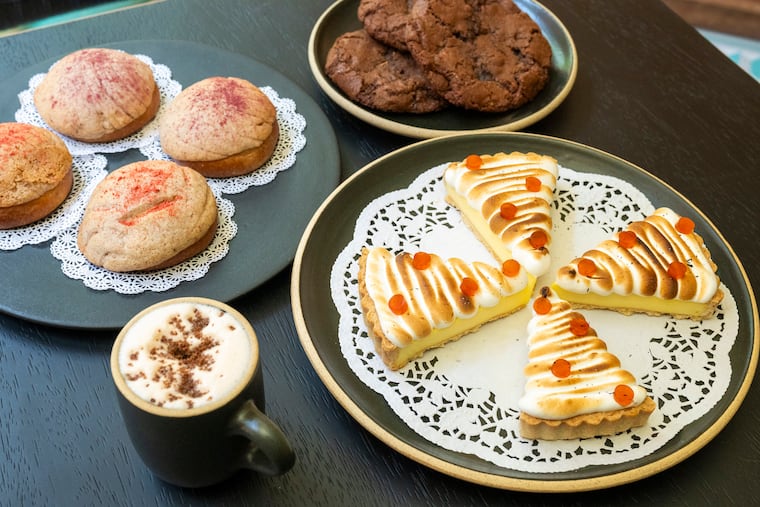
Crackled, cookie-like crusts sit on top of round, fluffy milk bread, sometimes filled with cream, jam, or custard, or char siu, a vibrant red Cantonese roast pork.
At dim sum and in Chinese bakeries, they’re the other mainstay classic, along with egg tarts. At first glance, the bo lo bao and the concha might not seem to have that much in common, aside from both being buns. Conchas are staples of the Mexican bakery, bo la bao are popular at dim sum houses.
This popular item at East Asian-leaning bakeries, both new wave and old school, shares its origins with traditional Mexican bakeries. While in Spanish it’s the concha, named for its shell that resembles the outside of the seashell (though it also can be manipulated with crosshatching to look more like tic tac toe), in Chinese, it’s “bo lo bao,” which translates to “pineapple bun,” though the bun never contains any pineapple. Rather, its namesake gives the bun a way to describe its crusty, often cross-hatched texture.
It’s a narrative that has been trending on social media, as people of Chinese heritage dig into the origins of their favorite foods.
One theory on how these buns evolved in separate cultures is that after Chinese immigrants built railroads in Mexico in the early 1900s and returned to China, they brought conchas with them. Chinese bakeries are also heavily influenced by the Portuguese, who ruled Macao and also introduced egg tarts to Chinese cuisine.
There’s another bread narrative that has been simultaneously making waves on social media. British baker Richard Hart, co-owner and founder of the lauded Copenhagen bakery Hart Bageri and the Green Rhino bakery in Mexico City, insulted the entirety of Mexican bread culture on a podcast, dismissing it as nonexistent. His words incensed the internet. And you’ll find that by tasting through even the Mexican breads available in Philly, he’s quite incorrect.
At Tequilas, an airy concha, flavored with hoja santa and filled with avocado whipped cream, is a coda to dinners of teeming molcajetes and similarly light tamales. At the adjacent La Jefa, you can pick up jam-filled concha, made by the same kitchen, to pair with your morning cappuccino. They’re the work of pastry chef Jessica Delgado, who comes from a baking family in Mexico City; the first taste of them nearly brought Tequilas founder David Suro to tears. “She said when she was a little kid, she helped her uncle deliver bread in big baskets and her pay was a concha,” he said.
In Mexico City, conchas abound. At traditional bakeries, grab a pair of tongs and heap them onto a plastic tray to bring them to a cashier. Repeat the process at any traditional bakery in Philly’s Chinatown, whether it’s Mayflower or Bread Top House (where you can get both bo lo bao and a “Mexican bun.” Dodo Bakery also makes them, though its diminutive footprint means you order from a counter).
In each case, a layer of fat (butter, shortening, or lard) is mixed with flour and sugar, and placed over a bun prior to baking. The Chinese versions are also brushed with egg yolk for a lacquered finish. The coating splits apart in the oven, sometimes eased along by delicate cuts made on it, to create the buns’ unique crusts.
Some of Philly’s best versions are found at dim sum parlors like Grand Palace on Washington Ave and China Gourmet in Northeast. Go easy on the siu mai and congee during dim sum so you can save some room for bo lo bao.