From omakase to cupcakes, Philly businesses are cutting prices
Hiroki has cut its omakase price and Termini Bros. has rolled back on pastries. The idea, the owners say, is to keep customers coming back.
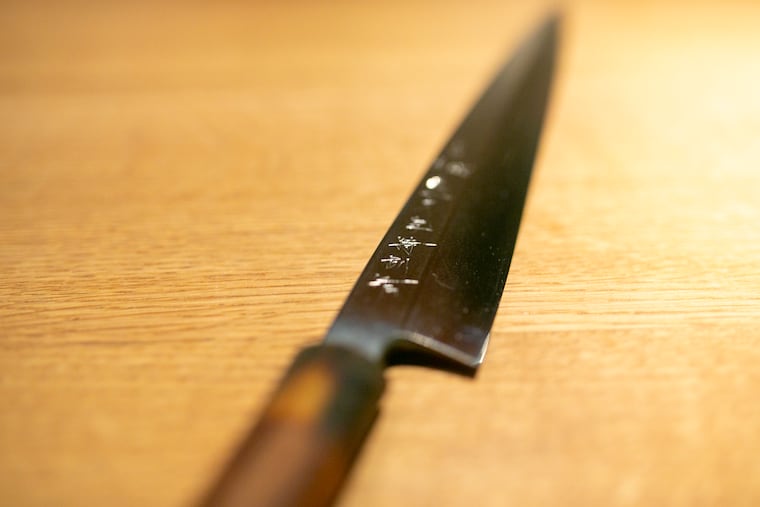
At Hiroki, a 21-course omakase is now about $35 cheaper than a year ago. At Termini Bros., the price of a cupcake just dropped $2.
One is a Michelin-recommended Fishtown tasting counter, the other a century-old South Philadelphia bakery. But both are making the same wager: In a moment when customers are watching every dollar, lower prices may be the best way to bring them back.
Hiroki recently lowered its 21-course tasting menu by 12%. Last month, Termini cut prices on staples, including cupcakes, birthday cakes, coffee cake rings, pound cake loaves, and cheesecake, at its locations.
The businesses could hardly be more different: one an intimate restaurant, the other a neighborhood bakery. But both are responding to the same pressure point. After years of rising costs, customers are pushing back — and some food businesses are deciding that the answer is not another price increase but a rollback.
At Hiroki, the move came as parent company Method Co., reconsidered what omakase means in a market crowded with high-end tasting counters. In 2019, when Hiroki Fujiyama opened his low-lit salon with a 12-seat counter and 14 table seats, the omakase cost $135 per person, with a sake pairing bringing the total to $195. That was a luxury price point then, but modest compared with where the restaurant would eventually go.
Over the next several years, prices reached $155 by the early 2020s. By 2024, Hiroki had split its offerings, introducing a less expensive $115 sushi omakase alongside a more elaborate $185 chef’s omakase. Eventually, the flagship experience ballooned to $285 — though including tax and service — placing Hiroki among Philadelphia’s priciest tasting menus. Now, in a notable reset, the restaurant has reduced the price to $195; when tax and mandatory service are added, the total is now $249.60. There’s an optional sake pairing for $70.
Maura Egan, Method Co.’s chief content officer, said the restaurant wanted to make the experience feel less like a once-a-year splurge and more approachable to diners who may be eating out less often.
“This is a moment right now where people are maybe not dining out as much, and we want to make sure it feels inclusive and that people can try it,” she said,
Egan said Hiroki has adjusted the format, leaning more deeply into Fujiyama’s background in Kyoto, a city known for kaiseki-style flourishes, with greater emphasis on seasonality and flexibility.
» READ MORE: Philly's omakase experiences
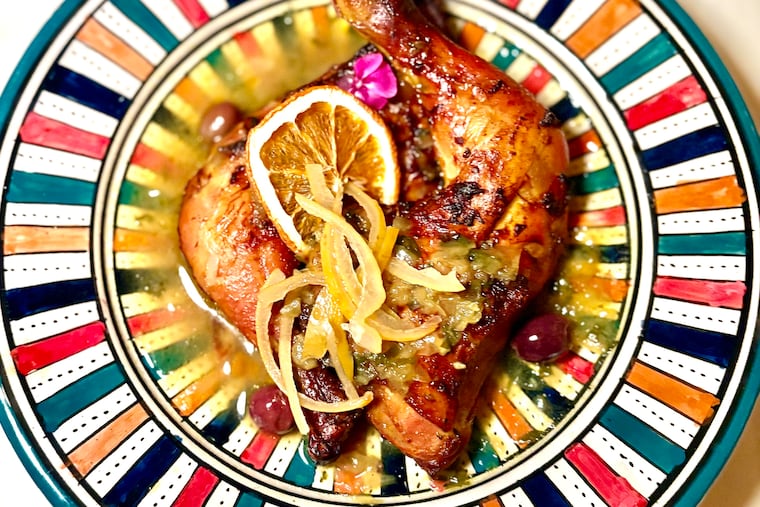
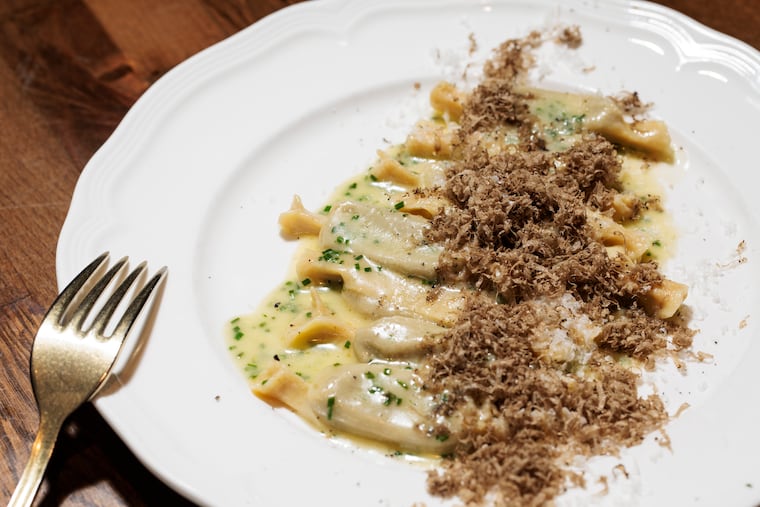
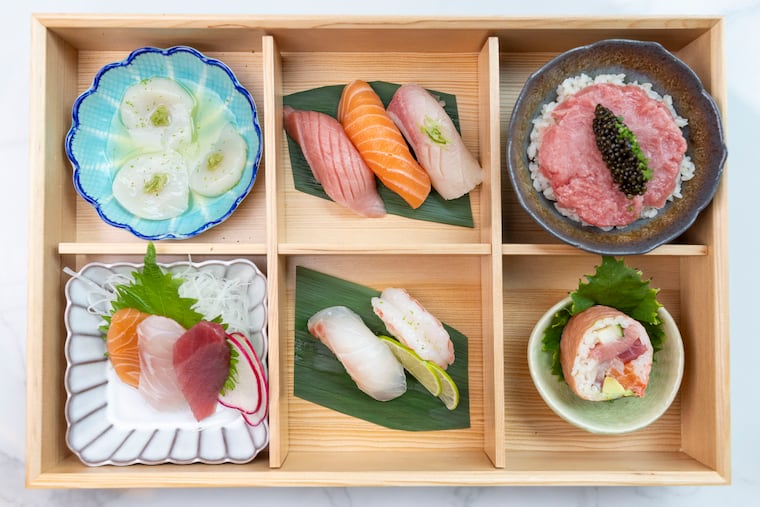
The restaurant is using different kinds of fish to make the economics work. Among the dishes: a truffle egg marinated in sweet soy with shaved black truffle, tuna, and squid ink puff pastry; snow crab with sumiso mustard, koji miso, crab butter, and yuzu; a warm wan mono soup built on Hiroki’s signature dashi; shabu-shabu with fish like buri or kinmedai; tableside A5 wagyu sukiyaki; and a sushi course consisting of eight pieces of nigiri, a hand roll, chirashi, and tamago.
The point, Egan said, is not simply to charge less. It is to make Hiroki feel less regimented — and less remote.
“We didn’t want to make it feel like you can only come here once a year, or twice a year, if that,” she said.
At Termini Bros., the decision was more personal.
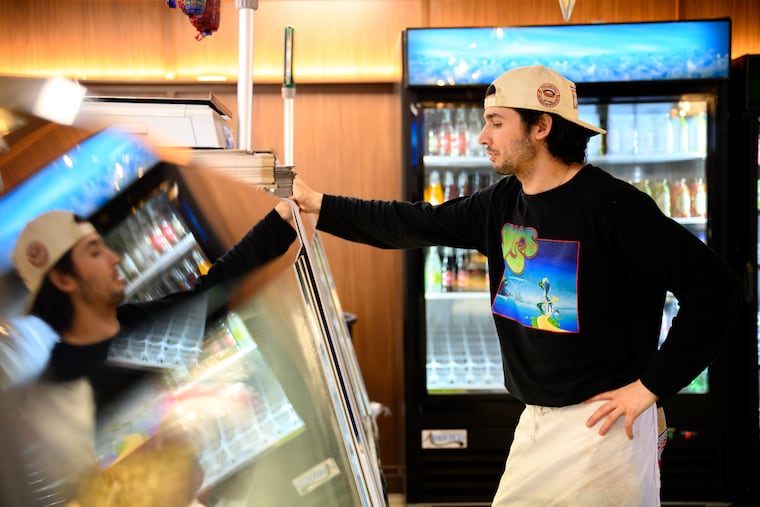
Joseph Termini said he and his brother, Vincent Jr., had been reviewing the pressures bearing down on the bakery: business insurance, health insurance, taxes, electric bills, gas bills, and ingredient costs.
Then, before Easter, the brothers overheard a family tell a boy that they could not afford to buy one more cupcake.
“My brother and I looked at each other and said, ‘No, this has got to stop. This is out of control,’” Termini said.
The brothers responded by lowering prices on some of the bakery’s most familiar items. Eight-inch birthday cakes dropped from $40 to $30. Coffee cake rings went from $25 to $15. Pound cake loaves fell from $18 to $12. Cupcakes went from $5 to $3. A large cheesecake, which had been $60, is now $50, while slices were cut to $5 from $6.
The reductions were not made by shrinking products, Termini said. Instead, the bakery looked for savings through production and purchasing. Years ago, the brothers began using a supplier-bidding system that lets vendors compete on prices for ingredients and packaging. More recently, they sat down with their head baker to reorganize production and reduce inefficiencies.
But instead of using those savings to widen margins, Termini said, they chose to pass them on to customers. “Sometimes you have to deal with the fact that you’re not going to maximize profits,” he said. “And that’s OK.”
The goal, he said, is to restore Termini Bros. as a regular stop, not just a special-occasion bakery.
Biscotti will be next, but not every item price can be cut, he said. Cannoli and Italian cream cake are labor-intensive, which works against price cuts.
Still, the broader strategy reflects a question more food operators are asking: Has the customer reached the limit?
Seeing an impact of GLP-1 drugs, Old City-based Cuba Libre introduced a lighter menu last year with lighter prices to meet lighter appetites.
The Harvest Seasonal Grill chain wrestled with not only with pricing but customer counts. Earlier this year, founder Dave Magrogan told The Inquirer that it was serving fewer people as check averages rose. Sales may have held, but fewer customers were coming through the door. Harvest responded by introducing lower-priced options, simplifying some dishes, and reengineering plates around less expensive ingredients.
In one case, the restaurant reworked a scallop risotto that had become too expensive by using broken scallop pieces and shrimp instead of four premium scallops, lowering the food cost. Magrogan said traffic rose 10% to 14% year over year.
The lesson for operators is not that costs have gone away. They have not. Insurance is still high. Utilities are still high. Ingredients remain volatile. Labor is expensive. But higher menu prices carry their own risk.
For Hiroki, the risk was that a $285 omakase could become too narrow an occasion. For Termini Bros., it was that a neighborhood bakery could lose its common status. For Harvest, it was that steady sales could mask a shrinking customer base.
Termini said customer reaction to the bakery’s cuts has been strong, though it is too soon to measure the full effect. The bakery is counting on volume and loyalty to help offset the lower margins.
“Our customers are tremendously loyal,” he said. “They were never mad at us for raising our prices. They understood, and they understood that it was justified. But that doesn’t make it right.”
In the end, the price rollbacks are a business calculation as much as a goodwill gesture. Lower margins can work only if more people come through the door — and come back more often.
At Hiroki, that means trying to make a luxury feel more attainable. At Termini Bros., it means turning special-occasion customers back into regulars. “No one will ever dictate to us how we run our business,” Termini said. “We’ll figure out a way.”
Correction: This article has been updated to more accurately reflect the price for the omakase at Hiroki.