Cardinal O’Hara is using a ‘next class up’ mentality to ‘close the gap’ on other top Catholic League football programs
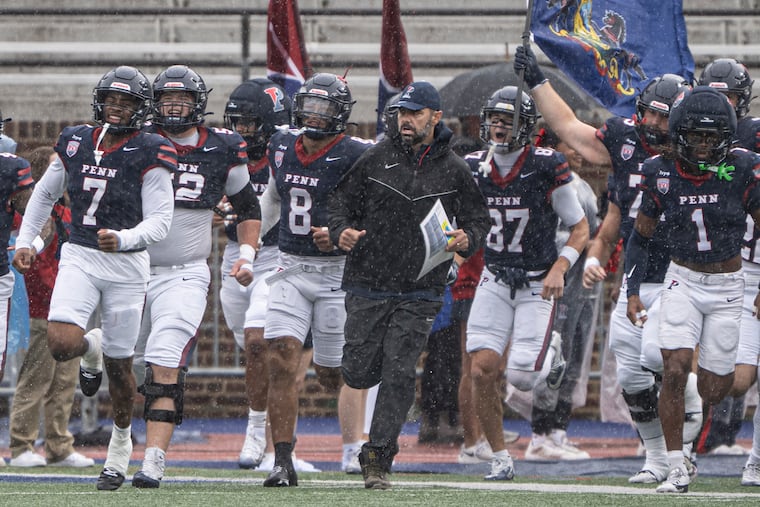
After collecting 10 wins, a District 12 title and the program’s first state-playoff victory last year, head coach Mike Ewing isn't settling for a "down year." The Lions face Roman Catholic Saturday.
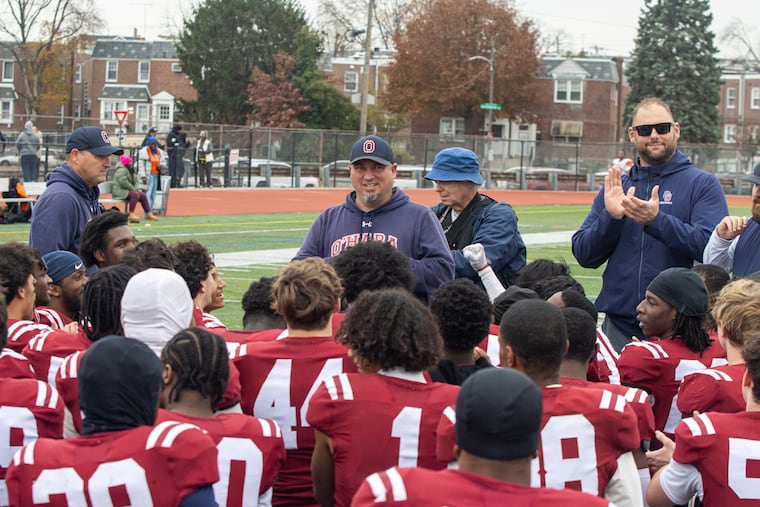
Mike Ewing knew winning football games couldn’t be the first thing he fixed at Cardinal O’Hara when he took over the high school football program in 2022.
“The first thing you have to start with is culture,” Ewing said. “You have to bring your culture, and it has to be tangible.”
That meant the weight room. It meant changing how O’Hara practiced. It meant establishing standards and refusing to move them when players tested how much the new coaching staff would tolerate.
“You have to demand certain things,” Ewing said. “You just have to be consistent with the message and consistent with your expectations of them.”
Four years later, Ewing is confronting a different challenge.
After last season produced 10 wins, a District 12 championship and the program’s first state-playoff victory, Ewing is trying to make sure the Lions’ breakthrough becomes an expectation rather than an exception.
» READ MORE: Almost a year after being shot, Northeast High QB Jayden Boyd is ready ‘for the biggest game of our season’
“We don’t expect a down year,” Ewing said. “We don’t want a down year. We’re not planning for a down year. It’s just the next class up. It’s their turn next.”
This season is providing an early test.
O’Hara, who replaced several veteran starters, opened the season with a 4-0 record. Consecutive losses to Smyrna and St. Joseph’s Prep followed as the Lions entered the heart of their Catholic League schedule.
Ewing has never confused improvement with arrival.
O’Hara’s breakthrough last season came when the Lions beat Bonner-Prendergast, their biggest rival, in the playoffs. The Friars won a state championship the previous season, and O’Hara had not beaten them in nine years.
For Ewing, the 24-3 victory provided the clearest indication that what his staff had been building might finally be taking hold.
“That was kind of like, ‘OK, we might have something special here,’” Ewing said.
The result was years in the making.
When Ewing arrived, he said changing the program meant creating standards players could feel daily. If players weren’t participating in a winter or spring sport, they were expected in O’Hara’s weight room. Speed and change-of-direction training became part of the routine.
Senior linebacker Max Brown remembers returning to practice after suffering an injury during a seven-on-seven competition as a sophomore. Brown assumed the coaching staff might ease him back in.
When he made a mistake, coaches immediately corrected him.
Brown became frustrated until Ewing found him afterward and explained why he had been so demanding. Ewing believed Brown could become a good player, so he was going to coach him accordingly.
“They don’t pick favorites,” Brown said. “They play whoever the best players are.”
Brown said that approach still defines practices. Whether it is a full-pads session or a lighter Thursday, Ewing and his staff emphasize arriving on time, working in the weight room and treating the details seriously.
“They try to emphasize the small things that will lead to big accomplishments,” Brown said.
Ewing hopes those standards eventually become enforced by players as much as coaches.
“If the coaches lead, we’re going to be good,” Ewing said. “If the players lead, we’re going to be great.”
Beyond Friday nights. Ewing wants teammates correcting each other in the classroom and hallways and stepping in when someone is about to make a poor decision.
For Ewing, player ownership is evidence the culture is becoming self-sustaining. So is the way players now describe O’Hara’s reputation.
When senior running back Isaac Day, a team captain, first joined the program, he remembers opponents reacting casually when they saw the Lions on their schedule.
“Oh, we’re playing O’Hara.”
Now, Day said, the reaction is different.
“Now it’s, ‘Oh, we’re playing O’Hara. We’ve got to lock in because they’re coming to play,’” Day said.
Senior edge rusher Sammy Dantonka remembers a similar starting point. O’Hara was coming off a 1-9 season when his group arrived.
“Then we shocked everybody,” Dantonka said.
Winning seasons followed, and expectations rose. Dantonka said this year’s goal is no longer having another successful season. The Lions want to “win it all.”
That ambition has not changed Ewing’s assessment of where the program stands.
O’Hara cleared one major hurdle by beating Bonner last year. It has not yet won against St. Joe’s Prep, La Salle or Roman Catholic since Ewing took over. They will get a chance to knock off Roman Catholic when they play Saturday.
“We’re trying to close the gap,” Ewing said. “Those are the teams we’re striving to get to.”
The largest obstacle, he believes, is depth.
Some of O’Hara’s PCL opponents have hundreds more boys in their schools. Ewing believes his top players can compete with anyone, but injuries, academic absences or other losses expose the gap between O’Hara and other top local programs.
“Our ones can play with anybody,” Ewing said. “But if we have an injury, or somebody is out because of academics, that’s where you start to see the falloff.”
That makes sustaining success more complicated.
Ewing has already watched the first major class of his tenure move on. Many were three- and four-year starters who were there while the program’s new identity was being formed.
The question now is whether the next group inherited more than their positions.
Ewing wants every class entering O’Hara to understand what comes with playing for the program — training throughout the year, taking academics seriously, practicing with a purpose and maintaining the standards established by the players who came before them.
Brown has watched that evolution up close.
“When I first got here, you had some kids taking it seriously and some who weren’t,” Brown said. “Everybody needs to be part of it for the whole thing to work.”
That is ultimately what Ewing is trying to build: A program where the standard remains after the players who established it are gone.
“Now there are expectations,” Ewing said.
And he has no plans to lower them.