Russian leader offers help with Afghanistan
He appeared to link any cooperation with changes in how the U.S. is waging the war.
MOSCOW - President Dmitry A. Medvedev said yesterday that Russia and its former Soviet allies wanted to cooperate with the United States on stabilizing Afghanistan, but he appeared to link any help to changes in Western policy.
Saying Moscow and its allies "are ready for full-fledged, comprehensive cooperation," the Russian leader seemed to imply that Moscow's help on Afghanistan was contingent on a broader list of changes it wants from the new U.S. administration.
These include a halt to NATO enlargement in Europe and the cancellation of plans for a U.S. missile-defense system on Russia's western borders.
Medvedev spoke less than a day after Kyrgyzstan got billions in new Russian aid and announced it was evicting the United States from an air base key to Afghan operations. His mix of conciliatory language and implicit demand for U.S. concessions may represent a risky attempt to pursue conflicting strategic goals at a moment when U.S. policy on Afghanistan is being remade by President Obama.
Russia has long been irritated by the U.S. military presence in what it considers its natural areas of influence in Eastern Europe and Central Asia. The Kremlin is widely believed to be behind the move against the United States by Kyrgyzstan's government, which submitted a draft bill to parliament yesterday that would close the Manas air base.
But Moscow, which fought a bloody and unsuccessful 10-year war to control Afghanistan, also does not want the country's instability spreading north toward Russia. The Kremlin has said it is open to aiding U.S. and NATO efforts in Afghanistan by helping to find alternatives to Pakistani supply lines that are increasingly threatened by militant attacks.
Medvedev spoke after a meeting of presidents from the seven-member Collective Security Treaty Organization - a loose, Moscow-dominated alliance made up of Kyrgyzstan and other ex-Soviet states. The group announced the creation of a joint rapid-reaction force that would boost the military dimension of an alliance that has until now served mostly as a forum for security consultations.
He said that Obama was right in making Afghanistan's stability a priority, but he also appeared to criticize U.S. efforts there, saying it would be impossible to defeat terrorism using only military means.
Russia announced a $2.15 billion aid package for Kyrgyzstan on Tuesday just hours before Kyrgyz leader Kurmanbek Bakiyev's statement about ending the U.S. presence. Russian officials have denied any connection between the two.
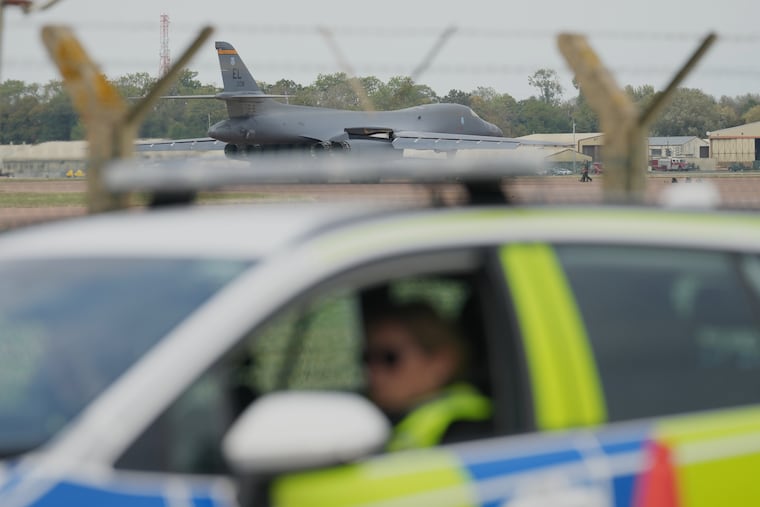
Losing Manas would pose a serious challenge to Obama's plan to send up to 30,000 more American forces into Afghanistan this year to fight surging Taliban and al-Qaeda violence.
The United States set up Manas and a base in neighboring Uzbekistan after the 9/11 attacks to support operations in Afghanistan. Uzbekistan expelled U.S. troops from the base on its territory in 2005 in a dispute over human-rights issues, leaving Manas as the only U.S. military facility in the immediate region.
In Washington, State Department spokesman Gordon Duguid said the United States had not agreed to any new arrangement at Manas and that Kyrgyz officials had not notified U.S. officials about ending access.
Holbrooke to Visit Pakistan Region
Richard Holbrooke,
the new U.S. special representative to Afghanistan and Pakistan, was leaving yesterday for his first visit to the region.
State Department
spokesman Robert Wood said Holbrooke was departing for London and would attend a global security conference in Germany over the weekend before continuing on
to Pakistan.
Holbrooke also will visit
Afghanistan and India.
Wood said Holbrooke
would be taking with him no specific proposals for advancing international efforts to stabilize Afghanistan.
- Associated Press