Philly just appointed its first rat czar
The first rat abatement manager will lead a new coordinated effort to address quality-of-life issues that attract the rodents.

Philadelphia has just appointed its first rat czar.
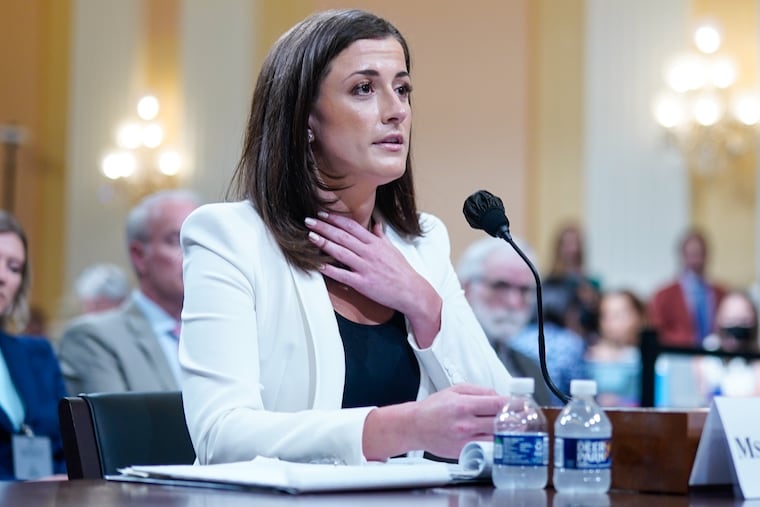
Or, more officially, its first Rat Abatement Manager — Adrian Jordan, a long time Department of Public Health employee.
Jordan will lead a new coordinated effort to address quality-of-life issues that attract the rodents, according to a city announcement Wednesday.
Jordan will work with six city departments to get rid of rats in residential and commercial areas.
The city will also post a public rat dashboard on its website to track residents’ complaints and properties serviced. The dashboard is not yet live.
Jordan said he is “honored” to take on the role.
“I’ve worked to fight rats in Philadelphia for more than 20 years,” he said in the announcement. “And I am looking forward to being able to work directly with colleagues from departments across the City to ensure that we are properly prioritizing this.”
Mayor Cherelle L. Parker said the new effort to rid the city of rats, “starts today.”
City officials said in the announcement that there has been no “documented rise in confirmed rat complaints” but that they wanted to show a commitment to a public health issue.
A rat survey begins
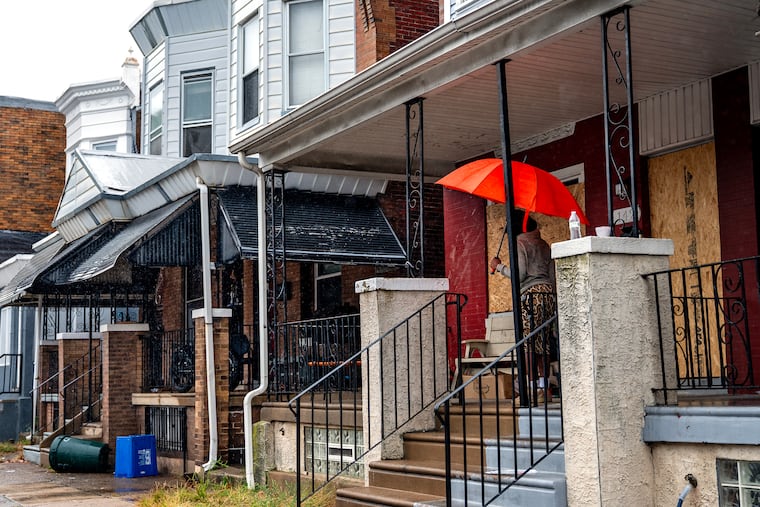
Managing Director Carlton Williams has directed Jordan and the health department’s rat control team to survey residents door-to-door in parts of the lower Northeast, including Oxford Circle and Castor Gardens.
The survey is designed to identify where rat problems exist, even if no complaints have been filed, then take action to reduce rats, including educating residents on how they can help prevent rat infestations.
The survey comes on the heels of a council resolution this month urging departments to develop a coordinated response to persistent rat infestations in the Lower Northeast, where residents reported rats around homes and businesses.
The rodents have been munching through car wires and causing other issues.
Although the council action focused on Lower Northeast because of the number of complaints, rats exist in other parts of the city.
PETA, the animal rights group has also weighed in on Philly’s rat issues. It is urging Parker to consider rat contraception rather than poison.
Does Philly have a big rat problem?
In a 2025 Orkin ranking, Philadelphia placed 6th nationally based on the number of rodent-control treatments. Philadelphia is the 6th largest U.S. city, so that suggests its rat population is not outsized comparatively.
By some measures, Philly logs fewer rat complaints than New York, D.C., or Baltimore, according to a 2025 analysis by The Inquirer. But the true population is hard to pin down.
The analysis noted that “the precise number of rats in Philadelphia is impossible to measure” because most data comes from complaints or exterminators.
The Inquirer reported that Philly recorded under 4,000 complaints in the prior year (about 25 per 10,000 residents), lower than New York, Baltimore, and D.C.
That same reporting also noted that some experts have raised concerns about inconsistencies in the city’s data collection as one reason the problem may appear smaller.
New York appointed a rat czar in 2023, who served for two years.
Rats tend to gather where there is food, trash, parks, vacant lots, and construction activity that disturbs nests.
The city’s vector-control unit has used tactics like placing poison pellets into burrows.
Rats could be adapting
But other forces, such as a warming climate with mild winters, could be helping rats survive.
In addition, rodent control is getting more complicated as pests adapt to methods of control.
Recent research by Rutgers University showed that house mice in Philadelphia and nearby areas are linked to resistance to common rodenticides, while also suggesting rats may pose a different challenge — avoiding traps rather than showing the same resistance pattern.
Philly’s new effort pulls together the six departments: health, streets, sanitation, community life improvement program, water, and licenses and inspections.
“Philadelphia residents deserve clean and safe blocks,” said Williams, the managing director. “By establishing a dedicated Rat Abatement Manager, we are strengthening our commitment to the basic services residents rely on every day.”