Alex Pretti’s parents say federal government is silent on investigation
Federal officials have yet to disclose information as basic as the identity of the agents who fired at least 10 bullets into Pretti’s back the morning of Jan. 24.
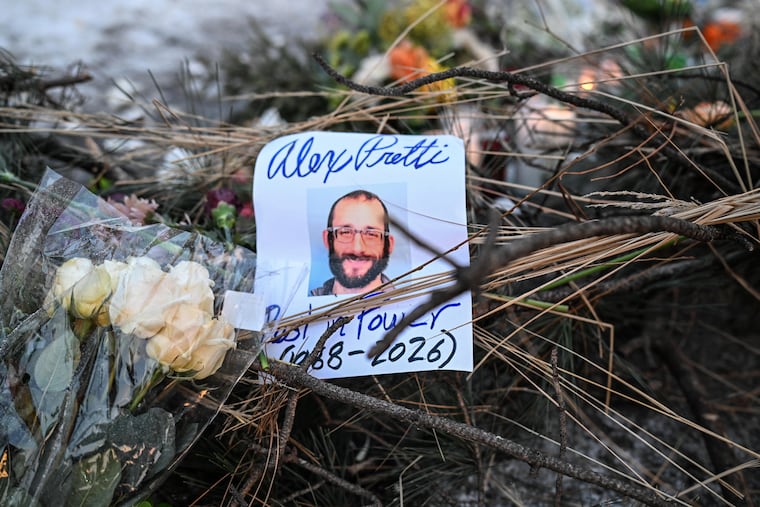
MINNEAPOLIS — The family of Alex Pretti, the Minneapolis nurse fatally shot by immigration agents in January, accused the federal government Tuesday of keeping them in the dark about the investigation into their son’s killing.
Steven Schleicher, a lawyer representing Pretti’s parents, Michael and Susan, said the Justice Department’s refusal to share basic information with the family amounted to a violation of the federal Crime Victims’ Rights Act.
“It is impossible to convey how the government’s refusal to engage in transparent communication with the Pretti family has compounded their heartbreak,” Schleicher wrote in a letter he sent to Attorney General Todd Blanche in July.
Schleicher provided a copy of the letter, which was first reported by CNN, on Tuesday morning before a news conference in Minneapolis during which Pretti’s parents were expected to speak about the case.
Federal officials have yet to disclose information as basic as the identity of the agents who fired at least 10 bullets into Pretti’s back the morning of Jan. 24, Schleicher said. The Department of Homeland Security has not retracted a statement issued shortly after the shooting in which it claimed Pretti had intended to “do maximum damage and massacre law enforcement,” he noted.
“The government’s steadfast protection of the identities of Alex’s killers is particularly cruel given the apparent campaign to publicly disparage Alex after his death by falsely accusing him of domestic terrorism,” the letter said.
Hoang Bui, a spokesperson for the U.S. attorney’s office in Minnesota, did not immediately respond to a request for comment.
Pretti’s parents have made few public appearances since their son’s death. They have given two emotional interviews detailing their grief and telling Pretti’s story: an avid cyclist and intensive-care nurse who joined protests against the Trump administration’s immigration crackdown in Minnesota.
Beyond that, the family has largely maintained its privacy as the federal government — as well as state and local investigators — pursue parallel investigations into the deaths of Pretti and Renee Good, whom immigration agents gunned down Jan. 7.
Their killings within 2½ weeks of each other touched off a nationwide outcry and ultimately forced President Donald Trump to withdraw hundreds of immigration agents from Minnesota.
But the investigations into the killings of Pretti, 37, and Good, 37, have produced little visible action. Officials in Minnesota have blamed the federal government for obstructing access to the scene of Pretti’s shooting, and have said federal officials dragged their feet for months by refusing to cooperate with local authorities or share evidence.
In March, Minnesota’s attorney general and the local prosecutor’s office sued the Department of Justice, accusing federal officials of refusing to share key evidence about Pretti’s case and two other shootings by immigration agents in Minneapolis in January.
Then in July, Mary Moriarty, the top prosecutor in Hennepin County, which includes Minneapolis, said the federal government had begun to share evidence into the killings of Pretti and Good. It was a breakthrough that would enable her office to decide whether the federal agents should be charged with state crimes.
Moriarity has already filed state assault charges against an Immigration and Customs Enforcement officer accused of shooting and wounding a Venezuelan man at the height of the administration’s immigration crackdown.
But this month, Moriarty said that the cooperation in all three cases had been “short-lived,” and that the federal government was continuing to withhold evidence.
Prominent in that evidence is the statement that one of the agents who shot Pretti provided to federal investigators after the killing. Her office has statements from other federal officers at the scene.
Moriarty said federal officials had handed over hard drives that contained body-camera footage and officer statements.
She also said she had repeatedly asked the U.S. attorney for Minnesota, Daniel Rosen, for an explanation, and to restart the sharing of information. She said she received neither answers nor cooperation from the federal prosecutor, who was nominated by Trump in 2025.
“He did not provide a reason why the sharing stopped, and stated he needed more time to navigate the situation,” Moriarty said in a legal filing.
Pretti was killed after he intervened to help a protester who was shoved to the ground by a federal agent on a snowy Minneapolis street at about 9 a.m. in January. Several immigration agents grabbed Pretti and wrestled him to ground, pepper spraying him and other protesters.
Video of the killing shows a federal agent found a pistol that Pretti had been legally licensed to carry, and then disarmed him moments before one immigration agent, then another, fired 10 shots at Pretti in the span of five seconds.
Pretti’s parents, who live in Colorado, have called his death a murder and said they are desperate for answers and accountability.
This article originally appeared in the New York Times.