Surprise ICE summonses to dozens of Philly immigrants ‘causing a lot of panic’
People facing immigration court cases are being told to report to the agency’s Center City office. “It’s causing a lot of panic,” an advocate said.

Dozens of people with pending immigration court cases in Philadelphia were unexpectedly ordered to appear in “court” inside ICE headquarters during the last two weeks ― frightening those for whom even a routine visit to the agency can result in arrest.
Some immigrants who had hearings scheduled for a year away were told to appear right away, in a space some see as hostile, without the accompanying support of family and friends, who were barred from the ICE facility at Eighth and Cherry Streets.
Once inside, people who were called to the building told Asian Americans United, they were directed to a third-floor waiting area, then summoned one by one to a back room, where a judge appeared on a video screen. The advocacy group questioned the change of venue from a courthouse to the secure confines of the agency that is actively seeking to deport those who appeared.
“It’s causing a lot of panic,” said Elena Emelchin Brunner, the immigration justice organizer at AAU.
The Department of Homeland Security, which supervises ICE, referred questions about the matter to the Justice Department, which did not immediately respond to inquiries.
“My client was very nervous about it,” said Philadelphia immigration lawyer Danilo Chavarro. “Worried it was a new strategy to get people.”
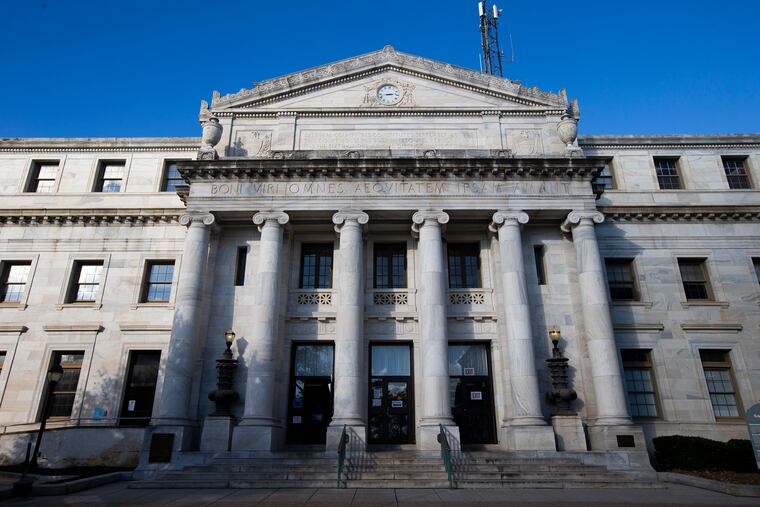
Chavarro had initially met his client at immigration court, in the Robert C. Nix Sr. Federal Building at Ninth and Market Streets, then was directed to go to the ICE office.
“In my case it wasn’t any trap,” he said, adding that the judge granted a continuation after a brief hearing. “Hopefully nobody gets arrested there in the future.”
Chavarro wondered if space limitations at the courthouse could be causing immigrants to be directed to ICE.
AAU leaders said it was unclear exactly what was happening. They believe the change could have been designed to speed up the hearing process in a system that they say has become increasingly stacked against immigrants.
In the last two years, scores of immigration court judges have resigned or been fired by the Trump administration, part of what critics see as a plan to install judges who will follow the president’s mass-deportation policy.
The rate at which judges grant asylum, which can be awarded to people who could be harmed or killed if sent back to their homelands, has dropped to an all-time low, according to TRAC, the immigration-data organization.
The grant rate was 32% at the end of President Joe Biden’s term. Under Trump, it has fallen to 5.5%.
AAU officials wondered if the switch in hearing locations could be tied to court rulings that have limited ICE activities.
This year federal judges blocked Immigration and Customs Enforcement from arresting immigrants when they appeared for hearings at immigration court.
In Philadelphia, some immigrants were notified by mail to go to ICE, not the courthouse, and others were told by text message.
Emelchin Brunner said the ICE building is not a court and not a neutral space.
“ICE is a removal agency,” she said. “These hearings are happening behind multiple security walls.”
She and Vivian Chang, executive director of AAU, estimated that at least 50 community members were summoned to ICE this week and last week. Some received notice to appear just days before they were expected to be there, and at least one person was notified the day before.
AAU said it did not know of anyone who was detained by ICE at the hearings.
At ICE, some people who were not due to appear in court for a year were told they now must appear next month. That effectively limits the time people have to prepare their cases, and curtails their ability to work and save money to hire attorneys, AAU said.
Under the Trump administration, immigration arrests at what were once routine check-ins at ICE have become common, with many taken into custody when they arrive.
Most of those summoned to ICE in the last two weeks were to attend what are called “master calendar” hearings, the first administrative court appearance for people facing removal proceedings.
Though those hearings do not result in final rulings, decisions can be made that can affect the outcome of a case. Groups like the Immigrant Legal Resource Center say attorneys must be well-prepared and have a detailed plan to advocate for their clients during these hearings.
There seemed to be no pattern or commonalities among those summoned to ICE, AAU said — people were of different ages, ethnicities, and occupations.
“It came as a surprise to everyone,” Emelchin Brunner said. “Lawyers have no idea what’s going on. Community members don’t know. We’re kind of going as we go.”