Kensington Voice newsroom has laid off staff and ceased publication
The outlet’s website, which provides news, guides, community-authored opinions, and neighborhood resources created with community reporting, stopped publishing new stories in June.
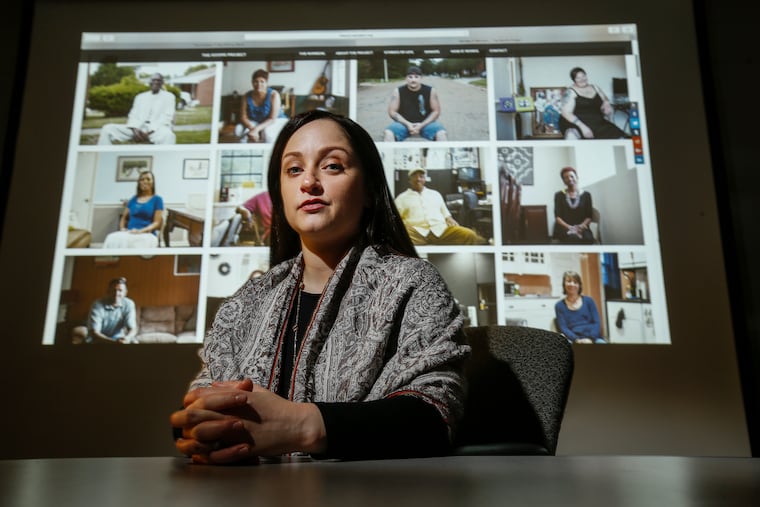
Kensington Voice — the independent, nonprofit newsroom and community hub covering the lower Northeast and North Philadelphia — has ceased publication.
“Kensington Voice has run out of money needed to pay our staff,” said Jillian Bauer-Reese, co-founder of Kensington Voice in a letter to readers published Monday.
The outlet’s website, which provided news, guides, community-authored opinions, and neighborhood resources created with community reporting, has been largely dormant for months.
“We should have shared this update sooner,” Bauer-Reese explained. “We stayed quiet while we worked through what would happen next, and that process has taken much longer than we expected.”
The hub is working with partners to preserve Kensington Voice’s work and resources, Bauer-Reese said, and to continue any ongoing projects where possible. The small news organization’s archives will stay online. Staff members — the hub employed six to eight journalists at its peak — had been laid off during the weeks and months leading to the announcement.
Funding for Kensington Voice — which operates with nonprofit status through a fiscal sponsor, Movement Alliance Project — had been a challenge for the past two years, Bauer-Reese wrote on the site. She could not be reached for comment.
“Thank you to everyone who read our work, shared it, trusted us with their time and their stories, corrected us, and helped make Kensington Voice what it has been,” she said.
News by and for residents
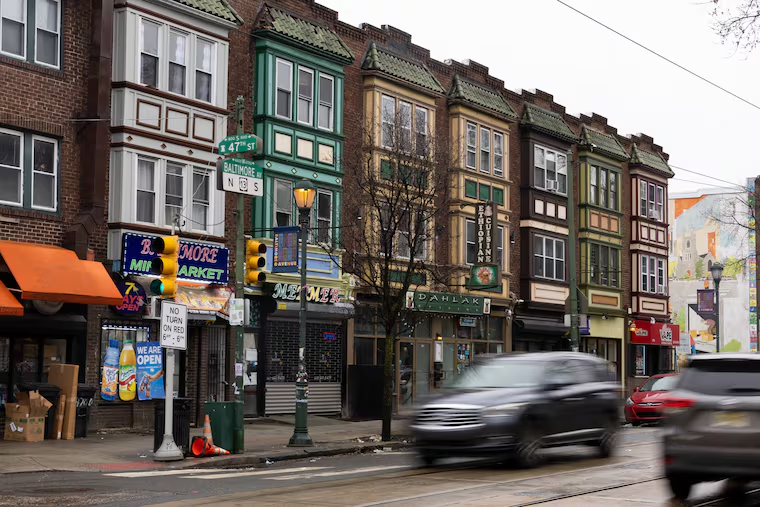
Serving the neighborhoods of Kensington, Fairhill, Harrowgate, Norris Square, and Port Richmond, Kensington Voice aimed to be something new when it was founded by Bauer-Reese and more than a half-dozen of her journalism students. Its communal reporting on the opioid overdose epidemic, housing, homelessness, poverty, and quality of life considered solutions to issues of inequality that have plagued North Philadelphia communities for decades.
The seeds of the news outlet took root during the height of the opioid crisis, Bauer-Reese wrote in a 2019 Inquirer editorial on the paper’s founding.
As the neighborhood seemed to suffer worse than ever from the grip of drugs and violence, Kensington Voice became an advocate for a community often overlooked — and stigmatized. Like when a 2018 New York Times Magazine story famously referred to the languishing community as the “Walmart of Heroin.”
“The idea for Kensington Voice came from a hunch I had that in a neighborhood often at the center of our national news media’s drug and addiction journalism, the news and information needs of the community itself weren’t being met,” she had said in 2019.
Within months, Bauer-Reese and her students operated a rotating pop-up community newsroom, run out of libraries, rec centers, and on street corners, and putting community voices foremost. At these pop-up stations, residents submitted story ideas and built storytelling bridges, where the realities and solutions of the community led reporting. Reporters would meet residents at tables. Some residents published their own stories.
“The more I work in the community, the more I realize how the work of journalists impacts those who live and work there,” Bauer-Reese said in 2019.
During the peak of the opioid overdose crisis in Philadelphia in 2022, when more than 1,400 people died in Philadelphia from drugs, the Kensington Voice relied on shoe-leather reporting from the front lines to draw attention to the city’s struggling response.
The newsroom shared empowering first-person narratives from people in addiction building new lives, young mothers navigating complex support services systems, and the writings and art of gifted local high school students.
“I look up at that blue sky and wonder how much longer will it be blue until it is filled with smog,” wrote 16-year-old Kensington student, Jazielys Serrano in a 2024 poem published through the hub’s Youth Voices Program.
Amid the challenges of reporting on the largest open-air drug market on the East Coast, Kensington Voice’s coverage received criticism as being too sympathetic to people who use drugs.
That was the point, Bauer-Reese explained. Flipping the lens so the most vulnerable had a chance to be heard.
“By being a part of the Kensington community and helping neighbors share their own voices, we hope to shed a new light on this community,” Bauer-Reese said in 2019.
Fading Funding
Staffed by reporters, photojournalists, and editors at its peak, Kensington Voice began to leak funding as attention slowly began to fade from the neighborhood.
Before going dormant in the Spring, the outlet published reports about medical mobile service bans in Kensington, police brutality, Mayor Cherelle L. Parker’s affordable housing plan, and plans to renovate Kensington’s embattled McPherson Square. The newsroom detailed community members’ heightened anxiety over U.S. Immigration and Customs Enforcement enforcement in North Philadelphia. hub also published guides helping citizens connect with vital public resources, like information on how to report illegal dumping and abandoned cars, and where to find jobs, housing, and health support.
The work — and the relationships — will live on, Bauer-Reese wrote.
“What this community built with Kensington Voice doesn’t end here,” he said.