China’s trade surplus passes $1 trillion at record pace
From solar panels to electric cars, China has found strong global demand for green energy products, as Iranian attacks on ships in the Strait of Hormuz have driven up international oil prices.
SHANGHAI — China’s trade surplus surged past $1 trillion in the first 10 months of this year, eclipsing last year’s record-setting pace as the country’s exports continued to climb steeply, the Chinese government announced on Tuesday.
From solar panels to electric cars, China has found strong global demand for green energy products, as Iranian attacks on ships in the Strait of Hormuz have driven up international oil prices. China has also profited from the boom in artificial intelligence data centers, for which it manufactures much of the equipment, except for the most powerful semiconductors.
China’s trade surplus reached $1.04 trillion in the first 10 months of the year, the General Administration of Customs said, bolstered by a surplus of $105.3 billion in October. The monthly figure narrowed from September as oil prices remained high. Exports surged 35.2% last month from a year earlier, while imports jumped 41.6%.
The figures came a day after Washington and Beijing took steps to ease tariffs and restrict the use of export controls through Jan. 10, putting into effect an agreement reached by senior officials in September before a Washington summit between President Donald Trump and Xi Jinping, China’s top leader.
China’s ever-rising trade surplus partly reflects the remarkable competitiveness of its exports. Low labor costs and heavy investment in the latest automation keep production costs down. World-class infrastructure makes it inexpensive to ship goods from towns and cities across China to international markets. China’s weak currency has also helped keep Chinese goods affordable in distant markets.
China also helps exporters through tax rebates, which now cost the government almost one-eighth of its tax revenues.
The trade surplus is also a sign, however, of the weakness of China’s domestic economy. A slow-motion collapse of the country’s housing market, with prices down roughly 40% nationwide over the past five years, has wrecked the life savings of much of the middle class.
Distrusting stocks, bonds and mutual funds, Chinese households had invested roughly four-fifths of their savings into apartments, only to find that real estate was not as safe an investment as widely believed. This has prompted many Chinese families to economize by cutting back on purchases of everything from cars to household appliances.
At the same time, China’s national campaign for self-reliance has further reduced its need for imports. “As supply chains continue to build out in China, there is less need for foreign components,” said Deborah Elms, the head of trade policy at the Hinrich Foundation, a Singapore-based group that favors free trade.
China’s rising trade surpluses with Europe, in particular, have fueled rapidly growing concern there about job losses in industry. China reported Tuesday that its surplus with Europe was $33.4 billion last month, and $320.8 billion for the first 10 months of this year.
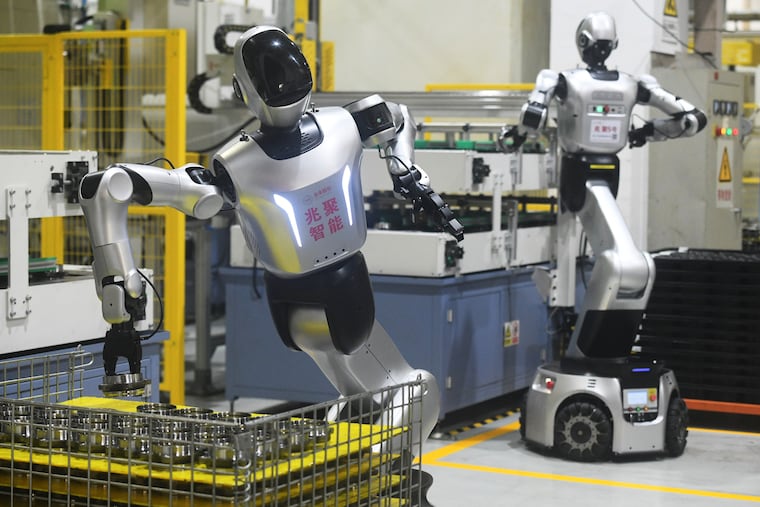
China’s rapidly rising exports have allowed it to accomplish a remarkable feat: installing extensive automation in its factories to expand production and improve efficiency without suffering heavy factory job losses. Manufacturing employment has remained mostly steady at about 71 million jobs since 2020, even as the trade surplus has climbed steeply, according to official data. Factory employment had contracted somewhat before then.
Manufacturing job losses have occurred instead in countries such as France and particularly Germany, which is shedding 14,000 industrial jobs per month. These countries have become large importers of Chinese goods while also losing markets to Chinese competition in developing countries and elsewhere.
This article originally appeared in The New York Times.