Letters to the Editor | Nov. 10, 2026
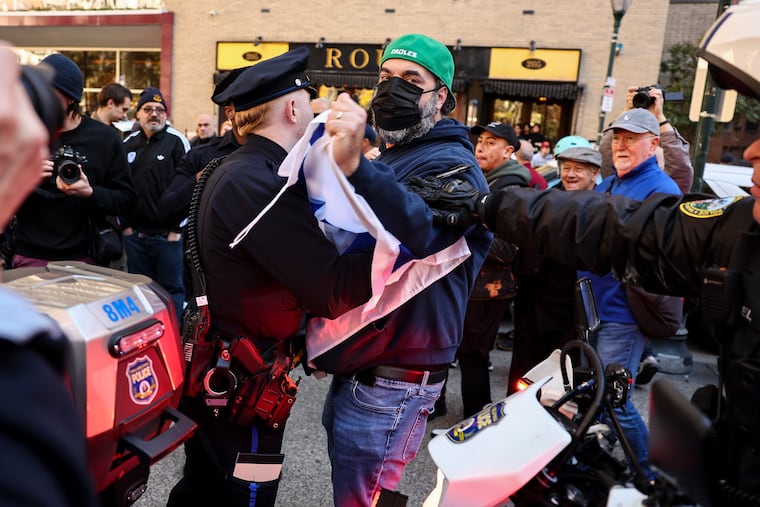
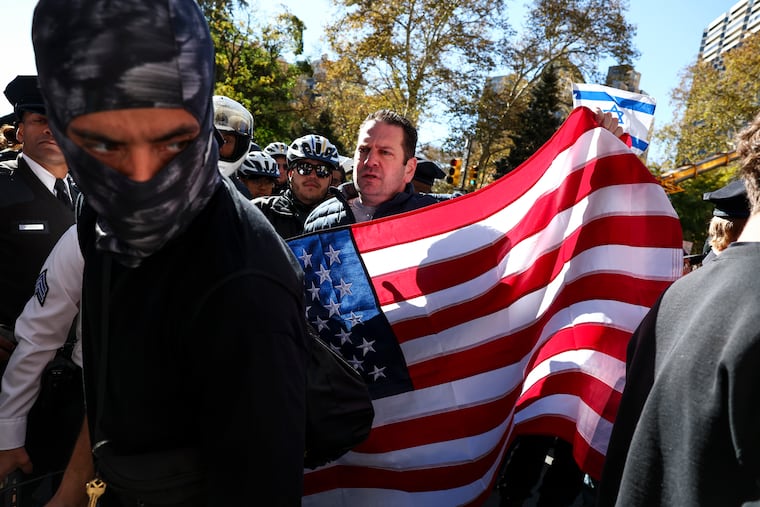
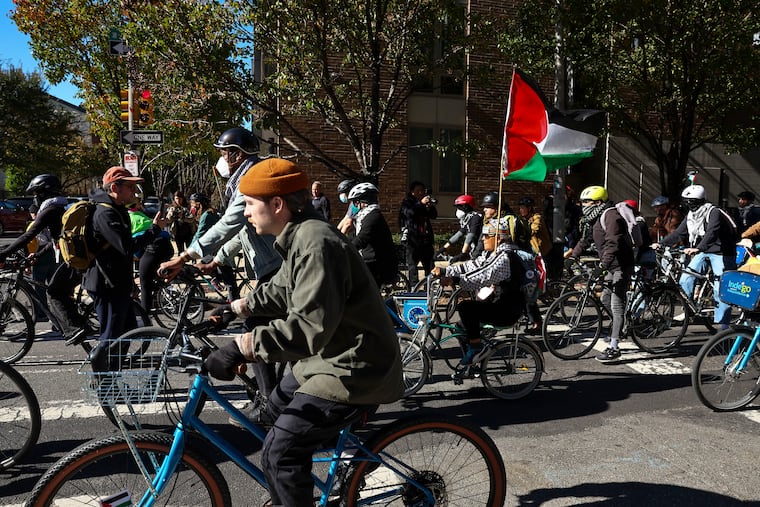
Inquirer readers on the “Boycott Ride” that targeted Jewish-owned businesses that support Israel.
Protest or prejudice?
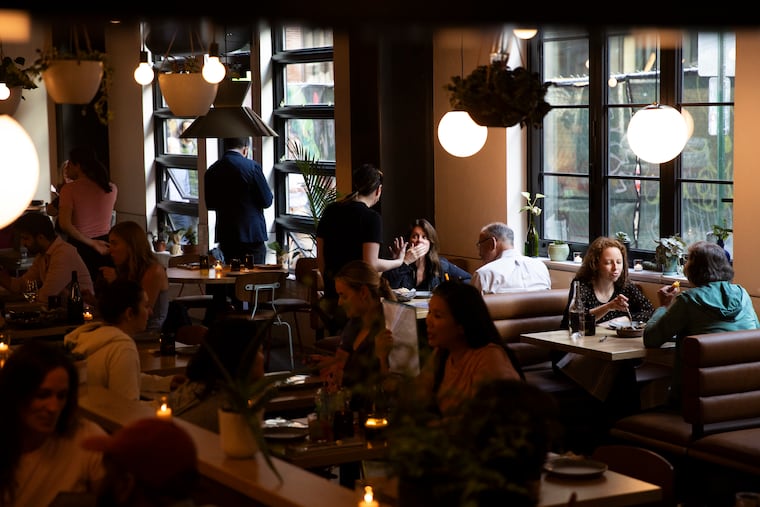
Shame on the members of Philly Bike on Your Left for trying to drive Jewish business owners and their businesses out of Philadelphia — and for implying that doing so will somehow help suffering Palestinians. In an Instagram post, the group called for its supporters to take part in a “boycott ride” to several Jewish-owned restaurants in Rittenhouse Square on Sunday, declaring: “These Zionist establishments must go! Not in our city!”
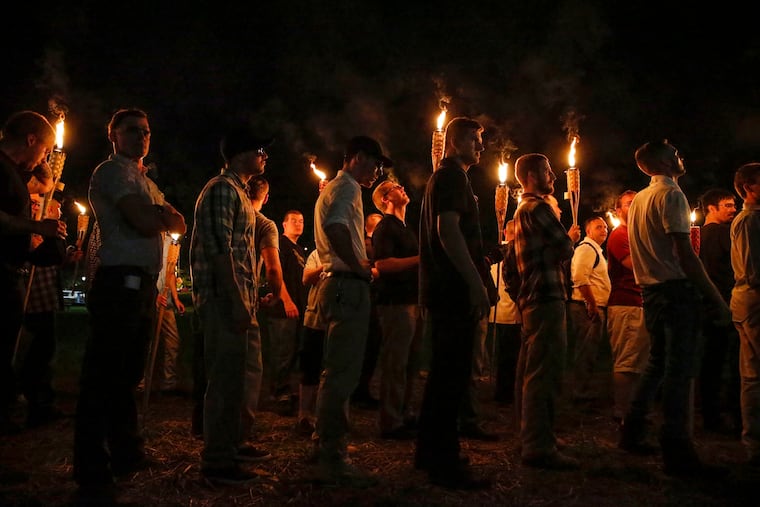
The chosen date is telling. Eighty-eight years ago, on Nov. 9 and 10, 1938, groups of Nazis and other Germans burned more than 1,400 synagogues, vandalized thousands of Jewish-owned businesses, and killed and assaulted Jewish people. German police imprisoned about 26,000 Jewish men in concentration camps. This pogrom came to be known as Kristallnacht, or the Night of Broken Glass.
Tormenting one’s neighbors, trying to drive them and their businesses out of town, and claiming they are not legitimately part of “our” city is not political advocacy or political protest. It’s simply hateful and bigoted behavior. In this case, it’s a chilling attempt at ethnic cleansing, right here in Philadelphia. And it does nothing to change U.S. policy toward Israel or advance justice for the Palestinians.
Shobhana Kanal, Bala Cynwyd
. . .
Is the “Boycott Ride” antisemitism? In my honest opinion, no.
According to the article, these businesses are being targeted because they — or their owners — have publicly supported Israel. This is anti-Zionism — not antisemitism. Shame on The Inquirer for its failure to understand the difference.
There are many organizations and institutions that have a vested interest in exaggerating the extent of antisemitism in our society and have a vested interest in equating all antisemitism as being essentially equivalent to historic Christian-European antisemitism. Some organizations — especially Zionist organizations because of the place of antisemitism and the Holocaust in Zionist mythology and propaganda — need to exaggerate antisemitism in order to promote Zionism and/or to justify their existence. And too many Jewish organizations and institutions use the specter of antisemitism to stoke fear and bolster their goal of supporting Israel.
My questions about this pertain to the ways in which the targeted businesses supported Israel. What makes them legitimate targets of protest? And why did the reporter not focus on these questions? My secondary questions would be about whether or not the protesters are highlighting this information, and how effectively they are communicating the reasons for targeting these businesses.
Benjamin “Benjy” Ben-Baruch, Ashland, Ore.
. . .
My skin shivered when I read the article, “Protest against Jewish-owned stores draws ire.” This is occurring in Philadelphia in 2026.
I just turned 88 years old on Nov. 2. I was a newborn in Philadelphia when Kristallnacht (the Night of Broken Glass on Nov. 9 and 10, 1938) violently occurred in Germany, ruled by the Nazis at that time. Jews were slaughtered; their businesses were attacked and destroyed.
I am the child of Jewish parents who escaped from Russia (now Ukraine) in 1909. Jews were being slaughtered by the Cossacks in Russia.
The specific time of Kristallnacht is embedded in my brain.
When do we, as United States citizens, stop this reign of terror against Jews or any minority group?
Who promotes such hatred against “others”: Jews, Arabs, Black people? When do we truly learn to respect each other? We don’t necessarily need to love each other, but respect for each other would be a good place to start.
Barbara Schwartz, Lafayette Hill
About letters to the editor
Letters feature a reader’s written opinion and are submitted in response to an article in The Inquirer or another topical issue. Submissions should be sent to letters@inquirer.com. Limit length to 150 words and include the writer’s home address and day and evening phone number. Letters are published in the Inquirer six days a week on the print opinion pages and online.