Why the nation’s stormwater systems are woefully unprepared for this El Niño
The American Society of Civil Engineers gave stormwater infrastructure in the United States a “D,” in 2025, noting the need to replace aging infrastructure often outstrips local capacity to do so.
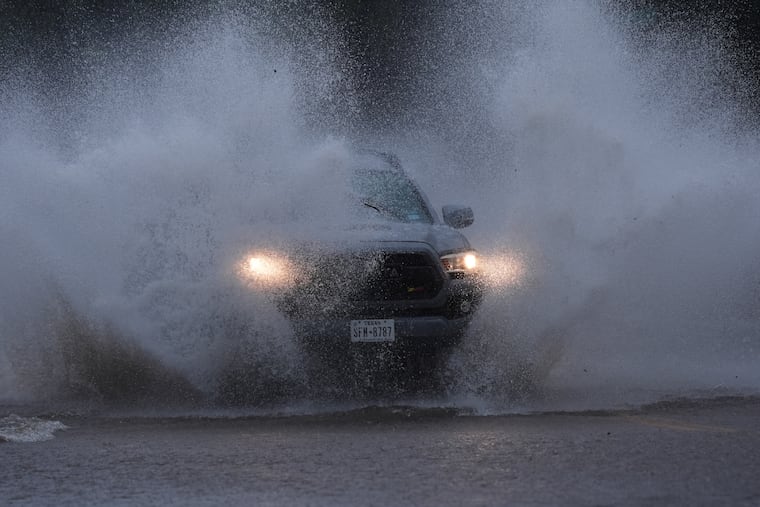
When it rains, canals, bridges, pipes, ditches and culverts are supposed to funnel water beneath streets. But the majority of the country’s stormwater infrastructure was not built for heavier bouts of rain brought by a warming climate — and now experts are warning the ongoing super El Niño will further expose those risks across the nation.
“The El Niño seems to be simply exacerbating the trend that we are already seeing,” said Chad Berginnis, executive director of the Association of State Floodplain Managers. “We need to make sure that we are designing [infrastructure] for these more extreme, heavy rainfall events.”
Current stormwater systems aren’t ready, and recent storms have exposed those shortcomings.
One analysis by Headwaters Economics, a nonprofit research group, found that of the nation’s more than 6 million culverts, about two thirds are in states with outdated design standards. (Culverts allow streams to pass beneath roads.) Another analysis by the American Society of Civil Engineers gave stormwater infrastructure in the United States a “D,” in 2025, noting that the need to replace aging infrastructure often outstrips local capacity to do so.
In the American Southwest, El Niño has already resulted in a wetter monsoon season that’s tested drainage infrastructure.
In the Navajo Nation, flash floods in mid-September killed three people and prompted evacuations. The remnants of Hurricane Polo brought even more rain last week. More than 500 areas of dirt roads were damaged in the last month, said Sheila Clyde, operations lead for Navajo Nation’s emergency operations center and a program supervisor for the Division of Transportation.
Floodwaters blew out culverts, some of which have been there for decades, Clyde said. There were nine pipe washouts on just one 15-mile stretch of road in Mexican Springs, New Mexico, she said.
“When it came, it came hard,” Clyde said of the rainfall, adding that it may take two months to fully repair the roads.
Stormwater infrastructure design standards are, in some cases, decades out of date, engineering experts said. The standards typically rely on historic rainfall totals without accounting for recent observations nor future projections in a warming climate.
“The majority of the culverts we have in place today are not built for the floods that we’re going to see,” said Bridget Mitchell, a civil engineer at Headwater Economics who leads the group’s community flood resiliency program.
Replacing culverts to better accommodate heavier rain totals can cost thousands to millions of dollars each, depending on the size and complexity of the project, said Mitchell. She argues the costs are worth it: Those culverts will require less maintenance, last decades longer and are cheaper than disaster response.
Still, many municipalities across the nation don’t have the money to replace aging and inadequate stormwater infrastructure, even in large cities.
In San Diego, funding needs for stormwater infrastructure exceed $5 billion, said Todd Snyder, the city’s stormwater department director. Most of the city’s drainage canals, underground pipes and pump stations were placed more than half a century ago when there were fewer buildings and a lot less concrete than today.
“San Diego has grown a lot since then,” said Snyder, adding that the city has been racing to clear debris out of waterways to better prepare the city for runoff. California is bracing for potentially brutal impacts, with El Niño expected to bring an exceptionally wet winter.
“You combine that with the intense storms we’re seeing from climate change … [and] we’ve got a lot of infrastructure that we would consider undersized,” Snyder added.
Only about 17 percent of aboveground stormwater channels there are capable of withstanding flooding that has a 1 percent chance of occurring each year - also known as a 100-year flood, he said.
In southern New Mexico, flash flooding last week breached levees, and put a dam in jeopardy of failing, prompting evacuations. In the drought-stricken West, water that hurts rather than helps feels particularly devastating.
“We really need that moisture,” said Gerhard Schoener, an assistant professor at the University of Mexico and a hydrologist who studies runoff. “The problem is when it arrives all at once.”