Nvidia CEO’s affair with an alleged Chinese spy could be a problem for the economy
At stake is not just Jensen Huang's position at Nvidia but potentially the fate of the AI economy and U.S. relations with China as the two nations compete over the future of artificial intelligence.
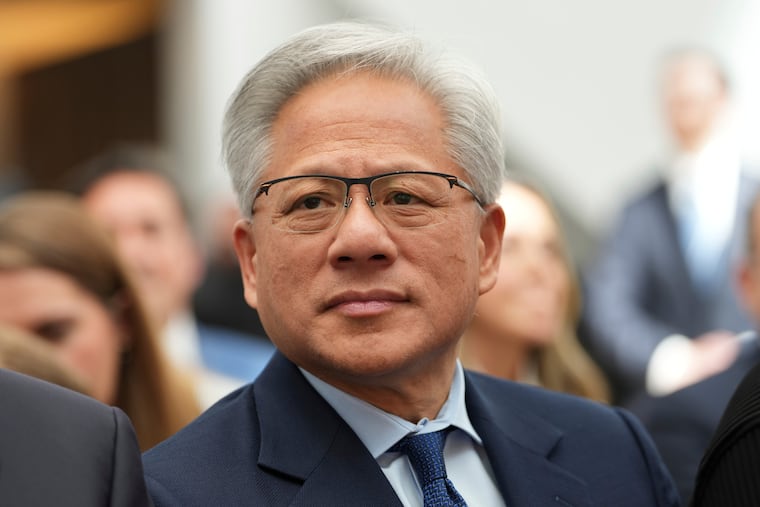
It took more than 30 years for Nvidia chief executive Jensen Huang to grow his start-up from a minnow of the video game industry to one of the world’s most valuable companies.
His signature leather jacket, frequent media appearances and close relationship with President Donald Trump made Huang one of the most iconic CEOs of the artificial intelligence era, providing computer chips and financing that have helped sustain an economic boom that has lifted millions of investment and retirement accounts. He helped reshape U.S. policy toward China.
Now Huang faces a crisis after he admitted Sunday to an affair with a woman who is a technology executive alleged to have been a Chinese spy. Trump said Monday that he had spoken with Huang and believed the CEO’s assurances that he did not know the woman, Alice Huang, was a spy. Nvidia’s board is investigating the matter and lawmakers from both major parties are calling for congressional probes into Huang’s conduct.
At stake is not just the CEO’s position at Nvidia but potentially the fate of the AI economy and U.S. relations with China as the two nations compete over the future of artificial intelligence.
Huang is central to the AI industry and has shaped U.S. policy on China as a strong advocate of loosening restrictions on exporting American chips to the country’s top technological rival, an approach adopted by Trump since his return to office.
Nvidia’s powerful computer chips, crucial to AI development, are “the lifeblood” of the global artificial intelligence industry, said Ben Buchanan, a White House special adviser on AI under President Joe Biden. That makes Huang arguably the most important figure in a surging sector seen as essential to the next phase of U.S. economic growth.
“It’s no exaggeration to say Jensen is one of the most significant people in the world and one of the most significant people in the AI industry,” said Buchanan, an adviser to Claude chatbot provider Anthropic, a partner of Nvidia.
Nvidia’s board said Sunday that it would investigate Huang’s conduct but also that it was confident in his leadership. “There’s no true succession plan,” said Dan Ives, a technology industry analyst, calling a potential gap at the top a frightening prospect for investors. “He’s kind of irreplaceable.”
Nvidia declined to comment Monday. In a statement Sunday, the board said it “has no reason to believe that either national security or NVIDIA secrets were compromised.”
Huang, who immigrated to the United States from Taiwan as a child and is now a U.S. citizen, founded Nvidia in 1993 along with two fellow computer chip engineers, sketching out the idea for the company at a Denny’s restaurant in San Jose. He built the start-up into a U.S. economic lynchpin through a combination of luck and determination.
After AI researchers in the 2010s showed that Nvidia chips designed to power video game graphics were also suited to the math behind a promising approach to machine learning, Huang seized the opportunity.
By the time OpenAI kicked off the AI boom with the 2022 release of ChatGPT, Nvidia had a lineup of chips targeted at AI developers. Orders — and profits — began to skyrocket as tech giants and start-ups spent hundreds of billions of dollars on Huang’s chips to outfit data centers to power AI.
Huang, who has tight control over his company, became a Silicon valley kingmaker overnight and soon after a major force in Washington. Other tech CEOs called to secure access to his chips. After Trump returned to the White House in 2025, Huang sought an alliance.
The two men first met in January 2025, by which time Nvidia had endured years of steadily tightening export controls that limited its sales to China. The company had only established a corporate presence in Washington a few years before. Huang quickly began to draw close to the president, attending a dinner for donors at Mar-a-Lago and becoming a fixture at Trump administration events.
Huang said his company would make multi-billion dollar investments into expanding factories in the U.S., boosting Trump’s efforts to show he was bringing more manufacturing jobs to the United States. And when the Trump administration opened the door to the export of more powerful Nvidia chips to China, the deal included an unusual provision that the government get a cut of the revenue.
In October 2025, Huang said his company had donated to Trump’s White House ballroom project. The Washington Post later reported that the company gave $25 million, one of only four donors to give that amount.
Trump has recognized how Nvidia has been essential to record stock market highs during his second term. Huang described Trump as jubilant when the pair met the day after Nvidia first reached a valuation of $4 trillion. “He spent a lot of time congratulating me and telling everybody all around him what a great achievement it was,” the CEO told USA Today at the time.
In its most recent financial quarter, Nvidia made nearly $100 billion in revenue, more than double the same period in the previous year and 14 times its revenue in the same quarter four years ago, just before ChatGPT was released.
During Huang’s recent alliance with the Trump administration, the CEO and top federal officials have argued that freeing up chip exports to China would tie companies there into American technology, ultimately benefiting the U.S.
In an interview with podcaster Dwarkesh Patel in April, Huang said dividing the world into an open Chinese AI system and a more locked-down American one “would be a horrible outcome for the United States.”
“The premise that even if we competed in China, that we’re going to lose that market anyways — you’re not talking to somebody who woke up a loser,” he said. “That loser attitude, that loser premise, makes no sense to me.”
But Huang’s advocacy for selling his products to a country seen by many in Washington as America’s archrival — and his caustic descriptions of those who favored restrictions — earned him opponents in the capital.
“It’s not in the U.S. national interest for this advanced technology to be sold to China when there’s tons of willing buyers in the United States and democratic” countries, said Buchanan, co-author of “The Bitter Struggle,” a new book about the AI race. “Jensen has absolutely been an avatar for the notion that we should.”
Nvidia’s centrality to the AI ecosystem shouldn’t deter full investigation of Huang’s interactions with an alleged spy, Buchanan said. “The world and American companies are still going to have huge demand for those products,” he added.
Relying so heavily on its chief executive was a risky strategy for Nvidia, said Ike Harris, the founder of the Frontier Security Institute, an AI and national security organization.
“Even the most genius genius will eventually make a mistake,” Harris said. “That’s humanity.”
In May, analysts at the financial firm Culper Research said they had shorted Nvidia’s stock and raised questions about the company’s alleged financial ties to China. The analysts highlighted Singapore-based Nvidia customer Megaspeed, questioning the Nvidia CEO’s relationship with one of its executives, Alice Huang.
Last month, the New York Times reported that the executive was suspected of passing information to the Chinese government. Nvidia responded with a statement that said Megaspeed was no different to its other customers. “We’re confident that if the U.S. government believes that any person is a threat to American industry, it would let us know,” the company said at the time.
Following a string of other news reports, Huang on Sunday admitted to having an affair with the woman in a note to employees.
“There is no excuse for what I did,” he wrote. “I am deeply sorry.” The CEO also said he was committed to “supporting America’s national security” and “proud and grateful to be an American.”
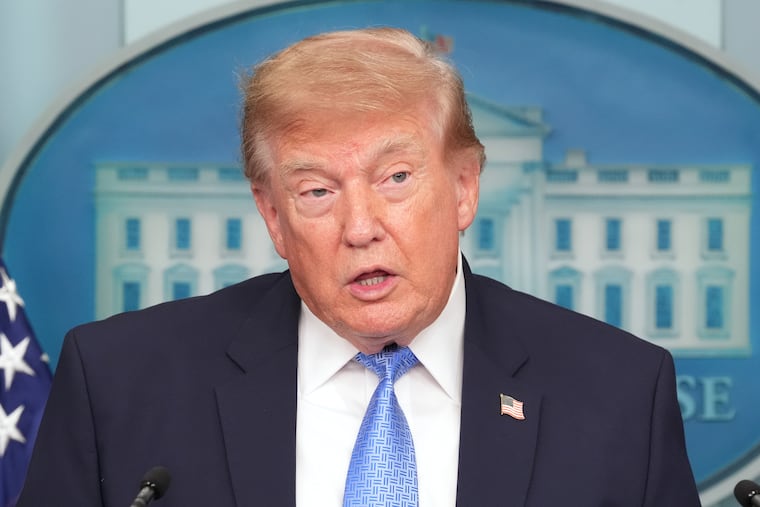
Trump expressed support for Huang, saying they had spoken briefly on Monday and that the CEO said “he had absolutely no idea that the person in question was a spy.” The president added: “I really believe him.”
Huang’s influential business allies in Silicon Valley also rallied around the CEO, casting the affair as purely a personal matter in a flurry of social media posts late Sunday.
Venture capitalist Shaun Maguire said in a post on X that Huang had been “incredibly dumb,” but that he doubted the Nvidia CEO had done anything intentionally wrong. “I believe Jensen is irreplaceable for America’s AI leadership,” Maguire wrote.
Bill Ackman, another investor and, like Maguire, a Trump supporter, wrote in his own X post that Huang deserved support: “He is an incredible human. Even incredible humans make mistakes.”
Nvidia shares fell just over 4 percent on Monday. The company and other AI darlings of the stock market were already under pressure over concerns the huge spending of tech firms on the company’s chips and other AI infrastructure may be built on an unstable speculative bubble.
Nvidia has previously been forced to defend itself on earnings calls against allegations that deals it has made to invest in customers represent risky “circular financing.”
Huang’s admitted affair adds new complexity. A trio of key House Republicans demanded last week that Huang show up at the Capitol this month to answer questions about the alleged spy plot.
“It is vital that Congress determines the extent to which U.S. national security has been placed at risk,” the Republican lawmakers wrote in a letter to Huang.
Democrats buoyed by their sweeping victories in the midterm elections are eager to hold Huang to account as an example of tech leaders’ outsized power.
“We need answers about the relationship between AI billionaires and the Trump administration, who’s making these decisions, and who’s really got their hand on the wheel,” Sen. Chris Coons (D-Delaware) said in a social media post Monday.
It remains unclear whether pressure from Washington will lead to Huang’s ouster.
Jo-Ellen Pozner, an associate business professor at Santa Clara University, said it should fall to Nvidia’s board to manage the situation. But with many of its members closely aligned with the chief executive, she questioned whether they would be able to act independently.
Almost half of Nvidia’s 11-person board have ties to the company’s earliest years. Huang and three others were first appointed in 1993, the year the company launched. Another board member joined in 1997.
“They have all been on the same team for so long,” Pozner said. “That makes it hard to say no to him.”
Gerrit De Vynck, Miriam Waldvogel and Kevin Schaul contributed to this report.