Putin will continue Ukraine war despite plans to meet Trump, intelligence says
Putin is under increasing pressure as Russia continues to suffer high casualties, recruiting difficulties, and an unstable economy, officials said.
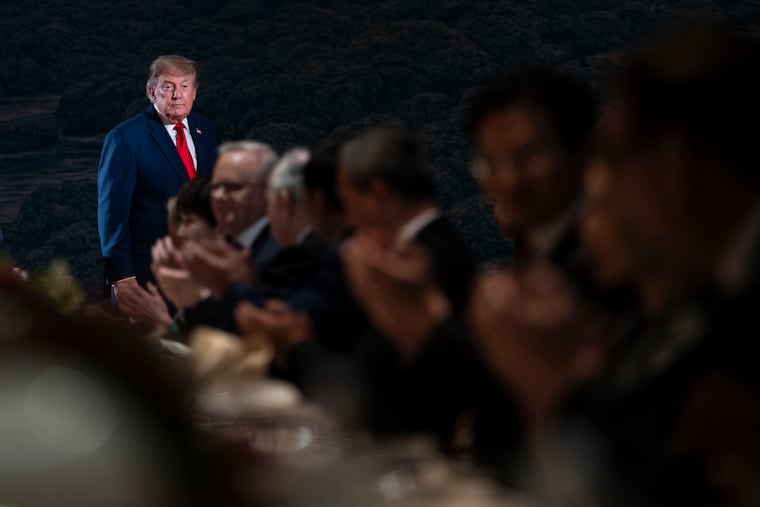
SHENZHEN, China — President Vladimir Putin of Russia is not ready to engage in serious negotiations on a peace settlement for Ukraine, according to Western intelligence assessments, even as he prepares to meet with President Donald Trump on Thursday in China.
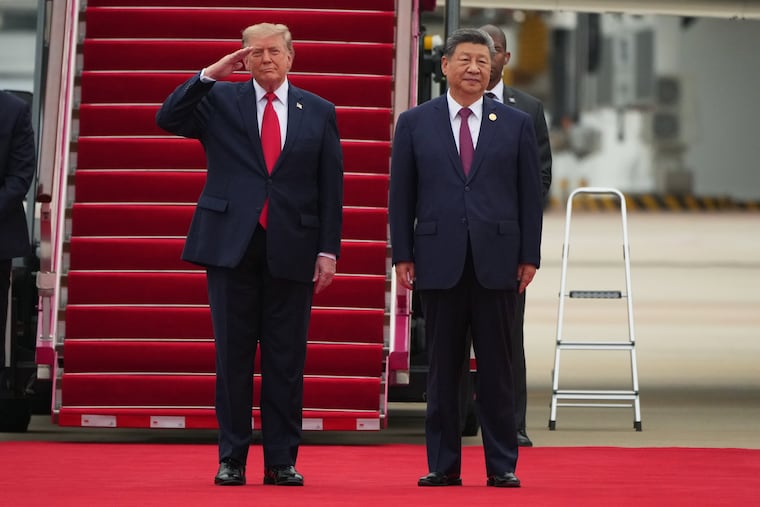
The two presidents, along with Xi Jinping, the leader of China, are scheduled to meet on the sidelines of an economic summit in the southern city of Shenzhen. The plan is extraordinary: The leaders of those three nations have never met in a trilateral summit, and for years the United States has considered both China and Russia to be rivals or even adversaries.
Trump said Monday that he planned to discuss nuclear arms issues and Ukraine, his “favorite subject.”
But recent Western intelligence assessments underscore Putin’s desire to keep fighting at least through the winter, said officials familiar with the reports. Putin hopes his army can make more progress in eastern Ukraine or that the Russian military’s drone and missile attacks on the capital, Kyiv, which kill civilians, can wear down the Ukrainian resistance, they said.
Putin is under increasing pressure as Russia continues to suffer high casualties, recruiting difficulties, and an unstable economy, the officials said. The war allows Putin to tamp down domestic criticism, some of them added.
Those assessments align with recent comments from European diplomats and leaders, who say they doubt the nearly 5-year-old war will end anytime soon.
“We believe Russia is in a very dire situation,” Aurélien Lechevallier, the French ambassador to Washington, said in an interview, referring to the country’s wartime economic condition and its impact on Putin’s legitimacy. “He needs the war in Ukraine to fuel his own leadership, his own narrative.”
Lechevallier noted that Putin had opposed the idea of even a partial ceasefire. That stance, he said, was “blatantly going against what President Trump has been asking from the start, which is to stop the hostilities.”
Putin could press Trump to lift some of the sanctions that the United States has imposed on Russia because of the war. In October, Trump signed an executive order exempting Russia from sanctions that Congress had passed a month earlier. Trump said the United States would import diesel from Russia in an effort to bring down gas prices weeks before the midterm elections.
Ukraine and other European nations saw that as a betrayal — and a sign that Trump was reverting to his long-running efforts to befriend Putin. European nations have increased their military aid to Ukraine and steadily added to the sanctions they have imposed on Russia since Putin began his full-scale invasion of Ukraine in February 2022.
Putin would have an advantage in discussing Ukraine with Trump in the trilateral setting. Xi, the host, has supported Russia’s invasion by allowing Chinese companies to trade with Russian defense enterprises. U.S. intelligence officials say China supplies microelectronics and other critical material to Russia’s defense industry.
Yuri Ushakov, a top aide to Putin, said the Russian president was eager for the talks.
“The significance and symbolism of this meeting cannot be overstated,” he told reporters Monday. “It is the first such meeting of its kind.”
“It has been agreed that it should be structured in the spirit of the mutual understanding and alliance between our three countries during the Second World War, with an emphasis on our countries’ cooperation in the establishment of the United Nations,” he added.
Lechevallier said Putin would think he had scored a win by appearing alongside Trump and Xi.
That could result in a photo that stands out in the annals of history, like the iconic photos of the leaders of the United States, Britain, and the Soviet Union, allies during World War II, that were taken at their summit in 1945 at Yalta on the Crimean Peninsula.
“From a Russian perspective, that would be the crowning of their diplomacy, because they want to appear as equals to the U.S. and China, which obviously they are not anymore,” Lechevallier said. “But that’s the storytelling they would like to push.”
Putin has faced increasing pressure at home this year from Ukraine’s strikes around Moscow, as well as from economic hardships and the difficulty conscripting men into the Russian army. Western intelligence agencies estimate that 40,000 to 50,000 Russians are being killed or seriously injured each month in Ukraine.
Allied intelligence agencies have varying interpretations of Putin’s reluctance to negotiate an end to the war. One agency assesses that the war gives Putin a sense of purpose, and that he needs to claim victory to hold on to power, an official said. Putin intends to make Ukraine suffer this winter under a barrage of attacks, the official added.
Putin could accept a deal if the right agreement was presented to him, the official said. As of now, at least one intelligence agency assesses that the terms would have to include Ukrainian leaders ceding all of the Donbas region in the east to Russia and promising that Ukraine will never join NATO.
But President Volodymyr Zelenskyy of Ukraine and other top officials in Kyiv would almost certainly not agree to those terms, so that type of agreement is unrealistic, the officials said.
Luc Frieden, the prime minister of Luxembourg, said in an interview Friday that he was “not too optimistic — let’s say it like that — that there will be a just and lasting peace in the near future.”
“We have seen Russia giving the impression, on several occasions, that they want to go towards peace, but then, a few weeks afterwards, we saw that it was not the case,” he said.
Some European officials say they suspect that the Kremlin is playing for time in hopes that a wave of 2027 elections in Europe could lead to cracks in support for Ukraine.
Marine Le Pen, the front-runner in the French presidential election, has said she will cut aid to Ukraine if she is victorious.
Putin’s recalcitrance is reflected in far-reaching demands that Russia has made in recent talks with Trump’s representatives, Steve Witkoff and Jared Kushner, the president’s son-in-law.
The Russians are insisting that the NATO allies adopt a new “security architecture” by, among other things, pulling troops back to positions they held in 1997, before the alliance expanded eastward toward Russia’s borders.
Putin made those demands two months before invading Ukraine in 2022. And he did so again last week, when Russian officials met with Witkoff and Kushner in Moscow and in Abu Dhabi, United Arab Emirates.
Russian officials circulated a document with Putin’s latest demands last week, according to a copy obtained by The New York Times.
European leaders have rejected Russia’s demand to roll back NATO, but were not surprised by it, two diplomats said Friday. They view Russia’s position as maximalist, which is also how Kushner has described it.
Kaja Kallas, the European Union’s top diplomat and an Estonian with a record of being tough on Russia, said during a news conference on Monday that Russia is “just trying to blur the picture, to say that, you know, we are just brainstorming.”
“They are not brainstorming.”
Some European officials said that if Russia was serious about peace, it would end its daily strikes on Ukraine.
“I thank the U.S. for its continuing efforts,” Micheál Martin, the prime minister of Ireland, said at a news conference Friday. “But Russia has to demonstrate through its actions that it is serious about ending its aggression.”
Yet European nations are laying the groundwork for a day when Russia might accede to a peace settlement. This month, France and Britain are leading 2,800 European troops in training exercises in Poland and Turkey aimed at preparing to help defend Ukraine if a settlement is reached.
“It’s really to make sure that once we have a ceasefire between Russia and Ukraine, European troops can be deployed,” Lechevallier said. “That will be very important the day we can strike this ceasefire.”
This article originally appeared in The New York Times.