A South Jersey man found a dead rodent inside a Monster Energy can, lawsuit says
Teddy Soto's lawsuit against the companies behind Monster and Bang energy drinks says the South Jersey resident wasn't the first to find a rodent's carcass in a sealed can.
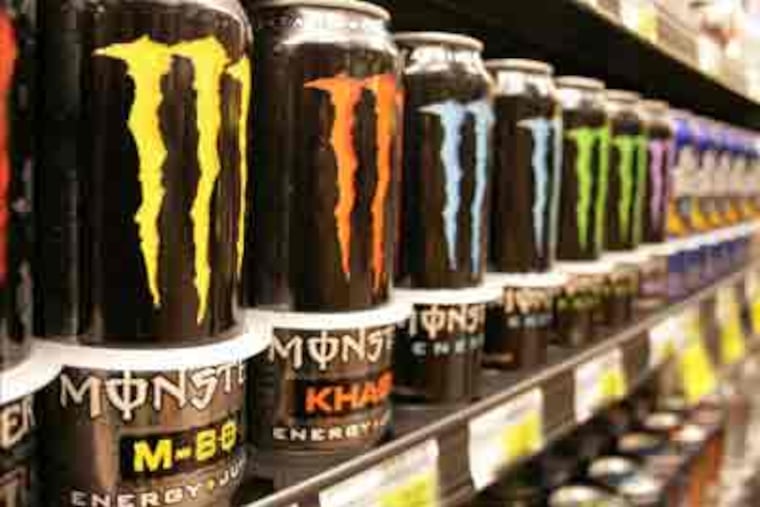
The scary part of a lawsuit filed in Philadelphia this week isn’t the Monster, but what a South Jersey man found inside of it.
Teddy Soto was driving his car on a January 2025 day, drinking a Monster Bang energy drink he had purchased at a Cumberland County Wawa, the suit says, when something touched his lips.
Soto pulled over and shined a light into the nearly empty can.
“He saw a tail and feet,” the lawsuit says.
At the bottom of the Bang can was a rodent’s carcass, the complaint says. Soto was overcome with nausea.
A photo included in the complaint shows what appears to be a small dead mouse at the bottom of the can.
The Cape May County resident has since suffered physically and psychologically, and is asking the court to award him damages in an unspecified amount.
The lawsuit, filed Monday in the Philadelphia Common Pleas Court, says the companies behind the energy drink brand, Monster Energy Company and Monster Beverage Corp., manufactured and distributed a product that was “defective, contaminated, and unsafe for consumption.”
Monster did not immediately respond to requests for comment.
The suit also names Wawa, where the Monster can was purchased, as a defendant. Wawa also did not respond to a request for comment.
Monster Beverage Corp. sells multiple brands of energy drinks, including Monster Energy and Bang, and reported $2.54 billion in sales in the second quarter of 2026.
The company acquired rival Bang Energy in 2023 for roughly $362 million.
Part of Soto’s case is that Monster has been sued before by customers who allegedly found dead rodents in the company’s energy drinks.
Instead of taking action to prevent such contamination from happening again, the suit says, Monster previously said it was “impossible for a rodent to have been sealed inside a can” and responded to the allegations as if they were a “hoax.”
For example, a Michigan woman sued Monster in 2024 after she found “a dead mouse laying in the bottom” of a Monster Energy can. The company denied the allegations.
Lawsuits over rodents in Monster date back at least to 2011, when a Washington state man claimed he found a mouse in his drink. Monster called that lawsuit “frivolous” and “unfounded.”
The man opened his drink and set it down, allowing a “small mouse to crawl into the can,” the company’s statement said.
“The Monster Energy canning process involves many safeguards to prevent contamination,” Monster said. “Importantly, while on the high speed can line, each can is turned upside down and injected with high-pressured deionized air, making it virtually impossible for any foreign object to remain in the can.”
Both parties agreed to dismiss the case in 2011.
Allegations of rodents in Monster cans also pop up on social media from time to time, but Monster representatives previously called those claims an “internet hoax” and those who file lawsuits “copycats.”
The recent Philadelphia lawsuit attempts to preempt Monster from adopting “its typical defense.” Soto never left the can unattended, the suit said, and he is prepared to “prove Monster’s responsibility for the failures that caused his injuries.”