How Philly distributed an estimated 1 million meals to kids this summer — and kept them busy
Hundreds of recreation centers, camps, and churches rally together to feed children every summer. This year, they did so amid the backdrop of rising grocery prices and a tightening safety net.
Michella Crosby first noticed it a couple of years ago: The children surrounding her block in West Philadelphia were hungry — and a little bored — during the summer break.
Once a kid in need of a meal, often getting one at her local armory, Crosby decided to do something to make sure no child went unfed.
The 74-year-old block captain signed up to run a Playstreet last summer. Through the city-run Playstreets program, and with the support of neighbors, she closed off her block to traffic on weekdays and distributed free, nutritious lunches to children, no questions asked.
“This is survival,” Crosby said in her second summer running a Playstreet. “We have to live. We have to be able to take care of our children.”
Crosby is just one part of the more than 500 churches, camps, schools, recreation centers, and Playstreets in Philadelphia that offer children under 18 opportunities to do everything from crafting to sports and unstructured play during the summer. These sites have the added benefit of feeding children for free.
The meals were paid for through the Summer Food Service Program, a federal program with funds administered by Pennsylvania.
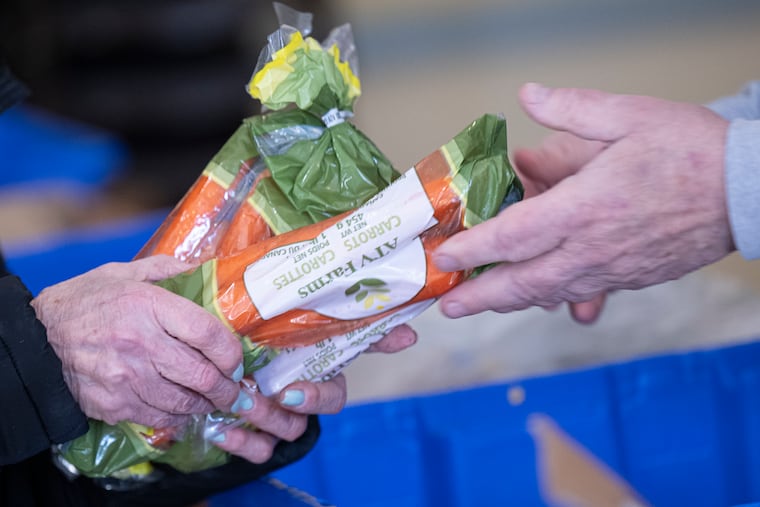
Providing children with a free, federally approved breakfast and lunch is a benefit many families only speak about in whispers, according to program operators. At many sites, all children are handed meals, even if they don’t need them or come with their own snacks. Coordinators say this method of meal distribution makes it so no one feels less-than for lining up during breakfast or lunch.
This summer, the city was projected to distribute more than a million meals. A final count of meal sites will not be available until the end of the year, according to the city.
The Inquirer visited several of these meal sites to get a glimpse of the many purposes these hubs serve and the people who make it all possible.
Holy Innocents School summer camp
The gymnasium is abuzz on a Tuesday with approximately 70 children ages 4 to 14.
The pre-K children are the first to boldly rush the plastic folding table featuring a spread of small cardboard boxes topped with pints of milk.
“There’s a line behind you,” an instructor gently reminds a little boy skipping past his classmates.
The child spins around, offering a sheepish grin, and joins the friends he had zoomed past, giggling with glee.
Almost every child in the room attends Holy Innocents School during the school year, said Dee D’Aulerio, director of the free all-day summer camp in Juniata Park.
“Historically, they did have to pay a fee, but now that we’re free, it really eases the burden on the families who pay tuition to take something off their plate,” she said.
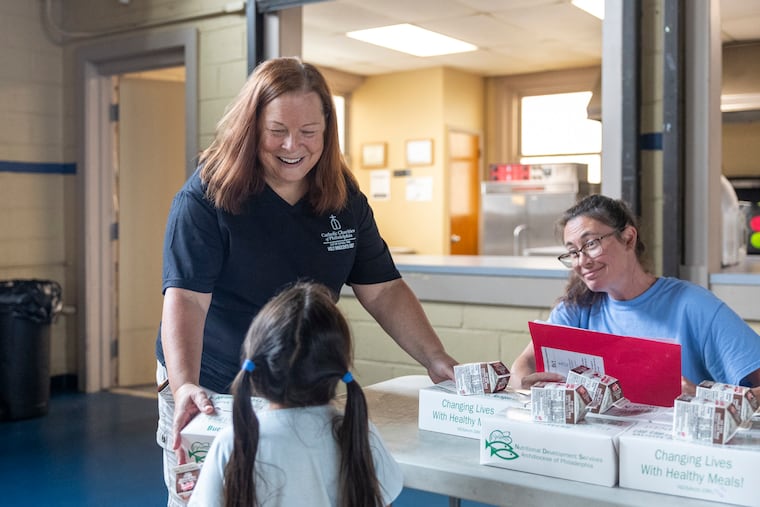
In rapid succession, D’Aulerio personally hands every child a box that includes a ham and cheese sandwich, celery sticks, and potato salad.
Most look past the celery, donating their untouched containers to the “share table,” where a milk crate is already overflowing with applesauce containers.
One of the middle school boys walks up to the share box and grabs a handful of sandwiches. He tosses one to a friend and keeps the rest.
“The kids can help themselves if they’re still hungry after eating; they’re also able to take things home with them, too,” no questions asked, D’Aulerio said. “That’s a big help, especially if there are multiple children in the family.”
100 block of Dewey Street
Michella Crosby won’t admit it, but she is kind of the linchpin of her block, according to her neighbors.
She had been block captain for a decade and a member of the nonprofit ACHIEVEability, which aims to break the “generational cycle of poverty,” for 16 years. She is the person neighbors go to for help applying to city programs that can lower their tax bills.
Last year, she started to tackle hunger in the neighborhood.
Two children run up to Crosby’s house around 2 p.m. on a Friday, cracking open a blue cooler full of chocolate milk and apple juice. They are not from the 100 block of North Dewey Street, but they are near-daily visitors.
“Got something to eat?” the boy asks, knowing the answer is yes.
“I want two juices!” the girl says, pointing at a doll she is swinging around. “It’s for the baby.”
“I got your applesauce,” Crosby says to the boy as he inspects the ham sandwich lunch. The boy is in a picky eating stage, Crosby notes.
There were no Playstreets when she was coming up, so Crosby would head to the local armory. She only wishes she could do more for the modern-day latchkey kids who live in neighboring blocks. This summer, she has gotten faint knocks on the weekend of kids asking for food. Playstreets, however, only runs during the week.
“As much as I would love to, I can’t give away my refrigerator,” she said, as a neighbor greets her from across the street.
Still, she considers this summer a success, grateful that children feel safe enough to come to her for food and a chat. Their continued presence has persuaded her to continue the program.
“As long as there’s a need for children to be fed, I’m going to do it,” she said.
Kingdom Restoration Ministries
Eight children were already digging into crispy grilled cheese sandwiches, fried chicken, corn, and fruit cups when Peace McClain, 35, walked into Kingdom Restoration Ministries in Olney with two of his own.
McClain keeps his kids busy with beach trips and other activities during the summer breaks, but worries they are missing out on an experience he remembers fondly: hanging out with friends freely on his block.
“I remember summertime, going outside, and going to get free lunch from the block captain,” McClain said.
Still, safety concerns keep McClain from letting his children too far out of his sight.
The half-day camp he saw advertised on utility poles across the neighborhood felt like a good compromise.
“I wanted to give them the experience to come in and meet these people because they don’t get to walk around,” McClain said.
Velvet Howard, 70, who is officially retired but is the camp supervisor for the summer, tells McClain how the camp works.
In its first year, the camp offers half-day summer programming for children on Tuesdays and Wednesdays with breakfast and lunch included — all free. No preregistration is required, so the number of children in attendance fluctuates based on families’ summer plans. And while many of the children in attendance have some connection with the church, it is not required.
Lunchtime is almost over by the time Howard finishes answering McClain’s questions, but she encourages Peace, 10, and Payton, 8, to stick around, grab a bite, and mingle with the time left.
“The staff was super nice here and it was really fun,” Payton said when reporting back to her father, noting she would come back. “And they had really good food.”
The intersection of food insecurity and summer childcare
More than 100,000 Philadelphia youth experience food insecurity, according to Laura Crandall, Philadelphia’s director of food security initiatives. In addition, close to 87,000 children under 18 live below the poverty line, according to the most recent data from the U.S. Census Bureau.
Worries that many of these children lose access to reliable meals during the summer have long existed. But recent cuts to the Supplemental Nutrition Assistance Program, a result of the One Big Beautiful Bill Act, have exacerbated concerns.
An estimated 45,000 SNAP recipients in Philadelphia could see benefits cut this year, according to the Pennsylvania Department of Human Services.
As the social safety net tightens for families, summer camp enrollment has only grown more competitive.
“Prior to the pandemic, we were already seeing that the options for families during the summer was decreasing,” said Erinn Hill, director of child nutrition programs for Catholic Charities of Philadelphia’s Nutritional Development Services, which sponsored 192 meal sites in the city this summer.
“Camps and other programs were getting smaller, shorter, or closing. As of now, the number of sites is still not back to pre-pandemic levels.”
The nonprofit CBS Food Program, which provides meals to Kingdom Restoration Ministries, responded to the mounting interest by delivering food to 41 partner locations in Philadelphia, close to double the number of sites it worked with last summer.
Even so, some city partners worry food insecurity is only spreading amid the rising cost of groceries.
At least two site operators, who asked not to be named to avoid getting in trouble, said seniors in their communities are increasingly coming to summer meal sites for food, which they are supposed to save for kids. In areas where the kids do not want the meals, operators will sometimes look the other way and let seniors take the leftovers.
“We just can’t let our neighbors go hungry,” one site operator said.