He wrote the book on sports gambling’s rise. Here’s what he thinks you should know.
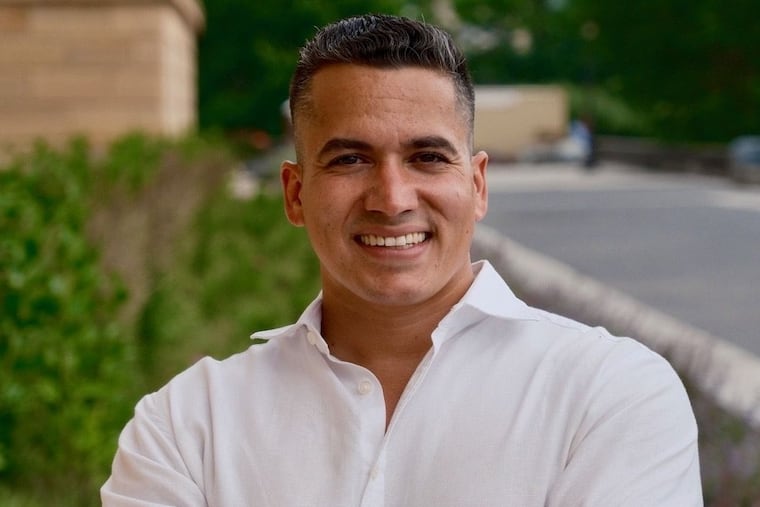
In “Everybody Loses: The Tumultuous Rise of American Sports Gambling“ journalist Danny Funt explores the fallout from a U.S. Supreme Court ruling that allowed states to enact sports betting laws.

Moments after Purdue University soundly beat Grambling State in the first round of the 2024 NCAA Men’s Basketball Tournament, Carson Barrett turned to his phone.
The Purdue guard, playing with a torn right meniscus, had sunk a three-pointer in the game’s final minutes to put his team up, 78-50. But amid the happy afterglow of victory, Barrett’s phone filled with venom.
“I hope you f— die," read one text message that he received.
“Kill yourself for taking that 3 you f— worthless loser," added another.
It’s the opening anecdote of the book Everybody Loses: The Tumultuous Rise of American Sports Gambling, an exploration of the fallout from a 2018 U.S. Supreme Court ruling that allowed states to enact individual sports betting laws. The decision has resulted in gambling becoming an omnipresent part of everyday American life.
Barrett became a harassment target because his three-pointer ensured that Purdue would cover a 27-point spread, explains author Danny Funt, a journalist who has written for the Washington Post, the Wall Street Journal, and the New Yorker.
Funt revisits critical moments in how gambling was embraced, like NBA commissioner Adam Silver writing an op-ed for the New York Times in 2014 that called for sports betting to be legalized and regulated. Silver claimed that nearly $400 billion was wagered annually on sports. But that eye-catching sum, Funt writes, was actually just a thinly sourced guesstimate.
Once states began legalizing sports betting, professional leagues abandoned their once- impassioned opposition to having any association with gambling, and entered into lucrative partnerships with sportsbook companies.
But some ex-league officials who spoke to Funt — including former NFL commissioner Paul Tagliabue and former MLB commissioner Fay Vincent — expressed lingering concerns.
“What’s going to happen is. it’s going to get out of hand. Gamblers will start fixing games,” Vincent correctly predicted. “And when that happens, Congress will intervene.”
Funt retraced the evolution of sportsbook companies FanDuel and DraftKings, and spoke with unnamed officials at each company about their business practices, including VIP managers who offer benefits — like free Super Bowl tickets — to bettors who consistently wager and lose large sums.
He also interviewed Nigel Eccles, a FanDuel cofounder.
“I love games that are beatable,” Eccles told Funt. “Unfortunately, what they’ve done with sports betting in the U.S. is turn it into a game that you can’t win, because if you win, they shut your account.”
Yet Everybody Loses isn’t told strictly through the eyes of executives and policymakers. Funt also interviewed ordinary people — a fifth-grade teacher in Connecticut and a college student from Washington Township, Gloucester County — whose lives were derailed by an all-consuming gambling addiction.
Inquirer reporters recently spoke to Funt, 34, about the research he conducted for his book, which was published in January by Simon & Schuster.
This interview has been edited and condensed for clarity.
You interviewed sportsbook industry officials. Was there anything they said that surprised you?
To hear an executive at a company say: ‘If you think about it, my job was to basically slowly bleed someone dry.’ We understand that’s the essence of gambling, but to hear an executive use those words was striking.
And there were definitely a lot of things that I didn’t expect. I didn’t realize the scope of the online VIP business at all. The things they’ll do to pamper those customers, the specifics of it blew me away: Throwing out the first pitch at a baseball game or playing pickup basketball on an NBA court.
The point of doing that is so these customers feel like [VIP managers] are their friend. So if they ever think of pulling back on their betting, they’ll lose all these perks — but also lose a friend that they’ve made.
Should regulators consider limits to prop bets or in-game microbets?
That’s something that these companies have invented, essentially, to give you a million ways of constructing same-game parlays, which are their most profitable product. So they want you to bet on limitless things, so you can construct an infinite number of same-game parlays.
The other thing with these in-game bets — which is the fastest-growing side of betting, and you can see companies like DraftKings really pushing them — is that it’s a road to compulsive behavior, if you’re betting on a minute-by-minute basis.
You could definitely restrict those bets, as far as the variety and abundance of them. But you could also mandate more of a responsibility on the operators to pick up on risky behavior from their customers, and intervene accordingly.
What do you think about the gambling content that young people encounter on social media, television and at sporting events?
As far as kids go, there are a lot of data points that are really alarming. I live in Charlotte. Half of the calls to the problem gambling hotline in North Carolina are coming from parents who are so concerned about their kids betting.
There are a lot of things that made [betting] mainstream, but I have to think having A-list movie stars and our heroes in sports pitching [these products] constantly has to have an effect on kids.
A lot of people I talk to — whether it’s educators, health experts, or lawmakers — this potential epidemic of gambling among kids is what they’re most worried about.
You write about sportsbook customers who had winning streaks, and then were stunned to find that the companies limited their accounts.
That limiting comes as such a surprise to people. They think, based on the premise of legalization, that there is a relatively level playing field. Then they learn that no, the deck is stacked against you.
If you do anything that shows you’re a competent bettor, you’ll get cut down to being able to bet only pennies on an NFL game. It feels grossly unfair. There are some states looking into regulating that.
But the advertising so clearly says that this is a way to make money. I just walked by an ad for PrizePicks, which said, basically, make money because you know sports.
What’s your perspective on prediction markets, which allow people to wager on everything from Hollywood awards shows to military conflicts?
I mainly think of them as a workaround — they offer gambling by a different name, and avoid paying state taxes. But by and large, I think they’re sports-betting operators. So the question becomes: Is this the logical extension of Americans wanting to bet on more and more stuff?
Kalshi’s CEO has said their ambition is for people to bet on literally everything, eventually. But I’m curious if that’s a viable business. I don’t think the average person wants to put in the time to bet on legislation, or the weather tomorrow, or who’s going to win at the Oscars. I think that is sadly feeding people who have an addiction.
The Inquirer will continue to report on issues related to the growth of gambling addiction — among teens and adults — across Pennsylvania. If you, or someone you know, wants to speak with a reporter, please contact David Gambacorta or William Bender at dgambacorta@inquirer.com and wbender@inquirer.com

The Inquirer’s journalism is supported, in part, by the Lenfest Institute for Journalism and readers like you. News and editorial content are created independently of The Inquirer’s donors. Gifts to support The Inquirer’s high-impact journalism can be made at inquirer.com/donate. A list of Lenfest Institute donors can be found at lenfestinstitute.org/supporters.