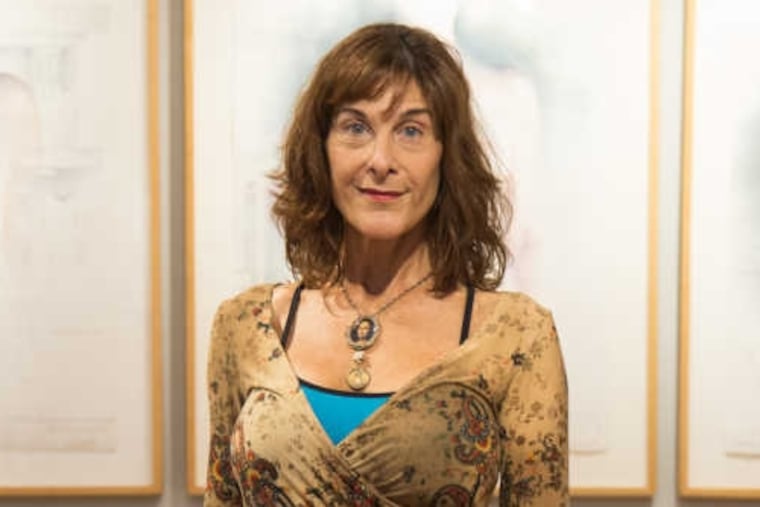
Barbara McDermott, a longtime Philadelphia homicide judge who worked with jurors and resentenced juvenile lifers, has died at 71
“Heaven will now be well-run and much more efficient,” McDermott's family wrote in an obituary shared online.
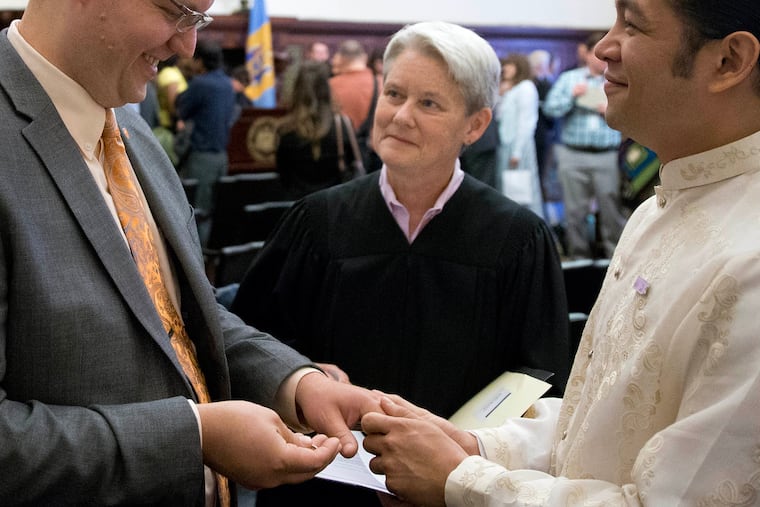
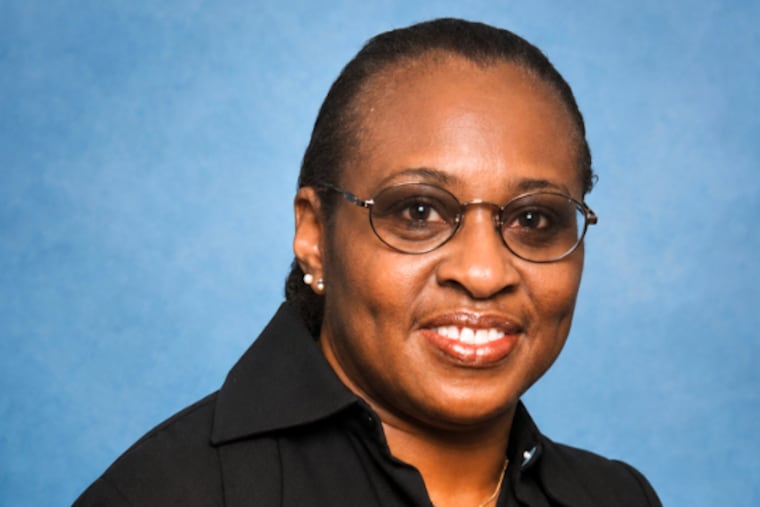
Barbara Ann McDermott, 71, a former Philadelphia judge who, for 40 years, spent nearly every workday inside the city’s criminal courthouse defending, prosecuting, and later presiding over some of the city’s most serious criminal cases, died Tuesday, Aug. 11, following a yearslong battle with a rare form of uterine cancer.
“Heaven will now be well-run and much more efficient,” her family wrote in an obituary shared online.
Judge McDermott spent nearly 14 years in Philadelphia’s Common Pleas Court — the majority of that time presiding over homicide cases — before retiring earlier this year.
She was known for running a tough and orderly courtroom, starting her day promptly and putting up with little fuss and few excuses from prosecutors, defense attorneys, police, and defendants alike.
Born and raised in Aliquippa, in Western Pennsylvania, Judge McDermott said in an interview this spring that, growing up, she was a tomboy who pushed the boundaries of her small, steel mill town. She delivered the local paper even when supervisors said the work was only for boys. When leaders of her local Catholic school balked at her request to start a girls basketball team — saying young women “weren’t strong enough” to play full-court — she found a coach who would let her.
She attended Seton Hill College, then an all-women’s university outside of Pittsburgh. There, she became passionate about pastoral theology and social justice, and led the student government association.
She initially thought she would follow local tradition and become a teacher or establish a chain of daycares, but then, she said, “I realized … I’ve been gifted with a brain. I want to do something more than the tradition.”
She took an interest in legal issues and attended Georgetown Law School. (She enjoyed pointing out that she was rejected by the University of Pennsylvania.)
She first worked in the attorney general’s office, but longed to practice in Philly, where she said she was inspired by female judges like Lois Forer, Lisa Richette, and Juanita Kidd Stout.
“I wanted to practice around lawyers that were better, and I wanted to practice around a diverse bench,” she said.
She joined the Philly DA’s office in 1984 under Ron Castille’s leadership, but left after several years due to what she described as “disagreements,” including that she did not support the death penalty.
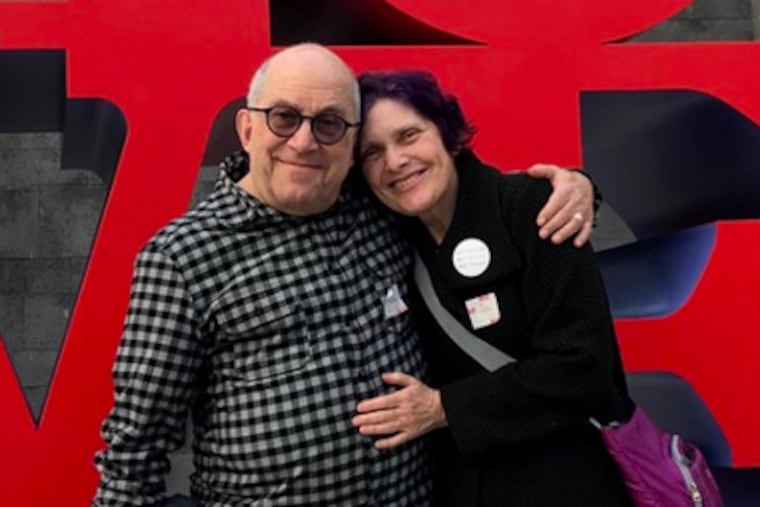
She started her own practice as a criminal defense attorney, and adopted two daughters, Nicole and Colette, in the early 1990s. She raised them alongside her partner — and, later, wife — of 37 years, Jeanne Buckley.
Buckley, in an interview with the Philadelphia Gay News, said she and Judge McDermott had been introduced by friends at St. Vincent de Paul Catholic Church in Germantown, a service-oriented congregation they remained a part of through their life.
She told the outlet that, early in their relationship, they went to Rehoboth Beach, Del. There, Judge McDermott asked her to close her eyes and placed sparklers around her. This was what life would be like together, she said.
As their life together went on, Judge McDermott was later elected to Common Pleas Court, joining the bench in 2012. Soon afterward, she started overseeing homicide cases.
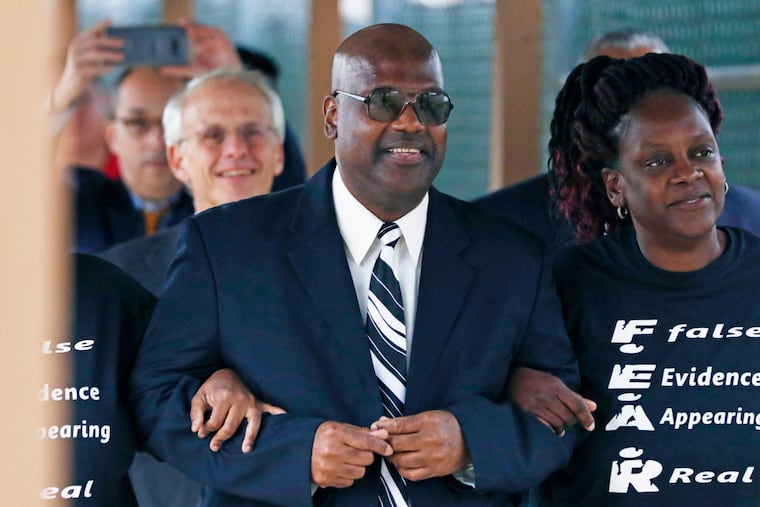
She presided over numerous resentencings of former juvenile lifers, in one case surprising both defense lawyers and prosecutors when she decided to exonerate one, Terrance Lewis, who had been found innocent by a federal magistrate judge but remained in prison on a procedural issue.
She said that work, seeing how people changed over time, was some of the most fulfilling of her career.
But she also drew criticism from some youth justice advocates who said she was unduly harsh in dealing with teenagers accused of violent crimes, denying requests to transfer their cases to juvenile court and imposing substantial state prison sentences.
Judge McDermott could be exacting from the bench. But her concern for how people experienced the courthouse and the justice system extended beyond the parties before her.
Colleagues called her a trailblazer for women and LGBTQ+ attorneys, and said she worked to get more female judges in leadership at the First Judicial District. She helped create a curriculum on how judges and court staff should treat transgender witnesses and victims. She also sought to improve conditions for jurors, and coordinated efforts to add a lactation booth to the criminal courthouse.
When she was fed up with how rundown the furniture was in the jury deliberation room, she brought in a sander and refinished the tables and chairs herself. A pungent smell took over her courtroom that “did linger longer than I thought,” she later joked.
Jury Commissioner Pat Martin said their work with jurors led to an unexpected friendship.
“I don’t know how or why,” he said. ”But I’m grateful."
He particularly enjoyed her dry sense of humor.
“She took on people and didn’t care. She didn’t worry about the feathers that she ruffled,” he said.
Outside of court, she enjoyed volunteering, biking, camping, hiking, traveling, and spending time with her family and grandchildren, her family wrote.
Friend and retired Common Pleas Court Judge Ann Butchart recalled a time when she and her wife had plans to meet Judge McDermott and her wife for dinner. McDermott invited them to go on a walk beforehand — which quickly became a challenging, miles-long hike.
“It’s getting darker and darker, and the hills are getting steeper and steeper,” she said. “We ended up at some hole in the wall in Roxborough.”
That was Judge McDermott, she said: “This very intense, very, very funny, very, very smart, and very, very determined woman.”
On the bench and in their friendship, she said, Judge McDermott was complex and honest, and rarely wavered in her positions.
She pointed to a Latin saying: “Sometimes wrong, but never in doubt.”
“She was so fiercely certain of her decisions and her perspective and her positions on things,” she said. “It was challenging at times, but to see and live in that confidence is a pretty amazing place to be. She manifested that in every part of her life, including her approach to her illness.”
When Judge McDermott was diagnosed with a rare form of cancer several years ago, Butchart said, there was little research on the illness and many doctors were unsure about the best course of treatment.
“She challenged every doctor. She was certain that if an approach had been recommended, it wasn’t thorough enough, wasn’t complete enough, wasn’t the best,” she said. “I think personally it added a good year and a half to her life.”
Martin and Butchart said they will never forget the unveiling of her judicial portrait at the criminal courthouse. A ceremony that is typically stale and sleepy became a celebration of her life.
She asked her colleagues to perform a skit that featured “a day in the life” of her courtroom, 507.
Butchart said she and other judges wore sparkly collars on their robes, waved little flags, and sang a personalized song to the tune of “Gloria” by Laura Branigan.
When they finished, she said, Judge McDermott quipped that the song was not even original — they had sung that at her birthday.
They could only shake their heads and laugh.
“This was so vintage Barb,” Butchart said. “She never had an experience that she couldn’t have improved upon or found wanting in some way.”
And then, naturally, she gifted them shirts donning her portrait.
Judge McDermott, in the months before her death, said she embarked on a “World Tour” to see and thank the people who had touched her over the years. It reinforced, she said, that her life was a gift.
“You’ve had 70 years,” she said she told herself. “You’ve had a life.”
Judge McDermott is survived by her wife and daughters, three grandsons, six siblings, and 20 nieces and nephews.
A celebration of her life is to be held in mid-September.