Will public projects lure private capital to Camden?
Fed head Harker seeks 'real people driving real economy'
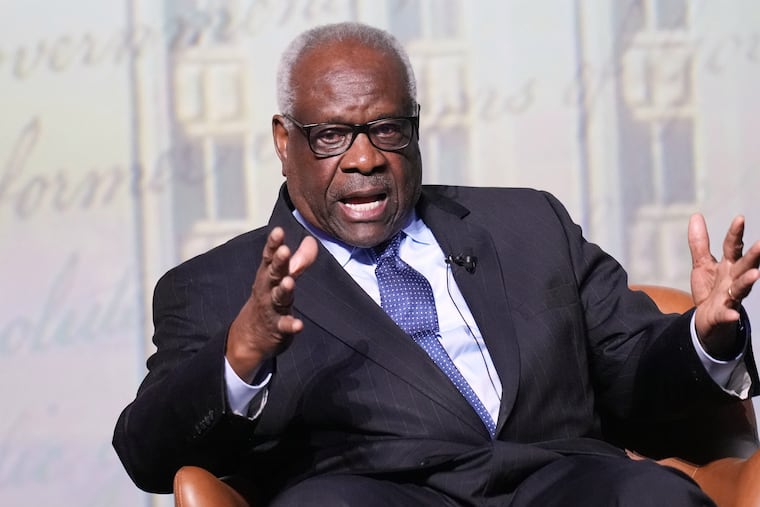
Philadelphia Federal Reserve chief Patrick Harker called on political and business leaders in Camden Friday, doing reconaissance for what the former Wharton dean and UDelaware president says will be his policy agenda studying and supporting employers, workers and towns across the Third District.
Sitting in the Coopers Ferry Development Corp. office with Mayor Donna Redd, after meeting with officials from Lockheed Martin, Rutgers, Cooper Health, Holtec, Campbell, L3, Contemporary Graphic and other big or recently-arrived Camden employers, Harker remarked on the "mismatch" between bosses needing skilled workers and the underemployed youth and midcareer population in the city. "They can't find welders," or programmers, Harker said. "I'm hearing this from substantial pockets across the country."
You can see the disparity in Camden, with its taxpayer-funded institutions and corporate projects -- many newly relocated from the suburbs with fat state tax breaks -- surrounded by rundown rowhouse and public-housing neighborhoods where too many working-age people are on the streets during the day. (There's still another Camden of dusty port and factory industries and utilty plants, though it's a fraction of its former size.) Harker said his Camden visit is part of his progress through the district, which he took over last summer, "to meet with opinion leaders and the real people driving the real economy."
Can the Fed help fix the poverty, violence, business shutdowns and depopulation that have marked Camden -- and Chester, Reading, Wilmington and other smaller Third District cities -- since the factories shut in the latter 1900s? "That's not what monetary policy does," Harker told me. "That's what great mayors and great community leaders and great nonprofits do:" attract employers, as schools prepare students for today's and tomorrow's jobs.
I asked the Mayor what the "real people" who put her in office think of the money flowing downtown. "What I'm hearing from our residents is, 'Mayor, keep up the good work,'" Redd said. "They've never witnessed so much energy. So many construction jobs." Employers have pledged to hire "local," she added, and Rutgers, Rowan and Camden County colleges have programs "preparing our residents, career readiness, making sure they are employable." She reminded me how hundreds showed up at an October job fair to fill 1,500 positions. She says something like 900 of the jobs were filled.
The Fed has a mandate from Congress to ensure "maximum employment and stable prices," Harker reminded everyone. He praised private programs like YouthBuild Philadelphia and union apprenticeship programs, since not everyone needs to be in college.
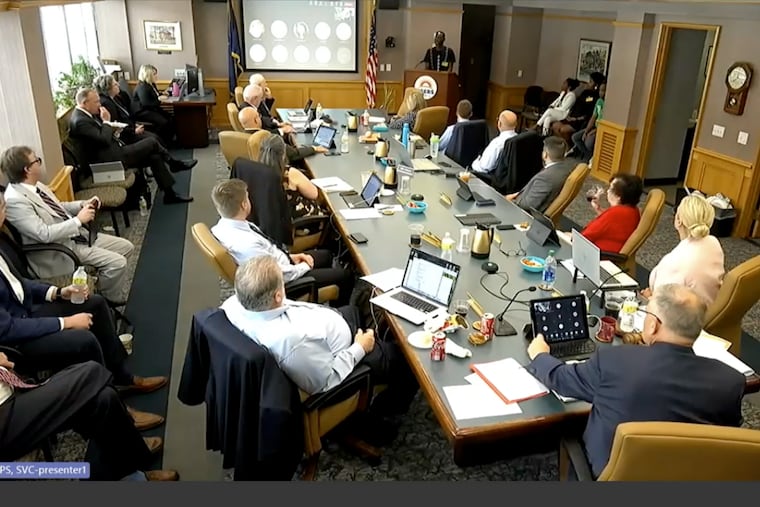
I'd sat through presentations that morning by state and federal housing agencies and private nonprofit lenders trying to convince reps from Wells Fargo, PNC, TD, 13 banks with branches in the area, to pump more private loan money into small and midsized employers and residential redevelopment. President Obama came here last fall to inaugurate Camden as one of half a dozen U.S. "Promise Zones" with special federal support for private projects (Mantua in West Philly is another,)
The bankers weren't committing; maybe we'll know in a few years if all the public money spent by New Jersey's deficit-hobbled public budget is going to be followed by market capital, or no.
If this works, I asked Redd, will Camden follow older Philadelphia neighborhoods in attracting wealthier new residents and pricing out her current constituents? "Displacement is a real issue. What I am more concerned about is Camden residents moving out of the city," she told me.
"Camden residents who are able to secure jobs, health benefits and pensions, they move out of the city," Redd lamented. "We want to make sure we have the quality of housing here that can retain our residents in the city, our millenials. Also attractive to milennials are mixed-income communities. Right now Camden is 67 percent rentals, 33 percent home ownership. We want to reverse that."
There's plenty of taxpayer money in Gov. Christie's New Jersey to help Subaru, the Sixers and Holtec to build big projects in Camden.
But Harker said he was surprised to hear from Camden business people today that midsized businesses -- the ones adding most of the jobs in the U.S. these days, as larger employers cut costs -- have a much harder time raising money for expansion, in part because the expense of updating their plant won't add enough value to their prpoerties, in the city's still-depressed industrial real estate market, to form good collateral.
"They have to fill the (financial) gap," Harker said. "The group we met with said this is a real challenge in terms of getting the 50 person company, the 100 person company, to move to Camden."