Philly’s thriving restaurant scene is almost entirely a good thing, but one drawback comes to mind: so many restaurants, so little time. The Inquirer Food Festival, now in its second year, presents a perfect chance to scratch at least a dozen restaurants off your bucket list. The all-day event, split into two sessions, features more than 40 of the city’s best restaurants and bakeries. Here are six Kensington spots — OK, one is in Bridesburg — whose chefs will be cooking at the Fillmore come Nov. 14. If you’re tempted, get a ticket soon. The festival is nearing sellout.
Ama
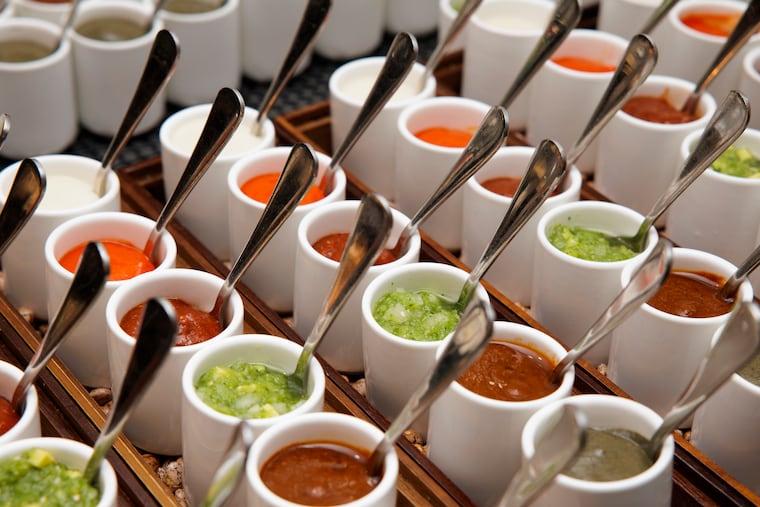
“I’m an honest chef,” said Amá’s Frankie Ramirez. “I try to do stuff that makes me happy.” That might be a simple, barely adorned Sinaloan-inspired aguachile that celebrates fresh seafood (like what he expects to serve at The Inquirer Food Festival), or it might be a dark, complex mole that requires 75 different ingredients. Whole chiles, spices, apples, plantains, black garlic, blistered tortillas, and pepper seeds that are intentionally burnt, soaked, then dried and pulverized make up just a smattering of the ingredients that go into the black mole that dresses his octopus tatemado. “We study Mexico,” Ramirez said. His team delves deep into researching ingredients and techniques unique to Mexican states in order to honestly recreate them, while also making sure that they work harmoniously on a tight menu. Ramirez’s homage to Mexico is as vast and wide-ranging in flavors as the country itself. The dish that best illustrates this has to be Ramirez’s salsa presentation, which has become his signature move. You don’t just get one or two; he gives you six. Among them, there’s a creamy cashew salsa that embodies the modern cuisine of Baja California, a charred pasilla chile-based salsa that represents Oaxaca, a fiery salsa made from burnt habaneros that invokes the Yucatan, and a funky, fishy salsa that represents both Michoacan and Fishtown. — Kiki Aranita
Emmett
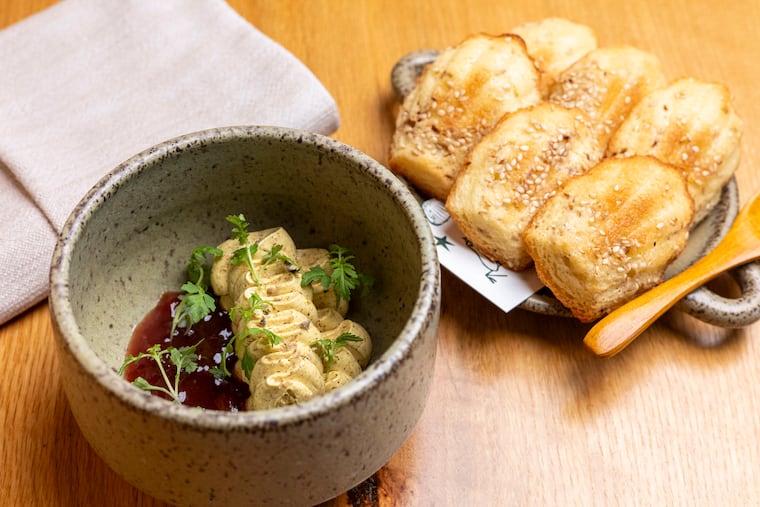
If it weren’t for Samuels Seafood, Philadelphia might not have one of its most promising new restaurants. After years of cooking professionally, Julian van der Tak had stepped out of the kitchen and was working as a sales rep for the South Philly fish vendor. He happened to pick up the phone when Evan Snyder, then executive chef at Redcrest Kitchen, called to establish an account. Little did they know, their budding client-salesperson relationship would lead to Emmett, the modern Kensington restaurant with one of Philly’s most imaginative menus. With Van der Tak as managing partner and Snyder heading up the kitchen, Emmett has brought “destination-dining energy,” as Inquirer critic Craig LaBan phrased it in his 2025 review, from the jump. It was a finalist earlier this year for the James Beard Award’s Best New Restaurant. Much of the acclaim rides on Snyder’s culinary creativity. Dinner at Emmett starts with his signature sesame madeleines with ras el hanout-spiced butter, ends with a Turkish coffee caramel-drenched date cake, and is punctuated in between with a parade of entrees that blend Levantine and Mediterranean influences. But van der Tak’s work, along with that of GM Marissa Chirico, makes the dining experience seamless and keeps the business running smoothly. “I’m the Robin to his Batman,” van Der Tak said of Snyder. (“I don’t think anyone’s ever called me that,” Snyder laughed skeptically.) The duo will bring that dynamic to The Inquirer Food Fest, where they’ll serve an off-menu bite that Emmett guests may recognize: burnt onion ash-cured tuna on a matzah cracker with preserved tomato labneh. Philadelphians will have more intriguing dishes to look forward to later this fall, when van der Tak and Snyder open their tasting-menu restaurant, Jean, above Emmett. — Jenn Ladd
Fiore
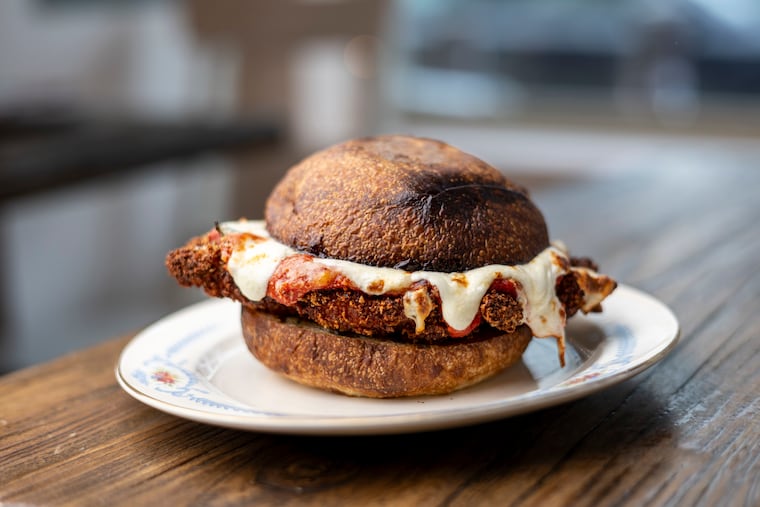
This all-day Italian specialist has been a magnet for pastry- and pasta-hungry Philadelphians since it first opened in its former Queen Village home, in 2019. The chef-owner couple that fuels it, Ed Crochet and Justine MacNeil, turned what had been a tricky Front Street space into a brunch and dinner destination that weathered the pandemic — and then did it all over again after relocating Fiore to a 20-seat cafe in East Kensington in 2023 in the interest of better work-life balance. That’s a value Crochet and MacNeil are committed to: They paused dinner service last year as they prepared to welcome their second child. In the meantime, the Frankford Avenue-based Fiore has a dedicated daytime crowd that streams in for an ever-changing Italian pastry showcase and hauntingly good sandwiches throughout the morning and afternoons. At The Inquirer Food Festival, MacNeil — a James Beard Award finalist for outstanding pastry chef this year — and Crochet plan to deliver a little taste of everything. They’ll be serving mortadella and pistachio-mint pesto sandwiches on their airy, olive oil-enriched pizza bianca; a spiced squash-apple salad; and a meringue-like ricciarelli, a classic Italian almond cookie. “It's kind of a lot to do on one plate, but we want to show people what we do here at the bakery every day,” Crochet said. — Jenn Ladd

Jaffa Bar
Andrew Henshaw has long been a key contributor to the success of the CookNSolo restaurant group, helming Zahav as chef de cuisine when it won America’s Outstanding Restaurant from the James Beard Foundation in 2019, then opening its more casual, skewer-forward Fishtown sibling, Laser Wolf, the following year. The launch of Jaffa Bar in 2024 in a stylishly rehabbed former Kensington firehouse has offered a set of new challenges for Henshaw, a Bethlehem native who’s now a partner for the first time with CookNSolo, along with longtime manager Kailey Jenkins. Jaffa Bar’s story has also been one of a continuing culinary evolution. The early seafood-focused menus, which included shellfish and pork, deviated far from the unofficial boundaries of the group’s previously Jewish-themed menus. The pork ribs have since been jettisoned, but Jaffa has remained true to its ambition to become one of the most distinctive raw bars in town, with well-shucked oysters garnished with schug spice and passion fruit mignonettes. The menu has also broadened its appeal with something for everyone. “The more we progressed, the more we just wanted to be a great neighborhood restaurant,” said Henshaw. They’ve managed just that while staying true to the group’s affinity for Levantine flavors, adding a cardamom-scented Yemenite spice to the house-ground brisket patties used for its standout smashburger. A sweet, tangy hot sauce of honey and harissa elevates the matzo-crusted fried chicken to next-level status. For The Inquirer’s Food Festival, Henshaw is serving up one of Jaffa Bar’s early and enduring hits: a riff on yellowtail crudo, cured in smoky pastrami style, paired with a dilled beet salad over a schmear of everything-spiced labneh yogurt. — Craig LaBan
Little Walter’s
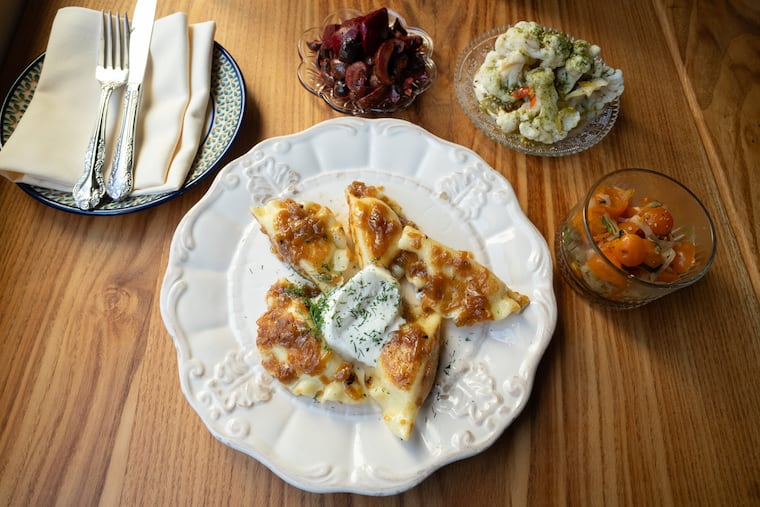
Chef Michael Brenfleck helps make upwards of 1,000 hand-shaped pierogies a week. They take center stage at Little Walter’s, Brenfleck’s East Kensington bar that’s a new-school tribute to Polish cuisine. Some are stuffed with brisket. Others are packed with mushrooms and served with thick buttermilk ranch. And some are prepared the old-fashioned way, with potatoes, farmers cheese, caramelized onions, and hefty dollops of sour cream. Brenfleck’s pierogies were among the best dishes New York Times critics ate in 2024 and just one facet of what Craig LaBan once called “one of Philly’s best new restaurants of any sort.” Now, Brenfleck, wants to push past the potato-y half moons and kielbasa to showcase more Polish deep cuts. At The Inquirer Food Festival, Brenfleck will be serving zapiekanka, a street food that the chef equates to French bread pizza topped with mushrooms. Additional toppings give zapiekanka its own personality, he said. He plans to opt for kielbasa, onions, and homemade ketchup. How’d he get the idea? “I literally just had a similar one in Krakow yesterday,” Brenfleck wrote from a recent research trip to Poland. — Beatrice Forman
Philly Hummus Girl
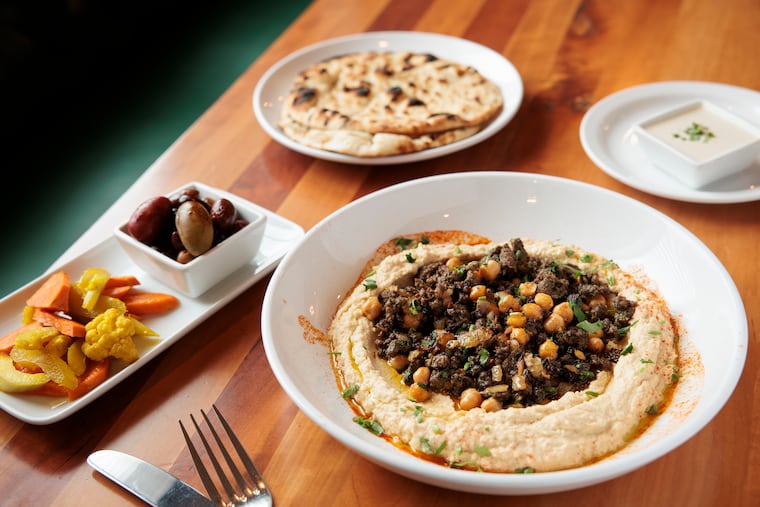
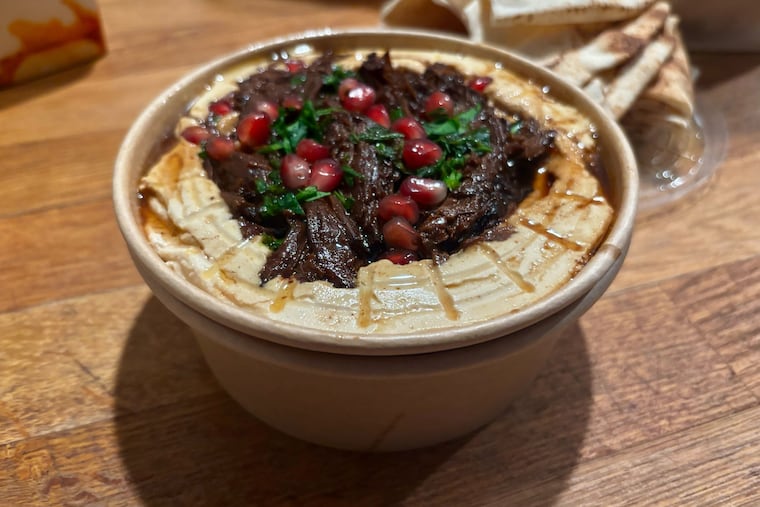
Miranda Stephen, better known as Philly Hummus Girl, will bring a portable version of her Lebanese mezze spreads to The Inquirer Food Festival. Stephen launched Philly Hummus Girl in 2024 after years of cooking for friends and family. What began with bowls of hummus she brought to gatherings developed into a full-time business built around Lebanese and Middle Eastern mezze, sold through pop-ups, farmers markets, online orders, and catering. She now works out of Culinary Collective’s commercial kitchens. At the food fest, Stephen said she plans to follow the same format she used last year: three signature dips, plus a few small bites that guests can assemble into miniature mezze spreads. The lineup will include hummus, muhammara, mint labneh, and baba ganoush, with a choice of falafel or rice-stuffed grape leaves on the side. Stephen’s cooking draws heavily on her Lebanese background but is not confined by it. Her regular menu has included date-syrup brisket hummus, dill-pickle labneh, duck shawarma, pumpkin kibbeh, and braised lamb shoulder on focaccia — dishes that mix Lebanese traditions with influences from the places she has lived, including Dubai and the American South. She is also working toward opening a brick-and-mortar market café next year. Her model, she said, is closer to an early Panera: a casual café where people can get fresh food without much ceremony or expense. She’s currently location-shopping. “I live in the Italian Market, so I would love to find something close to me,” she said. “But I feel as though Rittenhouse or Center City might be an easier place for people to find good, fresh food that doesn’t cost an arm and a leg or require a lot of effort to seek out.” — Michael Klein
Ama
“I’m an honest chef,” said Amá’s Frankie Ramirez. “I try to do stuff that makes me happy.” That might be a simple, barely adorned Sinaloan-inspired aguachile that celebrates fresh seafood (like what he expects to serve at The Inquirer Food Festival), or it might be a dark, complex mole that requires 75 different ingredients. Whole chiles, spices, apples, plantains, black garlic, blistered tortillas, and pepper seeds that are intentionally burnt, soaked, then dried and pulverized make up just a smattering of the ingredients that go into the black mole that dresses his octopus tatemado. “We study Mexico,” Ramirez said. His team delves deep into researching ingredients and techniques unique to Mexican states in order to honestly recreate them, while also making sure that they work harmoniously on a tight menu. Ramirez’s homage to Mexico is as vast and wide-ranging in flavors as the country itself. The dish that best illustrates this has to be Ramirez’s salsa presentation, which has become his signature move. You don’t just get one or two; he gives you six. Among them, there’s a creamy cashew salsa that embodies the modern cuisine of Baja California, a charred pasilla chile-based salsa that represents Oaxaca, a fiery salsa made from burnt habaneros that invokes the Yucatan, and a funky, fishy salsa that represents both Michoacan and Fishtown. — Kiki Aranita
Emmett
If it weren’t for Samuels Seafood, Philadelphia might not have one of its most promising new restaurants. After years of cooking professionally, Julian van der Tak had stepped out of the kitchen and was working as a sales rep for the South Philly fish vendor. He happened to pick up the phone when Evan Snyder, then executive chef at Redcrest Kitchen, called to establish an account. Little did they know, their budding client-salesperson relationship would lead to Emmett, the modern Kensington restaurant with one of Philly’s most imaginative menus. With Van der Tak as managing partner and Snyder heading up the kitchen, Emmett has brought “destination-dining energy,” as Inquirer critic Craig LaBan phrased it in his 2025 review, from the jump. It was a finalist earlier this year for the James Beard Award’s Best New Restaurant. Much of the acclaim rides on Snyder’s culinary creativity. Dinner at Emmett starts with his signature sesame madeleines with ras el hanout-spiced butter, ends with a Turkish coffee caramel-drenched date cake, and is punctuated in between with a parade of entrees that blend Levantine and Mediterranean influences. But van der Tak’s work, along with that of GM Marissa Chirico, makes the dining experience seamless and keeps the business running smoothly. “I’m the Robin to his Batman,” van Der Tak said of Snyder. (“I don’t think anyone’s ever called me that,” Snyder laughed skeptically.) The duo will bring that dynamic to The Inquirer Food Fest, where they’ll serve an off-menu bite that Emmett guests may recognize: burnt onion ash-cured tuna on a matzah cracker with preserved tomato labneh. Philadelphians will have more intriguing dishes to look forward to later this fall, when van der Tak and Snyder open their tasting-menu restaurant, Jean, above Emmett. — Jenn Ladd

Fiore
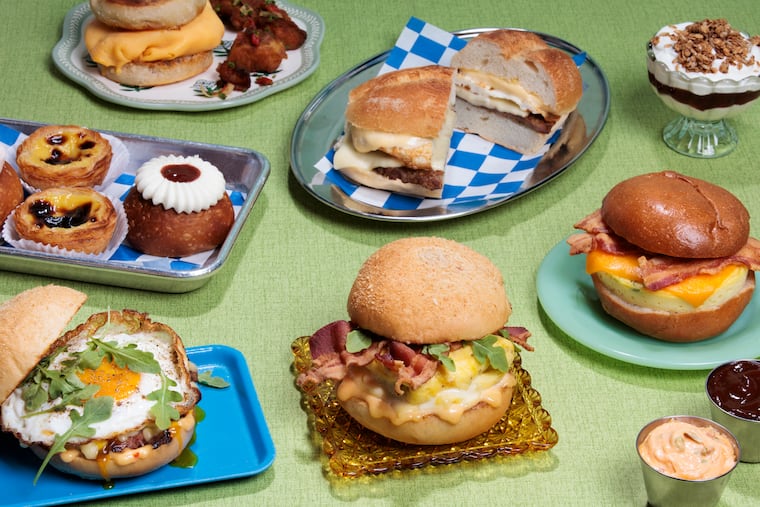
This all-day Italian specialist has been a magnet for pastry- and pasta-hungry Philadelphians since it first opened in its former Queen Village home, in 2019. The chef-owner couple that fuels it, Ed Crochet and Justine MacNeil, turned what had been a tricky Front Street space into a brunch and dinner destination that weathered the pandemic — and then did it all over again after relocating Fiore to a 20-seat cafe in East Kensington in 2023 in the interest of better work-life balance. That’s a value Crochet and MacNeil are committed to: They paused dinner service last year as they prepared to welcome their second child. In the meantime, the Frankford Avenue-based Fiore has a dedicated daytime crowd that streams in for an ever-changing Italian pastry showcase and hauntingly good sandwiches throughout the morning and afternoons. At The Inquirer Food Festival, MacNeil — a James Beard Award finalist for outstanding pastry chef this year — and Crochet plan to deliver a little taste of everything. They’ll be serving mortadella and pistachio-mint pesto sandwiches on their airy, olive oil-enriched pizza bianca; a spiced squash-apple salad; and a meringue-like ricciarelli, a classic Italian almond cookie. “It's kind of a lot to do on one plate, but we want to show people what we do here at the bakery every day,” Crochet said. — Jenn Ladd
Also appears in
Jaffa Bar
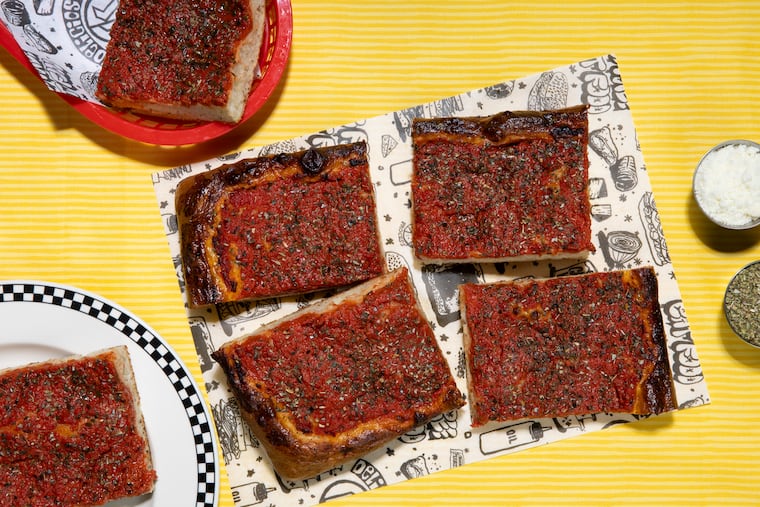
Andrew Henshaw has long been a key contributor to the success of the CookNSolo restaurant group, helming Zahav as chef de cuisine when it won America’s Outstanding Restaurant from the James Beard Foundation in 2019, then opening its more casual, skewer-forward Fishtown sibling, Laser Wolf, the following year. The launch of Jaffa Bar in 2024 in a stylishly rehabbed former Kensington firehouse has offered a set of new challenges for Henshaw, a Bethlehem native who’s now a partner for the first time with CookNSolo, along with longtime manager Kailey Jenkins. Jaffa Bar’s story has also been one of a continuing culinary evolution. The early seafood-focused menus, which included shellfish and pork, deviated far from the unofficial boundaries of the group’s previously Jewish-themed menus. The pork ribs have since been jettisoned, but Jaffa has remained true to its ambition to become one of the most distinctive raw bars in town, with well-shucked oysters garnished with schug spice and passion fruit mignonettes. The menu has also broadened its appeal with something for everyone. “The more we progressed, the more we just wanted to be a great neighborhood restaurant,” said Henshaw. They’ve managed just that while staying true to the group’s affinity for Levantine flavors, adding a cardamom-scented Yemenite spice to the house-ground brisket patties used for its standout smashburger. A sweet, tangy hot sauce of honey and harissa elevates the matzo-crusted fried chicken to next-level status. For The Inquirer’s Food Festival, Henshaw is serving up one of Jaffa Bar’s early and enduring hits: a riff on yellowtail crudo, cured in smoky pastrami style, paired with a dilled beet salad over a schmear of everything-spiced labneh yogurt. — Craig LaBan
Little Walter’s
Chef Michael Brenfleck helps make upwards of 1,000 hand-shaped pierogies a week. They take center stage at Little Walter’s, Brenfleck’s East Kensington bar that’s a new-school tribute to Polish cuisine. Some are stuffed with brisket. Others are packed with mushrooms and served with thick buttermilk ranch. And some are prepared the old-fashioned way, with potatoes, farmers cheese, caramelized onions, and hefty dollops of sour cream. Brenfleck’s pierogies were among the best dishes New York Times critics ate in 2024 and just one facet of what Craig LaBan once called “one of Philly’s best new restaurants of any sort.” Now, Brenfleck, wants to push past the potato-y half moons and kielbasa to showcase more Polish deep cuts. At The Inquirer Food Festival, Brenfleck will be serving zapiekanka, a street food that the chef equates to French bread pizza topped with mushrooms. Additional toppings give zapiekanka its own personality, he said. He plans to opt for kielbasa, onions, and homemade ketchup. How’d he get the idea? “I literally just had a similar one in Krakow yesterday,” Brenfleck wrote from a recent research trip to Poland. — Beatrice Forman
Philly Hummus Girl
Miranda Stephen, better known as Philly Hummus Girl, will bring a portable version of her Lebanese mezze spreads to The Inquirer Food Festival. Stephen launched Philly Hummus Girl in 2024 after years of cooking for friends and family. What began with bowls of hummus she brought to gatherings developed into a full-time business built around Lebanese and Middle Eastern mezze, sold through pop-ups, farmers markets, online orders, and catering. She now works out of Culinary Collective’s commercial kitchens. At the food fest, Stephen said she plans to follow the same format she used last year: three signature dips, plus a few small bites that guests can assemble into miniature mezze spreads. The lineup will include hummus, muhammara, mint labneh, and baba ganoush, with a choice of falafel or rice-stuffed grape leaves on the side. Stephen’s cooking draws heavily on her Lebanese background but is not confined by it. Her regular menu has included date-syrup brisket hummus, dill-pickle labneh, duck shawarma, pumpkin kibbeh, and braised lamb shoulder on focaccia — dishes that mix Lebanese traditions with influences from the places she has lived, including Dubai and the American South. She is also working toward opening a brick-and-mortar market café next year. Her model, she said, is closer to an early Panera: a casual café where people can get fresh food without much ceremony or expense. She’s currently location-shopping. “I live in the Italian Market, so I would love to find something close to me,” she said. “But I feel as though Rittenhouse or Center City might be an easier place for people to find good, fresh food that doesn’t cost an arm and a leg or require a lot of effort to seek out.” — Michael Klein
Also appears in