The Playground is latest venture to strengthen A.C.
ATLANTIC CITY - In the latest bid to strengthen Atlantic City as a shopping and entertainment destination, developer Bart Blatstein unveiled the first floor of his $50 million venture, the Playground, to an enthusiastic crowd Thursday.
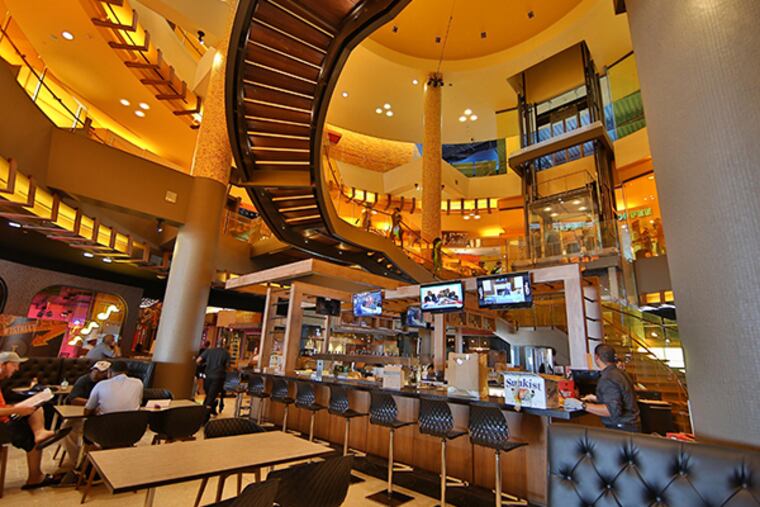
ATLANTIC CITY - In the latest bid to strengthen Atlantic City as a shopping and entertainment destination, developer Bart Blatstein unveiled the first floor of his $50 million venture, the Playground, to an enthusiastic crowd Thursday.
T Street - an urban streetscape lined with bars and live entertainment intended to resemble Music Row in Nashville - is to open to the public on Friday.
The city's Who's Who of politicians, local business leaders, and prominent residents, among others, got a sneak peak at a VIP event Thursday evening.
"Welcome to the Playground!" Blatstein, CEO of Tower Investments Inc. of Philadelphia, said just after 7 p.m. "I am so proud of this project. Atlantic City is like home to me. I hope this is part of its rebirth."
The unveiling party came the same day that legislation to stabilize the resort's soaring property taxes passed just hours earlier in the state Senate in Trenton. The Assembly version passed two weeks ago.
Four casinos on the Boardwalk closed last year, taking with them substantial city tax revenue and leaving local residents and smaller businesses footing higher taxes to keep city government afloat. The measure that passed allows the casinos here to pay a lump sum in lieu of property taxes for the next 15 years.
Gaming and tourism experts say Atlantic City needs to diversify its economy.
Retail sales have been relatively flat, which, considering the decline in the number of visitors because of the casino closures and the reduction in the year-round population, is not that bad, they say.
For casino operators, food and beverage revenue rose by 2 percent for the first quarter this year versus last year, and entertainment revenue was up 3.9 percent, according to the latest figures from the New Jersey Division of Gaming Enforcement.
"Regarding retail, most studies show that vacationers like to shop," said Michael Busler, a professor of finance at Stockton University. "The Walk [outlet mall] is proving to be successful, even considering the seasonality factors heavily influencing this market."
The drumbeat by North Jersey lawmakers has grown louder in recent weeks to build casinos in their respective areas, potentially ending Atlantic City's 37-year exclusivity on gambling in the state.
Legislation to allow state residents to vote on whether to expand gambling beyond Atlantic City has to pass by Aug. 2 for a question to make it on the November ballot.
State lawmakers will leave for summer recess after next week, and so far, no North Jersey casino bill has been scheduled for a vote, a Democratic aide said.
The possibility of New Jersey casinos outside Atlantic City "is a real threat, given the political momentum behind the initiative," said Alex Bumazhny, director of gaming, lodging, and leisure corporate ratings at Fitch Ratings. "Development of additional amenities may help soften the blow a bit."
Blatstein, known for projects in urban pockets, notably Northern Liberties in Philadelphia, said he hoped the Playground would turn the resort into the entertainment capital of the East Coast.
"Entertainment will play a huge role here," Blatstein said Thursday evening as he shook hands inside Monkey Bar in the middle of T Street. Music blared from the venues offering everything from jazz to rock, including 1921, Bo and Tag.
T Street, which measures 90,000 square feet, is the first phase of redevelopment, and Blatstein hopes it will generate the same vibe as Beale Street in Memphis, and Sixth Street in Austin.
Furnishings from the now-defunct Riviera Hotel and Casino in Las Vegas are seen throughout T Street. Blatstein and architect Paul Steelman, his partner in the Playground project, traveled to Las Vegas in May to retrieve several truckloads of memorabilia, signage, and furniture from the former casino.
"Atlantic City remains a difficult city to operate in with declining foot traffic from visiting gamblers," Bumazhny said. "This is more true with the recent Boardwalk [casino] closures. The opening of new amenities are especially important for the Boardwalk properties."
"For Atlantic City to succeed in the future, everyone agrees that it has to reinvent itself," Stockton's Busler said. "My view is that the Playground will be successful and will be a destination that will attract vacationers who may end up gambling once they are here."
Blatstein said the redeveloped second and third floors of the Playground will open by New Year's, and they will include more restaurants, a bowling alley and dining area, and private pool, among other features.
"The Playground will have the advantage of being in the center of town and completing a retail/entertainment "mile" that extends from the Convention Center through the Walk, to Bass Pro Shops, followed by a short walk to the Boardwalk and the Playground," said Israel Posner, executive director of the Lloyd D. Levenson Institute of Gaming, Hospitality, and Tourism at Stockton University.