Design a restaurant, move to the head of the class
Emily Lopez, a junior working toward her interior design degree at Drexel University, was making a presentation at a high drafting table the other day, with preliminary plans of a restaurant space unfurled before her.
Emily Lopez, a junior working toward her interior-design degree at Drexel University, was making a presentation at a high drafting table the other day, with preliminary plans of a restaurant space unfurled before her.
Her assignment, for the sake of this class, was to design a restaurant for hothead celebrity chef Gordon Ramsay, in, of all places, Suburban Square.
Her professor, Chris Sheffield of SLDesign in Kensington, is teaching his specialty, restaurant design, from conception to opening night.
This is Sheffield's first semester teaching, but he has spent most of his adult life designing restaurants and hotel spaces. Six years ago, he founded SLDesign. Kate Rohrer is now a partner and co-professor.
Sheffield and Rohrer list such members of the culinary elite as Michael Mina, prolific restaurateur Steve Hanson, and Stephen Starr, to name a few, among their clients. Their projects range from coffeeshops in Northern Liberties to lounges in Manhattan to showcase eateries in Las Vegas.
While the students don't have real clients, their projects are based in reality.
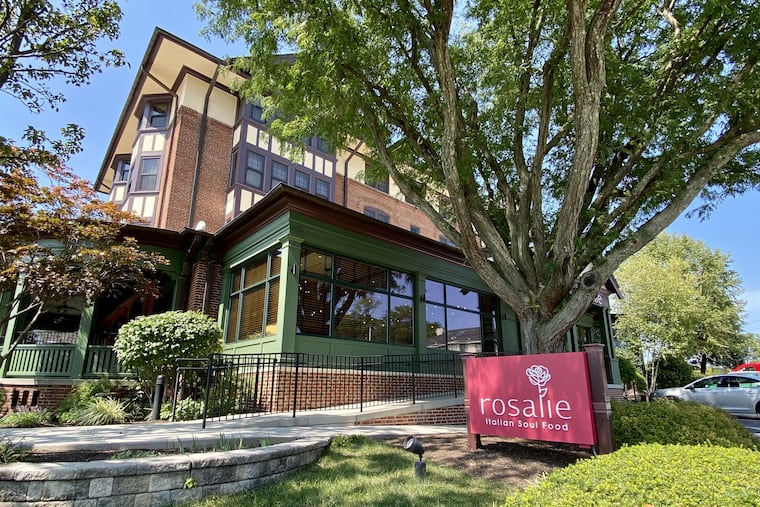
They are working with the dimensions of the Main Line shopping-center space that Sheffield and Rohrer are designing for restaurant owners Michael Schulson and Rob Wasserman. The duo (Schulson currently owns Sampan and Izakaya in Atlantic City; Wasserman owns Rouge and 500 Degrees) are set to open the casual American eatery this spring.
"It's cool because this is a real project," says Amanda James, also a junior. "We can actually go see the space."
As SLDesign's vision takes shape, so will the students' projects. They will have to meet the requirements of a real job: drawing elevations, creating concept boards, finding materials, and surveying demographics.
"We don't have a budget, though," says Lopez. "We can plate everything in gold and diamonds if we want."
Each student was instructed to choose a celebrity chef, then research the chef's background and personality to inform the vibe of the eatery.
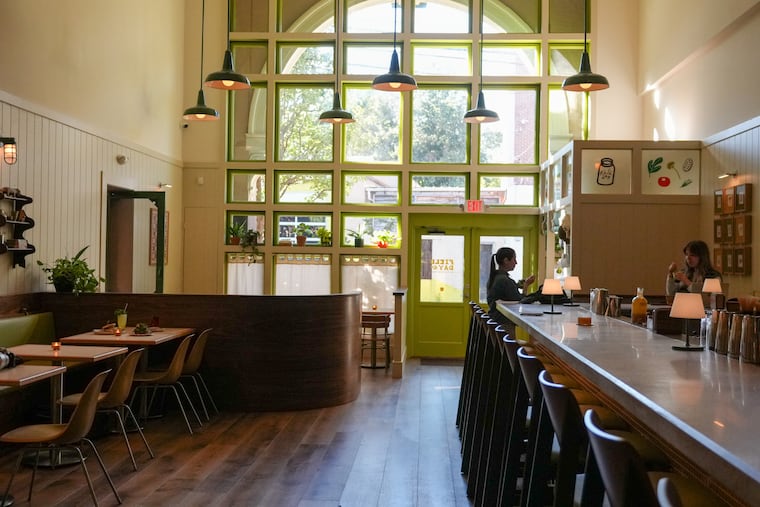
"It's important to really understand what your client wants," Sheffield says. "And to understand why people are going to this restaurant. What is Suburban Square largely driven by? Why do we go to restaurants?"
Sheffield and Rohrer also want to equip the students with the less glamorous nuts and bolts of restaurant design.
"I'd hate to say it, but the design can become a small part of the project," Sheffield says. He stresses real-world problem-solving, and compliance with legal and operational requirements such as the Americans With Disabilities Act.
"You have the responsibility as designers to make clients aware of all the laws," Sheffield says. "The idea is to meet the guidelines, with the best design solution."
The designer must also understand service and operational challenges. "If it takes a server 20 minutes to get to a water station, or if the food arrives cold because the kitchen is too far from the tables, it doesn't matter how pretty the place is, a customer isn't going to come back."
As a homework assignment, Sheffield and Rohrer have asked the students to visit two Philadelphia restaurants, one fine dining and one more casual, and observe their designs. It's important for them to see an array of well- and not-so-well-designed spaces, he said.
"Philadelphia has come a very long way," says Karen Pelzer, an associate director of the program, who taught the class before Sheffield. "Places like Buddakan and Continental have been copied all over the place. There are great examples in this city for the students, especially converted historic places like Trust."
Sheffield and Rohrer hope that on the site visits, students will be able to look past the flash. "I'm interested in hearing their negative feedback more than the positive feedback," Rohrer says.
For their next assignment, students need to create an inspiration board, and present it to the class as if they were the client. "It can be as simple as words or one piece of reclaimed wormy chestnut that spoke to you," Sheffield says. "But also think about the presentation. If it's for a Mexican restaurant, for example, it might be a collage, versus something that is organized into quadrants."
At the end of the semester, when their project is complete, the feedback won't come only from their professors. True, Gordon Ramsay probably won't be grading papers, but Sheffield wants Schulson and Wasserman to come to the class and see what the students have dreamed up for their restaurant space.
By that time, the construction on the real space in Suburban Square will be well under way. Let's just hope none of the student designers upstage their professors.