N.Y. unveils plan for aging bridge
New Tappan Zee Bridge would allow buses; rail later.
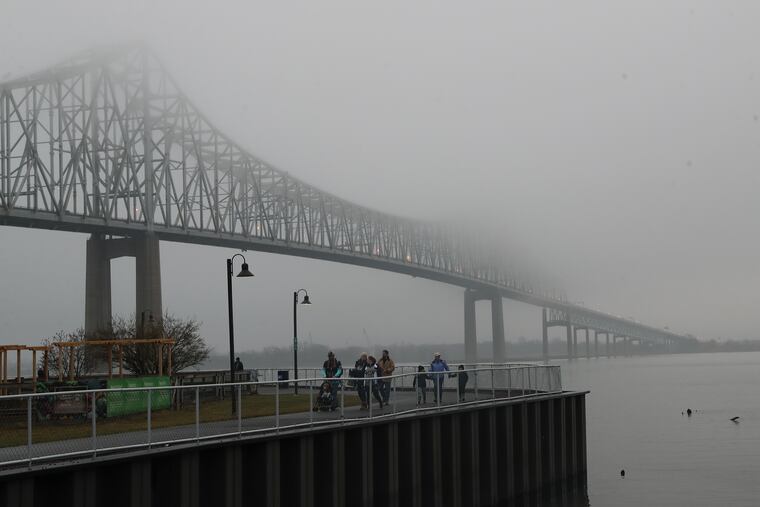
WHITE PLAINS, N.Y. - The Tappan Zee Bridge has to be replaced, but doing it right would mean including a commuter rail line and spending about $16 billion, state planners said.
They recommended a cheaper alternative Friday: building a new bridge with an express-bus system and a superstructure strong enough to carry a railroad across the Hudson River sometime in the future.
That would cost $9.3 billion, still a large sum to seek in the midst of a national economic crisis, officials acknowledged.
"Times may be tough, but the future is still there, and we still need to work together and build for it," said state Transportation Commissioner Astrid Glynn.
The recommendation by state transportation officials was the result of a nine-year study of options for the 53-year-old Tappan Zee, which spans the Hudson 14 miles north of Manhattan.
Glynn said it would be a few years before major investment was needed, and economic conditions might be more favorable then. State authorities said they did not yet know where the money might come from, but they have hired help to explore "creative financing," including private investment. They also expressed hope that federal funds would be available.
Michael Fleischer, executive director of the state Thruway Authority, said the option of simply keeping the current bridge was rejected because bringing it up to code would cost billions and "would leave you with about 80 percent new bridge anyway."
The Tappan Zee, which transformed the northern suburbs when it opened, is now under constant repair. In July, a crater 31/2 feet wide opened up in the roadbed, providing a clear view of the Hudson River below. It is constantly overcrowded, carrying 150,000 vehicles a day. It has no shoulders, so any breakdown causes huge traffic jams.
Glynn said a new bridge would mean lower maintenance costs, less construction time, less travel time, and less environmental impact.
"This just must be done," said Westchester County Executive Andrew Spano. "This is a bridge whose time has come."
Glynn said that if all goes smoothly, a new span linking Westchester and Rockland Counties could be completed by 2016 or 2017. Planners said last year that it would likely be built in two stages. When one section is completed, all the traffic from the current bridge would be routed onto that section temporarily while the old bridge is demolished and the second stage is built.
Officials said that mass transit is an integral part of the plan for the bridge.
"Moving people, not vehicles, is our goal," said Metro-North president Howard Permut.
Under the plan detailed Friday, a system of rapid-transit buses with dedicated lanes, new stations and limited stops would be ready to travel between Suffern and Port Chester when the bridge is completed.
"Bus rapid transit gives you the reliability and limited access you get with rail service, but more flexibility," Glynn said.
If, as recommended, a commuter railroad followed in the years afterward, it would link lines west of the river to Metro-North's Hudson line, providing direct access to Grand Central Terminal in Manhattan.